

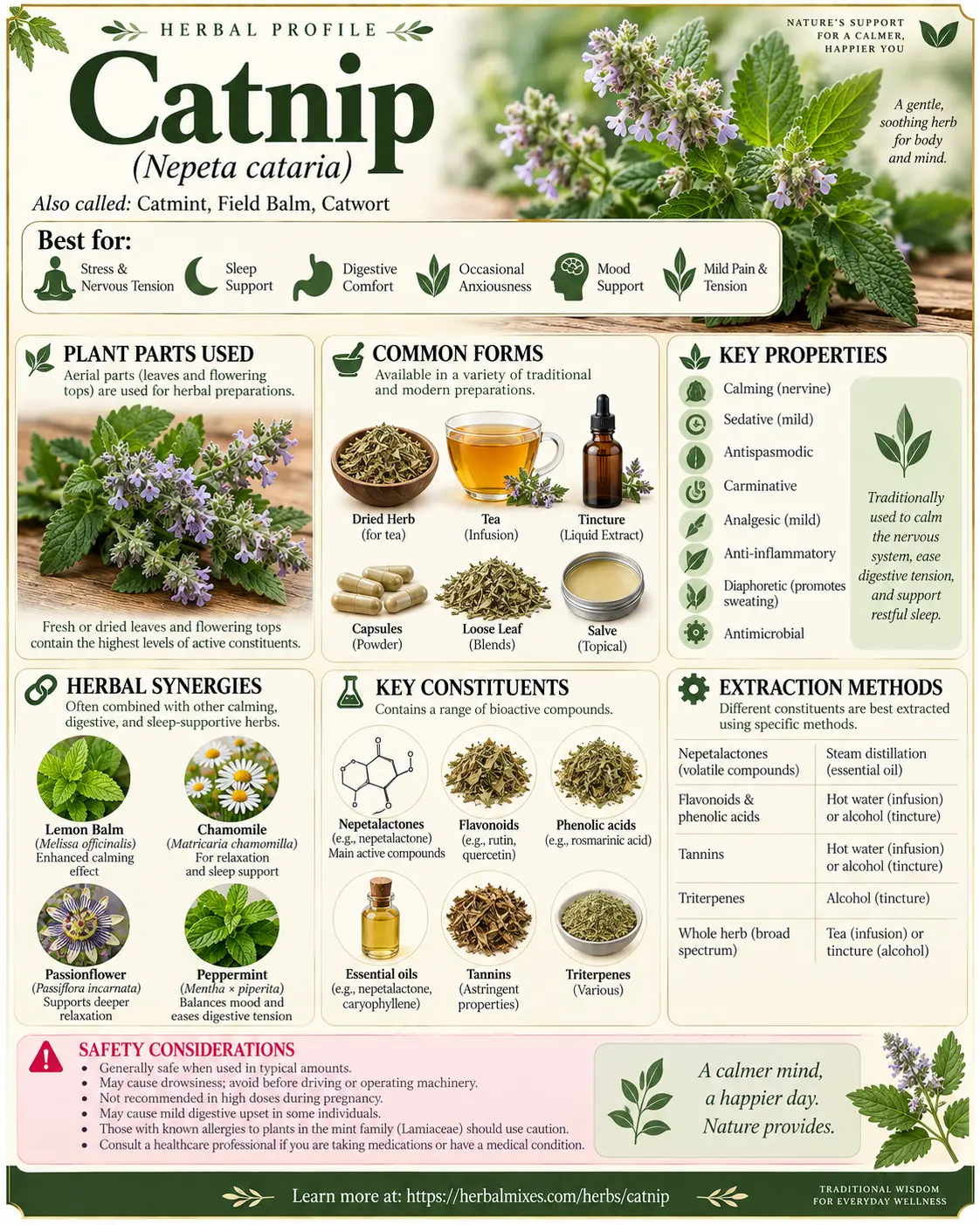
What Catnip Is Good For
Nervous Tension & Mild Anxiety — Catnip is a gentle yet effective nervine relaxant traditionally used to soothe frayed nerves, ease everyday stress, and calm an overactive mind.
Restful Sleep & Bedtime Ease — Brewed as an evening tea, it helps promote gentle relaxation and supports natural sleep onset for both adults and children.
Digestive Gas & Colic Relief — Its natural carminative properties help expel trapped intestinal gas, ease infant colic, and soothe spasmodic digestive cramping.
Fever Management & Chills — Acts as a mild diaphoretic when consumed warm, encouraging gentle perspiration to support the body during minor fevers and colds.
Gentle Pediatric Soothing — Exceptionally safe and mild, catnip tea or alcohol-free glycerites have been trusted for generations to settle restless, teething, or colicky infants.
Available Herbal Products
Buying Guides for Available Catnip Products
Organic Catnip Aerial Parts – Dried flowering herb. An authentic, traditional choice for steeping into a soothing, minty evening tea or a gentle digestive infusion. Seller: Mountain Rose Herbs – View Mountain Rose Herbs Catnip →
Catnip Liquid Extract – Hydroalcoholic tincture. A convenient liquid format that allows for precise, drop-by-drop dosing to calm sudden nervous tension or digestive upset. Seller: Herb Pharm – View Herb Pharm Catnip Extract →
Alcohol-Free Children’s Catnip Glycerite – Sweet, glycerin-based liquid extract. An ideal, palatable choice for infants and children experiencing colic, teething restlessness, or mild fevers. Seller: Wise Woman Herbals – View Wise Woman Herbals Glycerites →
Organic Calming Sleep Tea Blend – Herbal tea bags combining catnip with chamomile, passionflower, and peppermint. Designed to provide comprehensive evening relaxation. Seller: Traditional Medicinals – View Traditional Medicinals Teas →
Herbal Synergies
Catnip pairs especially well with German Chamomile, Fennel Seed, and Peppermint Leaf, depending on the goal of the formula.
Catnip Aerial Parts + German Chamomile Flowers Best for: Calming nervous children, soothing colic, easing teething fussiness, and promoting peaceful sleep Catnip provides gentle nervine relaxation and eases digestive gas, while chamomile offers comforting antispasmodic and anti-inflammatory action for frayed nerves and upset stomachs. Together, they form the ultimate pediatric calming duo. Best extraction: Covered warm infusion (tea) or glycerite. Both herbs release their soothing volatile oils and flavonoids efficiently in warm water.
Catnip Aerial Parts + Fennel Seed Best for: Expelling trapped gas, eliminating bloating, and calming infant digestive griping Catnip relaxes smooth muscle tissue throughout the GI tract, whereas fennel seed offers sweet carminative oils that relieve gas pressure and harmonize digestion. Best extraction: Covered hot infusion. Crushing fennel seeds slightly and steeping them alongside catnip creates an effective carminative tea.
Catnip Aerial Parts + Peppermint Leaf Best for: Improving flavor palatability, cooling digestive discomfort, and easing head tension Catnip brings minty relaxant properties, while peppermint provides cooling menthol oils that refresh the palate and soothe upper GI cramping. Best extraction: Covered tea infusion. Steeping these mint-family cousins together captures their aromatic volatile profiles.
Key Herbal Properties
Nervine Relaxant — Tones and calms the nervous system, shifting the body away from a stress state without heavy sedation.
Carminative — Relieves flatulence, gas buildup, and abdominal cramping by relaxing gastrointestinal smooth muscle.
Diaphoretic — Promotes peripheral circulation and gentle perspiration when consumed hot during minor fevers.
Antispasmodic — Relaxes smooth and skeletal muscle tissue, easing colic and tension.
Pediatric Tonic — Exceptionally gentle and safe for infants and children when used in appropriate dilutions.




Active Compounds
Nepetalactones (Monoterpene Isomers — including cis,trans-nepetalactone) Found mainly in: Flowering tops and leaves The primary bioactive volatile compounds responsible for catnip’s calming nervine action, carminative properties, and famous euphoric effect on cats. Best extraction: Covered hot infusion (tea) or hydroalcoholic tincture. Because nepetalactones are volatile aromatic compounds, tea must always be brewed in a covered pot or cup to prevent them from escaping into the steam.
Flavonoids (including Quercetin and Kaempferol) Found mainly in: Leaves and flowers Antioxidant compounds that support cellular health and enhance the plant’s calming synergy. Best extraction: Hot water infusion. Soluble in simmering or hot water.
Tannins and Volatile Oils Found mainly in: Aerial parts Provide mild astringency and support the plant’s carminative and soothing profile. Best extraction: Tea infusion or alcohol-water extract. Soluble in hydroalcoholic solutions.
FAQ
What is catnip best used for? Catnip is primarily used as a gentle nervine to calm everyday anxiety and promote sleep, and as a carminative tea to soothe infant colic and digestive gas.
Why must catnip tea be brewed covered? Because catnip’s active calming constituents (nepetalactones) are volatile aromatic oils, brewing the tea in an uncovered cup allows them to evaporate into the air; a lid keeps them trapped in the liquid.
Why does catnip make cats crazy? Nepetalactone binds to olfactory receptors in cats, triggering a neurological response that mimics feline pheromones and results in temporary playful euphoria.
Does catnip have this same stimulating effect on humans? No, while cats find it stimulating, humans experience the exact opposite effect: catnip acts as a relaxing sedative and nervine on human nervous systems.
Is catnip safe for babies? Yes, weak catnip tea or alcohol-free glycerites are among the safest and most trusted traditional remedies for soothing colicky, restless, or teething infants under professional guidance.
Safety & Precautions
Pregnancy Considerations: Culinary amounts are generally safe, but large medicinal doses of catnip during pregnancy should be approached with professional guidance due to its traditional emmenagogue and mild uterine-stimulating potential.
Drowsiness: Because catnip promotes gentle nervous system relaxation, large servings may cause mild drowsiness.
Allergies: As a member of the Lamiaceae (mint) family, individuals with known mint allergies should test tolerance before use.
Quality Source: Ensure catnip used for human consumption is harvested and dried cleanly, separate from pet-grade novelty toys.
Consult a qualified healthcare professional before using catnip therapeutically, especially if you manage underlying medical conditions or take prescription drugs.
References
National Center for Complementary and Integrative Health (NCCIH)
PubMed Central – Nepeta cataria (Catnip) Phytochemistry and Neuropharmacological Properties
European Medicines Agency (EMA) Herbal Documentation
World Health Organization (WHO) Monographs on Selected Medicinal Plants
Mountain Rose Herbs Catnip Monograph
Disclaimer
Disclaimer: This article is for educational purposes only and is not intended to diagnose, treat, cure, or prevent any disease. Herbal products can cause side effects and interact with medications. Consult a qualified healthcare professional before using herbs therapeutically, especially if you are pregnant, breastfeeding, taking prescription medications, or managing a medical condition.