

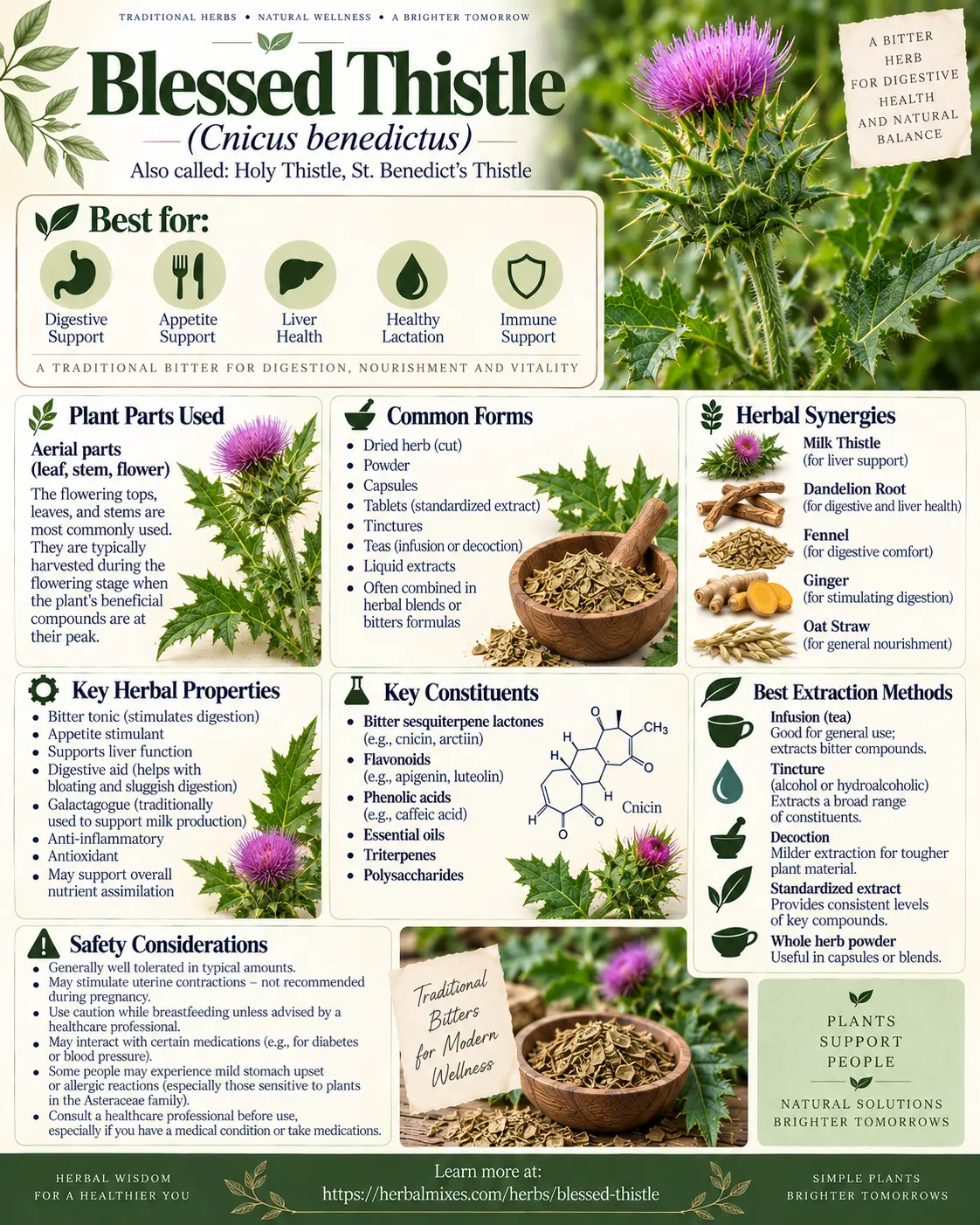
What Blessed Thistle Is Good For
Digestive Stimulation & Bitter Tonic — Blessed Thistle is a powerful bitter tonic traditionally used to stimulate digestive secretions, salivary flow, and gastric enzyme production.
Lactation Support (Galactagogue) — Frequently utilized by nursing mothers under professional guidance to help support and encourage healthy breast milk production.
Menstrual Comfort — Traditionally associated with supporting pelvic circulation and easing occasional menstrual discomfort or cramping.
Mild Liver & Detox Support — Helps support normal liver and gallbladder function through its gentle cholagogue and bitter properties.
Appetite Support — Traditionally employed to gently stimulate appetite and digestive vigor during periods of recovery or low vitality.
Available Herbal Products
Organic Blessed Thistle Leaf Cut – Dried aerial parts. An authentic, traditional choice for brewing an intensely bitter herbal tea or crafting custom digestive bitters. Seller: Mountain Rose Herbs – View Mountain Rose Herbs Blessed Thistle →
Blessed Thistle Liquid Extract – Hydroalcoholic tincture. A fast-absorbing liquid format that allows for precise, convenient dosing without enduring the plant’s intense bitterness on the palate. Seller: Herb Pharm – View Herb Pharm Blessed Thistle Extract →
Nursing Mother’s Organic Tea – Herbal tea bags combining blessed thistle with fenugreek and fennel seed. Designed specifically to provide synergistic lactation and digestive support. Seller: Traditional Medicinals – View Traditional Medicinals Nursing Teas →
Blessed Thistle Capsules – Encapsulated whole herb powder. A practical, taste-free option for individuals seeking the traditional digestive and nutritive benefits of blessed thistle. Seller: Nature’s Way – View Nature’s Way Blessed Thistle →
Herbal Synergies
Blessed Thistle pairs especially well with Fenugreek, Fennel Seed, and Dandelion Root, depending on the goal of the formula.
Blessed Thistle + Fenugreek Seed – Best for: Comprehensive lactation support, milk supply enhancement, and digestive comfort Blessed thistle provides vitalizing bitter tonic action, while fenugreek seed offers potent galactagogue properties and soothing mucilage. Together, they form the most popular traditional combination for nursing mothers. Best extraction: Capsules or combined tea infusion. Both herbs yield their active mucilaginous and bitter compounds efficiently into warm water or capsule formats.
Blessed Thistle + Dandelion Root – Best for: Enhanced liver support, bile flow, and digestive cleansing Blessed thistle stimulates upper GI digestive secretions, whereas dandelion root acts as a hepatic tonic that encourages healthy liver and gallbladder clearance. Best extraction: Decoction or bitter tincture blend. Simmering dandelion root while steeping blessed thistle creates a powerful, comprehensive bitter tonic.
Blessed Thistle + Peppermint Leaf – Best for: Improving flavor palatability and easing digestive cramping Blessed thistle possesses an intensely bitter taste profile; pairing it with cooling peppermint leaf helps balance the flavor while adding carminative antispasmodic comfort. Best extraction: Covered hot infusion. Steeping these herbs together captures both the bitter glycosides and the cooling aromatic mint oils.
Key Herbal Properties
Bitter Tonic — Engages bitter taste receptors across the tongue and gut to stimulate digestive enzyme and gastric acid output.
Galactagogue — Traditionally associated with supporting and increasing the production of breast milk in nursing women.
Diaphoretic — Promotes healthy perspiration, supporting the body’s natural warming response during minor chills.
Astringent — Tones mucous membranes and tissues throughout the gastrointestinal tract.
Hepatoprotective — Supports normal liver and gallbladder function and bile flow.






Active Compounds
Cnicin (Sesquiterpene Lactone) Found mainly in: Leaves and flowering tops The primary bioactive bitter principle responsible for blessed thistle’s digestive stimulation, antimicrobial support, and tonic properties. Best extraction: Alcohol-water tincture or warm water infusion. Cnicin dissolves moderately in warm water and extracts with high efficiency in hydroalcoholic solutions.
Volatile Oils and Tannins Found mainly in: Aerial parts Contribute to the plant’s mild carminative, astringent, and antimicrobial actions. Best extraction: Hydroalcoholic extract or decoction. Alcohol and simmering water successfully pull out these active compounds.
Polyphenols and Flavonoids Found mainly in: Leaves Antioxidant compounds that support cellular health and normal inflammatory balance. Best extraction: Hot water infusion or alcohol extract. Soluble in both warm water and alcohol-water mixtures.
FAQ
What is blessed thistle best used for? Blessed thistle is primarily used as a strong bitter tonic to stimulate digestion and appetite, and as a traditional galactagogue to support breast milk supply.
How does blessed thistle taste? Blessed thistle has an exceptionally sharp, pungent, and intensely bitter flavor profile driven by its high concentration of cnicin and sesquiterpene lactones.
Can blessed thistle be taken every day? While moderate culinary or supplemental use is common during nursing or digestive protocols, heavy medicinal doses should be used short-term or under professional guidance.
Can blessed thistle cause stomach upset? Yes, in high doses, blessed thistle’s intense bitterness can over-stimulate the gastric lining and cause mild nausea or vomiting in sensitive individuals.
Is blessed thistle safe to use during pregnancy? No, internal use of blessed thistle is strictly contraindicated during pregnancy due to its traditional emmenagogue and uterine-stimulating properties.
Safety & Precautions
Pregnancy & Breastfeeding: Avoid completely during pregnancy, as blessed thistle has a traditional history of stimulating uterine activity. It is safely used during lactation when guided by a professional.
Gastrointestinal Sensitivity: High doses or overly strong tea infusions can irritate the gastric mucosa and trigger nausea, vomiting, or stomach cramping due to intense bitter constituents.
Allergies: Individuals with known allergies to plants in the Asteraceae (daisy/ragweed) family—such as ragweed, marigolds, or daisies—should exercise caution.
Stomach Ulcers: Avoid use if you have active gastric ulcers, hyperacidity, or severe gastrointestinal inflammation, as bitter tonics stimulate acid production.
Consult a qualified healthcare professional before using blessed thistle therapeutically, especially if you manage underlying medical conditions or take prescription drugs.
References
National Center for Complementary and Integrative Health (NCCIH)
PubMed Central – Cnicus benedictus (Blessed Thistle) Phytochemistry and Traditional Uses
World Health Organization (WHO) Monographs on Selected Medicinal Plants
European Medicines Agency (EMA) Monograph on Cnicus benedictus L.
Mountain Rose Herbs Blessed Thistle Monograph
Herb Pharm Blessed Thistle Profile
Disclaimer
Disclaimer: This article is for educational purposes only and is not intended to diagnose, treat, cure, or prevent any disease. Herbal products can cause side effects and interact with medications. Consult a qualified healthcare professional before using herbs therapeutically, especially if you are pregnant, breastfeeding, taking prescription medications, or managing a medical condition.