

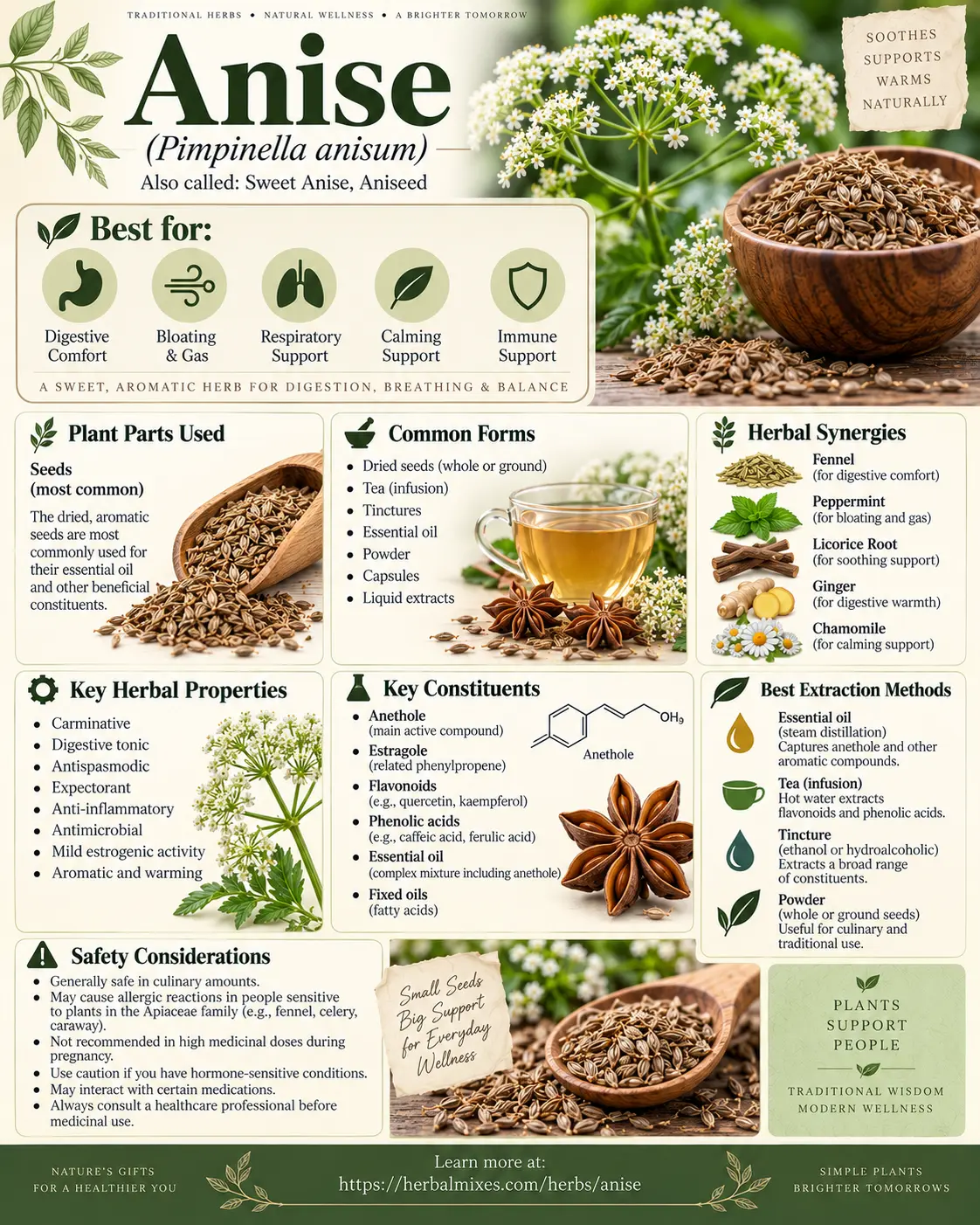
Anise is a fragrant seed traditionally valued for easing occasional bloating, gas, and post-meal heaviness, while its volatile oils help relax airway muscles and act as a gentle expectorant to support comfortable breathing during coughs. It also helps soothe mild digestive spasms and cramping, encouraging smoother gastrointestinal transit, and has long been used to support healthy breast milk production in nursing mothers under professional guidance. Beyond its therapeutic uses, Anise’s sweet, licorice-like aroma makes it a favorite for balancing bitter flavors in herbal teas and liquid formulas.
Available Herbal Products
Organic Whole Anise Seed – Dried seeds. An ideal choice for crushing fresh before steeping into a soothing carminative tea or incorporating into homemade herbal syrups. Seller: Mountain Rose Herbs – View Mountain Rose Herbs Anise Seed →
Anise Seed Extract – Liquid tincture. A concentrated hydroalcoholic extract that captures the warming volatile oils for rapid absorption and convenient everyday digestive dosing. Seller: Herb Pharm – View Herb Pharm Anise Extract →
Organic Digestion & Carminative Tea – Herbal tea bags featuring bruised anise seed combined with fennel and peppermint. Designed to quickly relieve post-meal gas and abdominal pressure. Seller: Traditional Medicinals – View Traditional Medicinals Digestion Teas →
Anise Essential Oil – Pure steam-distilled aromatic oil. Used in aromatherapy or heavily diluted topical chest rubs to support comfortable breathing and respiratory relaxation. Seller: Starwest Botanicals – View Starwest Botanicals Anise Oil →
Herbal Synergies
Anise pairs especially well with Fennel, Peppermint, and Thyme, depending on the goal of the formula.
Anise Seed + Fennel Seed – Best for: Comprehensive gas relief, bloating reduction, and digestive comfort Anise and fennel both share an abundance of sweet, carminative volatile oils that relax the intestinal tract and expel trapped gas. Together, they create a delicious, highly effective after-meal tea. Best extraction: Crushed seed hot infusion. Lightly bruising the seeds and steeping them in covered hot water captures their aromatic volatile oils without damaging them.
Anise Seed + Peppermint Leaf -Best for: Rapid relief from upper GI tension and digestive spasms Anise provides warming carminative action, while peppermint offers cooling, antispasmodic volatile oils that instantly soothe stomach discomfort and cramping. Best extraction: Hot infusion (tea). Both herbs readily release their volatile organic compounds into covered hot water.
Anise Seed + Thyme Leaf – Best for: Respiratory comfort, soothing coughs, and clearing mucus Anise acts as an expectorant and smooth muscle relaxant, while thyme provides powerful antimicrobial and antispasmodic volatile oils for the bronchial passages. Best extraction: Simmered decoction or herbal syrup. A warm syrup made from anise and thyme provides direct, soothing contact for tickaly coughs.
Key Herbal Properties
Carminative — Relieves flatulence, gas buildup, and abdominal cramping through aromatic volatile oils.
Expectorant — Supports the thinning and clearance of mucus from the respiratory tract.
Antispasmodic — Relaxes smooth muscle tension in the gastrointestinal and respiratory systems.
Galactagogue — Traditionally associated with supporting the production of breast milk.
Antimicrobial — Supports a balanced microbial environment in the digestive tract.






Active Compounds
Volatile Oils (primarily Anethole) Found mainly in: Crushed seeds The primary aromatic constituent responsible for anise’s distinct licorice flavor, carminative properties, and smooth muscle-relaxing effects. Best extraction: Covered hot water infusion or alcohol tincture. Lightly bruising the seeds before extracting preserves and captures these heat-sensitive volatile oils.
Flavonoids and Coumarins Found mainly in: Seeds Support the antioxidant and mild estrogenic or physiological activity of the plant. Best extraction: Hydroalcoholic extract or water infusion. Soluble in alcohol-water solvents and warm water.
Plant Sugars and Mucilage Found mainly in: Seed coat Provide mild demulcent and soothing qualities to complement the warming volatile oils. Best extraction: Aqueous extraction (tea or syrup). Water readily dissolves these comforting plant compounds.
FAQ
What is anise best used for? Anise is primarily used to relieve occasional gas, bloating, and digestive discomfort, as well as to support comfortable breathing during spasmodic coughs.
How does anise taste? Anise has a strong, sweet, and distinctly aromatic flavor profile closely resembling licorice or fennel, driven by its high concentration of anethole.
Should anise seeds be crushed before making tea? Yes, lightly bruising or crushing whole anise seeds right before steeping is essential to fracture the seed coat and release the therapeutic volatile oils into your water.
Can anise be used safely during pregnancy? Culinary amounts are generally safe, but concentrated therapeutic use of anise should be approached with caution or avoided during pregnancy due to its phytoestrogenic properties.
Is anise the same thing as star anise? No, while they share a nearly identical aroma and flavor compound (anethole) due to convergent evolution, they come from entirely different botanical families (Apiaceae versus Schisandraceae).
Safety & Precautions
Pregnancy & Breastfeeding: While historically used to support lactation, high medicinal doses or concentrated extracts should be used under professional guidance. Avoid high therapeutic doses during pregnancy.
Hormone-Sensitive Conditions: Because anise exhibits mild phytoestrogenic activity (due to anethole), individuals with hormone-sensitive conditions should consult a healthcare professional before frequent high-dose consumption.
Allergies: Individuals with known allergies to plants in the Apiaceae (carrot/parsley) family—such as celery, fennel, or caraway—should exercise caution.
Medication Interactions: May theoretically interact with hormone therapies, estrogen-based contraceptives, or anticoagulant medications.
Consult a qualified healthcare professional before using anise therapeutically, especially if you manage underlying medical conditions or take prescription drugs.
References
National Center for Complementary and Integrative Health (NCCIH)
PubMed Central – Pimpinella anisum: Phytochemistry and Pharmacological Activities
European Medicines Agency (EMA) Monograph on Pimpinella anisum
World Health Organization (WHO) Monographs on Selected Medicinal Plants
Mountain Rose Herbs Anise Seed Monograph
Disclaimer
Disclaimer: This article is for educational purposes only and is not intended to diagnose, treat, cure, or prevent any disease. Herbal products can cause side effects and interact with medications. Consult a qualified healthcare professional before using herbs therapeutically, especially if you are pregnant, breastfeeding, taking prescription medications, or managing a medical condition.