
Passionflower: Traditional Uses, Actions, and Herbal Preparations
Passionflower has a long-standing reputation in traditional Western herbalism as a gentle yet deeply reassuring plant. Herbalists often turn to it when the nervous system feels overstimulated but depleted at the same time—when rest is needed, yet the mind won’t quite let go. Rather than forcing calm, passionflower is traditionally understood to invite relaxation, supporting the body’s natural ability to settle, unwind, and restore balance.
Latin Name, Common Names & Uses
Latin (botanical) name: Passiflora incarnata
Plant family: Passifloraceae
Common names: Passionflower, Maypop, Purple passionflower
Traditional use overview
In Western herbalism, passionflower is traditionally used as a nervine relaxant and mild antispasmodic. It has been relied upon to support nervous system balance, physical relaxation, and rest during periods of mental overactivity or tension, often without causing dullness or heaviness.
Herbal Actions
Nervine relaxant: Encourages relaxation of an overactive nervous system.
Antispasmodic: Traditionally used to ease involuntary muscle tension.
Mild sedative (traditional context): Supports restfulness without strong sedation.
Anxiolytic (traditional understanding): Helps calm racing thoughts and nervous agitation.
Practical Uses
Passionflower is often used in the evening or during stressful periods when relaxation is needed without suppressing alertness. Western herbalists frequently include it in blends aimed at promoting restful sleep, easing nervous tension, or supporting physical relaxation associated with stress.
Product Forms
Loose dried aerial parts: Used for teas and infusions.
Alcohol tincture: A common and effective preparation, often 1:2–1:5 ratios.
Glycerite: Alcohol-free option with a milder profile.
Capsules or tablets: Dried powdered herb.
Liquid extracts: Concentrated preparations used in small doses.
Four Traditional Herbal Recipes
Passionflower Infusion:
1–2 teaspoons dried herb steeped in hot water for 10–15 minutes, taken in the evening.Passionflower Sleep Tea:
Passionflower blended with chamomile and lemon balm for gentle nighttime support.Fresh Passionflower Tincture:
Fresh aerial parts extracted in alcohol, traditionally valued for nervous system formulas.Passionflower Relaxation Blend:
Passionflower combined with skullcap and hops for physical and mental tension.
Parts Used
Aerial parts (leaves, stems, flowers)
Usage Forms & Shelf Life
Internal use: Tea, tincture, glycerite, capsules
External use: Rare in Western herbal practice
Shelf life:
Dried herb: ~1 year
Tincture: 3–5 years
Glycerite: 1–2 years
Safety & Considerations and Dosage Guidelines
Passionflower is traditionally regarded as gentle and appropriate for regular use in moderate amounts. Typical Western herbal use includes 1–2 cups of tea daily or 2–4 mL of tincture up to twice daily. It is often used situationally or short term, though longer use is also common in tonic formulas.
Side Effects & Contraindications
Side effects are uncommon but may include drowsiness at higher amounts. Caution is traditionally advised when combining passionflower with other strong sedative substances. Safety profiles and traditional considerations are summarized by the National Center for Complementary and Integrative Health (NCCIH) and the European Medicines Agency (EMA).
Active Constituents
Flavonoids (vitexin, isovitexin, orientin):
Traditionally associated with calming and antioxidant activity; best extracted with alcohol or hot water.
Total flavonoid content in dried aerial parts is commonly reported in the range of 1–3% by weight in analytical studies discussed in PubMed Central.Alkaloids (harmane, harmine – trace amounts):
Present in small concentrations; traditionally associated with nervine effects.Glycosides:
Contribute to overall plant activity; extracted in water and alcohol.
How It Works
From a traditional Western perspective, passionflower works by gently quieting nervous system overactivity while supporting physical relaxation. Modern research suggests its flavonoids may interact with neurotransmitter pathways involved in relaxation, aligning with its long-standing use as a calming nervine, as reviewed in PubMed Central and NCCIH.
Processing Cautions
Passionflower should be harvested during flowering and dried promptly. Excessive heat during drying can degrade flavonoids and reduce aromatic quality.
Quick Herb Overview
Botanical family: Passifloraceae
Parts used: Aerial parts
Energetics (traditional): Cooling, moistening
Taste profile: Mildly bitter, grassy
Herb Identification
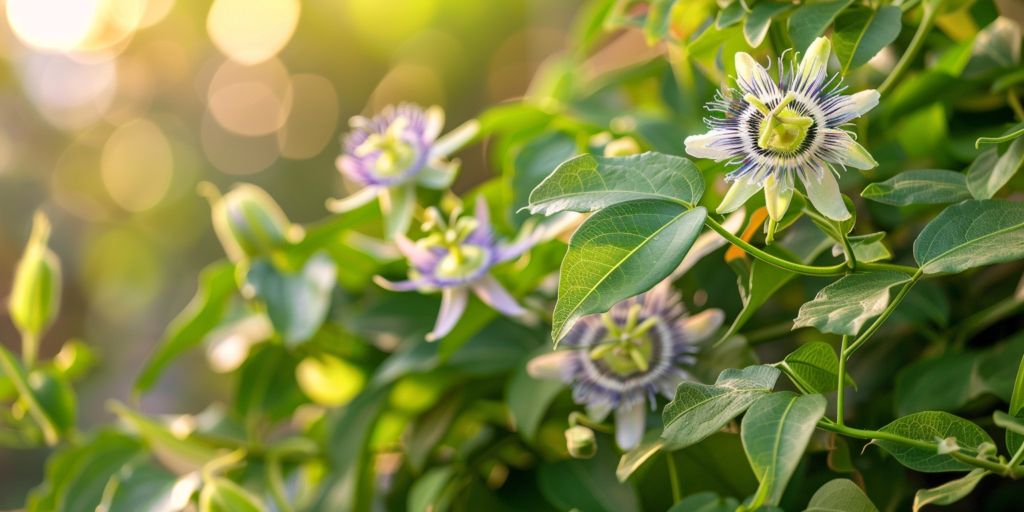
Visual traits: Deeply lobed leaves, distinctive purple-and-white flowers with radial filaments.
Growth habit: Perennial vine with tendrils.
Look-alikes: Other Passiflora species; not all share the same traditional use profile.
Selecting Quality Herb
High-quality passionflower retains green color and a fresh, grassy aroma. Browned material or excessive stem content often indicates poor-quality harvesting or storage.
Natural Growing Areas
Native to the southeastern United States, passionflower grows naturally in open fields, woodland edges, and along fences.
Growing Tips
Passionflower prefers full sun to partial shade and well-drained soil. As a vigorous climber, it benefits from trellising and regular pruning.
Frequently Asked Questions
Is passionflower sedating?
It is traditionally considered calming rather than strongly sedating. Many people find it supports relaxation without next-day grogginess.
Can passionflower be taken daily?
Yes, it is commonly used daily for short periods or situational support.
Is passionflower safe for daytime use?
In moderate amounts, many people use it during the day without drowsiness.
What form is best for beginners?
Tea is often the gentlest introduction, while tinctures offer convenience and consistency.
Is passionflower habit-forming?
Traditional use does not suggest habit-forming properties.
References cited using inline clickable source names
Traditional use and safety overview National Center for Complementary and Integrative Health (NCCIH)
Monographs and traditional context European Medicines Agency (EMA)
Constituent and flavonoid analysis PubMed Central
This article is for educational purposes only and does not provide medical advice, diagnosis, or treatment.