
Thyme: Traditional Uses, Actions, and Herbal Practice
Thyme is traditionally used to support respiratory clarity, encourage healthy microbial balance, and restore warmth and movement in sluggish tissues.

Latin (botanical) name: Thymus vulgaris
Plant family: Lamiaceae
Common names: Thyme, garden thyme
Traditional use overview:
Thyme has been a trusted household herb in Western herbalism for centuries, especially for respiratory and digestive support. Traditionally, it was used for coughs, congestion, and digestive discomfort linked to cold or damp conditions. Herbalists value thyme for its ability to clear while simultaneously toning tissues, making it suitable for both acute and ongoing use.
Herbal Actions
Thyme is traditionally associated with the following actions:
- Antimicrobial – supports healthy microbial balance
- Expectorant – encourages productive respiratory clearance
- Antispasmodic – eases tension in smooth muscle
- Carminative – supports digestive comfort and movement
- Warming stimulant – improves circulation and tissue tone
These actions describe traditional functional use rather than medical treatment.
Practical Uses
In Western herbalism, thyme is commonly used for chest congestion, sluggish digestion, and conditions marked by cold, damp stagnation. It is often chosen when tissues feel weak rather than inflamed. Thyme is also widely used as a culinary-medicinal herb, bridging daily nourishment and traditional remedy.
Product Forms
Thyme is available in a variety of preparations:
- Dried leaf and flowering tops – teas and blends
- Fresh herb tincture – alcohol extracts
- Essential oil – aromatic and external use
- Syrups – traditional respiratory formulas
- Capsules – powdered herb
Whole-herb preparations are preferred for internal use.
Traditional Herbal Recipes
- Thyme Respiratory Tea
A classic infusion used to support coughs and chest clarity. - Thyme Honey or Syrup
Traditionally used to soothe the throat and lungs. - Digestive Carminative Tea
Thyme combined with other warming herbs. - Steam Inhalation
Thyme infused in hot water for aromatic respiratory support.
Parts Used
- Leaf
- Flowering tops
Usage Forms & Shelf Life
Internal vs external use:
Used both internally and externally.
Common preparations:
Infusions, tinctures, syrups, essential oil (external/aromatic)
Shelf-life ranges:
- Dried herb: 1–2 years
- Tinctures: 3–5 years
- Syrups: 6–12 months refrigerated
- Essential oil: 3–4 years when stored properly
Safety & Considerations and Dosage Guidelines
Thyme is generally considered safe when used in traditional amounts. It is often taken in small, repeated doses during times of need. Essential oil preparations are highly concentrated and traditionally reserved for diluted external or aromatic use.
Side Effects & Contraindications
Large internal doses may cause digestive irritation in sensitive individuals. Essential oil should not be used internally without professional guidance. Thyme is traditionally avoided in concentrated form during pregnancy, though culinary amounts are considered acceptable.
Active Constituents
Volatile Oils
- Compounds: thymol, carvacrol
- Traditional role: respiratory clearing, microbial balance
- Best extraction: steam distillation (oil), alcohol tincture
- Quantitative data: thymol may comprise 20–60% of thyme essential oil
National Center for Biotechnology Information
Flavonoids
- Compounds: luteolin, apigenin
- Traditional role: antioxidant and tissue support
- Best extraction: water and alcohol
Phenolic Acids
- Compounds: rosmarinic acid
- Traditional role: balancing and soothing effects
- Best extraction: infusion or tincture
How It Works
Traditionally, thyme is understood to work by warming tissues, loosening congestion, and supporting the body’s natural defenses, particularly in the respiratory tract. Modern research highlights thymol’s activity and aromatic compounds, which closely align with thyme’s historical use for clearing and strengthening support
Journal of Ethnopharmacology.
Processing Cautions
Thyme should be harvested just as flowering begins, when volatile oil content is highest. Dry gently and store away from heat and light to preserve aroma and potency. Overheating during drying can significantly reduce active compounds.
Quick Herb Overview
- Botanical family: Lamiaceae
- Parts used: Leaf, flowering tops
- Energetics: Warming, drying
- Taste profile: Aromatic, pungent, slightly bitter
Herb Identification
Visual traits:
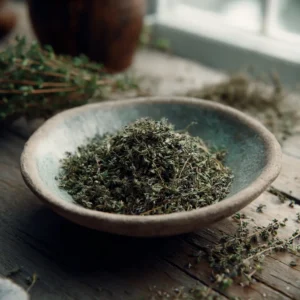
Small, narrow leaves with a strong aromatic scent; tiny pink or purple flowers.
Growth habit:
Low-growing perennial shrub with woody stems.
Look-alikes and safety notes:
Several Thymus species are used medicinally; correct identification ensures consistent potency.
Selecting Quality Herb
Choose thyme with a strong, clean aroma and green-gray coloration. Avoid herbs that smell flat or dusty. Fresh thyme should feel resilient rather than brittle.
Natural Growing Areas
Thyme is native to the Mediterranean region and widely cultivated worldwide. It thrives in dry, sunny environments.
Growing Tips
Thyme prefers full sun, well-drained soil, and minimal watering once established. Regular pruning encourages bushy growth and prevents woody stems.
Frequently Asked Questions
Is thyme mainly a respiratory herb?
Yes, respiratory support is one of its most common traditional uses.
Is thyme warming or cooling?
Thyme is considered warming and drying.
Can thyme be used daily?
Yes, especially in culinary or tea form.
Is thyme gentle enough for children?
In diluted teas or syrups, thyme has traditionally been used for children.
Does thyme help digestion?
Yes, it is commonly used as a carminative.
Is thyme stronger as a fresh or dried herb?
Both are effective, though fresh herb often contains higher volatile oil content.
References
- National Center for Biotechnology Information
- Journal of Ethnopharmacology
- European Medicines Agency – Herbal Monographs
This content is for educational purposes only and reflects traditional herbal understanding. It is not intended to diagnose, treat, cure, or prevent any disease.