
Licorice: Traditional Uses, Actions, and Herbal Practice
Licorice is traditionally used to soothe irritated tissues, support respiratory and digestive lining, and promote adaptive recovery during stress.
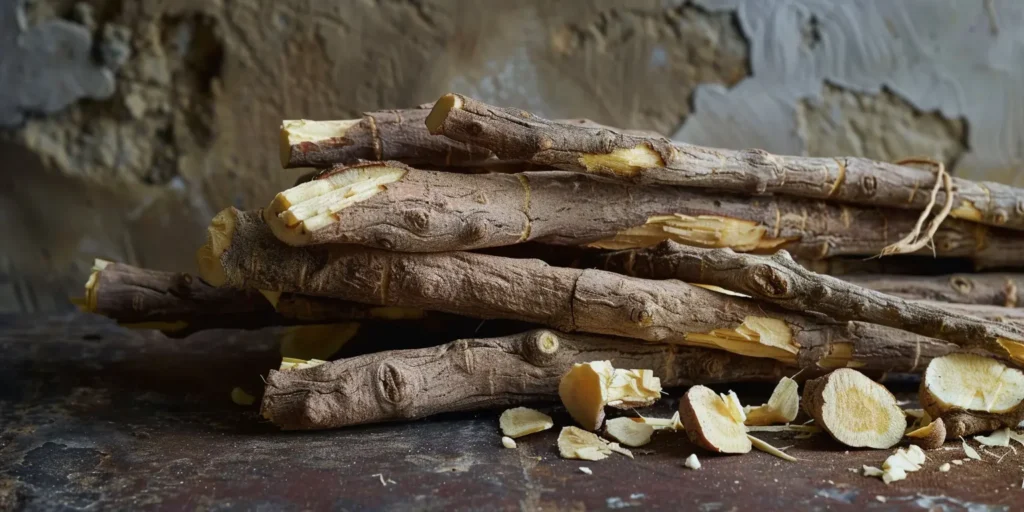
Latin (botanical) name: Glycyrrhiza glabra (also Glycyrrhiza uralensis used traditionally)
Plant family: Fabaceae
Common names: Licorice root, sweet root
Traditional use overview:
Licorice has a long history in European and Western herbal traditions as a demulcent, adaptogenic, and restorative root. It was traditionally used to soothe the respiratory and digestive tracts, support recovery from fatigue, and moderate the effects of stress on the body. Western herbalists often view licorice as a harmonizer—an herb that supports multiple systems while improving the balance and tolerance of formulas.
Herbal Actions
Licorice is traditionally associated with the following actions:
- Demulcent – soothes and protects irritated mucous membranes
- Adaptogenic support – supports the body’s response to ongoing stress
- Anti-inflammatory – helps moderate inflammatory responses
- Expectorant – supports healthy respiratory secretions
- Immune modulator – supports balanced immune responsiveness
These actions describe traditional functional use rather than medical treatment.
Practical Uses
In Western herbal practice, licorice is commonly used to support respiratory comfort, digestive resilience, and recovery during prolonged stress or fatigue. It is frequently included in compound formulas to soften harsh herbs, support endurance, and improve overall tolerance. Herbalists value licorice for both its direct effects and its ability to support broader system balance.
Product Forms
Licorice is available in a variety of preparations:
- Dried root slices – used for decoctions and teas
- Powdered root – capsules or blended formulas
- Tinctures – alcohol or hydroalcoholic extracts
- Deglycyrrhizinated licorice (DGL) – processed form with reduced glycyrrhizin
- Lozenges and syrups – often for respiratory or throat support
Decoctions and tinctures are the most traditional forms in Western herbalism.
Traditional Herbal Recipes
- Licorice Root Decoction
A slow-simmered preparation traditionally used to soothe respiratory and digestive tissues. - Respiratory Support Blend
Licorice combined with other demulcent and expectorant herbs. - Adaptogenic Tonic Formula
Used in small amounts alongside other restorative herbs. - Licorice Syrup
Traditionally prepared for throat and respiratory comfort.
Parts Used
- Root, harvested from mature plants and dried
Usage Forms & Shelf Life
Internal vs external use:
Primarily internal; occasionally external in topical preparations.
Common preparations:
Decoctions, powders, tinctures, syrups, lozenges
Shelf-life ranges:
- Dried root: 2–3 years when properly stored
- Tinctures: 3–5 years
- Syrups: 3–6 months refrigerated
Safety & Considerations and Dosage Guidelines
Licorice is traditionally used in moderate amounts and often for limited durations, especially when taken alone. Western herbalists commonly use smaller quantities in formulas rather than as a single-herb daily tonic. Attention to individual constitution and duration of use is emphasized.
Side Effects & Contraindications
Excessive or prolonged use of whole licorice root may contribute to fluid retention or altered electrolyte balance due to glycyrrhizin content. Traditional sources advise caution with long-term, high-dose use and during pregnancy. DGL preparations are sometimes chosen when glycyrrhizin is to be minimized.
Active Constituents
Triterpenoid Saponins
- Compounds: glycyrrhizin, glycyrrhetinic acid
- Traditional role: associated with demulcent, adaptogenic, and immune-modulating actions
- Best extraction: water decoction or hydroalcoholic extraction
- Quantitative data: glycyrrhizin typically comprises 2–9% of dried licorice root
National Center for Biotechnology Information
Flavonoids
- Compounds: liquiritin, isoliquiritigenin
- Traditional role: antioxidant and anti-inflammatory support
- Best extraction: alcohol or hydroalcoholic preparations
Polysaccharides
- Traditional role: soothing and nutritive support for mucous membranes
- Best extraction: water-based decoctions
How It Works
Traditionally, licorice is understood to work by soothing tissues, supporting stress adaptation, and moderating immune and inflammatory responses. Modern research indicates its constituents influence cortisol metabolism, inflammatory signaling, and mucosal protection, aligning with its long-standing use as a restorative and harmonizing herb
Journal of Ethnopharmacology.
Processing Cautions
Slow drying and gentle decoction preserve active constituents. Over-concentration may increase the likelihood of unwanted effects. Clear labeling of whole root versus DGL preparations is important for appropriate use.
Quick Herb Overview
- Botanical family: Fabaceae
- Parts used: Root
- Energetics: Neutral to slightly warming
- Taste profile: Sweet, earthy
Herb Identification
Visual traits:
Long, fibrous yellow-brown roots with a distinctly sweet taste.
Growth habit:
Perennial legume with pinnate leaves and purple-blue flowers.
Look-alikes and safety notes:
Correct identification of Glycyrrhiza species is essential; not all sweet-tasting roots are licorice.
Selecting Quality Herb
Choose roots that are firm, fibrous, and aromatic with a natural sweetness. Products should clearly state botanical species and whether the preparation is whole root or DGL.
Natural Growing Areas
Native to parts of Southern Europe and Western Asia; widely cultivated in temperate regions worldwide.
Growing Tips
Licorice prefers deep, well-drained soil and full sun. Roots are harvested after several years of growth to ensure quality and potency.
Frequently Asked Questions
Is licorice meant for daily use?
Traditionally, licorice is used thoughtfully and often for limited periods, especially as a single herb.
Why is licorice considered a harmonizing herb?
It is traditionally believed to support balance and improve tolerance within herbal formulas.
Is DGL the same as whole licorice root?
No. DGL has had most glycyrrhizin removed, altering its traditional profile.
Does licorice support digestion or respiration more?
Traditionally, it supports both by soothing and protecting mucous membranes.
Is licorice stimulating or calming?
It is generally considered supportive and balancing rather than stimulating.
Can licorice be combined with other herbs?
Yes. It is commonly used in formulas to support and harmonize other herbs.
References
- National Center for Biotechnology Information
- Journal of Ethnopharmacology
- European Medicines Agency – Herbal Monographs
This content is for educational purposes only and reflects traditional herbal understanding. It is not intended to diagnose, treat, cure, or prevent any disease.