
Elderberry: Traditional Uses & Actions
Elderberry is a seasonal ally for resilience and recovery, especially during times when the body feels taxed by cold, damp, or circulating stressors.
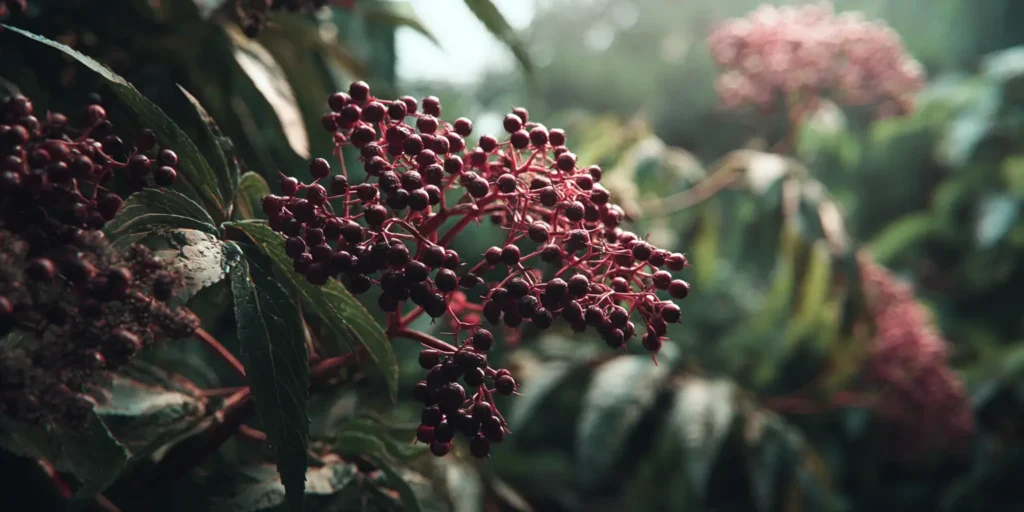
Latin (botanical) name: Sambucus nigra
Plant family: Adoxaceae
Common names: Elder, black elder, European elderberry
Traditional use overview:
Elder has been a cornerstone plant in European folk and later Western herbal traditions for centuries. Both the berries and flowers were traditionally used, though for different purposes. Elderberry was most often associated with seasonal immune stress, circulation of warmth, and recovery after depletion, while elderflower was valued for gentler, surface-level support. In herbalism, elderberry is typically framed as supportive and nutritive rather than aggressive, making it suitable for repeated or seasonal use.
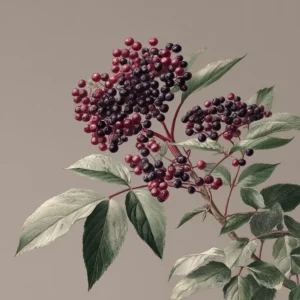
Herbal Actions
Elderberry is traditionally described with the following actions:
- Immune tonic – supports baseline immune resilience over time
- Antiviral support – traditionally associated with limiting viral adhesion and activity
- Diaphoretic – supports gentle sweating and circulation of warmth
- Anti-inflammatory – helps moderate inflammatory responses
- Antioxidant – provides protection against oxidative stress
These actions are understood in functional, traditional terms.
Practical Uses
In Western herbal practice, elderberry is most often used seasonally or during periods of increased immune demand. It is commonly chosen when immune stress feels lingering or recurring rather than sudden and acute. Herbalists often view elderberry as especially appropriate during colder months or times of prolonged fatigue, where steady support is preferred over stimulation.
Product Forms
Elderberry is widely available in many preparations:
- Syrups – one of the most traditional and popular forms
- Liquid extracts (tinctures) – alcohol or glycerin-based
- Capsules and powders – dried berry preparations
- Lozenges and gummies – modern convenience forms
- Teas and decoctions – less common due to flavor and preparation time
Syrups remain the most traditional and accessible preparation.
Traditional Herbal Recipes
- Elderberry Syrup
A slow-simmered decoction of dried berries combined with honey for seasonal use. - Elderberry Decoction
A simple water-based preparation used traditionally during colder seasons. - Immune Support Blend
Elderberry combined with warming or aromatic herbs for balance. - Elderberry Glycerite
An alcohol-free option traditionally used for children or those avoiding alcohol.
Parts Used
- Berries (fully ripe and cooked)
- Flowers (primarily for other traditional applications)
Only ripe, properly processed berries are used in Western herbalism.
Usage Forms & Shelf Life
Internal vs external use:
Primarily internal.
Common preparations:
Syrups, decoctions, tinctures, capsules
Shelf-life ranges:
- Dried berries: 1–2 years
- Syrups: 3–6 months refrigerated, longer with alcohol or preservatives
- Tinctures: 3–5 years
Safety & Considerations and Dosage Guidelines
Elderberry is traditionally considered gentle and suitable for repeated or seasonal use when properly prepared. Herbalists emphasize cooking the berries, as raw elderberries are not used traditionally. Dosage is typically adjusted by age, constitution, and form.
Side Effects & Contraindications
Raw or unripe elderberries may cause digestive upset and are avoided. Proper preparation eliminates this concern. Individuals with sensitivity to berries should use caution. Leaves, stems, and seeds are not used internally.
Active Constituents
Anthocyanins
- Compounds: cyanidin-3-glucoside, cyanidin-3-sambubioside
- Traditional role: antioxidant and immune-supportive activity
- Best extraction: water and hydroalcoholic preparations
- Quantitative data: elderberries may contain 200–600 mg anthocyanins per 100 g dried berries depending on variety and processing
National Center for Biotechnology Information
Flavonols
- Compounds: quercetin, rutin, kaempferol
- Traditional role: circulatory and anti-inflammatory support
- Best extraction: alcohol and hydroalcoholic extracts
Polysaccharides
- Traditional role: associated with immune modulation
- Best extraction: decoctions and syrups
How It Works
Traditionally, elderberry is understood to support immune function by enhancing resilience and clearance rather than provoking activity. Modern research suggests elderberry compounds may interfere with viral attachment and support cytokine signaling balance, offering context for its long-standing seasonal use
Journal of Ethnopharmacology.
Processing Cautions
Elderberries must be fully cooked to neutralize naturally occurring lectins and cyanogenic glycosides. Gentle simmering preserves anthocyanins while ensuring safety. Overheating may degrade delicate flavonoids.
Quick Herb Overview
- Botanical family: Adoxaceae
- Parts used: Berries (cooked), flowers
- Energetics: Cooling to neutral
- Taste profile: Tart, slightly sweet
Herb Identification
Visual traits:
Dark purple-black berries borne in flat clusters; shrubs or small trees with pinnate leaves.
Growth habit:
Perennial shrub or small tree.
Look-alikes and safety notes:
Red elder (Sambucus racemosa) differs in use; correct species identification is essential.
Selecting Quality Herb
Choose berries that are deep purple-black and free from stems. Products should specify Sambucus nigra and indicate that berries were cooked or heat-processed.
Natural Growing Areas
Native to Europe and parts of Western Asia; widely naturalized and cultivated in North America.
Growing Tips
Elder prefers moist, well-drained soil and full sun to partial shade. Shrubs are hardy and productive, with berries harvested in late summer to early autumn.
Frequently Asked Questions
Is elderberry meant for daily use?
Traditionally, elderberry may be used seasonally or during periods of increased demand rather than continuously year-round.
Why must elderberries be cooked?
Cooking neutralizes compounds present in raw berries that can cause digestive discomfort.
Are elderflowers used the same way as berries?
No. Flowers and berries have different traditional uses and preparations.
Is elderberry considered stimulating?
It is generally viewed as supportive and nutritive rather than stimulating.
Can elderberry be combined with other herbs?
Yes, it is frequently blended with warming or aromatic herbs for balance.
Is elderberry suitable for children?
Traditionally, syrup and glycerite forms were favored for younger individuals, adjusted carefully.
References
- National Center for Biotechnology Information
- Journal of Ethnopharmacology
- European Medicines Agency – Herbal Monographs
This content is for educational purposes only and reflects traditional herbal understanding. It is not intended to diagnose, treat, cure, or prevent any disease.