


Anxiety is that racing-heart, mind-won’t-stop feeling that shows up uninvited — before a meeting, in the middle of the night, or for no reason at all. You know the moment: you’re lying in bed replaying a conversation from three years ago, heart pounding like you just ran a marathon you never signed up for. If that sounds familiar, you’re not broken — you’re human, and there’s real support available.
Herbs That Can Help
Herbs have been used for centuries to gently support the nervous system, ease tension, and help the body shift out of “fight or flight” mode. They’re not a replacement for professional care, but for many people they’re a soothing, low-key way to build a little more calm into daily life.
- Ashwagandha — An adaptogenic root long used in Ayurvedic tradition to help the body adapt to stress and support balanced cortisol levels over time.
- Chamomile — A gentle, classic calming flower traditionally used to ease restlessness and support a relaxed transition into sleep.
- Lemon Balm — A cheerful, citrus-scented herb from the mint family, traditionally used to lift mood and quiet a busy mind.
- Passionflower — Traditionally used to calm racing thoughts and support a settled, restful state, especially in the evening.
- Lavender — Widely recognized for its soothing aroma, traditionally used to ease tension and support relaxation of both body and mind.
- Holy Basil (Tulsi) — An adaptogen revered in Ayurvedic practice for helping the body maintain resilience and emotional balance under stress.
- Valerian Root — A traditional herb used to support deep relaxation and restful sleep, especially helpful when anxiety keeps you up at night.
- Skullcap — A nervine herb traditionally used to gently ease nervous tension and support a calmer, steadier mood.
- Rhodiola — An adaptogen traditionally used to support mental stamina and reduce the fatigue that often accompanies chronic stress.
- Motherwort — A traditional herb often reached for during anxious or emotionally overwhelming moments, valued for its calming, grounding effect.
Most Popular Recipe
Calm Evening Lemon Balm & Chamomile Tea
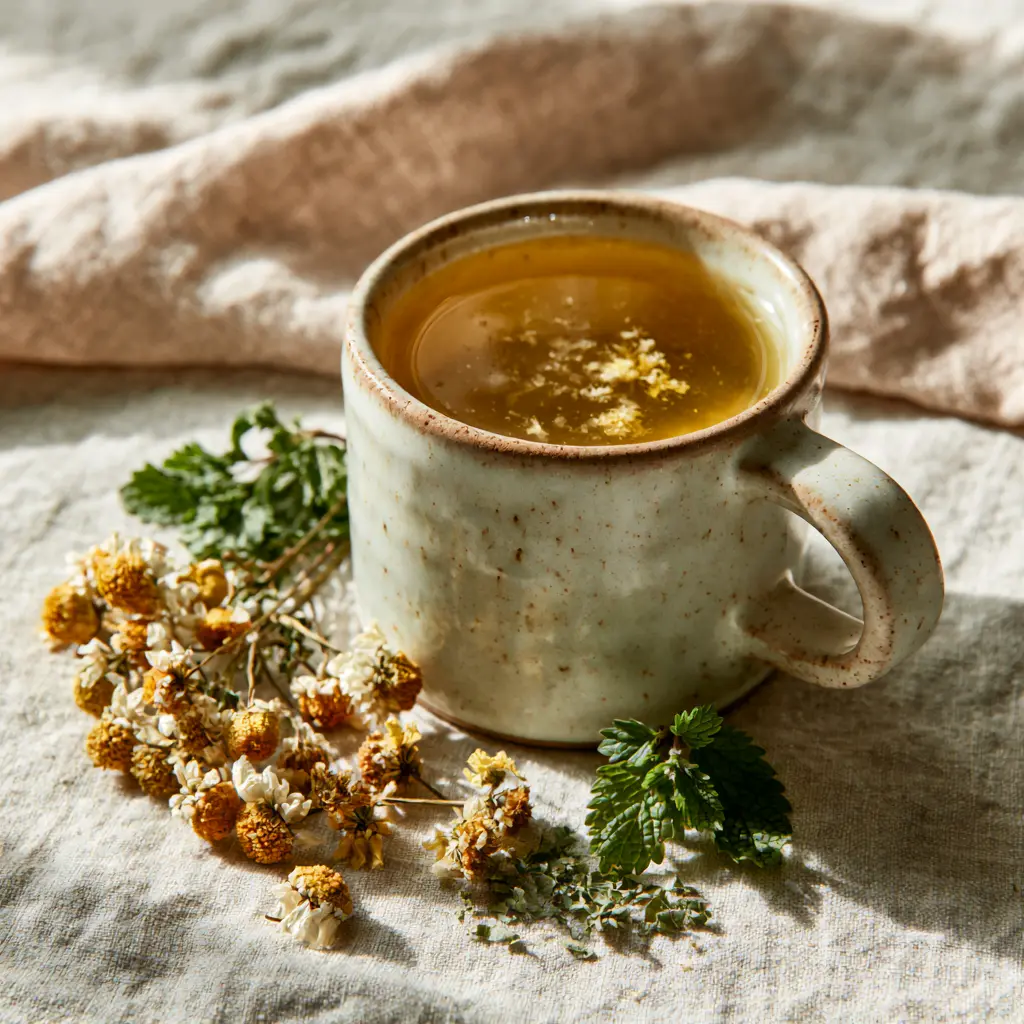
Herbs used: Lemon balm, chamomile
- Steep 1 teaspoon each of dried lemon balm and chamomile flowers in a cup of hot (not boiling) water, covered, for 8–10 minutes.
- Strain and sip slowly in the hour before bed, ideally away from screens.
- Add a touch of honey if you like a little sweetness — and enjoy the quiet.
This is a great starting point if you’re brand new to herbs for anxiety — mild, pleasant-tasting, and easy to build into a nightly wind-down ritual.
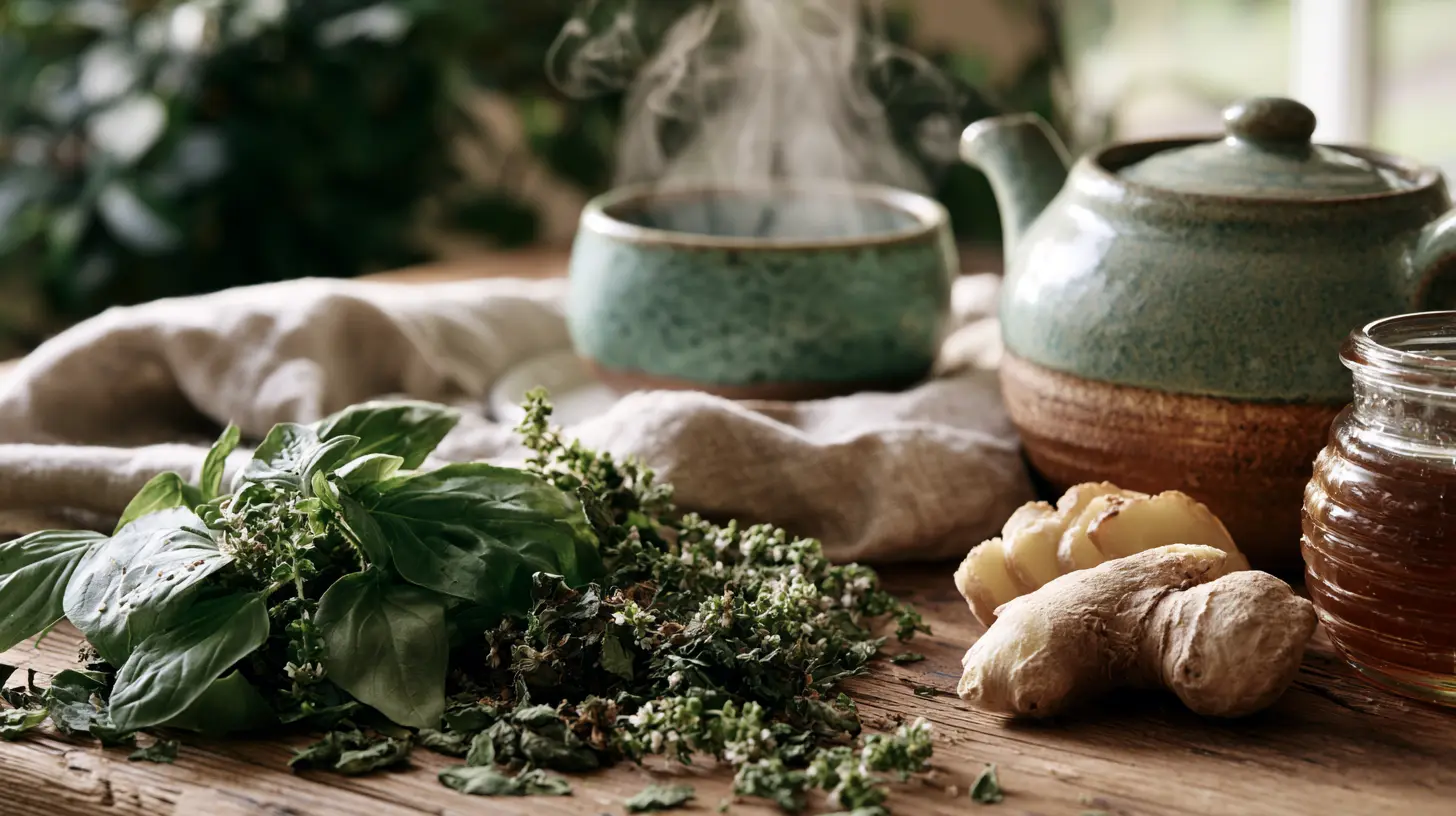
Explore Other Recipes
Herbal Products with Anxiety-Supportive Herbs
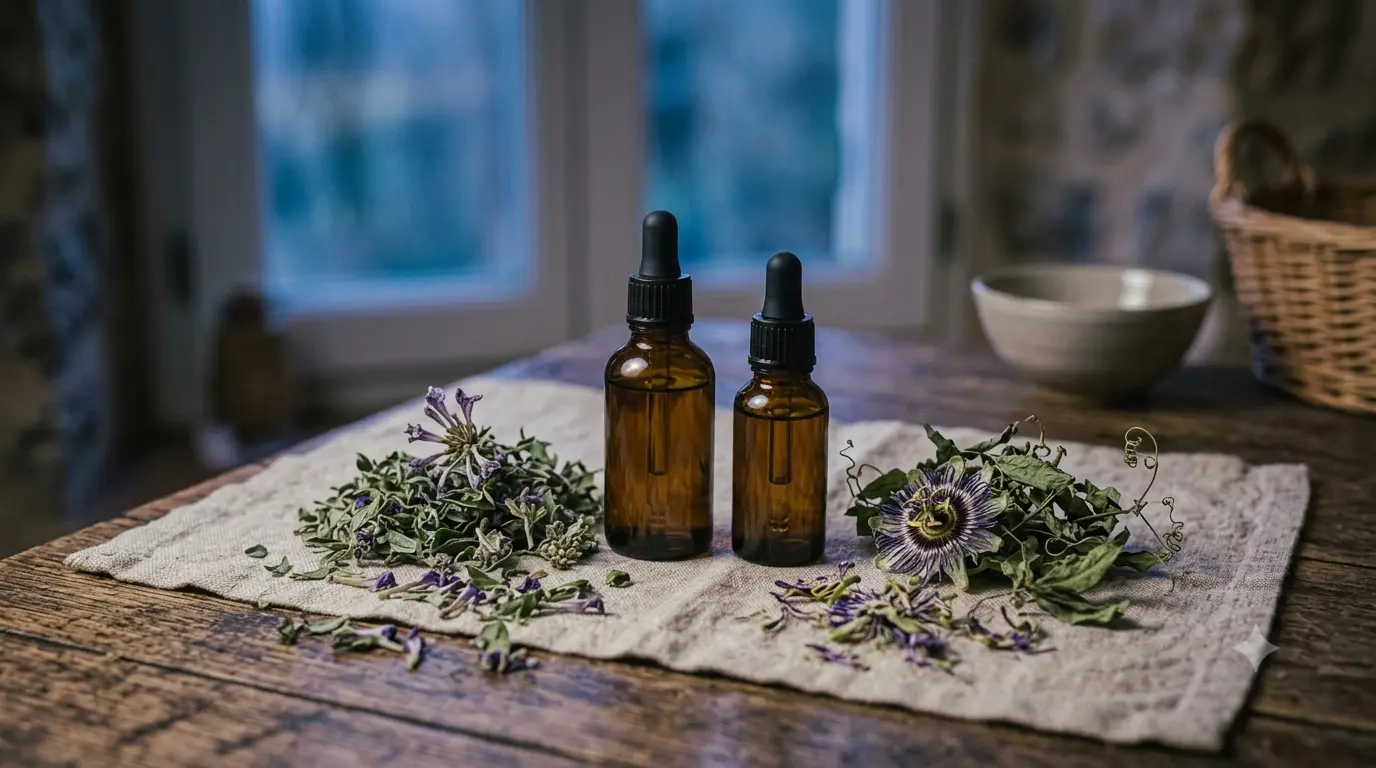
If steeping loose herbs isn’t your thing, there are plenty of ready-made options. Calming herbal teas blend several of these herbs into an easy nightly ritual [Product Link]. Tinctures offer a fast-absorbing, concentrated option for on-the-go moments of stress [Product Link]. Capsules are a convenient, no-prep way to take adaptogens like ashwagandha or rhodiola consistently [Product Link]. And herbal bath soaks featuring lavender or chamomile can turn a normal bath into a full sensory reset [Product Link].
Comparison of Herbs
| Herb | Best For | How to Use |
|---|---|---|
| Ashwagandha | Long-term stress resilience | Capsule, powder, or tincture, taken daily |
| Chamomile | Evening relaxation | Tea, steeped 8–10 minutes |
| Lemon Balm | Mood lift, mental clutter | Tea or tincture |
| Passionflower | Racing thoughts at bedtime | Tea or tincture, taken in the evening |
| Lavender | General tension relief | Tea, essential oil (diffused), or bath soak |
| Holy Basil (Tulsi) | Daily stress resilience | Tea or capsule, taken consistently |
| Valerian Root | Sleep-disrupting anxiety | Tincture or capsule, taken before bed |
| Skullcap | Nervous tension | Tea or tincture |
| Rhodiola | Mental fatigue from chronic stress | Capsule, taken in the morning |
| Motherwort | Acute anxious or overwhelmed moments | Tincture, taken as needed |
Learn More About Anxiety
What Anxiety Is
Anxiety is your body’s natural alarm system — a surge of alertness meant to help you respond to a perceived threat. It becomes a challenge when that alarm goes off too often, too intensely, or without a clear trigger, making everyday life feel harder to navigate. This is different from a single stressful moment (situational stress that fades once the trigger passes) and from panic attacks (a sudden, intense spike of fear with strong physical symptoms) — anxiety tends to be more of a persistent undercurrent of worry or unease.
How It Shows Up
- Physical: racing heart, tight chest, shallow breathing, muscle tension, upset stomach, fatigue
- Mental: racing thoughts, difficulty concentrating, catastrophizing, constant “what if” thinking
- Behavioral: restlessness, avoidance of certain situations, trouble sleeping, irritability, seeking frequent reassurance
Why It Happens
Anxiety is closely tied to the body’s stress-response system. When the brain perceives a threat, it signals the release of stress hormones like cortisol and adrenaline, priming the body for fight-or-flight. In modern life, this system can get triggered by non-physical stressors — deadlines, conflict, uncertainty — and stay activated longer than it should. Emerging research also points to the gut-brain axis, where gut health and the nervous system communicate directly, playing a role in how anxious the body and mind feel day to day.
Q&A
Q: How long does it take for calming herbs to work? A: It varies by herb and person. Nervines like chamomile or lemon balm can offer a gentle calming effect within an hour, while adaptogens like ashwagandha or rhodiola often need consistent daily use over several weeks to show their full benefit.
Q: Can I combine multiple calming herbs? A: Many people do combine herbs like chamomile and lemon balm, or ashwagandha and holy basil, but it’s best to introduce one new herb at a time so you can notice how your body responds, and to check with a healthcare provider if you’re combining several.
Q: Are these herbs safe to take every day? A: Some, like chamomile tea, are generally well tolerated daily. Others, like valerian, are typically recommended for shorter-term or as-needed use. Always check product labels and consult a healthcare provider for guidance tailored to you.
Q: Can I take these herbs alongside anxiety medication? A: Some herbs, especially valerian, kava, and St. John’s Wort, can interact with anxiety or antidepressant medications. Always talk to your doctor or pharmacist before combining herbs with prescription medication.
Q: What time of day should I take these herbs? A: Calming nervines like chamomile, lemon balm, and passionflower are often taken in the evening, while adaptogens like ashwagandha, rhodiola, and holy basil are commonly taken earlier in the day for sustained daily support.
Q: Are herbs safe during pregnancy or breastfeeding? A: Many calming herbs are not well studied or are not recommended during pregnancy or breastfeeding. Always consult your healthcare provider before using any herbal remedy during this time.
References
- National Center for Complementary and Integrative Health (NCCIH) – Herbs at a Glance
- American Botanical Council
- Cleveland Clinic – Herbal Remedies for Anxiety
- University of Michigan Health – Complementary and Alternative Medicine
- PubMed – National Library of Medicine
- American Herbalists Guild
Safety Tips
- Start with one herb at a time to see how your body responds before combining.
- Check for interactions if you take prescription medications, especially for anxiety, depression, or sleep.
- Choose reputable, third-party-tested brands to ensure purity and accurate dosing.
- Avoid certain herbs during pregnancy, breastfeeding, or if you have specific health conditions — check with a provider first.
- If anxiety is significantly affecting your daily life, work, relationships, or sleep, please speak with a healthcare provider or mental health professional.
Disclaimer
This post is for educational and informational purposes only and is not intended as medical advice. It should not be used to diagnose, treat, cure, or prevent any condition. Always consult a qualified healthcare provider before starting any new herbal or supplement regimen, especially if you are pregnant, nursing, taking medication, or managing a health condition.