

Thyme, marshmallow root, and sage bring together three very different herbal qualities: aromatic thyme, soothing marshmallow root, and astringent sage. That makes the combination particularly well suited to traditional throat and respiratory preparations.
The key is preparation. Thyme and sage favor a covered warm infusion, while marshmallow root’s soothing mucilage benefits from gentler water extraction.
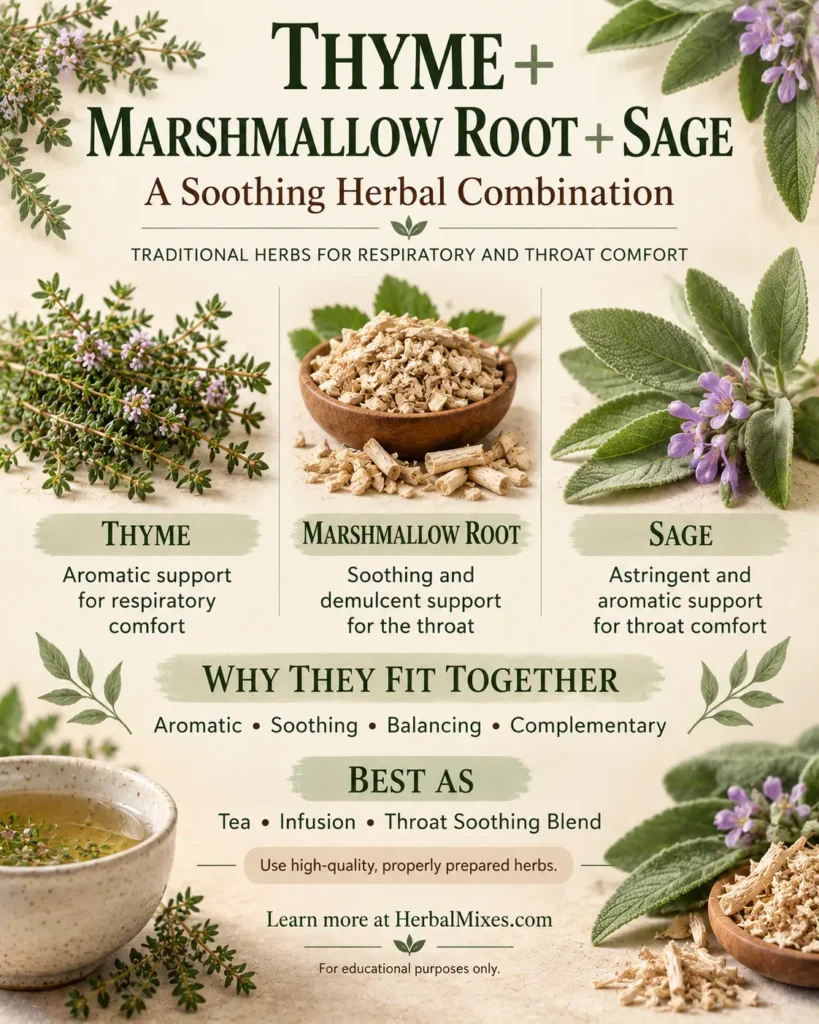
Why These Herbs Work Well Together
The value of this blend comes from contrast. Thyme and sage are aromatic herbs, while marshmallow root is a mucilage-rich demulcent.
| Herb | Role in the Combination |
| Thyme | Provides the aromatic respiratory component and gives the blend its fresh, herbaceous character. |
| Marshmallow Root | Provides soothing mucilage that complements the stronger, more drying aromatic herbs. |
| Sage | Adds aromatic and astringent qualities traditionally used for mouth and throat comfort. |
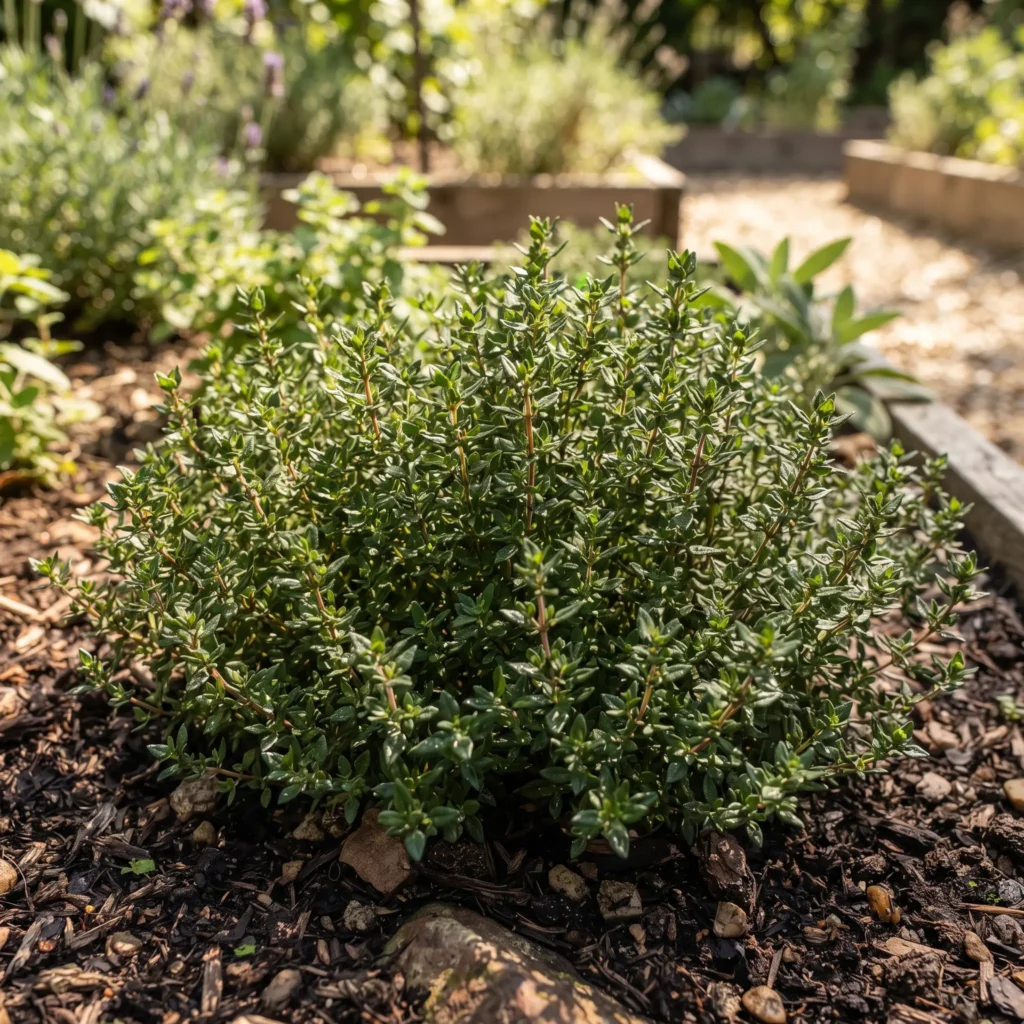
Thyme — The Aromatic Respiratory Herb
Thyme (Thymus vulgaris) is strongly aromatic and has a long history in respiratory herbal preparations. Its volatile oil contains compounds such as thymol and carvacrol.
The European Medicines Agency recognizes thyme’s traditional use for productive coughs associated with colds, while also noting that this conclusion is based primarily on long-standing traditional use rather than strong clinical evidence.
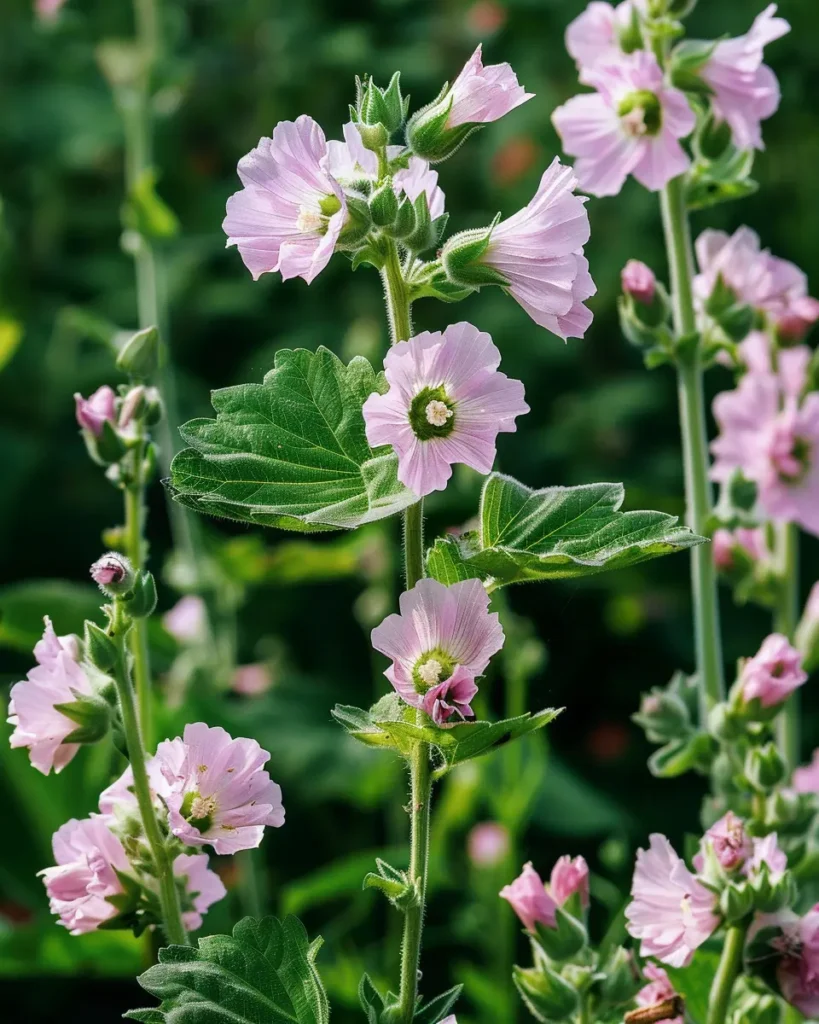
Marshmallow Root — The Soothing Component
Marshmallow root (Althaea officinalis) contributes the opposite quality. Instead of being strongly aromatic, the root is rich in mucilage polysaccharides that become slippery when extracted in water.
EMA recognizes marshmallow root’s traditional use for irritation of the mouth or throat and associated dry cough. This makes it especially useful in a blend where dryness, scratchiness, or irritation is part of the picture.
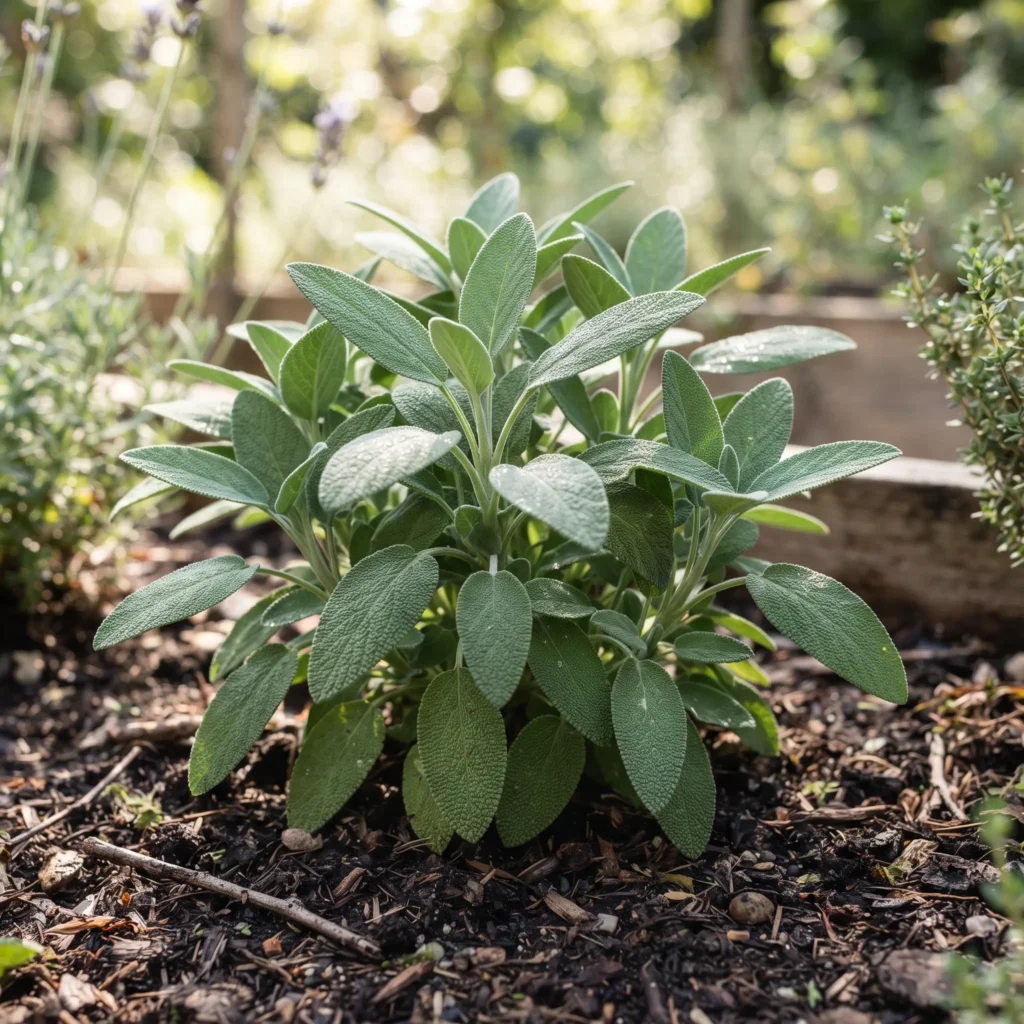
Sage — The Throat-Focused Aromatic
Sage (Salvia officinalis) contributes tannins, rosmarinic acid, and aromatic volatile compounds.
It has a long tradition of use in teas and gargles for the mouth and throat. EMA lists sage leaf as a traditional herbal medicinal product for relief of inflammation in the mouth or throat.
Why the Combination Makes Sense
This combination brings together two different strategies.
Thyme + sage provide the aromatic side of the formula.
Marshmallow root provides the moistening, demulcent side.
That contrast matters. Strong aromatic herbs can feel relatively drying, while marshmallow provides a softer, more coating character. The resulting blend can therefore be more balanced than a tea made entirely from strong aromatic herbs.
There is also a useful division of traditional roles: thyme is associated more strongly with chesty/productive cough preparations, while marshmallow is traditionally used when the throat feels dry or irritated. Sage adds a mouth-and-throat-focused astringent component.
However, these traditional uses do not establish that the exact three-herb combination has a clinically proven synergistic effect. It is better understood as a complementary herbal formulation.
Best Way to Prepare the Combination
Best overall preparation: Two-stage water extraction
This is one of those combinations where putting everything into boiling water for the same amount of time is not necessarily the best approach.
Marshmallow root’s mucilage extracts readily into water and is often prepared using a cool or room-temperature maceration. Thyme and sage, on the other hand, contain volatile aromatic compounds that work well in a short, covered hot infusion.
A practical solution is to prepare them separately and combine the liquids.
Simple Herbal Combination
A practical starting blend is:
- 2 parts marshmallow root
- 1 part thyme
- ½–1 part sage
For example:
2 teaspoons marshmallow root
1 teaspoon dried thyme
½–1 teaspoon dried sage
This is a practical formulation starting point, not a clinically established therapeutic ratio.
Use less sage if you want a softer-tasting blend. Sage can quickly dominate both the aroma and flavor.
Make It Yourself
What You’ll Need
- 2 teaspoons cut marshmallow root
- 1 teaspoon dried thyme
- ½ teaspoon dried sage
- 2 cups water
- Honey, optional
Basic Method
- Place the marshmallow root in about 1 cup of cool or room-temperature water.
- Let it steep for several hours, then strain.
- Place thyme and sage in a separate cup and add about 1 cup of just-boiled water.
- Cover and steep for approximately 5–10 minutes, then strain.
- Combine the two preparations and drink warm or at room temperature.
- Add a little honey if desired.
This method preserves the aromatic character of thyme and sage while giving marshmallow root time to release its characteristic slippery mucilage.
Preparation Notes
Keep Thyme and Sage Covered
Both thyme and sage contain volatile aromatic compounds.
Cover the cup while they steep so less aroma escapes with the steam. A short covered infusion makes more sense than prolonged boiling.
Give Marshmallow Root Time
Marshmallow root behaves differently.
When soaked in cool water, it develops a noticeably slippery texture. That texture comes largely from its mucilage and is part of the reason marshmallow has traditionally been used for dry, irritated tissues.
Don’t Boil Everything for 20 Minutes
A long decoction may be appropriate for many hard roots and barks, but this particular formula contains two aromatic leafy herbs.
Prolonged uncovered boiling can drive off some of the volatile compounds that give thyme and sage their aroma.
A Simpler Version Is Still Possible
If you don’t want to make two separate preparations, you can make a gentler warm tea using all three herbs together.
The two-stage method is preferable when you specifically want to emphasize both marshmallow’s mucilage and the aromatic qualities of thyme and sage.
What to Avoid
- Boiling thyme and sage uncovered for a long time
- Using sage essential oil in homemade tea
- Using thyme essential oil as a substitute for thyme herb
- Assuming a stronger or more concentrated blend is automatically better
- Using large amounts of sage for prolonged periods without a specific reason
- Claiming the combination treats respiratory infections or replaces medical care
Safety
Thyme is generally well tolerated in ordinary food and tea amounts, but people allergic to thyme or other mint-family plants should avoid it. EMA notes that stomach problems can occur with thyme preparations.
Marshmallow root is generally considered gentle, but its mucilage may theoretically affect the absorption of medicines taken at the same time. As a precaution, separate marshmallow root preparations from oral medications unless your pharmacist or healthcare professional advises otherwise.
Sage requires somewhat more caution in concentrated medicinal preparations. Common sage contains thujone, and sage essential oil is much more concentrated than tea. Do not substitute sage essential oil for sage leaf in this preparation.
Pregnant or breastfeeding people, young children, people with seizure disorders, and anyone taking prescription medication should discuss concentrated medicinal use with an appropriate healthcare professional.
For children, do not simply scale down an adult recipe. Age recommendations differ among herbal preparations and products.
When to Seek Medical Care
Herbal tea may provide comfort, but a persistent or worsening cough or sore throat can have many causes.
Seek medical care for difficulty breathing, chest pain, coughing up blood, severe trouble swallowing, dehydration, confusion, blue or gray lips, or other severe symptoms.
Medical evaluation is also appropriate when a cough or throat problem is persistent, repeatedly returns, becomes substantially worse, or is accompanied by a significant or persistent fever.
Frequently Asked Questions
Can thyme, marshmallow root, and sage be used together?
They can be combined in ordinary herbal preparations when each herb is appropriate for the person using it. Their roles are complementary, but the exact three-herb combination has not been established as a clinically proven synergy.
What is the best way to prepare them?
A two-stage preparation is especially useful: cool-macerate marshmallow root and prepare thyme and sage as a short covered hot infusion, then combine them.
Why not simply boil all three herbs together?
You can prepare a simple tea that way, but it is not ideal for emphasizing their different constituents. Marshmallow’s mucilage benefits from prolonged water contact, while thyme and sage contain volatile compounds that are better preserved by a short covered infusion.
Can I make this combination as a cold infusion?
Marshmallow root is well suited to cool maceration, but a completely cold preparation does not capture the aromatic character of thyme and sage as effectively as a hot covered infusion.
Can I add honey?
Yes, if honey is appropriate for you. Add it after the tea has cooled somewhat. Never give honey to an infant younger than 12 months.
Is this combination better for a dry or chesty cough?
The formula contains herbs traditionally associated with both patterns: marshmallow root is particularly associated with dry throat irritation and dry cough, while thyme has traditional use for productive cough associated with colds.
That does not mean the blend can diagnose or treat the cause of a cough.
Can I use thyme or sage essential oil instead?
No. Essential oils are highly concentrated and are not equivalent to dried thyme or sage used for tea. Do not add thyme or sage essential oil to this homemade tea.
References & Evidence
European Medicines Agency (EMA)
Thymi herba — Thyme
EMA’s HMPC recognizes thyme preparations for traditional use in productive cough associated with colds, while noting that the conclusion rests primarily on long-standing use.
European Medicines Agency (EMA)
Althaeae radix — Marshmallow Root
EMA recognizes traditional use of marshmallow root preparations for mouth or throat irritation and associated dry cough.
European Medicines Agency (EMA)
Salviae officinalis folium — Sage Leaf
EMA’s herbal monograph includes traditional use of sage leaf for relief of inflammation in the mouth or throat.
Büechi S, Vögelin R, von Eiff MM, Ramos M, Melzer J.
Open trial to assess aspects of safety and efficacy of a combined herbal cough syrup with ivy and thyme
This open trial evaluated a multi-herb cough syrup containing ivy as the main active ingredient together with thyme, aniseed, and marshmallow-root mucilage. It does not establish the effectiveness of the thyme + marshmallow root + sage combination described in this article.
Disclaimer
For educational purposes only. This information is not intended to diagnose, treat, cure, or prevent disease. Herbal products may cause side effects or interact with medications. Consult an appropriate healthcare professional if you have a medical condition, take medication, are pregnant or breastfeeding, or have persistent or concerning symptoms.