

Elderberry, ginger, and rose hip make a naturally tart, fruity, and warming combination for seasonal herbal preparations. Elderberry provides the dark berry base, ginger adds warmth and spice, while rose hips contribute tart flavor and naturally occurring plant nutrients.
The combination works particularly well as a syrup or warm decoction, where the three ingredients can be prepared together without requiring a complicated extraction method.
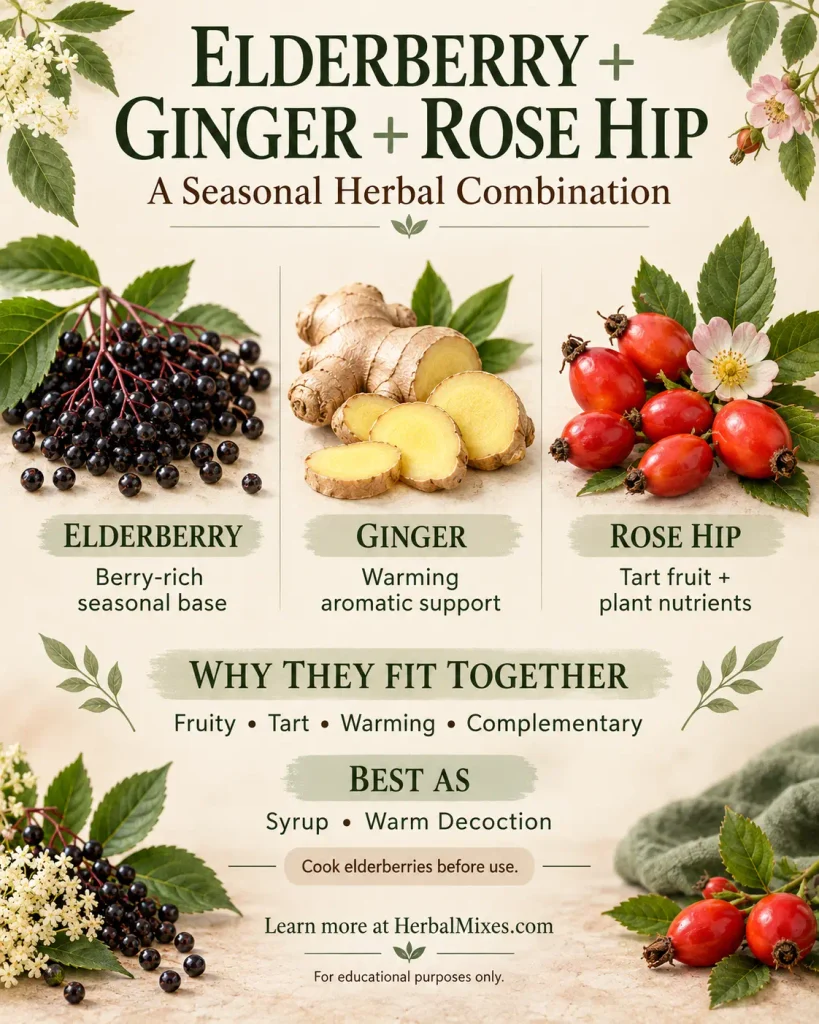
Why Elderberry, Ginger & Rose Hip Work Well Together
These three herbs contribute different qualities rather than simply duplicating one another.
| Herb | Role in the Combination |
| Elderberry | Provides the dark, fruit-rich base traditionally associated with seasonal herbal preparations. |
| Ginger | Adds warming spice and digestive character while balancing the sweetness and tartness of the fruits. |
| Rose Hip | Adds bright tartness along with naturally occurring vitamin C, carotenoids and polyphenols. |
Elderberry — The Berry Base
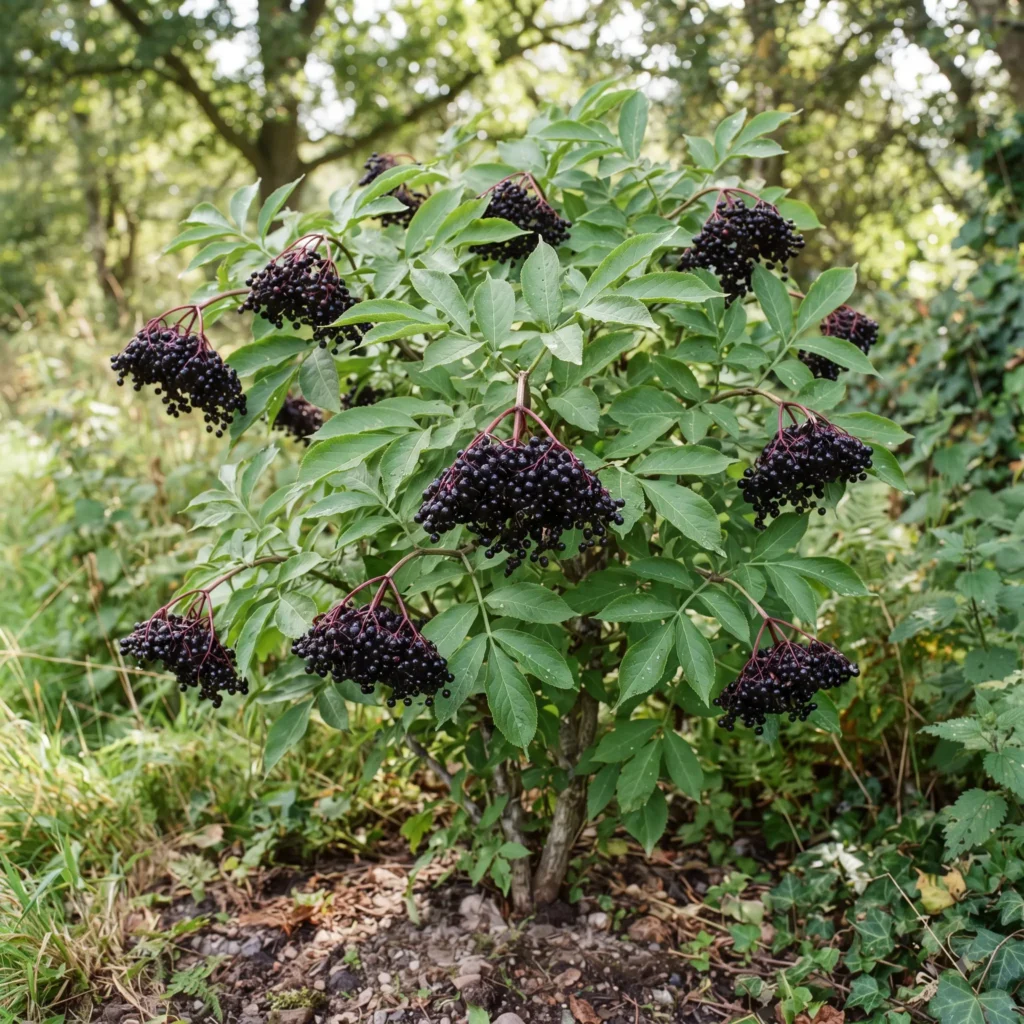
European black elderberry (Sambucus nigra) has a long history of use in seasonal preparations. Its dark fruit contains anthocyanins and other polyphenols that give properly prepared elderberry syrup and decoctions their characteristic deep purple color.
Some preliminary research has investigated elderberry for symptoms of colds and other upper respiratory infections, but high-quality evidence remains limited. It should therefore be viewed as a traditional seasonal herb rather than a proven treatment for respiratory illness.
Ginger — The Warming Component
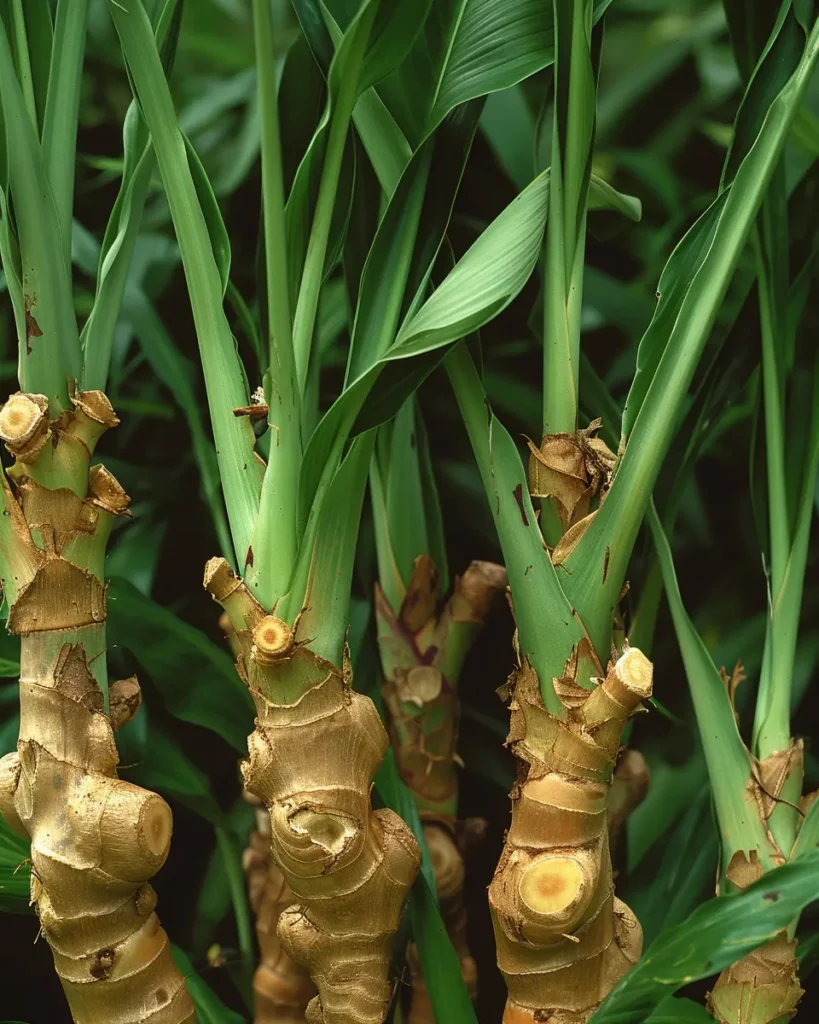
Ginger (Zingiber officinale) contributes something very different: a pungent, warming rhizome rich in gingerols and related compounds.
In this combination, its most practical role is warming and aromatic. It cuts through the heavy sweetness that berry syrups can develop and gives a hot elderberry-and-rose-hip drink a brighter, spicier finish.
Ginger also has a much broader clinical research base than many culinary herbs, particularly for certain forms of nausea, although those findings do not establish that this three-herb combination has a specific clinical effect.
Rose Hip — The Tart Fruit Complement
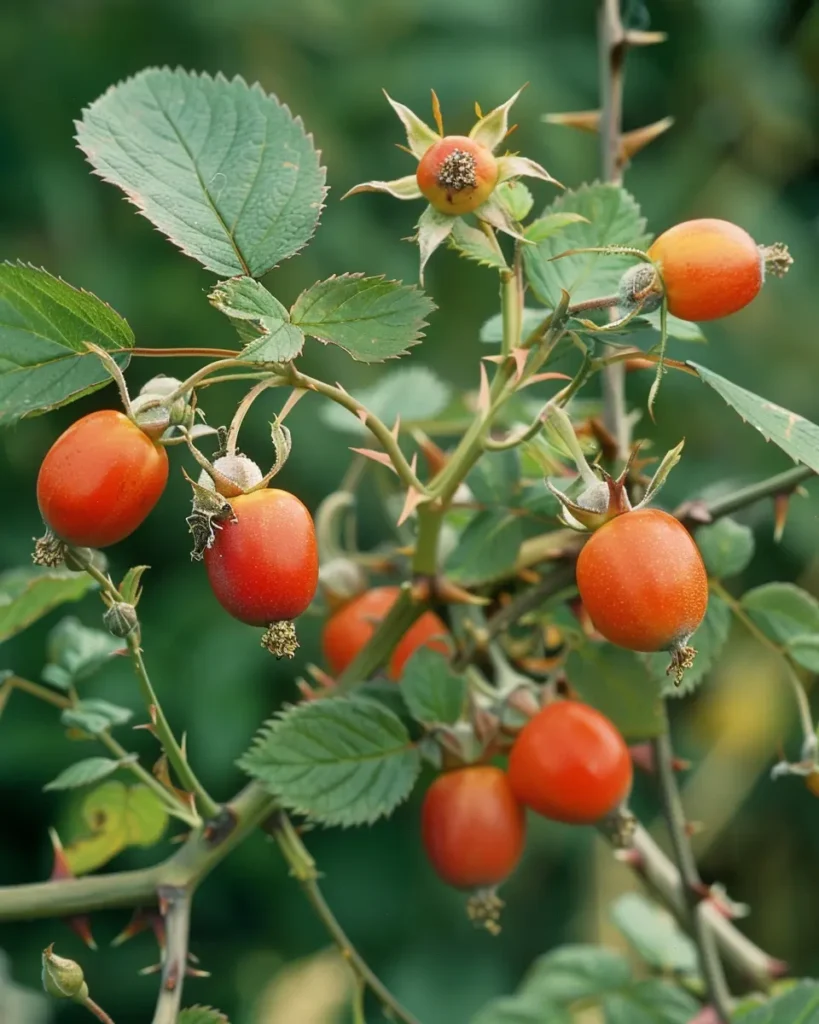
Rose hips—commonly from Rosa canina and related Rosa species—bring acidity and a distinctly tart fruit character.
They contain vitamin C as well as carotenoids, flavonoids and other polyphenols. The exact nutrient composition varies substantially by species, growing conditions, processing and preparation, so rose hip should not be treated as a standardized vitamin C supplement.
Why the Combination Makes Sense
The logic of this blend is mainly complementary formulation, not proof of a special clinical interaction.
Elderberry and rose hip provide two different fruit profiles, while ginger introduces a warming aromatic rhizome. This creates a more balanced preparation than simply combining several similar berries.
There is also good practical compatibility: all three can be prepared in water using gentle simmering, making the combination particularly suitable for a decoction or syrup.
Research exists on the individual ingredients, but the exact elderberry + ginger + rose hip combination has not been well established in clinical trials. It is better understood as a traditional-style seasonal formulation than as a scientifically proven three-herb synergy.
Best Way to Prepare the Combination
Best overall preparation: Syrup
A syrup suits this combination particularly well because elderberries and rose hips tolerate simmering, while fresh or dried ginger can be decocted alongside them.
Simmering extracts the fruits and ginger into a concentrated water preparation. After straining and allowing the liquid to cool, honey or another sweetener can be added if desired.
For a lighter preparation, the same herbs can be used as a warm decoction without turning it into syrup.
Simple Herbal Combination
A practical starting blend is:
- 2 parts elderberry
- 1 part rose hip
- ½ part ginger
For example:
2 tablespoons dried elderberries
1 tablespoon dried rose hips
½ tablespoon sliced or chopped dried ginger
This is a practical formulation starting point—not a clinically established therapeutic ratio.
Increase ginger slightly for a warmer, spicier blend or reduce it when you want the berry flavor to dominate.
Make It Yourself
What You’ll Need
- 2 tablespoons dried elderberries
- 1 tablespoon dried rose hips
- ½ tablespoon dried ginger
- 2 cups water
- Honey, optional
Basic Method
- Add elderberries, rose hips, ginger, and water to a small saucepan.
- Bring to a gentle boil, then reduce to a low simmer.
- Simmer for about 20–30 minutes.
- Strain thoroughly and discard the plant material.
- Drink as a warm decoction, or cool slightly and sweeten to taste.
- For a true preserved syrup, follow a tested syrup recipe with appropriate proportions and storage instructions.
For a more complete syrup preparation:
[See the Complete Elderberry + Ginger + Rose Hip Syrup Recipe → VERIFY URL]
Preparation Notes
Crush or chop rose hips before simmering when they are sold whole. This exposes more surface area to the water.
Slice or grate ginger according to how strong you want the warming flavor. Fresh ginger generally produces a brighter, juicier character; dried ginger can taste more concentrated and warming.
Cook the elderberries. Raw or unripe elderberries and other parts of the elder plant contain cyanide-producing substances that can cause gastrointestinal illness. Proper cooking eliminates this toxin.
Add honey after the preparation has cooled somewhat rather than boiling it unnecessarily.
What to Avoid
- Using raw or unripe elderberries
- Including elder leaves or stems in the preparation
- Assuming more ginger automatically makes a better blend
- Treating rose hip as a standardized vitamin C supplement
- Assuming the three-herb combination has been clinically proven
- Claiming the blend prevents or treats colds or influenza
Safety
Proper elderberry preparation matters. Raw or unripe elderberries and elder leaves and stems contain cyanide-producing substances that can cause nausea, vomiting and severe diarrhea. Cooking eliminates this toxin.
Ginger is generally well tolerated but can cause abdominal discomfort, heartburn, diarrhea, or mouth and throat irritation in some people.
Little is known about elderberry’s safety for medicinal use during pregnancy or breastfeeding. Ginger has been studied during pregnancy, particularly for nausea, but anyone considering concentrated herbal preparations during pregnancy should discuss them with an appropriate healthcare professional.
If you take medications, check with your healthcare professional before using concentrated herbal preparations because herbs and medicines can interact.
Honey-containing versions should not be given to infants younger than 12 months.
When to Seek Medical Care
This combination is a seasonal herbal preparation, not a substitute for diagnosis or medical treatment.
Seek medical care for symptoms such as difficulty breathing, chest pain, confusion, dehydration, severe or persistent fever, symptoms that are worsening rather than improving, or other concerning symptoms.
Suspected influenza deserves particular attention in people at higher risk for complications because prescription antiviral treatment works best when started early.
Frequently Asked Questions
Can elderberry, ginger, and rose hip be used together?
They can be combined in ordinary tea, decoction, and syrup-style preparations when each ingredient is appropriate for the person using it. Their use together is based mainly on practical and traditional formulation rather than strong clinical research on the exact three-herb combination.
What is the best way to prepare them?
A decoction or syrup is especially practical because elderberry fruit, rose hips, and ginger can all tolerate gentle simmering.
What ratio should I use?
A simple starting point is 2 parts elderberry, 1 part rose hip, and ½ part ginger. This is a practical culinary/herbal ratio rather than a clinically established dose.
Can I make elderberry, ginger, and rose hip tea?
Yes. Simmer the ingredients as a decoction and drink the strained liquid without adding enough sweetener to turn it into syrup.
Can I use fresh ginger?
Yes. Fresh ginger works well and produces a bright, warming flavor. Start with a modest amount because its pungency can easily dominate the fruits.
Is this combination high in vitamin C?
Rose hips can contain substantial vitamin C, but the amount varies with species, storage and processing. A homemade herbal preparation should not be treated as delivering a standardized vitamin C dose.
Does this combination prevent colds or flu?
There isn’t good evidence showing that this exact combination prevents colds or influenza. Elderberry has some preliminary research for respiratory symptoms, but NCCIH notes that the evidence is not conclusive, and no complementary approach has been shown to prevent influenza.
References & Evidence
National Center for Complementary and Integrative Health (NCCIH)
Elderberry: Usefulness and Safety
National Center for Complementary and Integrative Health (NCCIH)
Ginger: Usefulness and Safety
National Center for Complementary and Integrative Health (NCCIH)
Colds, Flu, and Complementary Health Approaches: Usefulness and Safety
Mármol I, Sánchez-de-Diego C, Jiménez-Moreno N, Ancín-Azpilicueta C, Rodríguez-Yoldi MJ.
Phytochemistry, Traditional Uses and Pharmacological Profile of Rose Hip: A Review
Christensen R, et al.
Rosa canina — Rose hip pharmacological ingredients and molecular mechanics: A systematic review
Disclaimer
For educational purposes only. This information is not intended to diagnose, treat, cure, or prevent disease. Herbal products may cause side effects or interact with medications. Consult an appropriate healthcare professional if you have a medical condition, take medication, are pregnant or breastfeeding, or have persistent or concerning symptoms.