

Percolation is a faster, more thorough alcohol extraction method where solvent is slowly dripped through tightly packed, moistened herb — similar to how a coffee percolator works. It’s commonly used in professional herbal production settings to create highly concentrated extracts more efficiently than standard maceration.
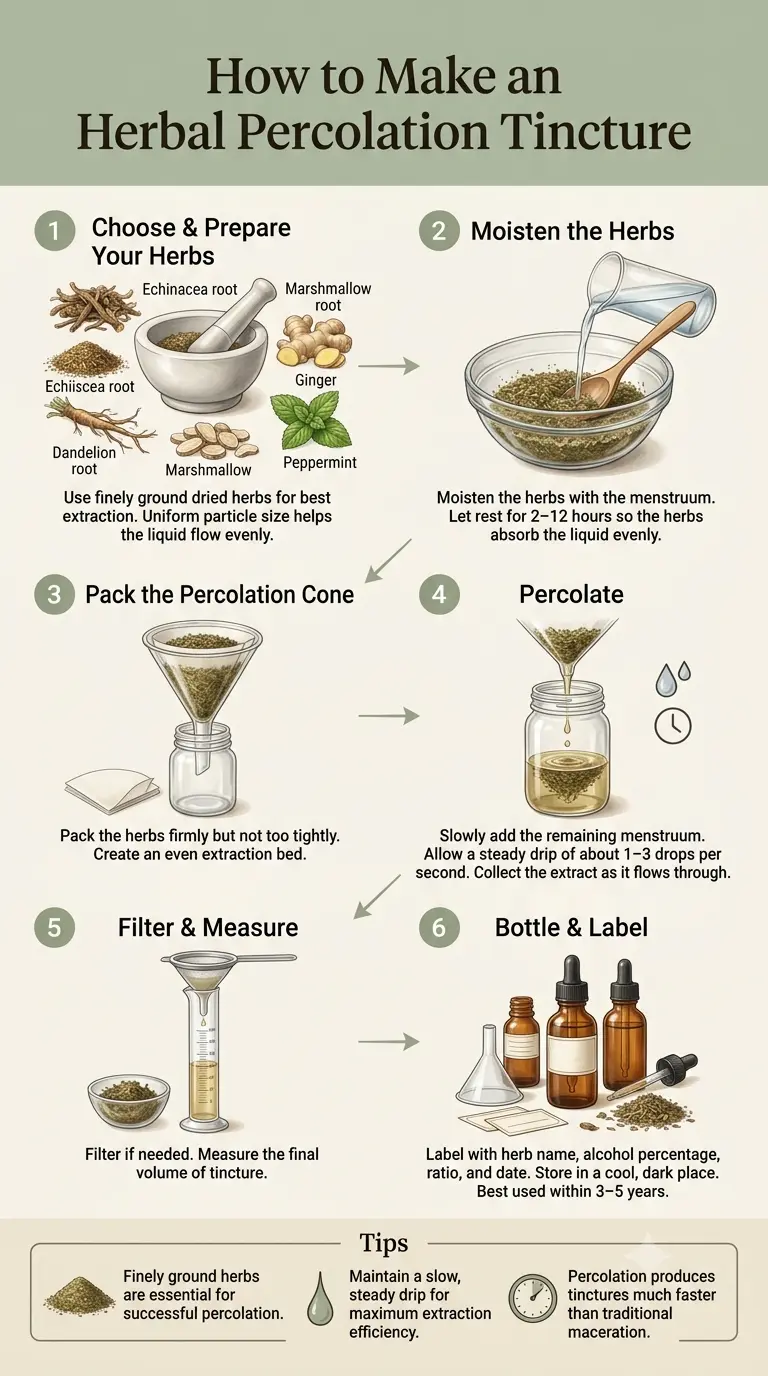
- Grind your herb into a fine powder for maximum surface area.
- Moisten the powdered herb with a small amount of alcohol and let it sit in a covered container for several hours (or overnight) to swell.
- Pack the moistened herb firmly into a percolation cone or funnel lined with a filter, avoiding air pockets.
- Slowly drip additional alcohol through the top of the packed herb, allowing it to percolate through and collect in a container below over several hours.
- Combine, bottle, and label the finished extract.
Secret Tips
- Even packing is the make-or-break step — pack too tightly and the solvent won’t flow through evenly; pack too loosely and the alcohol will channel through gaps without fully contacting all the herb.
- Pre-moistening (sometimes called “maceration before percolation”) and letting the herb swell for several hours before packing significantly improves the evenness of the final extraction.
- Percolation works best with finely powdered herb — coarser material reduces the surface area and slows the process without improving results.
- This method requires more specialized equipment and precision than standard tincturing, so it’s generally best attempted once you’re already comfortable with basic maceration technique.
Herb Examples Best Suited to Percolation
Goldenseal Root — a potent root often percolated in professional settings for a concentrated extract.
Valerian Root — benefits from percolation’s more thorough, efficient extraction.
Cayenne Pepper — sometimes percolated to create a highly concentrated capsaicin extract.
Black Walnut Hull — a traditional percolation candidate for a strong, concentrated tincture.
Q&A
Q: Is percolation better than standard tincture maceration? A: Percolation generally produces a faster, more thorough, and more concentrated extraction, but it requires more specialized equipment and technique than simple maceration.
Q: What equipment do I need for percolation? A: A percolation cone or funnel, a filter (like cotton or filter paper), and a collection container are the basic essentials.
Q: How long does percolation take? A: The dripping process itself typically takes several hours, though the pre-moistening step adds additional time beforehand.
Q: Can beginners try percolation? A: It’s possible, but percolation has a steeper learning curve than basic tincturing, so many herbalists recommend starting with standard maceration first.
Q: How long does a percolated tincture last? A: Similar to standard tinctures, properly made and stored percolated extracts can last 3–5+ years.
Safety Tips
- Use only food-grade, high-proof alcohol.
- Work in a well-ventilated area, as percolation involves handling larger volumes of alcohol over an extended process.
- Consult a healthcare provider before using percolated extracts medicinally, especially given their typically higher concentration.
Disclaimer
This content is for educational purposes only and is not a substitute for professional medical advice, diagnosis, or treatment.