


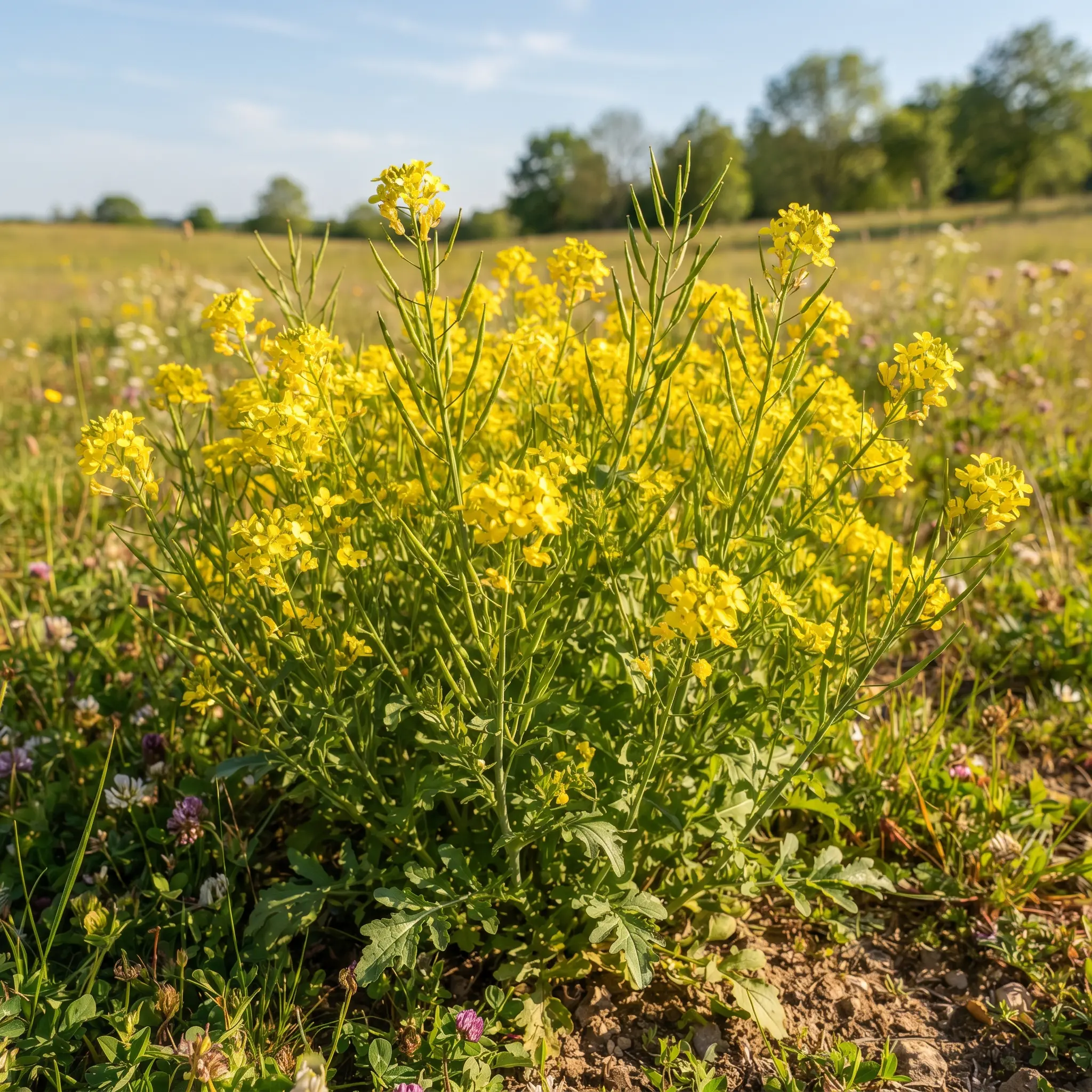
Traditionally, mustard seed has been used primarily as a warming, circulation-stimulating remedy, especially when chest congestion, joint aches, or sluggish digestion need a boost. It is commonly prepared as a topical plaster or paste, a footbath, a warming poultice, or taken in small culinary amounts to stimulate appetite.
Common Name: Mustard Seed Latin Name: Brassica nigra (black mustard); Sinapis alba (white mustard) Alternate Names: Black mustard, white mustard
- Parts used: seeds
- Primary properties: rubefacient, stimulant, diaphoretic
- Common preparations: plaster/poultice, footbath, powder, small culinary amounts
- Best known for: warming the body and easing chest congestion topically
What It Helps With
Health conditions this herb is commonly used to support.
Related Buying Guides
Featured Recipes
Explore and try simple ways to prepare and use this herb at home.
Active Compounds
The tiny plant chemistry doing all the heavy lifting.
Key Herbal Properties
What this herb is known for, herbally speaking.




Herbal Synergies
Other herbs that pair especially well with this one — together, their combined properties work better than either herb does alone.
Health Conditions Mustard Seed Helps With
- Chest congestion and coughs — Mustard plasters have one of the longest folk histories of any home remedy, traditionally applied to the chest to help loosen and shift congestion.
- Joint and muscle aches — As a warming rubefacient, mustard seed paste has traditionally been used topically to ease stiff joints, sore muscles, and rheumatic discomfort.
- Poor circulation and cold extremities — Mustard footbaths have a traditional reputation for stimulating circulation and warming cold hands and feet.
- Sluggish digestion and low appetite — A small amount of mustard seed has traditionally been used before meals to stimulate digestive secretions and appetite.
- Sinus congestion — The pungent compounds in mustard seed have traditionally been used to help shift and clear sinus congestion.
- Mild water retention — Mustard seed has a traditional history of use as a gentle diuretic to support fluid balance.
Compounds
- Glucosinolates (including sinigrin) — The signature compounds in mustard seed, converted into pungent isothiocyanates that underlie its traditional warming, stimulating action.
- Allyl isothiocyanate — Formed when mustard seed is crushed and mixed with water, responsible for its characteristic heat and its traditional rubefacient (skin-warming) effect.
- Fixed oils — Contribute to mustard seed’s texture in plasters and pastes and support its traditional topical use.
- Mucilage — Present in the seed coat, contributing a mild soothing quality that balances the seed’s intense pungency.
- Flavonoids — Contribute general antioxidant activity to the seed’s overall profile.
Properties
- Rubefacient — Mustard seed’s defining traditional property, referring to its ability to warm and redden the skin when applied topically, traditionally used to draw blood flow to an area.
- Stimulant — Traditionally used to stimulate digestion, circulation, and general bodily warmth.
- Diaphoretic — Its warming action has traditionally been used to encourage gentle sweating, particularly in footbath preparations.
- Diuretic (mild) — Traditional use includes gently supporting fluid balance and urinary output.
Recipes Using Mustard Seed
- Mustard plaster — Ground mustard seed mixed with flour and water into a paste, spread on cloth, and applied briefly to the chest or affected area for congestion or aches.
- Warming footbath — Mustard seed powder is added to warm water for a traditional footbath used to boost circulation and ease cold or congestion.
- Digestive appetizer — A small pinch of whole or ground mustard seed taken before a meal, traditionally used to stimulate appetite and digestion.
Products Featuring Mustard Seed
- Whole or ground seed — The most traditional and versatile form, used for plasters, footbaths, and small culinary amounts.
- Mustard seed powder — Convenient for quickly mixing into plasters or footbath preparations.
- Prepared mustard (condiment) — A diluted, food-safe form suitable for regular culinary use and mild digestive support.
Synergies
- Ginger — Frequently combined with mustard seed in warming footbaths and topical preparations for complementary circulatory support.
- Horseradish — Paired in traditional rubefacient remedies, both known for their warming, stimulating pungency.
- Eucalyptus — Combined in chest rub and plaster preparations for additional traditional respiratory support.
- Cayenne — Blended in warming topical formulas, pairing two traditionally circulation-stimulating ingredients.
Safety & Precautions
Mustard seed is generally safe in small culinary amounts, but its concentrated topical use requires real care, since it’s a strong skin irritant by design.
Mustard plasters and pastes should never be left on the skin for more than a short period, typically no more than 15 minutes, as prolonged contact can cause burns, blistering, or even permanent scarring; the plaster should be removed immediately at the first sign of burning. Topical mustard preparations should be avoided on broken or highly sensitive skin, and are generally not recommended for young children due to their skin’s increased sensitivity to irritation. People with circulatory conditions such as varicose veins or severe circulatory damage should avoid topical mustard applications. Internally, mustard seed should only be used in small culinary amounts, since concentrated internal use can act as a strong emetic and digestive irritant; black mustard in particular is not recommended for internal medicinal use beyond typical food amounts. Those with thyroid conditions should be aware that mustard seed, like other cruciferous plants, contains goitrogenic compounds that may affect thyroid function in very large or concentrated amounts. Anyone with a mustard or Brassica family allergy should avoid it entirely, as contact allergic reactions are well documented. There is no well-established safety data on mustard seed use in pets, so concentrated preparations should be kept away from animals.
Q&A
Does mustard seed taste bitter?
Mustard seed isn’t primarily bitter — its defining taste is a sharp, pungent heat that builds quickly, especially when the seed is crushed and mixed with water, which activates its characteristic spiciness.
Black mustard tends to be more intensely pungent and slightly bitter compared to the milder white mustard, which is part of why white mustard is generally preferred for internal, food-based use.
Can mustard seed be used daily?
In small culinary amounts, such as in prepared mustard or a pinch of seed before meals, mustard seed can be used regularly as part of a normal diet.
Concentrated preparations like plasters or medicinal-strength internal doses are not meant for daily use and are traditionally reserved for short, occasional applications due to their strong, irritating action.
How long should a mustard plaster stay on the skin?
A mustard plaster should generally be applied for no more than 15 minutes, and it’s important to remove it immediately if a burning sensation develops, since leaving it on too long can cause skin burns or blistering.
Checking the skin periodically during application and applying a soothing oil afterward, such as olive oil, are both traditional practices used to protect the skin and ease any residual redness.
What’s the difference between black mustard and white mustard?
Black mustard is more pungent and traditionally reserved for topical use like plasters, while white mustard is milder and more commonly used internally in small culinary amounts, such as in prepared mustard condiments.
Both share similar traditional warming, stimulating properties, but the choice between them typically depends on whether the preparation is meant for topical or internal use.
Is mustard seed safe to use on children?
Topical mustard preparations like plasters are generally not recommended for young children, since their skin is more sensitive and prone to burns or irritation from mustard’s strong warming compounds.
For culinary use, small amounts of prepared mustard are generally fine as part of a normal diet, but concentrated medicinal preparations should only be considered for children under the guidance of a qualified healthcare provider.
References
- Plants of the World Online: Brassica nigra
- PubMed: Scientific Literature on Brassica nigra and Sinapis alba
- National Library of Medicine: Chemical Constituents from Mustard Seed
- Wikipedia: Brassica nigra
- ScienceDirect Topics: Mustard Seed Research
- Memorial Sloan Kettering Cancer Center: About Herbs — Mustard
- PubMed: Mustard Seed Isothiocyanate Research
- National Center for Complementary and Integrative Health: Mustard
This information is for educational purposes only and is not intended as medical advice. Consult a qualified healthcare professional before using any herb, especially if pregnant, breastfeeding, taking medications, or managing a health condition.