

What Horehound Is Good For
Productive coughs — Horehound is traditionally used as an expectorant, helping loosen and bring up mucus during coughs associated with a cold. The European Medicines Agency recognizes this use based on long-standing traditional experience. (ema.europa.eu)
Chest congestion — Its bitter diterpenes and aromatic constituents help explain horehound’s longstanding role in respiratory syrups, lozenges, and expectorant formulas. Modern clinical evidence is limited, so it should be viewed as supportive rather than as treatment for respiratory infection.
Mild indigestion — EMA also recognizes traditional use of horehound for mild dyspeptic complaints, including digestive discomfort. (ema.europa.eu)
Bloating & gas — Its intense bitterness can stimulate digestive reflexes and may help when fullness and flatulence accompany sluggish digestion.
Temporary loss of appetite — Horehound is a classic bitter herb traditionally taken before meals when appetite is temporarily reduced. This is another EMA-recognized traditional indication. (ema.europa.eu)
Available Herbal Products
Buying Guides for Available Horehound Products
Horehound Liquid Herbal Extract – Flowering aerial-parts tincture. A concentrated certified-organic extract for people who prefer drops and want a broad-spectrum respiratory and bitter digestive preparation. Seller: Herb Pharm – View Herb Pharm Horehound →
Horehound Extract – Low-alcohol liquid extract. A concentrated 1:1 preparation providing 2,000 mg herb per serving and intended for respiratory and digestive support. Seller: Nature’s Answer – View Nature’s Answer Horehound Extract →
Mullein-X Throat Lozenges – Respiratory lozenges. Combines horehound with mullein, marshmallow, plantain, elecampane, nettle, and honey for people who want a soothing throat-oriented format rather than a single-herb extract. Seller: Nature’s Answer – View Mullein-X Throat Lozenges →
Mullein-X Nighttime Cough Syrup – Combination syrup. Includes horehound with several complementary respiratory herbs in a syrup format suited to people who prefer a ready-to-use nighttime respiratory blend. Seller: Nature’s Answer – View Mullein-X Nighttime Cough Syrup →
Mountain Rose Herbs also carries organic dried horehound for tea and homemade preparations, but it was listed as out of stock when this profile was prepared. (mountainroseherbs.com)
Herbal Synergies
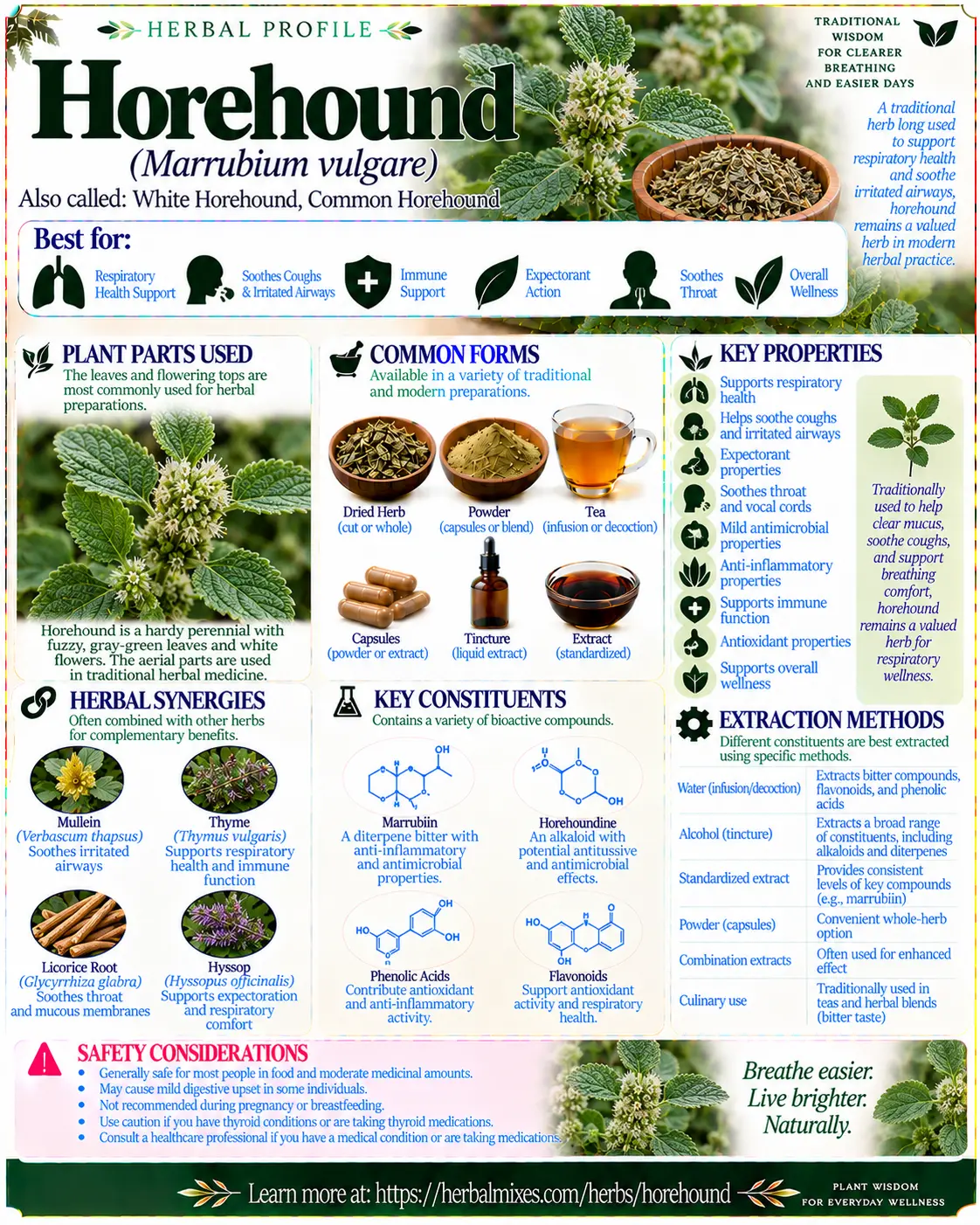
Horehound pairs especially well with mullein, elecampane, marshmallow root, thyme, and licorice depending on whether the goal is expectoration, soothing irritated airways, or easing a stubborn productive cough.
Horehound + Mullein
Best for: Productive coughs and chest congestion
Horehound contributes bitter expectorant activity, while mullein adds soothing respiratory support and gentle demulcent qualities.
The combination works especially well when mucus needs to move but the throat and airways also feel irritated.
Best extraction: Hot infusion or tincture. Both herbs work well in water, although tincture provides a more concentrated bitter preparation.
Horehound + Elecampane
Best for: Thick mucus and stubborn productive coughs
Horehound encourages expectoration, while elecampane adds aromatic, warming, and traditional mucus-clearing properties.
Best extraction: Tincture or decoction. Elecampane root benefits from longer extraction, while horehound aerial herb extracts readily in hot water or alcohol.
Horehound + Marshmallow Root
Best for: Productive cough with throat irritation
Horehound is bitter and somewhat drying, while marshmallow root contributes soothing mucilage.
This pairing balances mucus-moving activity with protection for irritated tissues.
Best extraction: Separate preparations. Horehound works well as tincture or hot infusion, while marshmallow mucilage is best extracted with a cold-water infusion.
Horehound + Thyme
Best for: Congested coughs with aromatic respiratory support
Horehound contributes expectorant and bitter activity, while thyme supplies volatile oils such as thymol and carvacrol traditionally associated with respiratory and antimicrobial support.
Best extraction: Covered hot infusion or tincture. Covering the tea helps retain thyme’s volatile oils.
Horehound + Licorice Root
Best for: Cough with throat irritation
Horehound helps mobilize mucus, while licorice contributes demulcent, soothing, and traditional expectorant activity.
Best extraction: Decoction or tincture. Licorice root tolerates longer heating, while horehound can be added later in the preparation.
Licorice is not suitable for everyone, particularly people with hypertension, kidney disease, or certain medication regimens.
Key Herbal Properties
Expectorant — Horehound is traditionally used to loosen and promote removal of mucus during coughs associated with colds. EMA specifically recognizes this traditional application. (ema.europa.eu)
Bitter — Horehound has an intensely bitter taste, largely associated with diterpenes such as marrubiin. Bitter taste supports its traditional digestive and appetite-stimulating uses.
Digestive stimulant — Bitter-receptor stimulation may promote salivation and digestive secretions, making horehound useful when digestion feels sluggish.
Appetite stimulant — Horehound is traditionally used for temporary loss of appetite. (ema.europa.eu)
Carminative — Traditional use includes mild digestive complaints such as bloating and flatulence.
Antioxidant — Horehound contains phenolic compounds and flavonoids with antioxidant activity demonstrated in laboratory studies. (pubmed.ncbi.nlm.nih.gov)
Anti-inflammatory — Marrubiin and other compounds have demonstrated anti-inflammatory activity experimentally, although clinical relevance remains uncertain. (pubmed.ncbi.nlm.nih.gov)








Active Compounds
Horehound is best known for its labdane diterpenes, particularly marrubiin, along with flavonoids, phenolic acids, sterols, saponins, and small amounts of volatile oil. European Pharmacopoeia-quality dried horehound contains a minimum specified marrubiin content. (ema.europa.eu)
Marrubiin
Found mainly in: Flowering aerial parts
Marrubiin is the signature bitter labdane diterpene of Marrubium vulgare and one of the most important chemical markers for the herb. It contributes strongly to horehound’s bitter taste and has been studied experimentally for respiratory, analgesic, anti-inflammatory, and cardiovascular effects. (pubmed.ncbi.nlm.nih.gov)
Best extraction: Hydroalcoholic tincture or concentrated extract. Marrubiin is not highly water soluble, so alcohol-containing preparations generally recover it more efficiently than weak tea.
Premarrubiin
Found mainly in: Fresh aerial parts
Premarrubiin is a diterpene precursor that can convert to marrubiin during drying and processing.
This means fresh and dried horehound are not chemically identical.
Best extraction: Hydroalcoholic tincture. Alcohol-containing preparations are practical for capturing the diterpene fraction.
Ladane-Type Diterpenes
Found mainly in: Aerial herb
Horehound contains several related labdane diterpenes in addition to marrubiin. These contribute to the plant’s characteristic bitterness and broader pharmacological profile. (pubmed.ncbi.nlm.nih.gov)
Best extraction: Hydroalcoholic extract. These compounds generally favor alcohol over plain water.
Luteolin Derivatives
Found mainly in: Leaves and flowering tops
Luteolin-related flavonoids contribute antioxidant and anti-inflammatory activity.
Best extraction: Hot infusion or hydroalcoholic tincture. Flavonoid glycosides extract reasonably well into water, while alcohol provides broader recovery.
Apigenin Derivatives
Found mainly in: Aerial herb
Apigenin-related compounds form part of horehound’s flavonoid fraction and contribute antioxidant activity.
Best extraction: Hydroalcoholic tincture or hot-water infusion.
Phenolic Acids
Found mainly in: Leaves and flowering aerial parts
Horehound contains several phenolic compounds that add antioxidant activity to the herb’s diterpene-rich chemistry. (pubmed.ncbi.nlm.nih.gov)
Best extraction: Hot water or diluted alcohol.
Essential Oil
Found mainly in: Flowering aerial portions
Horehound contains a relatively small volatile-oil fraction that contributes to its aromatic character.
Best extraction: Covered hot infusion, tincture, or steam-distilled preparation. Keeping tea covered reduces volatile losses.
FAQ
What is horehound best used for?
Horehound is best known for productive coughs and chest congestion, especially when mucus needs to be loosened and expelled.
EMA also recognizes traditional use for mild indigestion and temporary loss of appetite. (ema.europa.eu)
Is horehound good for a dry cough?
It is generally better suited to a productive or mucus-filled cough because its classic role is expectorant.
For a very dry, irritated cough, herbs such as marshmallow root or slippery elm may be more soothing, or they can be combined with horehound when both mucus and irritation are present.
Is horehound tea or tincture better?
Tea works well for respiratory formulas and extracts many bitter and flavonoid constituents.
A hydroalcoholic tincture provides a broader extraction of less water-soluble diterpenes such as marrubiin and requires a much smaller serving volume.
Why does horehound taste so bitter?
Its bitterness comes primarily from marrubiin and related diterpenes. European Pharmacopoeia standards even use marrubiin content as a marker of horehound quality.
The bitterness is therapeutically relevant because it contributes to digestive and appetite-stimulating actions.
Can horehound be used every day?
Horehound is generally used for short-term respiratory or digestive support rather than automatically taken indefinitely.
EMA advises medical evaluation if cough symptoms persist longer than one week, or if digestive complaints or poor appetite continue longer than two weeks. (ema.europa.eu)
Safety & Precautions
EMA recommends medicinal horehound only for adults and adolescents over 12 years for its recognized traditional indications. (ema.europa.eu)
Safety during pregnancy and breastfeeding has not been adequately established. Herb Pharm specifically advises seeking expert medical advice before use during pregnancy. (herb-pharm.com)
Because traditional and experimental sources suggest possible effects on uterine activity, concentrated medicinal use during pregnancy is best avoided unless specifically directed by a qualified healthcare professional.
Horehound’s bitter activity may aggravate gastritis, peptic ulcers, severe reflux, or highly sensitive digestion in some people.
Experimental research has investigated blood-pressure- and blood-glucose-related effects of Marrubium vulgare. Human evidence is inadequate, but people taking antihypertensive or glucose-lowering medications should be cautious with concentrated extracts until more is known. (pubmed.ncbi.nlm.nih.gov)
Seek medical evaluation for a cough accompanied by shortness of breath, chest pain, coughing blood, high fever, wheezing, blue lips, confusion, or symptoms lasting longer than expected.
A productive cough can occur with conditions such as pneumonia, asthma exacerbations, or other respiratory diseases that require appropriate diagnosis rather than herbal self-treatment.
Anyone with a chronic medical condition or taking prescription medications should discuss regular therapeutic horehound use with an appropriate healthcare professional.
References
- European Medicines Agency — Marrubii Herba
- PubMed — Marrubium vulgare L.: A Phytochemical and Pharmacological Overview
- PubMed Central — Marrubium vulgare L.: A Phytochemical and Pharmacological Overview
- PubMed — An Insight into Marrubium vulgare: More of a Myth than a Reality?
- PubMed — Review of the Chemical and Pharmacological Aspects of the Genus Marrubium
- Herb Pharm — Horehound Liquid Herbal Extract
- Nature’s Answer — Horehound Extract
- Nature’s Answer — Mullein-X Throat Lozenges
- Mountain Rose Herbs — Organic Horehound
Disclaimer
Disclaimer: This article is for educational purposes only and is not intended to diagnose, treat, cure, or prevent any disease. Herbal products can cause side effects and interact with medications. Consult a qualified healthcare professional before using herbs therapeutically, especially if you are pregnant, breastfeeding, taking prescription medications, or managing a medical condition.