


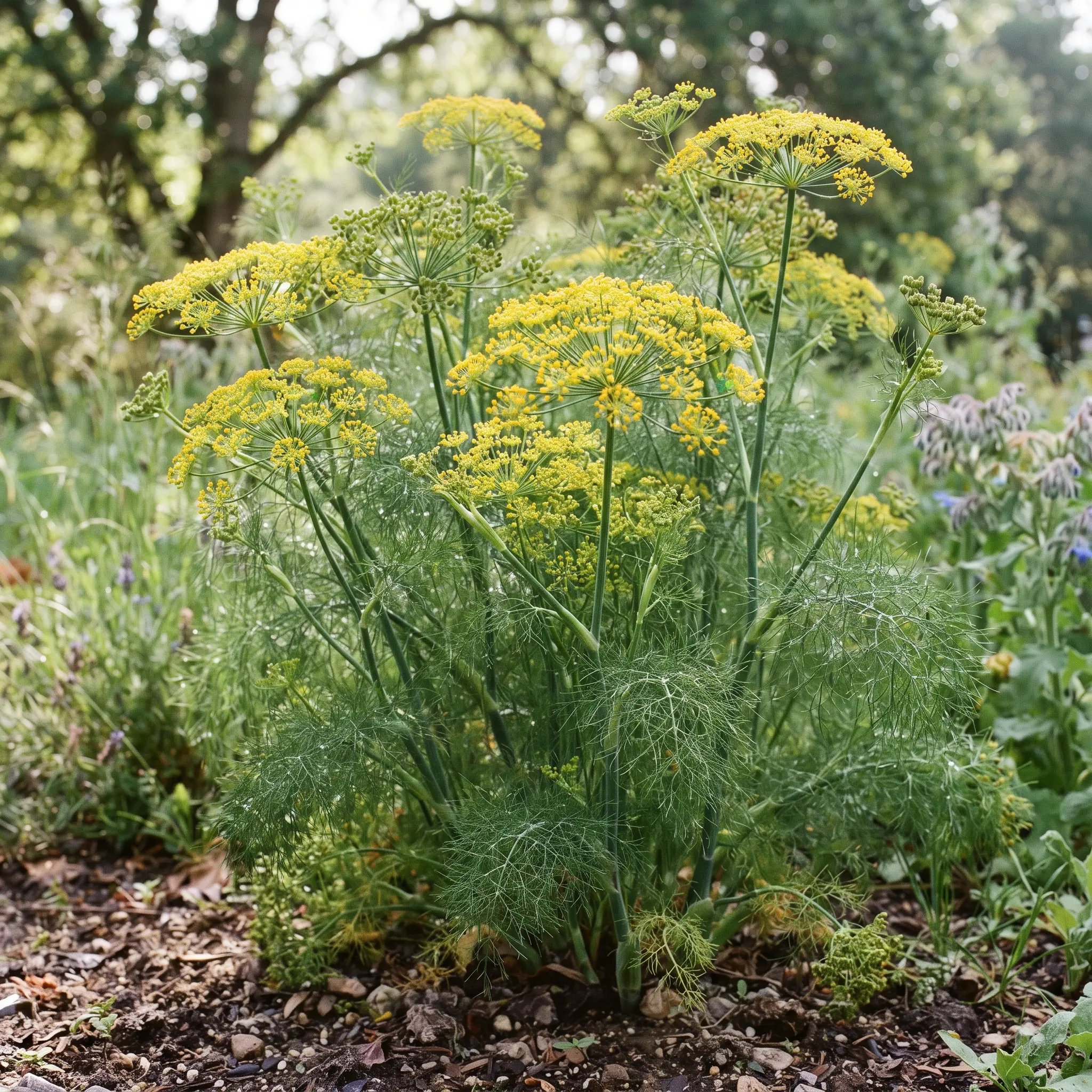
Traditionally, fennel has been used primarily to support digestion, especially when dealing with bloating, gas, or an upset stomach after eating. It is commonly prepared as a tea, chewed whole seeds, tincture, or infused oil.
Common Name: Fennel
Latin Name: Foeniculum vulgare
Alternate Names: Sweet Fennel
- Parts used: seed
- Primary properties: carminative, antispasmodic, galactagogue
- Common preparations: tea, chewed seeds, tincture, oil
- Best known for: easing bloating and digestive discomfort
What It Helps With
Health conditions this herb is commonly used to support.
Related Buying Guides
Featured Recipes
Explore and try simple ways to prepare and use this herb at home.
Active Compounds
The tiny plant chemistry doing all the heavy lifting.
Key Herbal Properties
What this herb is known for, herbally speaking.




Herbal Synergies
Other herbs that pair especially well with this one — together, their combined properties work better than either herb does alone.
Health Conditions Fennel Helps With
- Bloating & Gas — Fennel seed has traditionally been chewed or taken as tea after meals to help relieve trapped gas and abdominal bloating.
- Indigestion — Its carminative quality has made it a traditional after-meal remedy for general digestive discomfort and sluggish digestion.
- Colic (Infant & Adult) — Fennel has traditionally been used, often in diluted tea form, to help soothe colicky discomfort due to its gentle antispasmodic action.
- Low Milk Supply — As a traditional galactagogue, fennel has long been used by nursing mothers hoping to support milk production.
- Menstrual Cramps — Traditionally used for its antispasmodic quality to help ease mild cramping associated with menstruation.
Compounds
- Anethole — the primary volatile oil compound, thought to contribute to fennel’s carminative and antispasmodic reputation as well as its licorice-like flavor.
- Fenchone — another volatile oil constituent believed to support fennel’s traditional digestive use.
- Flavonoids — generally understood to contribute antioxidant activity alongside fennel’s other traditional benefits.
- Fiber — supports fennel seed’s traditional role in gentle digestive regularity.
Properties
- Carminative — helps relieve gas and bloating, fennel’s most well-known traditional property.
- Antispasmodic — eases muscle spasms in the digestive tract and uterus, tied to its traditional use for cramps and colic.
- Galactagogue — traditionally used to support milk supply in nursing mothers.
- Aromatic — its warming, licorice-like aroma is central to why it’s chewed directly or brewed as tea.
Recipes Using Fennel
- Fennel Seed Tea — a simple after-dinner infusion traditionally used to ease bloating and support digestion.
- Digestive Bitters Blends — fennel is a common addition to bitter formulas meant to be taken before or after meals.
- Nursing Support Tea Blends — fennel is often included in traditional lactation tea blends alongside other galactagogue herbs.
Products Featuring Fennel
- Whole Seeds — favored for chewing directly after meals or brewing fresh tea.
- Tea Bags — a convenient, pre-measured option for regular after-meal use.
- Tincture — chosen for a more concentrated dose, often included in digestive bitter formulas.
Synergies
- Peppermint — traditionally combined with fennel for a complementary carminative, cooling digestive blend.
- Ginger — paired for its warming, digestion-supportive quality alongside fennel’s gas-relieving action.
- Chamomile — combined in traditional colic and digestive-ease blends for infants and adults alike.
- Anise — often paired with fennel due to a similar flavor profile and shared carminative action.
Safety & Precautions
Fennel is generally well-tolerated in typical culinary and tea-strength amounts. Those with allergies to plants in the carrot family (celery, carrot, mugwort) should use caution, as cross-reactivity is possible. Fennel has estrogenic properties in traditional use, so those with hormone-sensitive conditions, or who are pregnant, should consult a healthcare provider before using it beyond culinary amounts, since concentrated preparations are traditionally avoided during pregnancy outside of typical food use. Breastfeeding individuals should also check with a healthcare provider, as fennel is widely used as a galactagogue but dosing guidance varies. Diluted fennel tea has a long traditional history of use for infant colic, but any use with infants should be discussed with a pediatrician first. Fennel is generally considered safe for pets in small culinary amounts, but concentrated forms like tinctures or essential oil should be avoided without veterinary guidance.
Q&A
Does fennel taste bitter?
No, fennel has a mild, sweet, licorice-like flavor rather than a bitter one, which makes it one of the more pleasant-tasting digestive herbs. This mild sweetness is part of why it’s easy to chew as whole seeds after a meal.
It pairs well with other digestive herbs like peppermint or ginger if you want to soften or vary the flavor further.
Can fennel be used daily?
Yes, fennel is commonly used daily in culinary and tea-strength amounts, such as chewing a small pinch of seeds after meals or having a cup of fennel tea regularly. This everyday, food-level use is well within its traditional pattern.
For more concentrated forms like tinctures, it’s best to use them for shorter periods tied to a specific digestive concern rather than as an indefinite daily habit.
Is fresh or dried fennel seed better?
Dried fennel seed is the standard form used for tea, chewing, and tincture-making, and it holds its aromatic oils well when stored properly. Fresh fennel seed isn’t typically available commercially, since the seeds are harvested and dried as part of normal processing.
Fennel bulb and fronds (the vegetable parts of the plant) are used fresh in cooking, but that’s a separate culinary use from the seed-based herbal preparations described here.
Can fennel tea be given to babies for colic?
Diluted fennel tea has a long traditional history of use for infant colic, typically in a very weak, well-strained preparation. That said, an infant’s digestive system is sensitive, so this is one case where checking with a pediatrician before use is especially important.
Adult and older-child use of fennel tea for digestive discomfort doesn’t carry the same level of caution, though starting with a mild preparation is still a reasonable approach for anyone new to it.
How should fennel seed be stored?
Whole fennel seed should be stored in an airtight container away from light and heat, where it will typically hold its aroma and potency for about a year. Whole seeds keep noticeably better than pre-ground fennel, since grinding speeds up the loss of volatile oils.
If you notice the seeds have lost their characteristic licorice-like smell, that’s a sign it’s time to replace them.
References
- Plants of the World Online: Foeniculum vulgare
- PubMed: Scientific Literature on Foeniculum vulgare
- National Library of Medicine: Chemical Constituents from Foeniculum vulgare
- Wikipedia: Foeniculum vulgare
- ScienceDirect Topics: Foeniculum vulgare Research
- North Carolina State Extension Plant Toolbox: Foeniculum vulgare
- Memorial Sloan Kettering Cancer Center: About Herbs — Fennel
- National Library of Medicine: Anethole Research
This information is for educational purposes only and is not intended as medical advice. Consult a qualified healthcare professional before using any herb, especially if pregnant, breastfeeding, taking medications, or managing a health condition.