


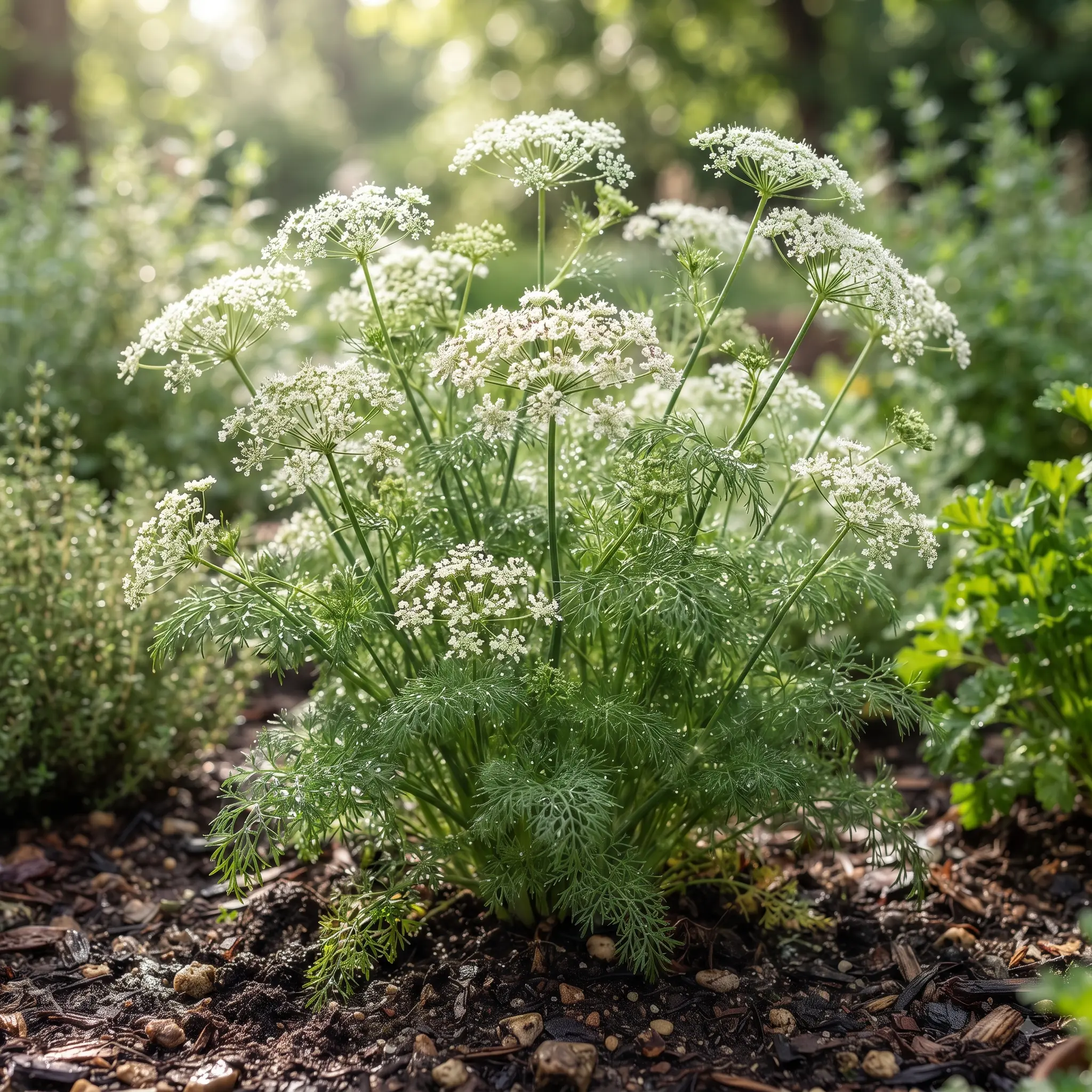
Traditionally, anise has been used primarily as a post-meal digestive comfort herb, especially when bloating, gas, or a heavy feeling after eating are involved. It is commonly prepared as a tea, chewed whole seed, tincture, or included in after-dinner spice blends.
Common Name: Anise Latin Name: Pimpinella anisum Alternate Names: Aniseed, Sweet Cumin
- Parts used: Seeds
- Primary properties: Aromatic, carminative
- Common preparations: Tea, chewed seed, tincture
- Best known for: Easing post-meal bloating and freshening breath
What It Helps With
Health conditions this herb is commonly used to support.
Related Buying Guides
Featured Recipes
Explore and try simple ways to prepare and use this herb at home.
Active Compounds
The tiny plant chemistry doing all the heavy lifting.
Key Herbal Properties
What this herb is known for, herbally speaking.


Herbal Synergies
Other herbs that pair especially well with this one — together, their combined properties work better than either herb does alone.
Health Conditions Anise Helps With
- Post-meal bloating and gas — Anise’s most common traditional use; its aromatic seeds are taken after eating to ease fullness and discomfort.
- Occasional indigestion — Traditionally used as an after-meal digestive tea to help settle the stomach.
- Bad breath — Chewing whole anise seed is a long-standing traditional practice for freshening breath after meals.
- Mild cough or chest tightness — Some traditional use includes anise in warming tea blends for occasional cough comfort.
Compounds
- Anethole — The primary aromatic compound responsible for anise’s distinctive licorice-like flavor and much of its traditional digestive reputation.
- Volatile oils — Contribute to anise’s aromatic quality and are central to its traditional carminative and breath-freshening use.
Properties
- Aromatic — Anise’s defining property; its fragrant seeds are traditionally used to ease digestion and freshen breath.
- Carminative — Traditionally used to help relieve gas and bloating after meals.
Recipes Using Anise
- After-dinner anise tea — Whole or crushed anise seeds steeped in hot water as a simple post-meal digestive tea.
- Chewable seed mix — Anise seed combined with fennel seed as a traditional after-meal chew, common in many culinary traditions.
- Warming spiced tea blend — Anise paired with cinnamon or ginger for a comforting, digestion-supporting tea.
Products Featuring Anise
- Whole dried seed — The most traditional form, used for chewing, tea, or grinding into blends.
- Tincture — A concentrated liquid extract useful for a quick digestive dose without steeping tea.
- Ground seed/spice blend — Convenient for adding to homemade tea or bitters blends.
Synergies
- Fennel — A classic pairing; both share a similar aromatic, licorice-like profile and complementary digestive support.
- Ginger — Frequently combined with anise in warming digestive tea blends.
- Peppermint — Shares a carminative profile, making the pairing popular for post-meal comfort.
Safety & Precautions
Anise is generally well-tolerated in typical culinary and tea amounts. Concentrated preparations, particularly anise essential oil, are much stronger and are not appropriate for the same casual use as tea or whole seed — essential oil should only be used under professional guidance and is not recommended for infants or young children.
Because anethole has mild estrogen-like activity, anyone who is pregnant, breastfeeding, or managing a hormone-sensitive condition should use caution with concentrated anise preparations and check with a healthcare provider before regular use; occasional culinary tea is generally considered lower risk. People with a known allergy to plants in the carrot family (Apiaceae), such as celery, carrot, or fennel, should approach anise cautiously, as cross-reactivity is possible.
There isn’t well-established traditional guidance for using concentrated anise preparations with pets, so tinctures or essential oil should not be given to an animal without veterinary guidance.
Q&A
Does anise taste like licorice?
Yes — anise has a distinctive sweet, licorice-like flavor due to its anethole content, which is the same aromatic compound found in true licorice root, star anise, and fennel, even though these are all unrelated plants. This is why people who enjoy one of these flavors often enjoy the others too.
If you’re not a fan of licorice flavor, anise probably isn’t going to be an exception, since the taste is quite pronounced even in small amounts.
Can anise be used every day?
Small culinary amounts, like a cup of anise tea or a few chewed seeds after a meal, are generally fine for most healthy adults on a regular basis. Regular use of concentrated forms like essential oil hasn’t been well studied and isn’t recommended for casual daily use.
If you’re using anise specifically for ongoing digestive support, tea or whole seed is a more appropriate daily form than concentrated extracts.
Is anise the same as star anise?
No — anise (Pimpinella anisum) and star anise (Illicium verum) are entirely different, unrelated plants that happen to share a similar licorice-like flavor because they both contain anethole. Star anise also has its own distinct safety considerations, particularly around species mix-ups with a toxic look-alike variety.
If a recipe or product calls for one, it’s best not to substitute the other without checking, since they aren’t botanically interchangeable.
Is anise safe during pregnancy?
Occasional culinary use, like a cup of anise tea, is generally considered lower risk, but concentrated preparations such as tinctures or essential oil should be avoided during pregnancy due to anise’s mild estrogen-like activity. Anyone who is pregnant should check with a healthcare provider before using anise beyond typical culinary amounts.
The same caution generally applies during breastfeeding, since concentrated use hasn’t been well studied in that context either.
Does anise help with breath freshening?
Yes — chewing whole anise seed after a meal is a long-standing traditional practice for freshening breath, thanks to its strong aromatic oils. It’s a simple, portable option that doesn’t require any preparation.
This traditional use is more about masking odor with a pleasant aroma than addressing the underlying cause of bad breath, so it works best as an after-meal habit rather than a fix for ongoing oral health concerns.
References
- Plants of the World Online: Pimpinella anisum
- PubMed: Scientific Literature on Pimpinella anisum
- National Library of Medicine: Chemical Constituents from Pimpinella anisum
- Wikipedia: Pimpinella anisum
- ScienceDirect Topics: Pimpinella anisum Research
- PubMed: Anethole Bioactivity and Estrogenic Properties
- PubMed: Volatile Oils of the Apiaceae Family
This information is for educational purposes only and is not intended as medical advice. Consult a qualified healthcare professional before using any herb, especially if pregnant, breastfeeding, taking medications, or managing a health condition.