

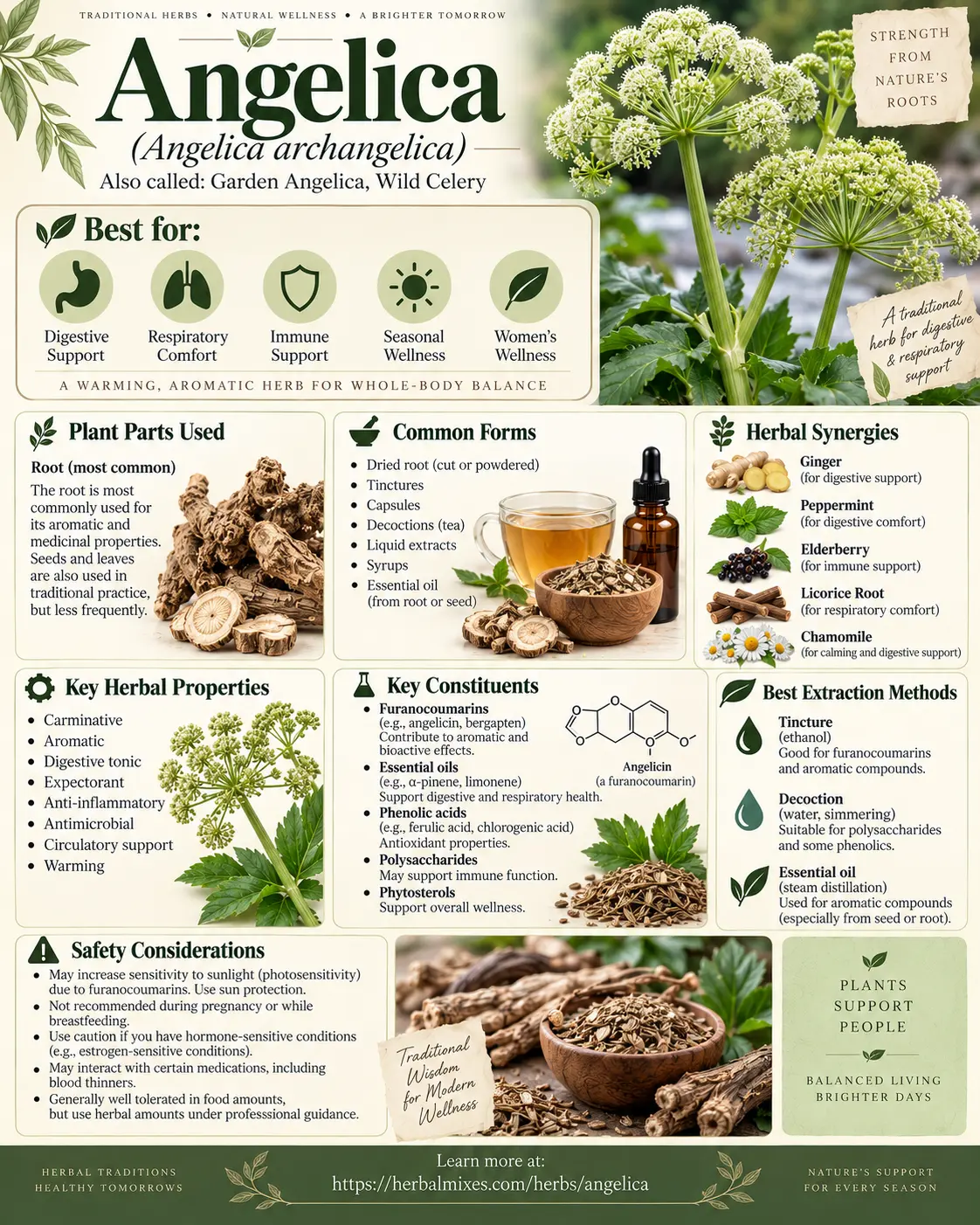
What Angelica Is Good For
Digestive Comfort & Carminative Support — Angelica root is traditionally used as a warming aromatic bitter that helps ease occasional gas, bloating, and sluggish digestion after heavy meals.
Warming Circulation — The active volatile oils help stimulate peripheral blood flow, bringing gentle internal warmth to cold hands, feet, and chilled tissues.
Respiratory Comfort — Traditionally valued as an expectorant that helps support comfortable breathing and clear respiratory passages during seasonal chills.
Menstrual Comfort & Pelvic Tonicity — Often utilized to support smooth muscle relaxation in the pelvic region, helping ease occasional menstrual discomfort and cramping.
General Tonic Support — Historically regarded as a strengthening restorative herb that promotes overall vitality and resilience during periods of fatigue.
Available Herbal Products
Organic Angelica Root Cut – Dried root pieces. An ideal choice for preparing traditional simmered decoctions, herbal syrups, or custom root infusions. Seller: Mountain Rose Herbs – View Mountain Rose Herbs Angelica Root →
Angelica Root Extract – Liquid tincture. A concentrated hydroalcoholic extract that captures the warming resins and volatile oils for rapid absorption and convenient daily dosing. Seller: Herb Pharm – View Herb Pharm Angelica Extract →
Angelica Seed Oil – Pure essential oil or oil maceration. Used topically in diluted massage blends to promote warming circulation and soothe muscular tension. Seller: Starwest Botanicals – View Starwest Botanicals Angelica Products →
Traditional Warming Bitters Formula – Liquid herbal blend containing angelica root. Designed to stimulate digestive secretions and relieve post-meal heaviness. Seller: Urban Moonshine – View Urban Moonshine Bitters →
Herbal Synergies
Angelica pairs especially well with Ginger, Cinnamon, and Licorice Root, depending on the goal of the formula.
Angelica Root + Ginger Root – Best for: Deep warming digestion, circulation support, and cold-weather vitality Angelica provides deep aromatic warming and digestive toning, while ginger offers rapid circulatory stimulation and anti-nausea action. Together, they create a powerful internal warming formula. Best extraction: Decoction or high-proof tincture. Both dense roots require a brief simmer or alcohol extraction to fully release their active resins and warming volatile oils.
Angelica Root + Licorice Root -Best for: Mucosal soothing and balancing bitter-aromatic flavors Angelica’s pungent, earthy warmth can be intense; pairing it with sweet licorice root softens the flavor profile while adding soothing demulcent properties for the digestive tract. Best extraction: Decoction or syrup. Simmering the roots together creates a harmonious, soothing liquid preparation.
Angelica Root + Peppermint Leaf – Best for: Easing post-meal bloating and digestive sluggishness Angelica acts as a deep warming bitter, while peppermint supplies cooling carminative volatile oils that relieve gas pressure and harmonize upper GI comfort. Best extraction: Combined decoction and infusion. Simmer the angelica root first, then pour the hot liquid over peppermint leaf off the heat to preserve its delicate oils.
Key Herbal Properties
Carminative — Relieves flatulence, gas buildup, and abdominal cramping through aromatic volatile oils.
Expectorant — Supports the thinning and clearance of mucus from the respiratory tract.
Diaphoretic — Promotes healthy perspiration, supporting the body’s natural warming response during chills.
Bitter Tonic — Stimulates digestive secretions, salivary flow, and overall gastrointestinal tone.
Circulatory Stimulant — Encourages peripheral blood flow and brings internal warmth to chilled tissues.





Active Compounds
Volatile Oils (including Imperatorin and Angelicin) Found mainly in: Roots and seeds Aromatic compounds responsible for angelica’s warming, carminative, and smooth muscle-relaxing actions. Best extraction: Hydroalcoholic tincture or steam distillation. Alcohol effectively dissolves these aromatic and resinous compounds.
Coumarins (including Furanocoumarins) Found mainly in: Roots and fresh plant parts Bioactive organic compounds that contribute to angelica’s physiological activity and photosensitizing properties. Best extraction: Alcohol-water extract. Soluble in hydroalcoholic solvents.
Plant Resins and Bitter Glycosides Found mainly in: Dried root Support the bitter tonic and digestive-stimulating profile of the plant. Best extraction: Decoction or strong alcohol tincture. Long simmering or alcohol extraction is necessary to draw out dense root resins.
FAQ
What is angelica root best used for? Angelica root is primarily used as a warming digestive tonic to relieve gas and bloating, stimulate circulation, and support respiratory comfort during cold weather.
How does angelica taste? Angelica has a strong, earthy, pungent, and bittersweet flavor profile with warm, celery-like, and musky aromatic undertones.
Is tea or tincture better for angelica root? Decoctions (simmered teas) work well for extracting water-soluble constituents and minerals, but high-proof tinctures are often preferred because they capture the potent volatile oils and resins much more efficiently.
Can angelica root be used topically? Diluted angelica root or seed preparations are occasionally used in warming liniments for muscular comfort, though care must be taken due to photosensitizing compounds.
Is angelica safe to use during pregnancy? No, internal use of angelica root is strictly contraindicated during pregnancy due to its traditional emmenagogue and uterine-stimulating properties.
Safety & Precautions
Pregnancy & Breastfeeding: Avoid internal use during pregnancy and lactation, as angelica root has a long-traditional association with uterine stimulation.
Photosensitivity: Angelica contains furanocoumarins, which can increase skin sensitivity to ultraviolet (UV) light and sunlight, potentially causing rash or irritation following topical exposure or high-dose consumption.
Blood-Thinning Medications: Exercise caution if you take anticoagulant or antiplatelet medications, as angelica may interact with blood-clotting pathways.
Diabetes: Individuals managing blood sugar levels should use angelica with caution, as it may influence glucose metabolism.
Consult a qualified healthcare professional before using angelica therapeutically, especially if you manage underlying medical conditions or take prescription drugs.
References
National Center for Complementary and Integrative Health (NCCIH)
PubMed Central – Angelica archangelica Phytochemistry and Pharmacology
European Medicines Agency (EMA) Monograph on Angelica archangelica
World Health Organization (WHO) Monographs on Selected Medicinal Plants
Mountain Rose Herbs Angelica Root Monograph
Disclaimer
Disclaimer: This article is for educational purposes only and is not intended to diagnose, treat, cure, or prevent any disease. Herbal products can cause side effects and interact with medications. Consult a qualified healthcare professional before using herbs therapeutically, especially if you are pregnant, breastfeeding, taking prescription medications, or managing a medical condition.