Acid reflux happens when stomach contents move upward into the esophagus. It may feel like burning, sour burps, throat irritation, chest pressure, or post-meal regret with excellent dramatic timing.
Learn more about Acid Reflux
Why Acid Reflux Happens
Acid reflux often starts when the lower esophageal sphincter relaxes at the wrong time. This muscle usually works like a one-way gate between the stomach and esophagus.
When that gate opens too easily, stomach contents can rise upward. Occasional reflux happens to many adults, while frequent reflux may fit GERD.
Common Triggers
Large meals can increase stomach pressure. Fatty foods, chocolate, coffee, alcohol, peppermint, spicy foods, citrus, tomatoes, and late meals can bother some people.
Lying down soon after eating can also make reflux more likely. Tight clothing may add extra abdominal pressure.
How It May Show Up
Some people feel classic heartburn behind the breastbone. Others notice sour taste, burping, nausea, hoarseness, coughing, throat clearing, or fullness after meals.
Traditional Herbal Patterns
Traditional herbalism often sees reflux through patterns. Some people show heat and irritation. Others show gas pressure, sluggish digestion, dryness, or stress-related tension.
Herbalists usually match herbs to the pattern. Cooling demulcents suit burning dryness. Carminatives suit gas pressure. Nervines suit stress tension. Gentle bitters suit slow digestion only when appropriate.
How Herbs Can Help Acid Reflux
Herbalism traditionally sees acid reflux as upward-moving digestive irritation, often linked with heat, dryness, pressure, or nervous tension. Demulcents coat and moisten tissues, carminatives ease gas pressure, nervines calm tension, and gentle bitters support sluggish digestion when that pattern fits. Herbalists choose between these actions by noticing whether reflux feels hot, dry, gassy, tense, or heavy, and these are herbs traditionally used when acid reflux happens: marshmallow root, chamomile, licorice root, slippery elm, ginger, fennel, catnip, calendula, plantain leaf, oat straw, lemon balm, aloe vera, mint, meadowsweet, nettle, dandelion root, lavender
“Acid reflux is the stomach’s dramatic reminder that dinner, gravity, and bedtime need better teamwork.”
Recipes & Remedies Acid Reflux
Herbal Preparations
Slippery Elm and Marshmallow Soothing Tea
This gentle tea uses mucilage-rich herbs that become silky in water. Herbalists traditionally use that texture for throat and upper digestive comfort.
Ingredients with exact measurements
- 1 teaspoon slippery elm bark powder
- 1 teaspoon marshmallow root, cut and sifted
- 1 teaspoon chamomile flowers
- 1 cup warm water
- 1 teaspoon honey, optional
Step-by-step preparation instructions
- Add marshmallow root and chamomile flowers to a mug.
- Pour 1 cup warm water over the herbs.
- Cover the mug and steep for 15 minutes.
- Strain the liquid into a clean cup.
- Whisk in slippery elm powder until smooth.
- Add honey if desired.
How to use
Sip slowly after meals or in the evening. Take this tea at least two hours away from medications or supplements.
Food for support Acid Reflux
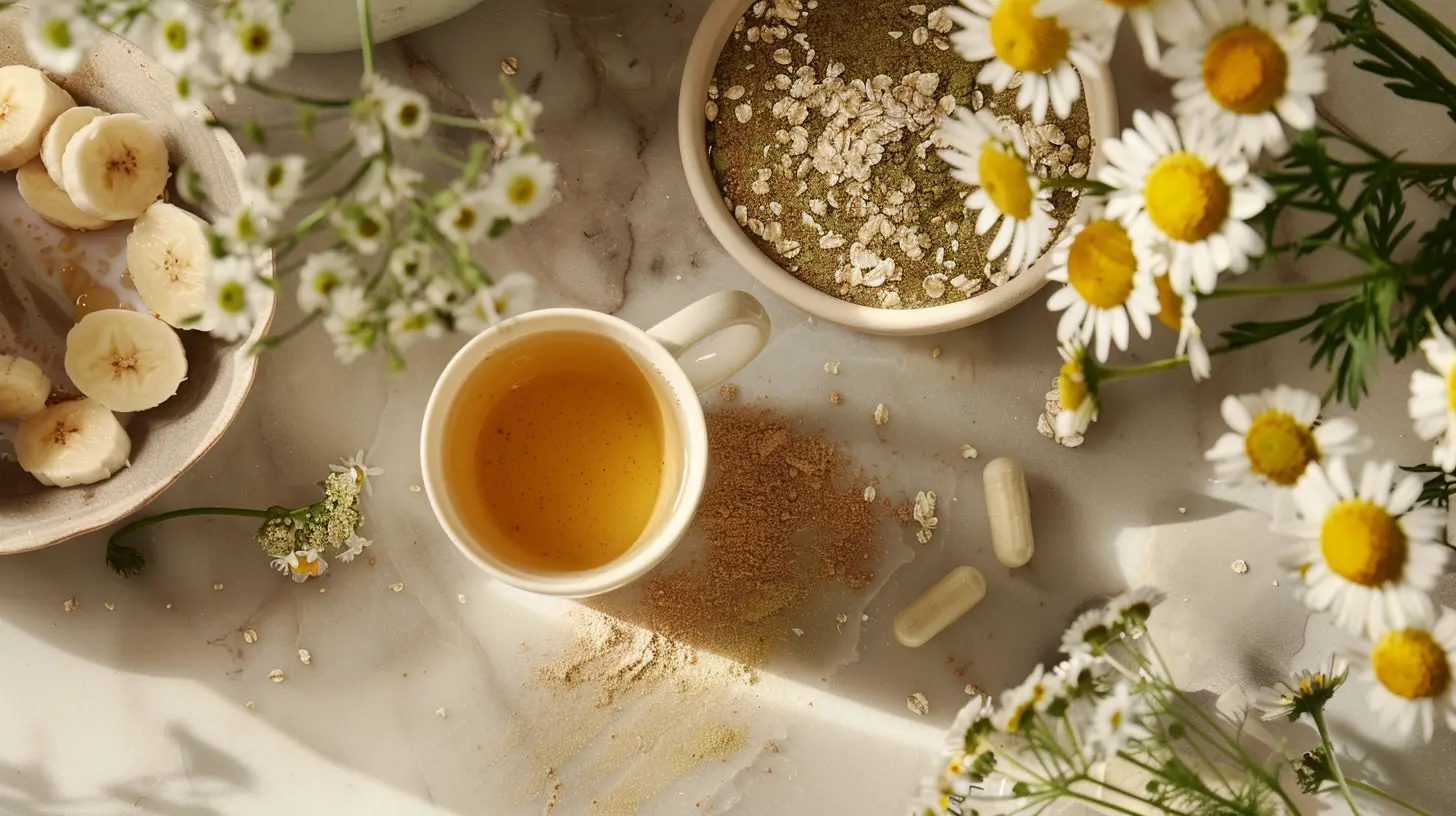
Gentle Banana Oatmeal with Chamomile
This soft meal uses mild, low-fat ingredients. It suits days when digestion wants comfort, not a three-act opera.
Ingredients with exact measurements
- 1/2 cup rolled oats
- 1 cup water
- 1/2 ripe banana, sliced
- 2 tablespoons strong brewed chamomile tea
- 1/4 teaspoon ground cinnamon
- 1 teaspoon ground flaxseed, optional
Step-by-step preparation instructions
- Add oats and water to a small saucepan.
- Simmer over low heat for 5 to 7 minutes.
- Stir often until the oats soften.
- Add sliced banana and cinnamon.
- Stir in the brewed chamomile tea.
- Add ground flaxseed if desired.
How to use
Eat warm for breakfast or an early light dinner. Keep portions moderate, because large meals can increase reflux pressure.
What Herbs You Need
The herbs traditionally used for acid reflux support include slippery elm, marshmallow root, chamomile, DGL licorice, meadowsweet, and ginger. Each herb fits a different pattern, so gentle selection matters.
Slippery Elm
Latin name: Ulmus rubra
Key herbal actions:
Demulcent: creates a slippery texture that coats irritated tissues.
Emollient: softens and moistens dry or irritated areas.
Mild nutritive: offers gentle plant fiber and minerals.
Key active compounds relevant to this issue:
Mucilage polysaccharides, tannins, and plant starches.
Marshmallow Root
Latin name: Althaea officinalis
Key herbal actions:
Demulcent: forms a gel-like liquid when mixed with water.
Mucoprotective: supports moisture along mucous membranes.
Cooling: traditionally suits hot, dry irritation.
Key active compounds relevant to this issue:
Mucilage polysaccharides, pectin, flavonoids, and phenolic acids.
Chamomile
Latin name: Matricaria chamomilla
Key herbal actions:
Carminative: eases gas and digestive pressure.
Nervine: supports calm during stress-related digestive discomfort.
Mild antispasmodic: helps relax tense digestive muscles.
Key active compounds relevant to this issue:
Apigenin, bisabolol, chamazulene, flavonoids, and coumarins.
DGL Licorice
Latin name: Glycyrrhiza glabra
Key herbal actions:
Demulcent: supports a soothing mouth and throat feel.
Mucosal support: traditionally supports irritated digestive tissues.
Harmonizing herb: often appears in digestive herbal formulas.
Key active compounds relevant to this issue:
Liquiritin, glabridin, flavonoids, and reduced glycyrrhizin in DGL products.
Meadowsweet
Latin name: Filipendula ulmaria
Key herbal actions:
Astringent: gently tones irritated tissues.
Aromatic bitter: supports digestive secretions in traditional use.
Cooling: traditionally suits sour, hot digestive patterns.
Key active compounds relevant to this issue:
Salicylates, tannins, flavonoids, and phenolic glycosides.
Ginger
Latin name: Zingiber officinale
Key herbal actions:
Carminative: helps move trapped gas.
Warming digestive: traditionally suits cold, sluggish digestion.
Aromatic: supports digestive movement through spice and scent.
Key active compounds relevant to this issue:
Gingerols, shogaols, zingerone, and volatile oils.
Key Herbal Products for Acid Reflux
DGL Licorice Chewables
DGL licorice chewables contain licorice with most glycyrrhizin removed. People commonly chew them before meals for upper digestive comfort.
Pros: They travel well and fit easily into a meal routine.
Cons: They may taste chalky or very sweet.
Choose this form when you want something convenient before meals.
Slippery Elm Lozenges
Slippery elm lozenges use mucilage-rich bark in a slow-dissolving form. People often choose them when reflux affects the throat.
Pros: They feel soothing and need no preparation.
Cons: They may contain sugar, flavorings, or sweeteners.
Choose this form when throat irritation feels more noticeable than stomach heaviness.
Marshmallow Root Tea
Marshmallow root tea creates a soft, slippery liquid. Many people prepare it as a long infusion for stronger mucilage.
Pros: It feels gentle, simple, and caffeine-free.
Cons: It takes longer to prepare than tablets or lozenges.
Choose this form when dryness, burning, or irritation feels prominent.
Chamomile Tea
Chamomile tea remains one of the most familiar digestive comfort teas. People often drink it after meals or before bed.
Pros: It tastes pleasant and supports relaxation.
Cons: It may bother people with ragweed-family allergies.
Choose this form when stress and digestive tension appear together.
Aloe Vera Inner Leaf Juice
Aloe inner leaf juice appears in many digestive support products. People usually choose purified, decolorized inner leaf products made for internal use.
Pros: It feels cooling and mixes easily with water.
Cons: Whole-leaf aloe latex can act as a strong laxative.
Choose this form only when the label clearly states purified inner leaf juice.
FAQ
Is acid reflux the same as GERD?
No. Acid reflux can happen occasionally after meals or certain triggers. GERD means reflux happens frequently or causes ongoing problems.
Can herbs replace reflux medication?
No. Herbs should not replace prescribed medication or medical evaluation. Persistent reflux needs professional guidance, especially when symptoms repeat often.
Which herbs may worsen acid reflux?
Peppermint may worsen reflux for some people. It can relax the lower esophageal sphincter, which may allow upward movement.
Can I drink slippery elm tea every day?
Many adults tolerate slippery elm well for short-term use. However, take it away from medications because mucilage may affect absorption.
Is fresh or dried herb better for reflux support?
Dried herbs work well for most reflux preparations. Marshmallow root and slippery elm usually release mucilage well from dried material.
How should I store these herbs?
Store dried herbs in airtight containers. Keep them away from heat, light, and moisture.
Can pets use these herbs for reflux?
Do not give reflux herbs to pets without a veterinarian’s guidance. Pets process herbs differently, and symptoms may signal another issue.
References
National Institute of Diabetes and Digestive and Kidney Diseases: Acid Reflux in Adults
NCBI Bookshelf: Gastroesophageal Reflux Disease
PubMed Central: Gastroesophageal Reflux Disease
PubMed Central: Integrative Medicine for Gastrointestinal Disease
PubMed Central: Natural Products in the Management of Gastroesophageal Reflux Disease
European Medicines Agency: Althaea officinalis Root Assessment Report
PubMed Central: Chamomile, A Herbal Medicine of the Past with Bright Future
PubMed Central: Chamomile Traditional Uses, Chemical Constituents, and Pharmacological Effects
Disclaimer
This article is for educational purposes only. It does not provide medical advice, diagnosis, or treatment. Talk with a qualified healthcare professional if you have frequent reflux, severe symptoms, pregnancy, chronic health conditions, or medication use. Seek urgent care for chest pain, trouble breathing, vomiting blood, black stools, unexplained weight loss, or trouble swallowing.