
Cornflower Benefits & Uses in Herbalism
There’s something quietly reassuring about cornflower—those vivid blue petals that seem almost too bright to be real. Traditionally, it’s been less about spectacle and more about gentle care, especially for the eyes and delicate tissues.
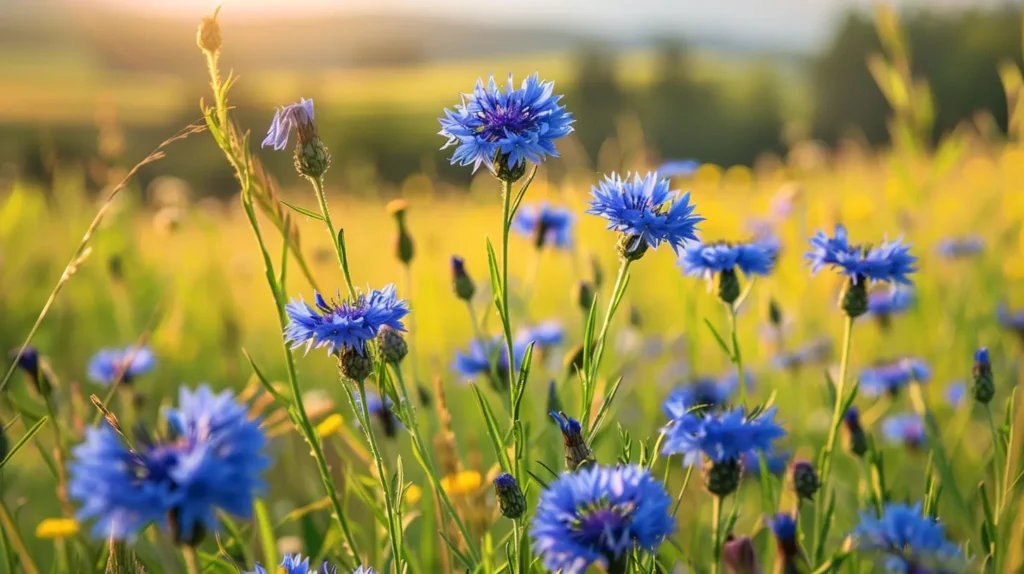
Latin (botanical) name: Centaurea cyanus
Common names: Cornflower, bachelor’s button, bluebottle
Cornflower has been traditionally used in Western herbalism as a mild soothing herb, especially for eye comfort, skin irritation, and general inflammation. It often appears in simple preparations—infusions, washes, or compresses—where its gentle nature can shine.
Herbal Actions
Cornflower is not a powerhouse herb, but that’s part of its charm. Its actions are subtle and supportive:
- Anti-inflammatory – Helps calm irritated tissues, particularly useful for eyes and skin
- Astringent – Gently tones tissues, which can help reduce puffiness or minor swelling
- Vulnerary – Traditionally used to support minor tissue repair
- Soothing (demulcent-like effect) – While not mucilage-rich, it has a softening, calming effect on sensitive areas
Think of it as the herbal equivalent of a cool compress on a warm day.
Benefits and Uses for Humans
Cornflower’s most well-known traditional use is for eye comfort. Herbalists have used it for:
- Tired or strained eyes after long periods of reading or screen exposure
- Mild irritation from dust or environmental factors
- Puffy or fatigued eye tissues
It also finds its way into skin preparations, where it can help calm minor redness or sensitivity. Less commonly, it has been used internally as a mild digestive support, though this is not its primary role.
Preparation and Usage for Humans
For everyday use, cornflower is typically prepared simply:
- Infusion (tea): Light, floral, and mild
- Eye wash or compress: A cooled infusion applied externally
- Facial toner: Used in skincare for calming effects
A common approach is to steep the dried petals in hot water, allow it to cool completely, and then use it as a compress with clean cloth or cotton pads.
Usage Forms & Shelf Life
Internal vs external use:
- Internal use is mild and occasional
- External use is far more common and traditional
Forms:
- Infusion (tea): best used fresh within 24 hours
- Dried herb: shelf life ~1 year if stored away from light and moisture
- Distilled water (cornflower hydrosol): typically lasts 6–12 months unopened
Safety & Considerations and Dosage Guidelines
Cornflower is considered very gentle.
Traditional dosage (internal):
- 1–2 teaspoons dried petals per cup of water
- Steep 10–15 minutes
For external use, there’s more flexibility, but always ensure cleanliness—especially for eye applications.
Side Effects & Contraindications
- Rare sensitivity in individuals allergic to plants in the Asteraceae family (such as chamomile or ragweed)
- Avoid using non-sterile preparations directly in the eyes
- Not typically recommended during pregnancy without guidance, simply out of caution rather than known risk
Active Constituents
Cornflower contains several gentle but meaningful compounds:
Flavonoids (e.g., apigenin, luteolin)
- Present in small amounts, typically <1% in dried petals
- Traditionally associated with anti-inflammatory and antioxidant effects
- Best extracted in water (infusion)
Anthocyanins (e.g., cyanidin derivatives)
- Responsible for the vivid blue color
- Known for antioxidant activity
- Water-soluble, making them ideal for teas and washes
Bitter principles
- Mildly present
- Traditionally linked to gentle digestive stimulation
How It Works
Cornflower’s effects are less about strong biochemical shifts and more about local soothing action.
Flavonoids and anthocyanins interact with tissues to help calm irritation and reduce oxidative stress. When applied externally, especially around the eyes, the cooling liquid itself contributes to relief—sometimes the simplest mechanisms are the most effective.
Processing Cautions
- Always use clean, preferably sterile preparations for eye applications
- Avoid over-steeping, which can make the infusion slightly irritating rather than soothing
- Harvest petals when fully open and vibrant for best quality
Benefits and Uses for Pets
Cornflower may be used cautiously for pets, particularly:
- Gentle eye cleansing for dogs (external use only)
- Mild skin soothing for irritated areas
Cats tend to be more sensitive, so extra care is needed.
Preparation and Usage for Pets
- Use a well-strained, cooled infusion
- Apply externally with clean gauze
- Never pour directly into the eye
Safety & Considerations and Doses for Pets
- Use only diluted, fresh preparations
- Avoid internal use unless guided by a trained professional
- Monitor closely for any signs of irritation
Quick Herb Overview
- Botanical family: Asteraceae
- Parts used: Flowers (petals)
- Energetics: Cooling, slightly drying
- Taste profile: Mild, slightly bitter, floral
Traditional & Historical Use
Cornflower has a long history in European herbal traditions. It was once a common field plant—hence the name—growing among grain crops. Herbalists valued it for eye care, often referring to it as a “clearer of sight,” though always in a gentle, supportive sense.
Products with This Herb Available on the Market
- Dried cornflower petals
- Herbal teas
- Hydrosols (cornflower water)
- Skincare formulations
- Eye compress blends
Herb Identification
Cornflower is fairly easy to recognize:
- Bright blue, fringed flowers
- Slender stems with narrow leaves
- Grows about 1–3 feet tall
Look-alikes: Few true look-alikes, but always confirm identification—especially in wild settings.
Selecting Quality Herb
Look for:
- Vibrant blue color (faded petals suggest age)
- Light, floral scent
- No dustiness or excessive breakage
Avoid herbs that look dull, grayish, or overly crushed.
Parts Used
The flower petals are the primary part used.
Harvest when flowers are fully open and dry. The petals are often separated and dried quickly to preserve their color and constituents.
Natural Growing Areas
Originally native to Europe, cornflower now grows widely in:
- North America
- Temperate regions worldwide
It thrives in open fields and sunny areas.
Growing Tips
Cornflower is delightfully easy to grow:
- Soil: Well-drained, not overly rich
- Light: Full sun
- Water: Moderate
It’s an annual, but often self-seeds generously—once you plant it, it tends to stay around.
Traditional Recipes
A simple classic:
Cornflower Eye Compress
Steep 1 teaspoon dried petals in 1 cup hot water for 10 minutes.
Cool completely, strain thoroughly, and apply with clean cloth over closed eyes.
Frequently Asked Questions
Is cornflower safe for daily use?
For external use, especially as a compress, it’s generally considered safe when prepared properly. Internal use is mild and usually occasional.
Can pets use cornflower?
Dogs may benefit from gentle external applications. Cats are more sensitive, so use extra caution and consult a professional if unsure.
What does cornflower taste like?
It’s quite mild—slightly floral with a faint bitterness. It’s often added more for color than flavor in teas.
Fresh vs dried — which is better?
Dried petals are more commonly used and easier to store. Fresh flowers can be used but spoil quickly.
How long does cornflower last when stored?
Dried petals typically keep for about a year if stored properly—cool, dark, and dry.
References
- European Medicines Agency (EMA)
- American Herbal Pharmacopoeia
- Bone, K., & Mills, S. Principles and Practice of Phytotherapy
- McGee, H. On Food and Cooking (for anthocyanin chemistry context)
This content is provided for educational purposes only. It does not diagnose, treat, or replace professional medical care or individualized guidance from qualified healthcare providers.