Herbal Recipes for Overactivity or Irritation of the Digestive System
When digestion feels reactive, traditional herbal formulas often lean toward soothing and moderating rather than stimulating.
A gentle chamomile and lemon balm infusion is a classic place to begin. Chamomile has a long history of digestive and calming use, documented in WHO monographs published by the World Health Organization (WHO). Lemon balm adds a soft nervine quality that supports digestive comfort when stress plays a role.
Another traditional blend pairs marshmallow root with fennel seed. Marshmallow offers demulcent support for irritated mucosal tissue, while fennel provides aromatic carminative action that can ease cramping and gas. Marshmallow root’s traditional soothing use is described in WHO monographs from the World Health Organization (WHO).
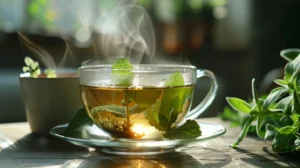
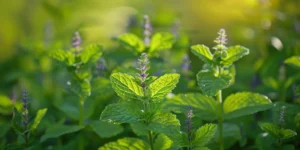
Peppermint leaf tea is frequently used when cramping and urgency are present. Peppermint oil’s effects on intestinal smooth muscle have been studied and summarized through research available at PubMed Central.
These combinations are examples of traditional strategies, not fixed instructions. The guiding principle is gentle regulation rather than force.
Herbal Support for Overactivity or Irritation of the Digestive System
In traditional Western herbalism, this pattern is often understood as excessive motility, heightened sensitivity of the intestinal lining, or nervous system overactivation.
Carminatives such as peppermint and fennel are used when spasm and cramping are prominent. Their aromatic volatile oils support smooth muscle relaxation. Peppermint’s digestive comfort effects are also summarized by the National Center for Complementary and Integrative Health (NCCIH).
Demulcent herbs like marshmallow root are chosen when tissues feel irritated or inflamed. These herbs provide mucilage that coats and supports the intestinal lining.
Nervines such as chamomile and lemon balm are included when emotional stress is clearly influencing digestive activity. The connection between the gut and nervous system, often called the gut–brain axis, is well described in research available through PubMed Central.
Mild astringents such as meadowsweet may be considered when there is excessive looseness. Meadowsweet’s traditional digestive use is documented by the European Medicines Agency (EMA).
The approach is about calming excess, supporting tissue integrity, and restoring balance.
Herbs Used for Overactivity or Irritation Support
Common herbs traditionally used in this pattern include chamomile, peppermint, fennel, marshmallow root, lemon balm, and meadowsweet.
How These Herbs Work in the Body
When the digestive system is overactive, smooth muscle contractions may be heightened or poorly coordinated. Aromatic carminatives contain volatile oils such as menthol in peppermint and anethole in fennel. These compounds interact with smooth muscle and help modulate contraction patterns. Research describing peppermint’s effects on intestinal smooth muscle is available through PubMed Central.
Demulcent herbs contain polysaccharides that form a soothing layer over mucosal tissue. This supports barrier integrity and hydration, especially when tissues feel irritated.
Chamomile contains flavonoids such as apigenin, which contribute to its calming effects on both the nervous system and digestive tract. Its traditional use is described in WHO documentation from the World Health Organization (WHO).
The gut–brain axis illustrates how stress can influence digestive secretion and motility. This bidirectional communication between the nervous system and gastrointestinal tract is described in scientific literature available through PubMed Central.
These herbs do not suppress digestion. They help moderate tone, support mucosal comfort, and encourage balanced motility.
Herbal Preparations and Recipes
Preparation form influences how herbs feel in the body. A warm tea provides hydration and gentle delivery of aromatic compounds. Demulcent roots are often infused to preserve their soothing polysaccharides. Tinctures offer concentrated extracts in small volumes and are convenient for travel or busy schedules.
Those interested in deeper study may explore individual herb profiles or preparation guides to understand how infusion, decoction, and tincture methods differ in extracting constituents. Traditional blends often combine a demulcent, a carminative, and a nervine for balanced support.
What Is Overactivity or Irritation of the Digestive System?
This pattern refers to a functional state in which digestion moves too quickly or reacts too strongly. It may involve cramping, urgency, loose stools, or heightened sensitivity after meals.
It is a description of digestive behavior, not a medical diagnosis.
Why It Happens
Digestive overactivity may be influenced by stress, sudden dietary shifts, food sensitivities, microbial imbalance, or acute emotional strain.
The nervous system plays a central role. The gut–brain axis demonstrates how stress can alter motility and secretion patterns, as described in research available through PubMed Central.
How It Commonly Shows Up
People often describe frequent elimination, abdominal rumbling, cramping that improves after passing stool, or feeling that digestion is unpredictable. Emotional stress may clearly worsen symptoms.
The pattern is often cyclical, improving when stress decreases and returning during periods of pressure.
Foundations of Support
Regular meals, mindful eating, and adequate hydration support digestive stability. Gentle movement can regulate motility. Sleep supports nervous system balance.
Stress management is especially important in this pattern. Breathing exercises, time outdoors, and slowing meal pace can reduce digestive reactivity.
Herbs complement these foundations rather than replacing them.
Learning More
If you are curious about digestive physiology, reviewing resources from the National Center for Complementary and Integrative Health (NCCIH) or herbal monographs from the European Medicines Agency (EMA) provides reliable, evidence-informed context.
FAQ
Is digestive irritation always caused by food?
Not always. Stress and nervous system activation can significantly influence digestive motility and sensitivity.
Are calming herbs safe for regular use?
Many traditional digestive herbs have long histories of culinary and herbal use. Individual considerations vary, and professional guidance is helpful when questions arise.
Can I combine demulcents and carminatives?
Yes. Traditional formulas often combine soothing and aromatic herbs to balance irritation and tension.
How long does it take to notice improvement?
Some aromatic herbs may act quickly on smooth muscle tension. Broader patterns of balance often require consistency and attention to lifestyle foundations.
When should someone seek professional care?
Persistent, severe, or worsening symptoms should always be evaluated by a qualified healthcare professional.
References
National Center for Complementary and Integrative Health (NCCIH) – Peppermint Oil
https://www.nccih.nih.gov/health/peppermint-oil
National Center for Complementary and Integrative Health (NCCIH) – Digestive Disorders Overview
https://www.nccih.nih.gov/health/digestive-disorders
World Health Organization (WHO) – WHO Monographs on Selected Medicinal Plants
https://apps.who.int/iris/handle/10665/42052
European Medicines Agency (EMA) – Filipendulae herba monograph
https://www.ema.europa.eu/en/medicines/herbal/filipendulae-herba
PubMed Central – Peppermint and gastrointestinal function
https://www.ncbi.nlm.nih.gov/pmc/articles/PMC3003461/
PubMed Central – The gut-brain axis
https://www.ncbi.nlm.nih.gov/pmc/articles/PMC4367209/
This content is educational only. It does not diagnose, treat, or replace professional medical care. Individual health decisions should be made in consultation with qualified healthcare professionals.