
Schisandra: Traditional Uses, Actions, and Herbal Practice
Schisandra is traditionally used to support stress adaptation, liver resilience, and long-term endurance, especially when fatigue and depletion follow prolonged demand.
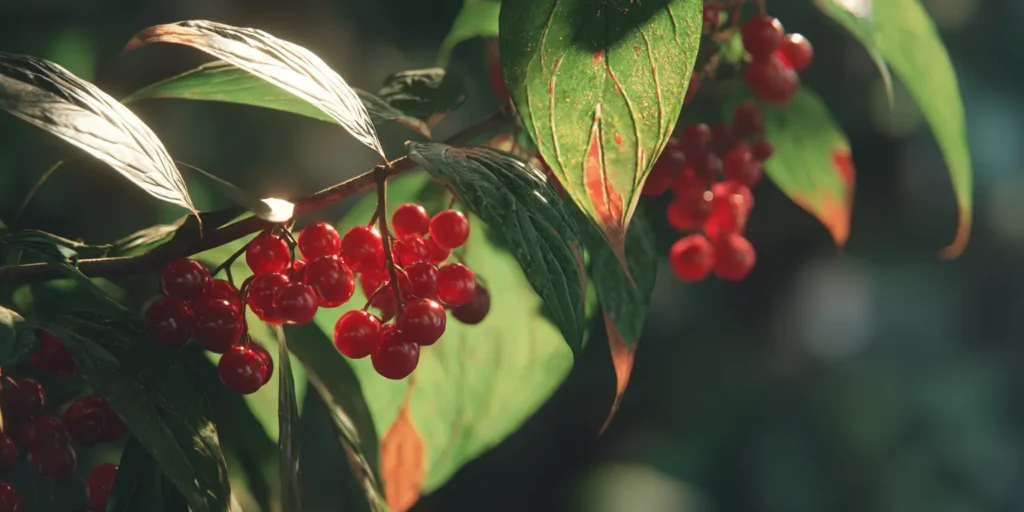
Latin (botanical) name: Schisandra chinensis
Plant family: Schisandraceae
Common names: Schisandra, five-flavor berry, magnolia vine berry
Traditional use overview:
Although schisandra originates in East Asia, it has been fully integrated into modern Western herbalism as an adaptogenic, hepatic, and tonic herb. Western herbalists commonly use schisandra to support recovery from chronic stress, protect liver function, and promote stamina without stimulation. Its unique combination of sour, sweet, bitter, pungent, and salty tastes reflects its broad traditional system-balancing role.
Herbal Actions
Schisandra is traditionally associated with the following actions:
- Adaptogen – supports resilience to physical and emotional stress
- Hepatic support – supports liver detoxification and protection
- Antioxidant – helps protect tissues from oxidative stress
- Astringent – supports tissue tone and fluid balance
- Immune tonic – supports long-term immune resilience
These actions describe traditional functional use rather than medical treatment.
Practical Uses
In Western herbal practice, schisandra is most often used over time, particularly for individuals experiencing burnout, poor stress tolerance, or liver strain. Herbalists value it when endurance, clarity, and recovery need strengthening without overstimulation. It is commonly included in adaptogenic and restorative formulas.
Product Forms
Schisandra is available in a variety of preparations:
- Dried berries – used for decoctions and teas
- Powdered berries – capsules or blended formulas
- Tinctures – alcohol or hydroalcoholic extracts
- Liquid extracts – standardized or whole-plant
- Adaptogenic blends – combined with other tonic herbs
Decoctions and tinctures are the most traditional forms.
Traditional Herbal Recipes
- Schisandra Berry Decoction
A slow-simmered preparation traditionally used for endurance and liver support. - Adaptogenic Tonic Formula
Schisandra blended with other tonic herbs for long-term resilience. - Five-Flavor Tea
A light infusion highlighting schisandra’s complex taste profile. - Schisandra Tincture
Used for convenient daily tonic support.
Parts Used
- Berries (fruit), harvested when fully ripe and dried
Usage Forms & Shelf Life
Internal vs external use:
Primarily internal.
Common preparations:
Decoctions, tinctures, powders, capsules
Shelf-life ranges:
- Dried berries: 2–3 years
- Tinctures: 3–5 years
- Powders/capsules: 1–2 years
Safety & Considerations and Dosage Guidelines
Schisandra is traditionally considered safe and well suited for long-term use when used in moderate amounts. Herbalists typically emphasize consistent daily intake rather than high doses. It is often introduced gradually.
Side Effects & Contraindications
Schisandra is generally well tolerated. Due to its astringent nature, excessive use may feel drying for some individuals. Traditional sources suggest mindful use during acute illness or when strong stimulation is not desired.
Active Constituents
Lignans
- Compounds: schisandrin, schisandrol, gomisin A
- Traditional role: associated with liver protection, stress adaptation, and antioxidant activity
- Best extraction: alcohol or hydroalcoholic preparations
- Quantitative data: total lignans typically range from 1–3% of dried berries
National Center for Biotechnology Information
Organic Acids
- Compounds: citric, malic, tartaric acids
- Traditional role: contribute to sour taste and tonic effect
- Best extraction: water and alcohol
Essential Oils
- Traditional role: aromatic and stimulant-supportive properties
- Best extraction: alcohol
How It Works
Traditionally, schisandra is understood to work by supporting liver processing, enhancing stress resilience, and improving coordination between body systems. Modern research highlights its hepatoprotective and antioxidant activity, aligning with its long-standing use as a restorative and endurance-building herb
Journal of Ethnopharmacology.
Processing Cautions
Schisandra berries should be dried thoroughly before storage. Long, gentle decoction preserves lignans without excessive bitterness. Overheating may degrade aromatic constituents.
Quick Herb Overview
- Botanical family: Schisandraceae
- Parts used: Berries
- Energetics: Warming, balancing
- Taste profile: Sour, sweet, bitter, pungent, salty
Herb Identification
Visual traits:
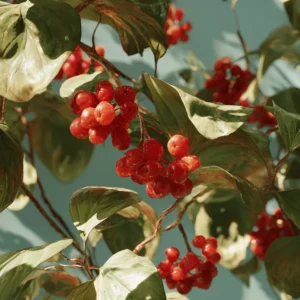
Small red berries borne in clusters along a climbing vine.
Growth habit:
Deciduous woody vine.
Look-alikes and safety notes:
Distinct berry clusters and five-flavor taste help distinguish schisandra from other vines.
Selecting Quality Herb
Choose berries that are deep red, intact, and aromatic. Dried schisandra should have a strong, complex flavor. Products should clearly list Schisandra chinensis and berry part.
Natural Growing Areas
Native to northeastern China, Korea, and parts of Russia; cultivated in temperate regions worldwide.
Growing Tips
Schisandra prefers partial shade, moist well-drained soil, and sturdy trellising. Berries are typically harvested in late summer to early autumn.
Frequently Asked Questions
Is schisandra a stimulant?
No. It is considered an adaptogen that supports endurance without stimulation.
How long does schisandra take to work?
Traditionally, benefits develop gradually over weeks of consistent use.
Is schisandra mainly for liver support?
While strongly associated with the liver, it traditionally supports stress adaptation and overall resilience.
Can schisandra be used daily?
Yes. It is commonly used as a daily tonic herb.
Does schisandra feel warming or cooling?
It is traditionally considered warming and balancing.
Can schisandra be combined with other adaptogens?
Yes. It is often blended with complementary tonic herbs.
References
- National Center for Biotechnology Information
- Journal of Ethnopharmacology
- European Medicines Agency – Herbal Monographs
This content is for educational purposes only and reflects traditional herbal understanding. It is not intended to diagnose, treat, cure, or prevent any disease.