
Burdock: Traditional Uses, Actions, and Herbal Practice
Burdock is traditionally used to support liver and lymphatic function, encourage deep tissue cleansing, and nourish skin and connective tissue over time.
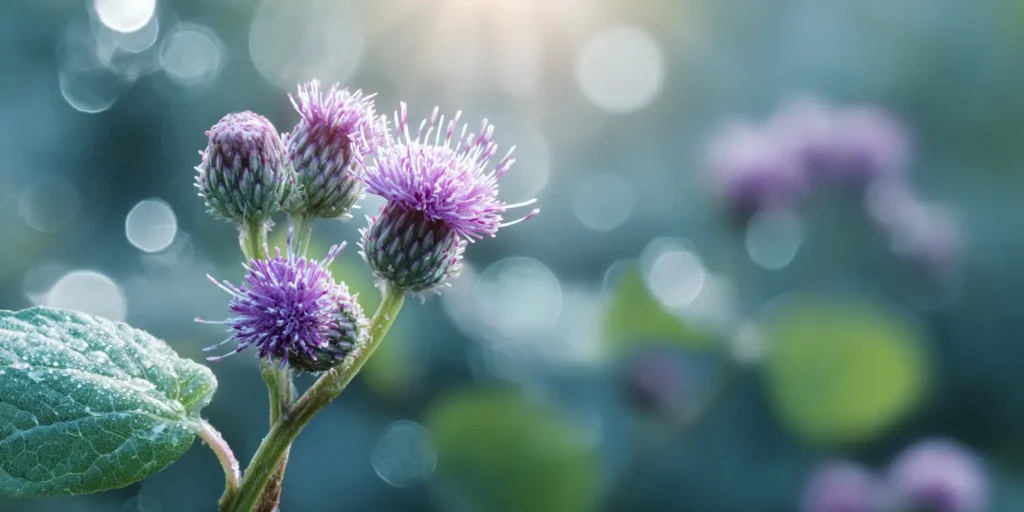
Latin (botanical) name: Arctium lappa (also Arctium minus)
Plant family: Asteraceae
Common names: Burdock root, great burdock
Traditional use overview:
Burdock has been used for centuries in European and Western herbal traditions as a primary alterative and nutritive root. Traditionally, it was chosen for long-standing skin issues, metabolic stagnation, and conditions linked to poor elimination. Western herbalists often see burdock as a foundational cleansing herb—supporting the liver, lymph, and skin simultaneously.
Herbal Actions
Burdock is traditionally associated with the following actions:
- Alterative – supports gradual metabolic cleansing
- Hepatic support – supports liver function and bile flow
- Lymphatic support – encourages movement of lymph and waste
- Nutritive – provides minerals and inulin-rich nourishment
- Mild diuretic – supports urinary elimination
These actions describe traditional functional use rather than medical treatment.
Practical Uses
In Western herbal practice, burdock is most often used long term, especially when skin issues, joint stiffness, or chronic congestion suggest deeper metabolic imbalance. Herbalists value burdock for its ability to work quietly but thoroughly, making it a classic choice for rebuilding vitality while clearing accumulated waste.
Product Forms
Burdock is available in a variety of preparations:
- Dried root slices – used for decoctions and long-simmered teas
- Powdered root – capsules or blended formulas
- Tinctures – alcohol or hydroalcoholic extracts
- Fresh root – occasionally used when available
- Topical washes – less common, for skin support
Decoctions are the most traditional and widely used form.
Traditional Herbal Recipes
- Burdock Root Decoction
A slow-simmered preparation traditionally used for deep cleansing and nourishment. - Skin-Support Tea Blend
Burdock combined with other alteratives for long-term use. - Liver Support Formula
Burdock paired with complementary hepatic herbs. - Burdock Tincture
Used when a more concentrated or portable form is preferred.
Parts Used
- Root, harvested from first-year plants for best quality
Usage Forms & Shelf Life
Internal vs external use:
Primarily internal; occasional external use.
Common preparations:
Decoctions, tinctures, powders, capsules
Shelf-life ranges:
- Dried root: 2–3 years
- Tinctures: 3–5 years
- Powders/capsules: 1–2 years
Safety & Considerations and Dosage Guidelines
Burdock is traditionally considered safe and suitable for extended use, particularly as a food-like herb. Herbalists emphasize regular, moderate use rather than high doses. Adequate hydration is often encouraged during use.
Side Effects & Contraindications
Burdock is generally well tolerated. Because of its cleansing action, some individuals may notice mild changes in digestion or elimination early on. Caution is traditionally advised for those with sensitivity to Asteraceae plants.
Active Constituents
Inulin (Polysaccharide)
- Traditional role: nutritive support for digestion and metabolism
- Best extraction: water decoction
- Quantitative data: inulin may comprise up to 45–50% of dried burdock root
National Center for Biotechnology Information
Polyphenols
- Compounds: arctiin, arctigenin
- Traditional role: antioxidant and tissue-supportive activity
- Best extraction: alcohol or hydroalcoholic preparations
Bitter Compounds
- Traditional role: supports digestion and liver function
- Best extraction: water and alcohol
How It Works
Traditionally, burdock is understood to work by supporting liver processing, improving elimination, and nourishing tissues simultaneously. Modern research highlights its antioxidant activity and prebiotic inulin content, helping explain its long-standing use for skin, metabolic, and connective tissue support
Journal of Ethnopharmacology.
Processing Cautions
Burdock root should be sliced and dried promptly to prevent spoilage. Long, gentle decoction is preferred to fully extract inulin and bitter compounds. Excessive heat beyond simmering is unnecessary.
Quick Herb Overview
- Botanical family: Asteraceae
- Parts used: Root
- Energetics: Cooling, drying
- Taste profile: Earthy, mildly bitter, slightly sweet
Herb Identification
Visual traits:
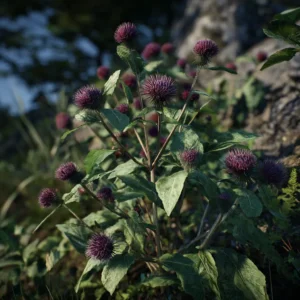
Large, heart-shaped basal leaves with fuzzy undersides and purple thistle-like flowers in the second year.
Growth habit:
Biennial plant forming a deep taproot in its first year.
Look-alikes and safety notes:
Young burdock may resemble foxglove leaves; correct identification is essential.
Selecting Quality Herb
Choose roots that are firm, aromatic, and free from mold. Dried burdock should retain a pale interior color. Products should clearly list the botanical name and root part.
Natural Growing Areas
Native to Europe and Asia; widely naturalized across North America along roadsides and fields.
Growing Tips
Burdock prefers loose, deep soil to allow proper root development. Harvest roots in the fall of the first year for best quality and sweetness.
Frequently Asked Questions
Is burdock meant for short-term use?
No. Traditionally, it is used over weeks or months for gradual support.
Is burdock mainly for skin health?
While commonly associated with skin, it works systemically through liver and lymphatic support.
Does burdock act quickly?
Burdock works slowly and steadily rather than producing rapid effects.
Is burdock warming or cooling?
It is traditionally considered cooling and drying.
Can burdock be used daily?
Yes. It is often used regularly as a food-like herbal tonic.
Can burdock be combined with other herbs?
Yes. It blends well with other alteratives and nutritive roots.
References
- National Center for Biotechnology Information
- Journal of Ethnopharmacology
- European Medicines Agency – Herbal Monographs
This content is for educational purposes only and reflects traditional herbal understanding. It is not intended to diagnose, treat, cure, or prevent any disease.