

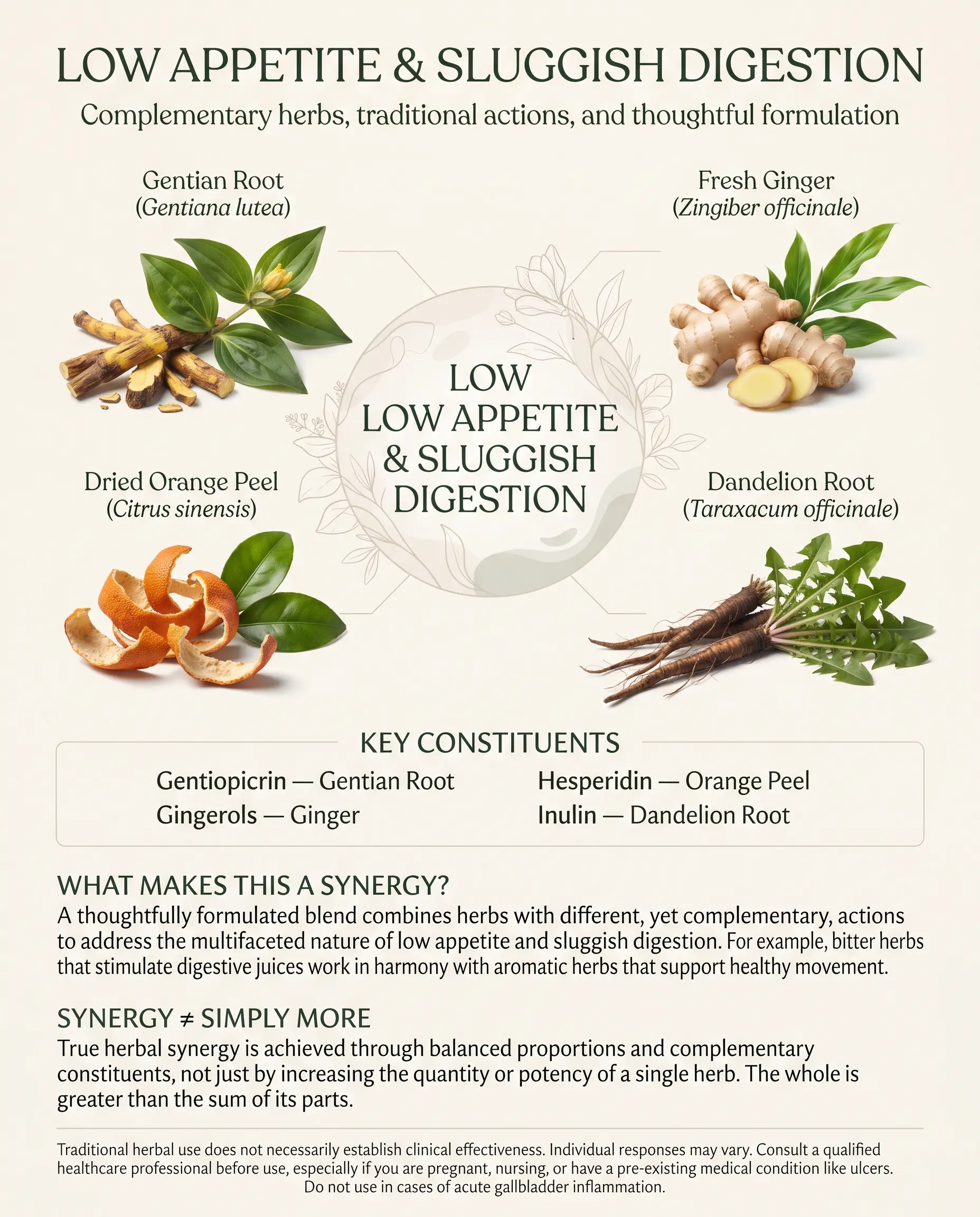
Low appetite and sluggish digestion often go hand in hand — when digestion is slow, appetite naturally drops, and low appetite means less is happening to keep digestion moving. This is a category with a genuinely interesting evidence story: the traditional idea of “bitters stimulate digestion” has real mechanistic research behind it now, not just folklore.
| Herb | What It Adds |
| Gentian | The classic bitter, with real evidence for stimulating digestive secretions via bitter taste receptors |
| Ginger | Shown in trials to speed up gastric emptying and improve functional dyspepsia symptoms |
| Dandelion Root | A traditional bitter, commonly paired with gentian to round out the bitter profile |
| Artichoke Leaf | Trial evidence specifically for functional dyspepsia, often paired with ginger |
Gentian is the standout here — recent research has actually identified the mechanism by which bitter taste triggers increased digestive secretions, moving this from pure tradition into genuine physiology. Ginger works differently, directly speeding up how quickly the stomach empties. Combining a bitter (priming digestion before eating) with ginger (supporting movement after eating) covers the process from both ends.
Recipe for Low Appetite / Sluggish Digestion
Gentian & Ginger Pre-Meal Bitters
Why this blend: Gentian has real research support for stimulating digestive secretions through its intensely bitter taste, and ginger adds gastric-emptying support plus a milder flavor to make the bitterness more approachable.
Ingredients
- ¼ tsp dried gentian root
- ¼ tsp fresh grated ginger (or a pinch of dried)
- ½ cup (120 ml) hot water
Yield: ½ cup (a concentrated pre-meal dose, not a full mug)
Preparation
- Combine the gentian root and ginger in a small cup.
- Pour hot water over them and cover.
- Steep, covered, for 10 minutes.
- Strain and drink a small amount (a few tablespoons) about 15–20 minutes before a meal.
How to Use This is meant to be taken in a small amount before eating, not sipped like a regular tea — the bitter taste itself is what does the work, so don’t mask it with sweeteners.
Herbalist’s Note The bitterness is genuinely the active ingredient here — tasting it is part of how it works, since bitter taste receptors are what trigger the digestive response.
Safety Skip gentian and other strong bitters if you have gallstones, a bowel obstruction, or an active peptic ulcer — see the safety section below.
Ready-to-Use Products With This Synergy
Urban Moonshine Original Bitters Brand: Urban Moonshine Key herbs: Gentian root, ginger root, dandelion root and leaf, burdock root, fennel seed, orange peel Why it fits: This is close to an exact match to the gentian-and-ginger combination discussed in this article, in a convenient spray or dropper format for pre-meal use. Buy: urbanmoonshine.com
Gaia Herbs PRO Digestive Bitters with Turmeric Brand: Gaia Herbs Key herbs: Bitter herb blend with turmeric Why it fits: A travel-friendly liquid bitters formula for readers who want a different brand’s take on the same pre-meal bitters approach. Buy: amazon.com
Traditional Medicinals Organic Ginger Aid Tea Brand: Traditional Medicinals Key herbs: Ginger Why it fits: A simpler, single-herb ginger tea option for readers who want to start with the gastric-emptying side of this combination before adding a bitter. Buy: traditionalmedicinals.com
Herbal Synergies for Low Appetite / Sluggish Digestion
Not everyone’s sluggishness looks the same. Low appetite without much digestive discomfort — just not feeling hungry — is where bitters like gentian shine, since their whole traditional purpose is priming appetite before a meal even starts. Sluggish digestion after eating — that overly full, slow feeling — is more where ginger’s gastric-emptying evidence applies, taken with or after a meal rather than before. And general, ongoing sluggishness benefits from combining both approaches across the day.
As always: synergy is about thoughtful complementarity — not simply adding more herbs to the pot.
Core Herbal Synergy Combinations
Gentian + Ginger Best for: Low appetite specifically, taken before meals. Why it works: Gentian’s bitter taste has documented mechanistic research showing it stimulates gastric secretions via specific bitter taste receptors, while ginger adds gastric-emptying support and makes the whole preparation more palatable. This is the recipe above.
Ginger + Artichoke Leaf Best for: Sluggish digestion and fullness after eating, more than low appetite itself. Why it works: A randomized, placebo-controlled trial specifically tested ginger and artichoke extract together for functional dyspepsia and found a significant improvement over placebo — a genuinely evidence-backed pairing, not just a formulation guess.
Gentian + Dandelion Root Best for: A broader, more traditional bitters approach covering both appetite and general digestive tone. Why it works: Both are classic bitters, commonly combined in traditional formulas to stimulate a wider range of bitter taste receptors than either alone — reflecting the same logic behind most commercial digestive bitters products.
Ginger Alone Best for: Someone who wants to start simple, especially for the “food just sits there” feeling. Why it works: Ginger has been shown in multiple trials to genuinely accelerate gastric emptying, not just provide symptomatic comfort — a reasonable single-herb starting point before building toward a bitters combination.
Herbs Used in These Synergies
Gentian Botanical name: Gentiana lutea Traditional actions: Bitter, digestive stimulant Role in the synergy: The best-researched bitter in this article — recent studies have identified the specific bitter taste receptors gentian activates, and a multicenter study of gentian capsules found meaningful relief across a range of digestive symptoms including appetite loss. Key constituents: Amarogentin, gentiopicroside (secoiridoid glycosides)
Ginger Botanical name: Zingiber officinale Traditional actions: Carminative, digestive stimulant Role in the synergy: Shown in controlled studies to accelerate gastric emptying and improve functional dyspepsia symptoms, working through a genuinely different mechanism than the bitters — movement rather than secretion stimulation. Key constituents: Gingerols, shogaols
Dandelion Root Botanical name: Taraxacum officinale Traditional actions: Bitter, mild digestive stimulant Role in the synergy: A classic bitter commonly paired with gentian in traditional formulas, contributing to the broader bitter-taste-receptor activation that seems to matter for the overall effect. Key constituents: Sesquiterpene lactones, inulin
Artichoke Leaf Botanical name: Cynara scolymus (syn. Cynara cardunculus) Traditional actions: Bitter, digestive stimulant Role in the synergy: Has its own direct trial evidence for functional dyspepsia, and was specifically tested in combination with ginger with positive results — one of the more genuinely evidence-backed pairings in this article. Key constituents: Cynarin, chlorogenic acid
Safety and When to Seek Medical Advice
Use Caution If:
- You have gallstones or a bile duct obstruction — bitters like gentian and dandelion stimulate bile flow, which can be problematic in these situations
- You have a bowel obstruction or active peptic ulcer — avoid bitters formulas entirely; commercial products explicitly warn against use in these cases
- You’re allergic to plants in the parsley (Apiaceae) family — some bitters formulas include fennel or related herbs
- You’re pregnant — most commercial bitters products explicitly advise against use during pregnancy
- You experience discomfort from gastric hyperacidity — bitter herbs can occasionally cause this in sensitive individuals; discontinue if it happens
See a Healthcare Professional If: Low appetite or sluggish digestion is persistent, unexplained, or accompanied by unintentional weight loss, difficulty swallowing, persistent vomiting, or blood in the stool. A prolonged, unexplained loss of appetite deserves proper medical evaluation rather than ongoing herbal self-management, since it can occasionally signal something that needs direct attention.
Q&A
Do bitters actually work, or is it just tradition? There’s genuine modern research behind it — studies have identified the specific bitter taste receptors that gentian and similar herbs activate, and clinical observations show real improvement in digestive symptoms including appetite. It’s one of the better-mechanistically-supported traditions in herbalism.
Why do I have to actually taste the bitterness for it to work? Because the bitter taste itself, sensed by receptors on the tongue (and even in the gut), is part of what triggers the digestive response. Masking the bitterness with sugar or a lot of dilution works against the mechanism.
Is ginger better for appetite or for after-meal fullness? More the latter — ginger’s evidence is strongest for speeding gastric emptying and easing that overly-full feeling after eating, while gentian and other bitters are more specifically about stimulating appetite before a meal.
Can I use these every day? Yes, that’s how bitters are traditionally used — a small amount before meals, regularly, rather than as an occasional remedy.
Which combination is gentlest? Ginger alone, without the more intensely bitter gentian or dandelion — a reasonable starting point if you’re not used to bitter flavors.
Can I combine this with a probiotic or other digestive supplement? Generally yes, there’s no known conflict — bitters and probiotics work through different mechanisms.
When should I see a doctor instead of trying herbs? If appetite loss is persistent, unexplained, or comes with weight loss, difficulty swallowing, or blood in the stool — those need proper medical evaluation, not ongoing herbal management.
References
Bitters: Time for a New Paradigm – PMC
Bitter Tastants Alter Gastric-Phase Postprandial Haemodynamics – ScienceDirect
Gentian (Gentiana lutea): Benefits, Safety, Uses – Herbal Reality
Effect of Ginger on Gastric Motility and Symptoms of Functional Dyspepsia – WJG
Disclaimer
This article is for educational and informational purposes only and is not intended to diagnose, treat, cure, or prevent disease. Herbs are biologically active and may interact with medications or be inappropriate for some people. If you are pregnant, breastfeeding, taking medication, managing a health condition, or experiencing persistent or severe symptoms, consult a qualified healthcare professional before using herbal preparations.
Available Herbal Products
Explore and shop ready-made products offering this benefit.