

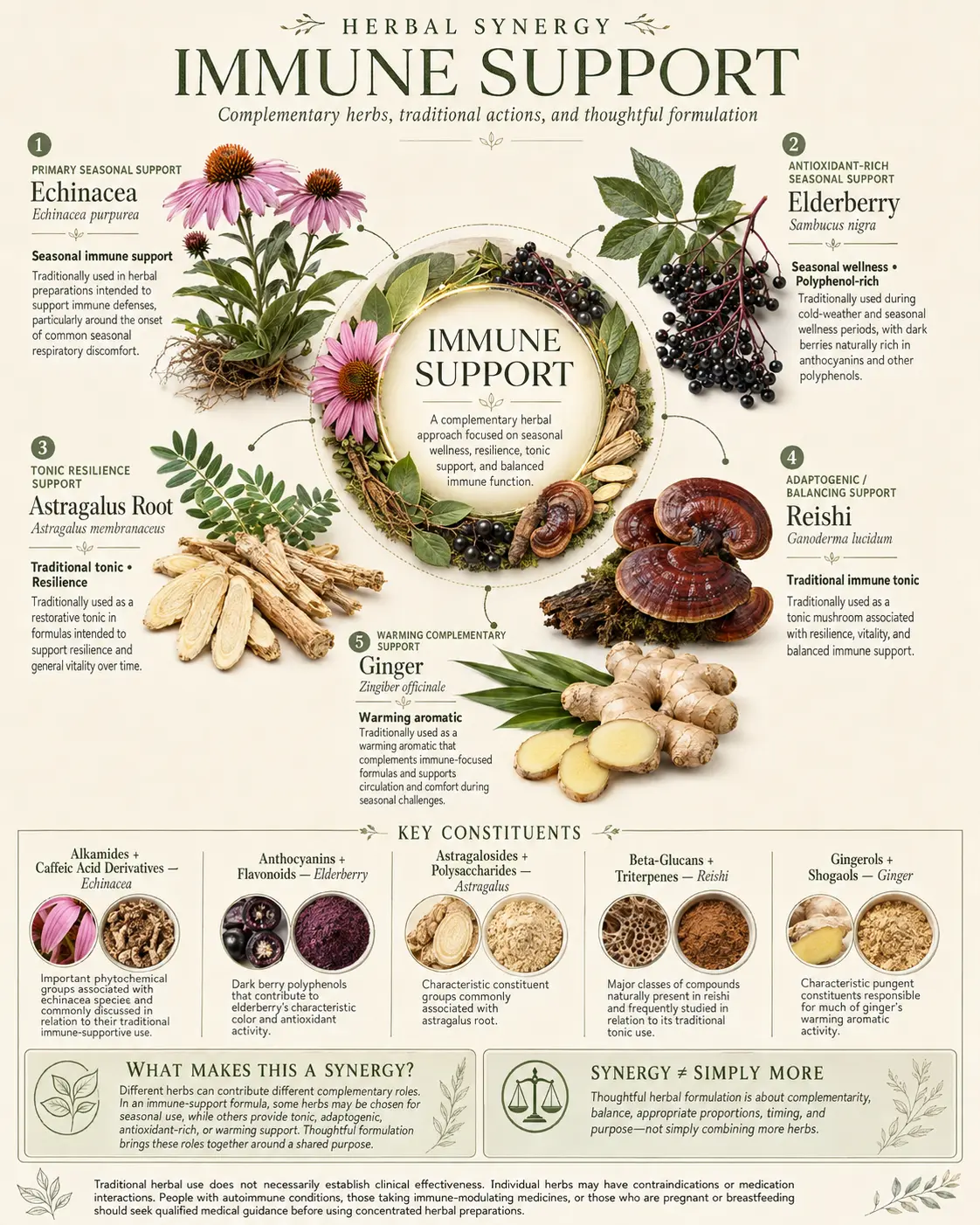
“Immune support” covers a lot of ground — some people want something to reach for the moment a cold starts, others want a daily habit through the winter months. Different herbs (and one mineral) are traditionally suited to different parts of that picture, and the evidence quality varies more here than in most herbal categories.
| Herb | What It Adds |
| Echinacea | The most-studied herb here, with meta-analysis evidence for shortening cold duration and possibly reducing incidence |
| Elderberry | Traditionally and clinically associated with reducing the severity and duration of upper respiratory symptoms |
| Zinc | Not an herb, but the single strongest piece of evidence in this whole category for shortening a cold once it starts |
| Astragalus | A traditional immune-supportive herb, though the human evidence base is thinner than the others |
Echinacea and elderberry are the two herbs with the most consistent research behind them, zinc is the “act fast once symptoms start” ingredient with genuinely strong trial data, and astragalus leans more traditional than proven. A sensible formula usually picks from these based on timing — acute symptom-onset support looks different from an everyday winter habit.
Recipe for Immune Support
Elderberry, Echinacea & Ginger Immune Tea
Why this blend: Elderberry and echinacea are the two best-evidenced herbs in this category, and ginger adds warmth along with its own traditional immune-supportive reputation — a simple, everyday tea rather than a concentrated treatment product.
Ingredients
- 1 tsp dried elderberries
- 1 tsp dried echinacea root or leaf
- ½ tsp fresh grated ginger (or ¼ tsp dried)
- 1 cup (240 ml) hot water
Yield: 1 cup
Preparation
- Combine the elderberries, echinacea, and ginger in a small saucepan.
- Add the water and bring to a gentle simmer.
- Simmer, covered, for 10–12 minutes — elderberries benefit from actual simmering rather than just steeping.
- Strain and drink warm.
How to Use Drink up to 2–3 cups a day at the first sign of a cold, or once daily as a general habit through cold season.
Herbalist’s Note Dried elderberries need real heat to release their compounds properly — a quick steep like you’d use for a leafy herb won’t do the job here.
Safety Never eat raw or unripe elderberries or use unprepared elderberry parts — they contain compounds that can cause nausea when not properly processed. Stick to commercially prepared dried elderberries or products.
Ready-to-Use Products With This Synergy
Gaia Herbs Black Elderberry Syrup Brand: Gaia Herbs Key herbs: Organic black elderberry, acerola cherry (vitamin C) Why it fits: A concentrated, standardized elderberry syrup reflecting the form used in most of the clinical research on elderberry for upper respiratory symptoms. Buy: gaiaherbs.com
Cold-EEZE Zinc Lozenges Brand: Cold-EEZE Key herbs: Zinc gluconate (plus homeopathic-dose sambucus, echinacea, rose hips) Why it fits: Zinc gluconate lozenges are the product category with the strongest clinical evidence in this entire article for shortening an active cold when started early. Buy: coldeeze.com
A.Vogel Echinaforce Echinacea Drops Brand: A.Vogel Key herbs: Fresh echinacea purpurea (herb and root) Why it fits: A standardized fresh-echinacea tincture reflecting the type of preparation used in several of the meta-analyzed clinical trials on echinacea and the common cold. Buy: amazon.com
Herbal Synergies for Immune Support
Not all immune support means the same thing at the same time. Right at the first sign of a scratchy throat or that “coming down with something” feeling, fast-acting options like zinc lozenges have the clearest evidence for shortening what follows. Once a cold has settled in, elderberry and echinacea are more often used to ease severity over the following days. And some people want a lower-key, ongoing herbal habit through the winter months rather than waiting for symptoms — that’s a different use case with a different, generally more traditional evidence base.
As always: synergy is about thoughtful complementarity — not simply adding more herbs to the pot.
Core Herbal Synergy Combinations
Zinc + Elderberry Best for: The first 24 hours of cold symptoms, when speed matters most. Why it works: Zinc acetate lozenges have some of the strongest clinical evidence in this whole category for shortening cold duration when started early, and elderberry’s evidence base focuses on reducing the severity of the days that follow. Together they cover both “shorten this” and “make it milder.”
Echinacea + Elderberry Best for: General cold-season support, taken either preventively or once symptoms appear. Why it works: These are the two most consistently studied herbs in this category, each with a somewhat different evidence profile — echinacea leans toward a modest preventive effect and reduced duration, elderberry toward eased severity of upper respiratory symptoms. A natural, well-evidenced pairing rather than a purely traditional one.
Elderberry + Ginger Best for: An easy, everyday tea, especially when a cold comes with some digestive discomfort too. Why it works: Elderberry brings the immune-focused evidence, while ginger adds warmth and its own traditional reputation for easing nausea or an upset stomach that sometimes tags along with a cold. This is the gentle, food-like combination — the tea recipe above with echinacea added for extra support.
Astragalus + Elderberry Best for: People wanting a longer-term, ongoing immune habit rather than acute symptom relief. Why it works: Astragalus is traditionally used as a longer-term tonic rather than a fast-acting remedy, which pairs logically with elderberry as a daily habit through cold season — though it’s worth being upfront that astragalus’s human evidence base is considerably thinner than the other herbs here.
Herbs Used in These Synergies
Echinacea Botanical name: Echinacea purpurea Traditional actions: Immune-supportive, traditionally anti-inflammatory Role in the synergy: A meta-analysis of 14 trials found echinacea reduced the odds of developing a cold and shortened cold duration by roughly a day and a half, though more recent reviews have found the evidence for prevention specifically to be weaker and inconsistent across products. Key constituents: Alkylamides, polysaccharides, caffeic acid derivatives
Elderberry Botanical name: Sambucus nigra Traditional actions: Traditionally antiviral, immune-supportive Role in the synergy: A meta-analysis of randomized trials found elderberry supplementation substantially reduced upper respiratory symptoms, and a separate trial found reduced cold duration in air travelers — one of the better-evidenced herbs in this category. Key constituents: Anthocyanins, flavonoids (quercetin, rutin)
Zinc Not a botanical (mineral) Traditional actions: Not applicable — this is nutritional/pharmacological rather than herbal Role in the synergy: Included here because it’s so often paired with these herbs in practice, and because a meta-analysis of high-dose zinc acetate lozenge trials found meaningfully shortened duration across multiple cold symptoms when started within 24 hours of onset. Key constituents: Elemental zinc (as zinc acetate or zinc gluconate)
Astragalus Botanical name: Astragalus membranaceus Traditional actions: Traditional tonic, adaptogen-adjacent Role in the synergy: Widely used in traditional Chinese herbal medicine as a longer-term immune tonic, but current reviews note there’s no strong human clinical evidence confirming this use — it’s included here as a traditional, not clinically proven, option. Key constituents: Astragalosides, polysaccharides
Safety and When to Seek Medical Advice
Use Caution If:
- You’re taking immunosuppressant medication — echinacea and astragalus are both sometimes advised against in this situation; check with a provider
- You’re using zinc lozenges or nasal products — oral lozenges are fine short-term, but intranasal zinc products have been linked to permanent loss of smell and should be avoided entirely
- You’re pregnant or breastfeeding — check with a provider before regular use of any concentrated herbal immune product, since safety data for these herbs in pregnancy is limited
- You’re allergic to ragweed, daisies, or related plants — echinacea is part of the same plant family and can cross-react
- You’re using raw or homemade elderberry preparations — unripe berries, leaves, bark, and stems contain compounds that can cause nausea and digestive upset if not properly processed
See a Healthcare Professional If: Symptoms are severe, include high fever, difficulty breathing, chest pain, or persist longer than 10 days without improvement, or if you’re managing a chronic illness that makes respiratory infections higher risk. These deserve proper medical evaluation rather than ongoing herbal self-treatment.
Q&A
What’s the single most evidence-backed option here? Zinc acetate lozenges, taken within 24 hours of symptom onset, have some of the clearest clinical trial evidence in this whole category for shortening a cold. Echinacea and elderberry both have solid, though more mixed, evidence behind them.
Can I take echinacea and elderberry together? Yes — this is one of the more evidence-supported pairings in herbal immune support, since both have research behind slightly different aspects of cold symptoms.
When should I start taking these — before or after I feel sick? Zinc works best started right at the first sign of symptoms. Echinacea and elderberry are used both ways — some people take them preventively through cold season, others reach for them once symptoms start.
Can I use these every day? Elderberry syrup is commonly used daily during cold season. Echinacea is often used in shorter courses (during a cold, or for a few weeks at a time) rather than continuously for months, though practices vary.
Is astragalus worth including? It’s a long-standing traditional herb, but the human clinical evidence for it is noticeably thinner than for echinacea, elderberry, or zinc. Worth knowing that distinction going in rather than expecting the same evidence-backed effect.
Are there people who should avoid these? People on immunosuppressant medications should generally avoid echinacea and astragalus without medical guidance, and raw or unprepared elderberry parts should always be avoided.
When should I see a doctor instead? If symptoms are severe, include high fever or breathing difficulty, or aren’t improving after about 10 days — that’s worth a proper evaluation rather than continued herbal management.
References
The Common Cold and Complementary Health Approaches: What the Science Says – NCCIH
Elderberry Supplementation Reduces Cold Duration and Symptoms in Air-Travellers – PMC
Disclaimer
This article is for educational and informational purposes only and is not intended to diagnose, treat, cure, or prevent disease. Herbs are biologically active and may interact with medications or be inappropriate for some people. If you are pregnant, breastfeeding, taking medication, managing a health condition, or experiencing persistent or severe symptoms, consult a qualified healthcare professional before using herbal preparations.
Available Herbal Products
Explore and shop ready-made products offering this benefit.