

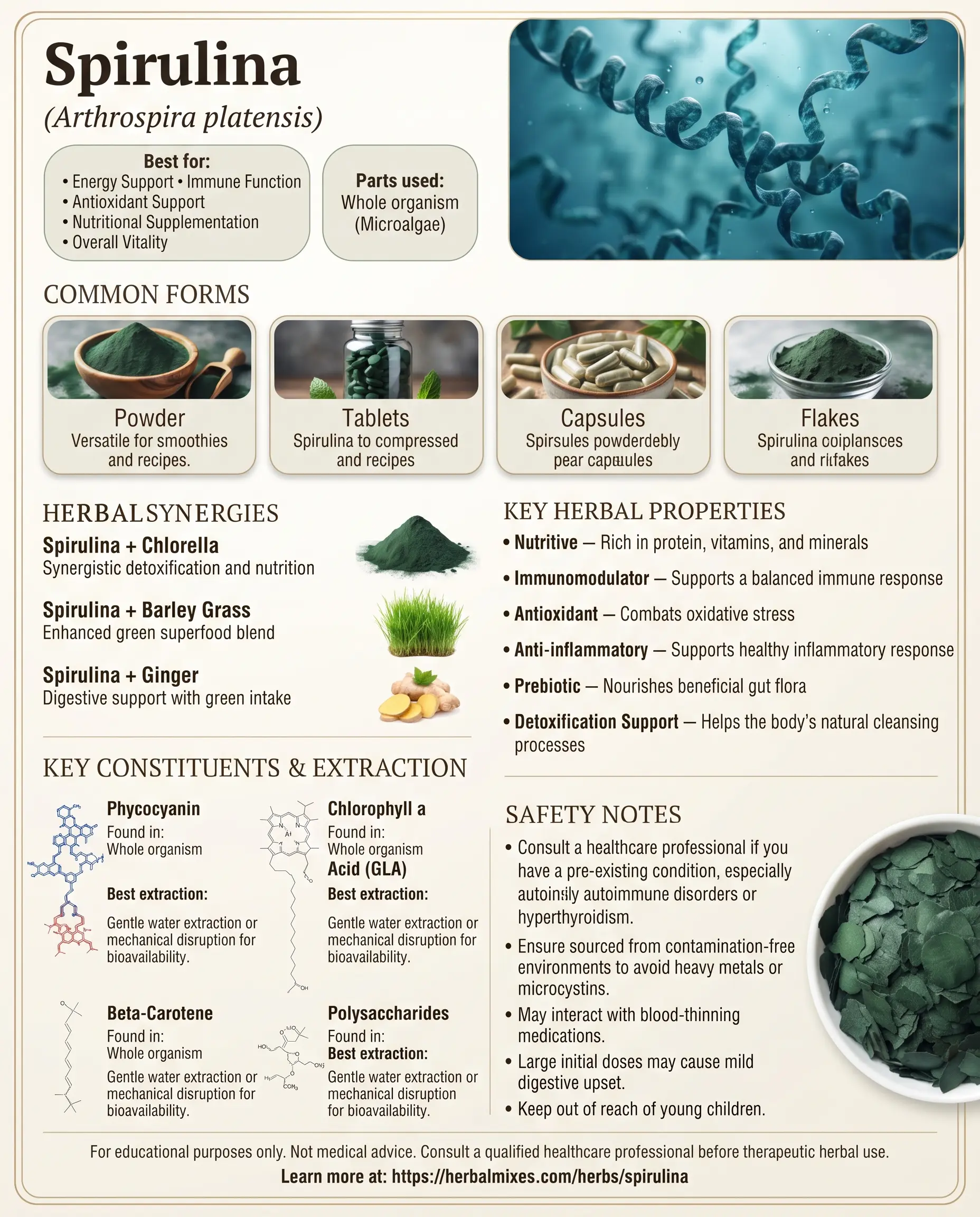
What Spirulina Is Good For
Nutritional support — Spirulina is a nutrient-dense edible cyanobacterium with a high proportion of protein plus carotenoids, minerals, essential fatty acids, chlorophyll, and the blue pigment-protein phycocyanin. It can supplement a balanced diet but should not be considered nutritionally complete.
Cholesterol & triglyceride support — Meta-analyses of randomized controlled trials suggest spirulina supplementation can reduce total cholesterol, LDL cholesterol, and triglycerides, while sometimes modestly increasing HDL cholesterol. A 2023 GRADE-assessed meta-analysis confirmed favorable lipid effects across clinical trials. PubMed
Blood pressure support — A 2024 systematic review and meta-analysis found average reductions of about 4.4 mmHg systolic and 2.8 mmHg diastolic blood pressure, with benefits particularly apparent in participants with elevated blood pressure or overweight. PubMed
Blood sugar support — Meta-analyses in people with type 2 diabetes or metabolic disorders have reported reductions in fasting glucose and improvements in several lipid markers. Spirulina should be considered complementary nutrition rather than a substitute for diabetes treatment. PubMed
Allergy support — A randomized placebo-controlled study found improvements in nasal discharge, sneezing, congestion, and itching in people with allergic rhinitis. These results are interesting but require more independent confirmation. PubMed
Exercise & recovery support — A 2026 meta-analysis of algae supplements found modest improvements in some aerobic-performance measures and reductions in creatine kinase, a marker of exercise-related muscle damage. Effects varied substantially by product, dose, and training type. PubMed
Available Herbal Products
Buying Guides for Available Spirulina Products
Organic Spirulina 500 mg Tablets – USDA Organic Arthrospira platensis tablets with no additional active ingredients. Multiple bottle sizes are currently available directly from the manufacturer. Seller: NOW Foods – View NOW Organic Spirulina →
Pure Hawaiian Spirulina Tablets – Hawaiian-grown spirulina tablets available in several strengths and package sizes. A practical option for people who prefer tablets over the strong taste of powder. Seller: Nutrex Hawaii – View Pure Hawaiian Spirulina →
Organic Spirulina Powder – Single-ingredient organic spirulina powder suitable for smoothies, juices, water, and foods. Currently available directly from the manufacturer. Seller: Organic Traditions – View Organic Spirulina Powder →
Organic Spirulina Powder – Bulk powdered spirulina currently available through iHerb as a simple single-ingredient superfood preparation. Seller: California Gold Nutrition / iHerb – View California Gold Nutrition Spirulina →
Organic Spirulina Tablets – 500 mg organic spirulina tablets available in multiple package sizes through iHerb. Seller: California Gold Nutrition / iHerb – View Organic Spirulina Tablets →
For spirulina, quality testing matters at least as much as dosage. Prefer products from manufacturers that test each lot for microcystins, heavy metals, microorganisms, and botanical/cyanobacterial identity.
Herbal Synergies
Spirulina pairs especially well with chlorella, moringa, turmeric, ginger, and flaxseed depending on whether the goal is nutritional density, metabolic wellness, antioxidant support, or recovery.
Spirulina + Chlorella
Best for: Nutritional and antioxidant support
Both are nutrient-dense green supplements, but their chemistry differs. Spirulina is particularly rich in phycocyanin, while chlorella provides chlorophyll, carotenoids, and a different cellular nutrient profile.
Best extraction: Whole powders or tablets. No herbal tincture is necessary.
Spirulina + Moringa
Best for: Nutritional density and general vitality
Spirulina provides concentrated protein and phycocyanin, while moringa leaf adds polyphenols, carotenoids, minerals, and plant-derived micronutrients.
Best extraction: Whole powders mixed into food or smoothies.
Spirulina + Turmeric
Best for: Antioxidant and inflammatory support
Spirulina contributes phycocyanin and carotenoids, while turmeric provides curcuminoids acting through complementary inflammatory pathways.
Best extraction: Spirulina as whole powder or tablets combined with a properly formulated turmeric extract.
Spirulina + Ginger
Best for: Exercise recovery with digestive support
Spirulina contributes protein and antioxidant compounds, while ginger adds anti-nausea, digestive, and inflammatory-modulating effects.
Best extraction: Spirulina powder combined with ginger tea, food, or standardized extract.
Spirulina + Flaxseed
Best for: Cardiovascular and metabolic support
Spirulina provides phycocyanin and protein, while flaxseed contributes soluble fiber, lignans, and alpha-linolenic acid.
Best extraction: Whole spirulina plus freshly ground flaxseed. Neither requires tincturing.
Key Herbal Properties
Nutritive — Spirulina provides concentrated protein, pigments, minerals, carotenoids, and fatty acids.
Antioxidant — Phycocyanin, carotenoids, chlorophyll-related pigments, and phenolic compounds contribute antioxidant activity.
Lipid supportive — Meta-analyses suggest modest improvements in LDL, total cholesterol, triglycerides, and sometimes HDL.
Antihypertensive supportive — Randomized-trial meta-analysis suggests modest reductions in systolic and diastolic blood pressure.
Glucose supportive — Clinical studies suggest fasting blood glucose may decrease in people with metabolic disorders.
Immunomodulatory — Phycocyanin and other spirulina components influence cytokine and immune-cell activity rather than simply “boosting” immunity.
Anti-inflammatory — experimental and emerging clinical evidence — Phycocyanin influences oxidative and inflammatory pathways.
Exercise-recovery supportive — emerging evidence — Recent clinical synthesis suggests possible reductions in muscle-damage markers and modest improvements in aerobic performance.



Active Compounds
Spirulina contains a distinctive mixture of proteins, phycobiliproteins, carotenoids, chlorophyll, polysaccharides, essential fatty acids, minerals, phenolics, and amino acids.
C-Phycocyanin
Found mainly in: Spirulina biomass
C-phycocyanin is spirulina’s characteristic blue water-soluble protein pigment and one of its most researched constituents.
It contains the chromophore phycocyanobilin and demonstrates antioxidant, anti-inflammatory, and immunomodulatory activity experimentally.
Best extraction: Cold or mildly warm water. Phycocyanin is water soluble and relatively heat sensitive.
Phycocyanobilin
Found mainly in: Attached to phycocyanin
Phycocyanobilin is the blue tetrapyrrole chromophore responsible for much of phycocyanin’s antioxidant chemistry.
Best extraction: Extracted together with phycocyanin in water-based systems.
Beta-Carotene
Found mainly in: Cellular pigment fraction
Spirulina contains beta-carotene and related carotenoids, which contribute antioxidant activity and can provide provitamin A activity.
Best extraction: Lipid-compatible extraction improves carotenoid recovery, although whole-food consumption also provides them.
Zeaxanthin
Found mainly in: Pigment fraction
Zeaxanthin is an oxygenated carotenoid associated with retinal antioxidant protection.
Best extraction: Lipid-compatible extraction or consumption with meals containing dietary fat.
Gamma-Linolenic Acid
Found mainly in: Lipid fraction
Spirulina is unusual among supplement foods for containing some gamma-linolenic acid (GLA), an omega-6 fatty acid.
Best extraction: Lipid extraction; whole spirulina retains it naturally.
Chlorophyll a
Found mainly in: Photosynthetic membranes
Spirulina contains chlorophyll a, which contributes its deep green coloration alongside blue phycocyanin.
Best extraction: Alcohol- or lipid-compatible solvents are more efficient analytically, but whole powder preserves it as food.
Polysaccharides
Found mainly in: Cell matrix
Complex spirulina polysaccharides have demonstrated immunological and antioxidant effects experimentally.
Best extraction: Hot or warm water.
Protein & Amino Acids
Found mainly in: Whole biomass
Dried spirulina is naturally high in protein and contains all essential amino acids, although the balance and amount should be considered in the context of total diet.
Best extraction: No extraction is necessary; whole dried biomass is the most direct nutritional form.
-
FAQ
What is spirulina best used for?
Spirulina is best viewed as a nutrient-dense functional food with promising evidence for cholesterol, triglycerides, blood pressure, glucose control, antioxidant support, and exercise recovery.
Is spirulina really high in protein?
Yes.
Dried spirulina is naturally protein-rich, although typical supplement servings are relatively small, so it usually contributes only a few grams of protein rather than replacing normal dietary protein sources.
Is spirulina a good source of vitamin B12?
No—not reliably.
Spirulina can test high for B12-like compounds, but much of this is pseudovitamin B12, an inactive corrinoid that humans cannot use like true cobalamin.
People following vegan diets should use a reliable vitamin B12 supplement or fortified food rather than relying on spirulina. PubMed
Is powder better than tablets?
Nutritionally they can be similar if the raw material and dose are equivalent.
Powder is economical and easy to add to food, while tablets make the strong flavor easier to avoid.
Product testing and purity matter more than format.
What is the biggest safety issue with spirulina?
Contamination.
Poorly controlled blue-green-algae products can contain microcystins, heavy metals, or other unwanted contaminants. FDA warns that significant microcystin exposure can damage the liver and kidneys. FDA
Safety & Precautions
Spirulina is generally well tolerated when obtained from a reputable, carefully tested source.
Possible adverse effects include nausea, bloating, diarrhea, headache, or allergic reaction.
The most important practical concern is product quality.
Microcystin Contamination
Spirulina itself is not the same organism as toxin-producing Microcystis, but cyanobacterial supplements can become contaminated if production and quality control are poor.
FDA warns that microcystins can cause liver and kidney damage at significant exposures.
Choose products that provide meaningful quality-control information and preferably batch testing for:
- microcystins;
- heavy metals;
- pathogenic bacteria;
- unwanted cyanobacterial species.
Avoid unidentified bulk “blue-green algae” powders from suppliers that provide no testing information.
Blood Pressure & Diabetes Medications
Because clinical trials suggest spirulina can reduce blood pressure and fasting glucose, additive effects are possible with antihypertensive or diabetes medications.
People using insulin, sulfonylureas, or multiple glucose-lowering medications should monitor glucose carefully when adding concentrated spirulina supplements.
Immune-Modifying Drugs
Spirulina has immunomodulatory activity.
People taking immunosuppressive medications after transplantation or for autoimmune disease should discuss regular high-dose spirulina use with their healthcare team.
Do not assume that an “immune-supportive” supplement is desirable when the medical goal is deliberate immune suppression.
Anticoagulant & Antiplatelet Therapy
Clinically significant interactions are not well established, but spirulina contains multiple biologically active compounds.
People taking warfarin, apixaban, rivaroxaban, clopidogrel, or similar medicines should inform their healthcare professional about regular concentrated supplement use.
Phenylketonuria
Spirulina contains the amino acid phenylalanine.
People with phenylketonuria (PKU) should avoid or carefully manage spirulina according to their medical nutrition plan.
Pregnancy & Breastfeeding
Food-like spirulina has a long history of dietary use, but pregnancy-specific supplement safety and contaminant exposure deserve caution.
FDA recommends consulting a healthcare professional before using blue-green-algae dietary supplements during pregnancy or breastfeeding.
Only use products with strong contaminant testing during pregnancy.
Vitamin B12
Do not rely on spirulina for preventing vitamin B12 deficiency.
Research shows its dominant B12-like compound can be biologically inactive pseudovitamin B12. PubMed
This is particularly important for vegans and vegetarians.
Do not use spirulina as a substitute for prescribed treatment of high cholesterol, hypertension, diabetes, anemia, allergy, autoimmune disease, or another diagnosed condition.
Anyone who is pregnant, breastfeeding, taking diabetes, blood-pressure, immune-suppressing, or anticoagulant medications, or managing PKU or significant liver/kidney disease should discuss therapeutic spirulina use with an appropriate healthcare professional.
References
- PubMed — Spirulina and Lipid Profile: GRADE-Assessed Meta-Analysis
- PubMed — Spirulina and Blood Pressure: 2024 Systematic Review and Meta-Analysis
- PubMed — Spirulina in Type 2 Diabetes: Systematic Review and Meta-Analysis
- PubMed — Spirulina and Cardiometabolic Health in Overweight and Obese Adults
- PubMed — Spirulina and Exercise Performance & Recovery: 2026 Meta-Analysis
- PubMed — Spirulina for Allergic Rhinitis
- PubMed — Spirulina Vitamin B12 and Pseudovitamin B12
- PubMed — Phycocyanin Extraction and Stability
- FDA — Blue-Green Algae Products and Microcystins
- NOW Foods — Organic Spirulina Tablets
- Nutrex Hawaii — Hawaiian Spirulina
- Organic Traditions — Spirulina Powder
Disclaimer
Disclaimer: This article is for educational purposes only and is not intended to diagnose, treat, cure, or prevent any disease. Herbal products can cause side effects and interact with medications. Consult a qualified healthcare professional before using herbs therapeutically, especially if you are pregnant, breastfeeding, taking prescription medications, or managing a medical condition.