


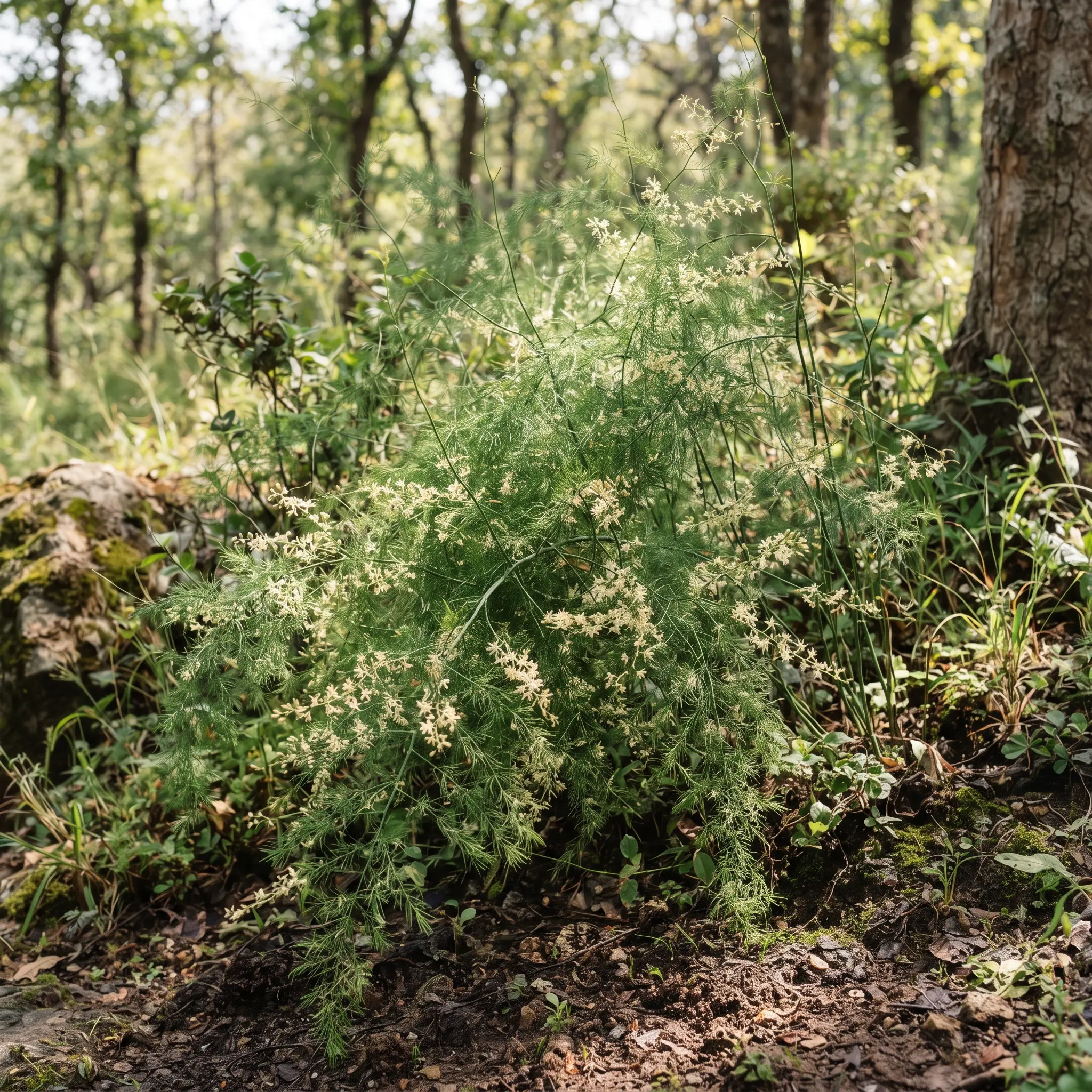
Traditionally, shatavari has been used primarily for supporting women’s reproductive and hormonal health, especially when dealing with hormonal fluctuations or low milk supply during breastfeeding. It is commonly prepared as a powder, tea, tincture, or capsule.
Common Name: Shatavari Latin Name: Asparagus racemosus (Latin name itself in italics) Alternate Names: Wild Asparagus, Queen of Herbs
- Parts used: root
- Primary properties: adaptogen, demulcent, galactagogue
- Common preparations: powder, tea, tincture, capsule
- Best known for: supporting female hormonal balance and reproductive health
What It Helps With
Health conditions this herb is commonly used to support.
Related Buying Guides
Featured Recipes
Explore and try simple ways to prepare and use this herb at home.
Active Compounds
The tiny plant chemistry doing all the heavy lifting.
Key Herbal Properties
What this herb is known for, herbally speaking.





Herbal Synergies
Other herbs that pair especially well with this one — together, their combined properties work better than either herb does alone.
Health Conditions Shatavari Helps With
- Hormonal balance — Shatavari has a long traditional reputation in Ayurvedic practice as a primary herb for supporting women’s hormonal health across life stages.
- Low breast milk supply — Traditionally one of the most well-known galactagogue herbs, used to help support healthy milk production in breastfeeding mothers.
- Menopausal symptoms — Traditionally used to help ease hot flashes, mood changes, and general discomfort associated with menopause.
- Digestive discomfort — Used traditionally as a soothing demulcent to help calm an irritated digestive tract.
- General vitality & stress resilience — Classified as an adaptogen in Ayurvedic tradition, used to support the body’s resilience to stress and support overall energy.
- Menstrual irregularity — Traditionally included in formulas intended to support a more regular, comfortable menstrual cycle.
Compounds
- Steroidal saponins (shatavarins) — Compounds unique to shatavari, generally understood to contribute significantly to its traditional hormonal and adaptogenic reputation.
- Mucilage — Contributes to shatavari’s soothing, demulcent quality, particularly for digestive tissue.
- Flavonoids — Support shatavari’s overall antioxidant profile and traditional anti-inflammatory use.
- Polysaccharides — Thought to contribute to shatavari’s broader traditional immune-supportive and tonic reputation.
- Phytoestrogens — Plant compounds with mild estrogen-like activity, thought to underpin much of shatavari’s traditional hormonal-support use.
Properties
- Adaptogen — Shatavari’s defining property in Ayurvedic tradition, used to help the body adapt to physical and emotional stress.
- Demulcent — Its mucilage content gives shatavari a soothing quality, traditionally used for digestive and tissue comfort.
- Galactagogue — One of shatavari’s most specific and well-known traditional uses, supporting milk production in breastfeeding mothers.
- Nutritive tonic — Long used in Ayurvedic tradition as a general building and nourishing tonic, particularly for women.
- Mild estrogenic (traditional) — Its phytoestrogen content underpins shatavari’s traditional reputation for supporting hormonal balance.
Recipes Using Shatavari
- Shatavari milk tonic — Shatavari powder stirred into warm milk, often with a touch of ghee and spices, a classic Ayurvedic preparation for women’s health.
- Shatavari lactation tea — Shatavari combined with other traditional galactagogue herbs like fennel or fenugreek for breastfeeding support.
- Shatavari hormone-support capsule blends — Shatavari paired with herbs like ashwagandha or maca in capsule form for broader hormonal and energy support.
Products Featuring Shatavari
- Root powder — The most traditional form, commonly stirred into warm milk or water following Ayurvedic practice.
- Standardized capsules — Offers a consistent, pre-measured dose for convenient daily use.
- Tincture — Provides a concentrated liquid form for flexible, adjustable dosing.
Synergies
- Shatavari + ashwagandha — A classic Ayurvedic pairing combining shatavari’s hormonal support with ashwagandha’s broader adaptogenic and grounding qualities.
- Shatavari + fennel — Traditionally combined to support lactation and ease digestive comfort together.
- Shatavari + fenugreek — A popular pairing in traditional breastfeeding-support formulas.
- Shatavari + licorice root — Combined in some traditional formulas for hormonal balance and soothing digestive support.
Safety & Precautions
Shatavari is generally considered well-tolerated at typical traditional doses, though it can occasionally cause mild digestive upset in sensitive individuals. Because of its traditional phytoestrogenic activity, anyone with a hormone-sensitive condition, such as certain types of breast, ovarian, or uterine cancer, endometriosis, or fibroids, should consult a healthcare provider before use, as its hormonal effects may not be appropriate in these situations.
Shatavari is one of the few herbs traditionally considered supportive during pregnancy in Ayurvedic practice, but given the complexity of hormonal herbs and pregnancy, it’s still best used only under the guidance of a healthcare provider or experienced practitioner rather than self-prescribed. Those allergic to asparagus or other plants in the same family should avoid shatavari, as cross-reactivity is possible. It may also interact with hormone-related medications, including birth control or hormone replacement therapy, so anyone on these should speak with a healthcare provider before use.
Shatavari is generally well-tolerated by most healthy adults when used appropriately. For pets, shatavari is not a commonly used or well-studied herb, and reliable safety information is limited, so it’s best avoided for dogs or cats without direct veterinary guidance.
Q&A
Does shatavari actually help increase milk supply while breastfeeding?
Shatavari has one of the longest and most consistent traditional reputations of any herb specifically for supporting milk production, and it’s a foundational galactagogue in Ayurvedic postpartum care. Many breastfeeding mothers today still use it in the traditional milk tonic form for this purpose.
As with any supplement during breastfeeding, it’s worth discussing with a healthcare provider or lactation consultant first, especially to make sure it fits well alongside your overall feeding routine.
Can shatavari be used daily?
Shatavari is commonly used daily in traditional Ayurvedic practice, particularly during specific life stages like postpartum recovery or menopause, often for sustained periods of weeks to months. It’s generally considered a gentle, food-like tonic rather than a harsh or fast-acting remedy.
That said, checking in with a healthcare provider periodically during long-term use is a reasonable practice, particularly for anyone with hormone-sensitive health considerations.
What does shatavari taste like, and how is it usually taken?
Shatavari root powder has a mildly sweet, slightly bitter, earthy flavor, which is part of why it’s traditionally mixed into warm milk with a bit of natural sweetness and warming spices to improve palatability. It can also be taken in capsule form if the taste isn’t appealing.
The classic Ayurvedic preparation of shatavari powder in warm milk before bed is still one of the most common ways it’s used today.
Is shatavari the same as regular asparagus?
Shatavari and the asparagus found in grocery stores are related, both belonging to the Asparagus genus, but shatavari (Asparagus racemosus) is a distinct species traditionally used for its root rather than eaten as a vegetable. The root is what’s used medicinally, not the edible spears people cook with.
Because of this botanical relationship, anyone with a known asparagus allergy should be cautious with shatavari as well.
Is shatavari safe around pets?
Shatavari isn’t a well-studied herb for dogs or cats, so there isn’t reliable safety information confirming it’s appropriate for them. Without solid data, it’s best treated with caution rather than assumed safe.
If you’re interested in herbal support for a pet’s hormonal or general health, it’s best to speak with a veterinarian familiar with herbal options rather than sharing a human shatavari supplement.
References
- Plants of the World Online: Asparagus racemosus
- PubMed: Scientific Literature on Asparagus racemosus
- National Library of Medicine: Chemical Constituents from Asparagus racemosus
- Wikipedia: Asparagus racemosus
- ScienceDirect Topics: Asparagus racemosus Research
- Memorial Sloan Kettering Cancer Center: About Herbs — Shatavari
- PubMed: Shatavari Galactagogue and Hormonal Research
- PubMed: Shatavarin Saponin Compound Research
This information is for educational purposes only and is not intended as medical advice. Consult a qualified healthcare professional before using any herb, especially if pregnant, breastfeeding, taking medications, or managing a health condition.