

Health Conditions Red Root Helps With
Red Root is traditionally used for lymphatic congestion, helping to move stagnant fluid and support the body when lymph nodes in the neck or body feel swollen and tender. It has a history of use in supporting mild respiratory congestion and excess mucus by acting on the mucous membranes of the upper airways. Additionally, it has been traditionally employed to support normal splenic and hepatic circulation when minor sluggishness occurs in the upper abdomen. It is also used historically to tone oral tissues, sometimes appearing in herbal toothpowders or mouth rinses for gum health.
Available Herbal Products
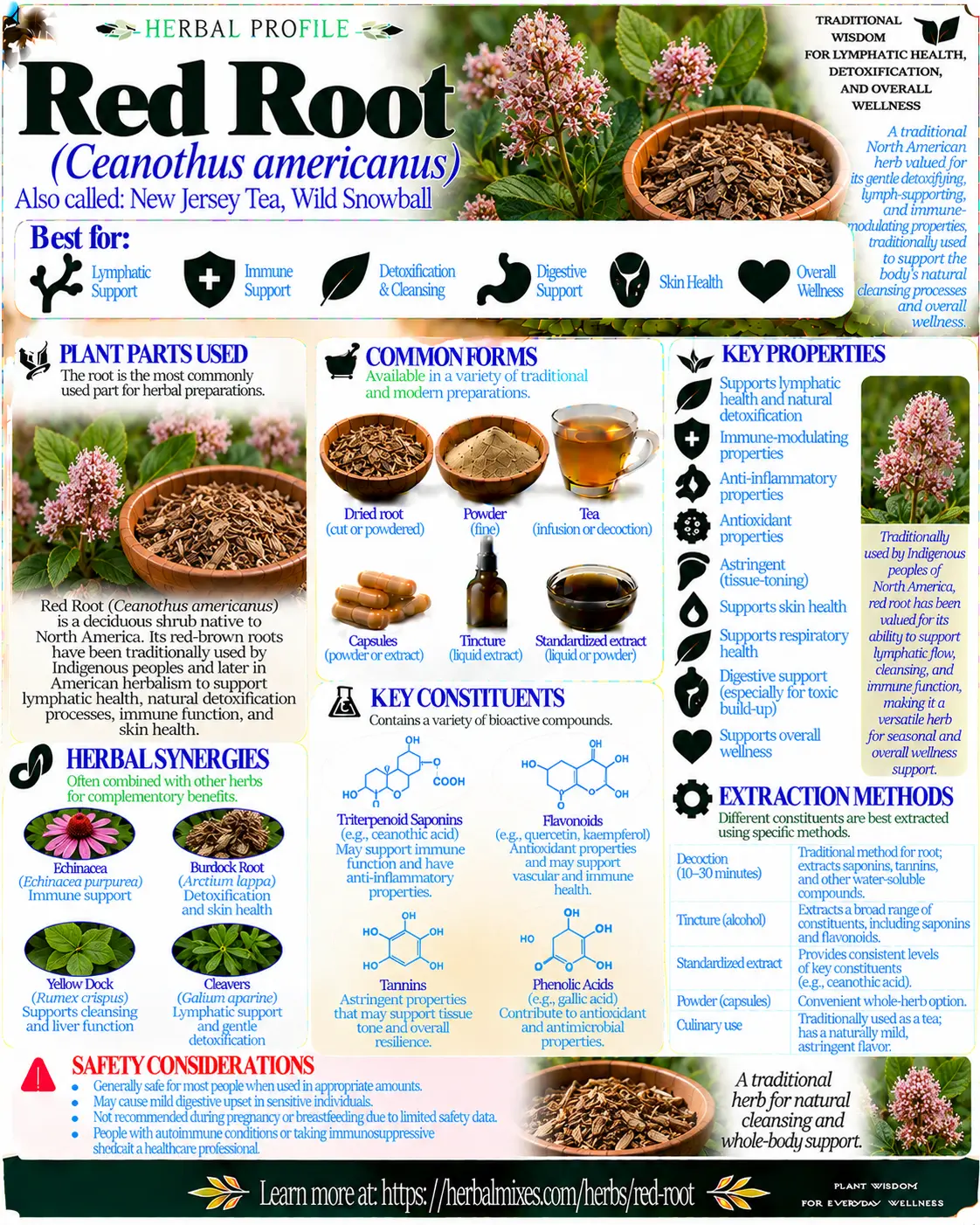
Herbal Synergies
Red Root is frequently paired with Cleavers (Galium aparine) to create a comprehensive formula that addresses both deep lymphatic stagnation and superficial fluid clearance. It is commonly combined with Stillingia (Stillingia sylvatica) and Prickly Ash Bark (Zanthoxylum americanum) in traditional formulas designed to stimulate stubborn lymphatic and circulatory sluggishness. For respiratory support, it blends well with Wild Cherry Bark (Prunus serotina) to soothe the airways while clearing mucus.
Because Red Root relies on hard root material to release its active constituents, it is most commonly prepared as a strong decoction, where the dried root is gently simmered on low heat for twenty to thirty minutes. Due to its potent astringent profile and earthy taste, it is rarely consumed as a standalone beverage tea and is more frequently taken in smaller sips or formulated into syrups and oxymels. It also serves as an excellent base for specialized lymph-cleansing herbal formulas blended with complementary root and leaf extracts.
Key Herbal Properties
Red Root functions primarily as a lymphatic, meaning it specifically stimulates and supports the flow of lymph, helping to clear cellular debris and reduce congestion. It acts as a powerful astringent, using its high tannin content to tighten, tone, and dry relaxed or boggy mucous membranes. It also acts as an expectorant, helping to loosen and clear phlegm from the upper respiratory passages. Finally, it serves as a mild vascular tonic, gently supporting the integrity of blood vessels and circulation in organ tissues.




Active Compounds
Red Root contains high levels of peptide alkaloids, such as ceanothine, which are understood to contribute to its tonic effects on smooth muscle and vascular tissue. It is rich in complex tannins, which provide its characteristic astringent and tissue-tightening qualities. Flavonoids and phenolic glycosides are also present, offering antioxidant support and influencing local inflammatory responses. Additionally, it contains triterpenes that help support normal cellular function and metabolic pathways.
Safety & Precautions
Red Root should be used with caution or avoided during pregnancy and breastfeeding due to a lack of sufficient safety data regarding its active constituents on developing fetuses and infants. Individuals taking anticoagulant medications or blood thinners should consult a healthcare provider before use, as its strong astringent and constituent profile may interact with blood clotting mechanisms. Because it can strongly stimulate lymphatic flow, sensitive individuals may occasionally experience mild temporary discomfort or headaches as congestion clears. It is generally not recommended for long-term continuous daily use without a specific therapeutic goal, and safety data regarding routine use in pets is limited, so veterinary guidance is advised.
Q&A
Does Red Root taste bitter?
Red Root has a strongly astringent, earthy, and somewhat bitter flavor profile due to its high concentration of tannins and active compounds. Because of this bold and drying taste, it is rarely enjoyed as a casual beverage tea.
Most people prefer taking it as a concentrated liquid tincture or mixing a decoction into flavored herbal syrups to make it much more palatable.
Can Red Root be used daily for long periods?
Red Root is generally intended for short-term or targeted use when addressing specific lymphatic congestion, swollen nodes, or sluggish fluid movement. Continuous daily use over many months is typically discouraged unless directed by an experienced herbalist or practitioner.
Cycling off the herb allows the body to respond naturally without over-relying on its strong lymphatic-stimulating and astringent properties.
How does Red Root differ from other lymphatic herbs?
Unlike gentler lymphatic movers like cleavers or violet leaf that focus on gentle fluid clearance, Red Root has a stronger, more targeted effect on deep lymphatic congestion and swollen nodes. Its high tannin content also gives it a distinct tissue-tightening property that milder herbs lack.
This makes it especially useful when tissues feel boggy, relaxed, or congested rather than simply needing mild fluid support.
Can Red Root be applied topically?
While the internal decoction or tincture is the primary traditional method of use, strong decoctions of Red Root have occasionally been used in washes or compresses for minor localized tissue support. However, internal preparations remain the standard approach for addressing systemic lymphatic and respiratory concerns.
Anyone considering topical application should ensure the skin is unbroken and patch-test a small area first to monitor for sensitivity to the tannins.
References
- Plants of the World Online: Ceanothus americanus
- PubMed: Scientific Literature on Ceanothus americanus
- National Library of Medicine: Chemical Constituents from Ceanothus americanus
- Wikipedia: Ceanothus americanus
- ScienceDirect Topics: Ceanothus americanus Research
- Memorial Sloan Kettering Cancer Center: About Herbs — Red Root
Disclaimer
Disclaimer: This article is for educational purposes only and is not intended to diagnose, treat, cure, or prevent any disease. Herbal products can cause side effects and interact with medications. Consult a qualified healthcare professional before using herbs therapeutically, especially if you are pregnant, breastfeeding, taking prescription medications, or managing a medical condition.