

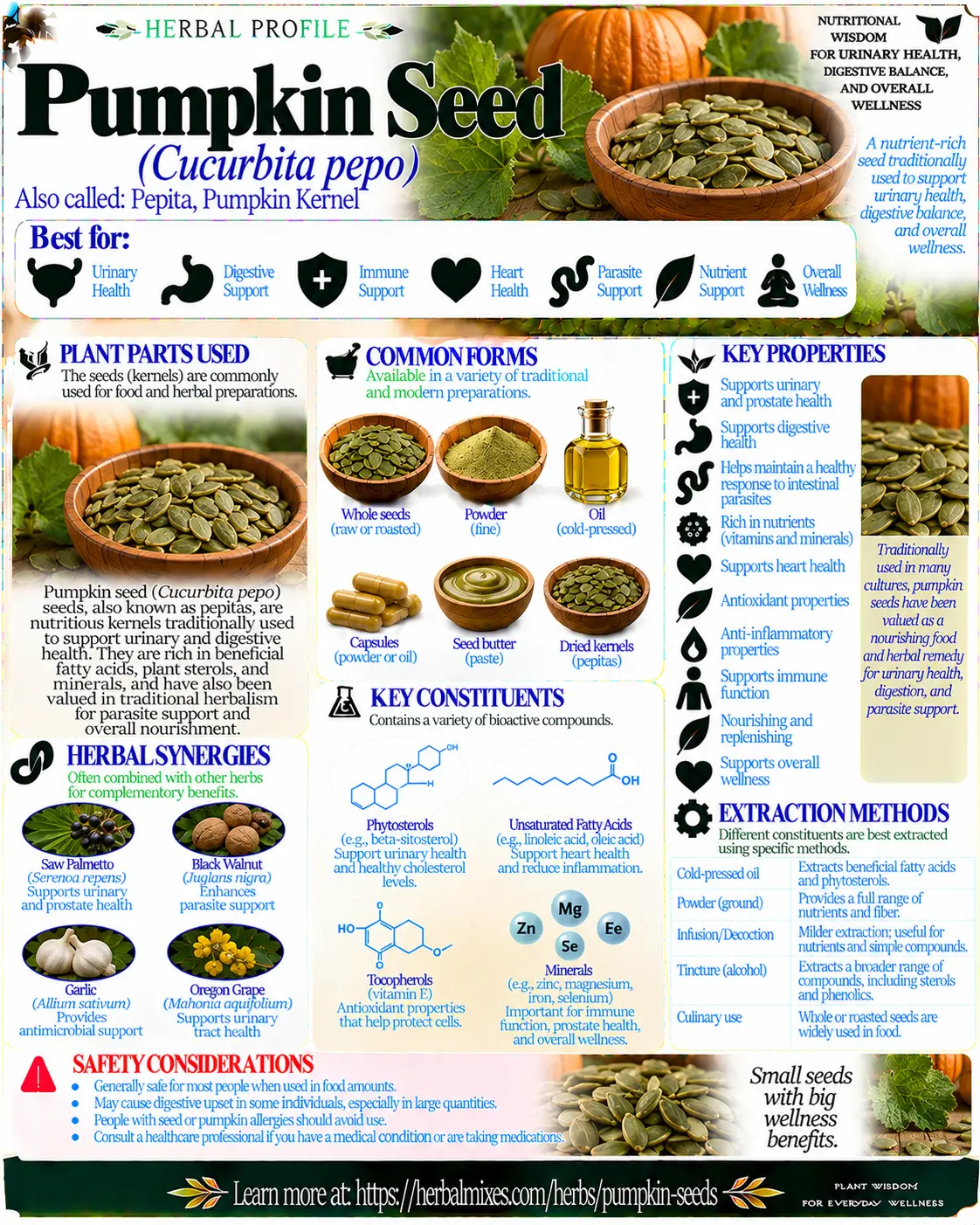
What Pumpkin Seed Is Good For
Prostate support — Pumpkin seed is best known medicinally for supporting lower urinary tract symptoms associated with benign prostatic hyperplasia (BPH). The European Medicines Agency recognizes Cucurbita pepo seed within the therapeutic area of urinary and genital disorders.
Urinary flow and nighttime urination — A large one-year randomized trial involving 1,431 men found that whole pumpkin seed improved lower urinary tract symptom scores compared with placebo, although the pumpkin-seed extract arm did not significantly outperform placebo. The results were encouraging but not definitive.
BPH-related urinary symptoms — A smaller randomized trial comparing pumpkin seed oil with tamsulosin found improvement in symptom scores and quality of life in both groups over three months. Tamsulosin produced greater symptom reduction, so pumpkin seed oil should be viewed as supportive rather than equivalent to standard medication.
Bladder support — Pumpkin seed has longstanding traditional use for irritable bladder, urinary frequency, nocturia, hesitancy, and weak urinary flow. These uses form part of its European herbal tradition.
Nutritional support — Pumpkin seeds provide protein, magnesium, zinc, unsaturated fats, vitamin E compounds, and phytosterols, making them a useful everyday food beyond their herbal applications.
Traditional intestinal cleansing — Pumpkin seeds have historically been used as a vermifuge, particularly against intestinal worms. Cucurbitin and related constituents have demonstrated anthelmintic activity experimentally, but modern human evidence is inadequate for treating diagnosed parasitic infections.
Available Herbal Products
Buying Guides for Available Pumpkin Seed Products
Pumpkin Seed Oil 1000 mg – Cold-pressed pumpkin seed oil softgels. Provides essential fatty acids and phytosterols from non-GMO pumpkin seeds and is currently available directly from the manufacturer. Seller: NOW Foods – View NOW Pumpkin Seed Oil →
Pygeum & Saw Palmetto with Pumpkin Seed Oil – Men’s urinary-support softgels. Combines saw palmetto and pygeum extracts with 1,500 mg pumpkin seed oil per serving and is currently available. Seller: NOW Foods – View NOW Pygeum & Saw Palmetto →
Pumpkin Seed Oil 1000 mg Softgels – Cold-pressed oil capsules. A widely available single-ingredient pumpkin-seed-oil product currently listed for purchase through iHerb. Seller: NOW Foods / iHerb – View Pumpkin Seed Oil at iHerb →
For urinary and prostate support, choose products that clearly state pumpkin seed, pumpkin seed oil, or a defined Cucurbita pepo extract rather than vague “men’s health” blends with undisclosed amounts.
Whole unsalted pepitas are also an excellent food-based option when the goal is general nutritional support rather than concentrated supplementation.
Herbal Synergies
Pumpkin seed pairs especially well with saw palmetto, nettle root, pygeum, cranberry, and garlic depending on whether the goal is prostate, bladder, urinary, or traditional intestinal support.
Pumpkin Seed + Saw Palmetto
Best for: BPH-related urinary symptoms
Pumpkin seed contributes phytosterols, fatty acids, and other seed constituents, while saw palmetto provides lipid-soluble compounds used more specifically for prostate and urinary support.
Best extraction: Pumpkin seed oil or standardized extract combined with a liposterolic saw-palmetto extract.
Pumpkin Seed + Nettle Root
Best for: Urinary hesitancy and prostate support
Pumpkin seed supports urinary function, while nettle root has established traditional use for lower urinary tract symptoms associated with an enlarged prostate.
Best extraction: Pumpkin seed oil or whole seed combined with nettle-root tincture or standardized extract.
Pumpkin Seed + Pygeum
Best for: Weak urinary flow and nighttime urination
Pumpkin seed contributes phytosterol-rich nutritional support, while pygeum provides bark sterols and triterpenes traditionally used for BPH-related urinary symptoms.
Best extraction: Pumpkin seed oil combined with standardized pygeum bark extract.
Pumpkin Seed + Cranberry
Best for: General urinary-system support
Pumpkin seed is more strongly associated with bladder and prostate function, while cranberry provides proanthocyanidins that help reduce bacterial adhesion in the urinary tract.
Best extraction: Pumpkin seed food or oil plus standardized cranberry extract.
This combination does not replace antibiotics for a diagnosed urinary tract infection.
Pumpkin Seed + Garlic
Best for: Traditional intestinal-cleansing formulas
Pumpkin seed has historical anthelmintic use, while garlic contributes sulfur compounds with experimental antimicrobial and antiparasitic activity.
Best extraction: Freshly ground or whole pumpkin seeds combined with freshly crushed garlic in food-based preparations.
Do not rely on this combination to treat a confirmed parasite infection.
Key Herbal Properties
Urinary supportive — Pumpkin seed has traditional and clinical evidence for reducing some lower urinary tract symptoms.
Prostate supportive — Whole seed, oil, and extracts have been investigated for BPH-related symptom management.
Nutritive — Seeds provide protein, magnesium, zinc, unsaturated fatty acids, and antioxidant nutrients.
Phytosterol-rich — Pumpkin seeds contain substantial total phytosterols, including beta-sitosterol, campesterol, and delta-5-avenasterol.
Antioxidant — Vitamin E compounds, carotenoids, phenolics, and seed lipids contribute antioxidant activity.
Anthelmintic — traditional / experimental — Pumpkin seed and seed extracts have demonstrated activity against intestinal parasites in laboratory and animal studies.
Anti-inflammatory — experimental — Seed sterols, fatty acids, and phenolic compounds influence inflammatory pathways in preclinical research.




Active Compounds
Pumpkin seeds contain fatty acids, phytosterols, tocopherols, carotenoids, amino acids, minerals, proteins, phenolic compounds, and cucurbitin. Whole seeds and oil differ substantially in composition.
Delta-7-Sterols
Found mainly in: Seeds and seed oil
Pumpkin seeds are particularly associated with delta-7 phytosterols, which have historically been proposed as contributors to their prostate-supportive activity.
Best extraction: Lipid extraction or cold-pressed seed oil.
Beta-Sitosterol
Found mainly in: Seed lipid fraction
Beta-sitosterol is one of several phytosterols present in pumpkin seed.
Pumpkin kernels contain a high total phytosterol content, although beta-sitosterol itself represents only part of that total.
Best extraction: Cold-pressed oil or lipid-compatible extraction.
Delta-5-Avenasterol
Found mainly in: Seed oil
Delta-5-avenasterol is another major phytosterol found in nuts and seeds, including pumpkin seed.
Best extraction: Seed oil.
Cucurbitin
Found mainly in: Seed
Cucurbitin is a non-protein amino acid historically associated with pumpkin seed’s anthelmintic use.
Experimental pumpkin-seed extracts containing cucurbitin have demonstrated activity against nematodes.
Best extraction: Water or hydroalcoholic preparations can recover cucurbitin, but whole crushed seed has traditionally been used.
Linoleic Acid
Found mainly in: Seed oil
Linoleic acid, an omega-6 polyunsaturated fatty acid, is one of the major lipids in pumpkin seed oil.
It contributes to the seed’s nutritional and cardiovascular profile.
Best extraction: Cold pressing.
Oleic Acid
Found mainly in: Seed oil
Oleic acid is a monounsaturated fatty acid contributing to pumpkin seed oil’s nutritional value.
Best extraction: Cold-pressed oil.
Tocopherols and Tocotrienols
Found mainly in: Oil-rich seed fraction
Pumpkin seed oil contains several forms of vitamin E, contributing antioxidant protection for both the oil and biological tissues.
Best extraction: Cold pressing or lipid extraction.
Carotenoids
Found mainly in: Seed oil, depending on cultivar
Pumpkin seed oil contains carotenoid pigments that contribute antioxidant activity and its characteristic green-to-reddish color.
Best extraction: Lipid extraction.
FAQ
What are pumpkin seeds best used for?
Medicinally, pumpkin seed is best supported for mild lower urinary tract symptoms associated with BPH and bladder dysfunction.
Nutritionally, whole pumpkin seeds are also an excellent source of minerals, protein, and healthy fats.
Do pumpkin seeds shrink the prostate?
There is no strong evidence that they significantly shrink prostate size.
Clinical studies more consistently suggest improvement in symptoms such as frequency, nocturia, and weak urinary flow, rather than major anatomical changes.
Is pumpkin seed oil better than whole pumpkin seeds?
They are different.
Whole seeds provide protein, minerals, fiber, phytosterols, and oil, while pumpkin seed oil concentrates fatty acids and lipid-soluble phytosterols.
A large trial actually found favorable results with whole seed while the tested seed-extract capsules did not significantly outperform placebo.
Can pumpkin seed help overactive bladder?
Possibly.
Pumpkin seed has traditional use for irritable bladder, and some small studies of seed extracts have reported improvements in urinary frequency and nocturia. Evidence is promising but less robust than for standard bladder treatments.
Do pumpkin seeds kill parasites?
They have traditional anthelmintic use and laboratory/animal evidence supports biological activity.
However, modern controlled human evidence is insufficient to recommend pumpkin seed as a stand-alone treatment for diagnosed intestinal parasites.
Safety & Precautions
Pumpkin seed eaten as food is generally very well tolerated.
The most common issues from large quantities are digestive fullness, gas, loose stool, or excess calorie intake.
Pumpkin-seed allergy is uncommon but possible. People with known pumpkin or Cucurbitaceae allergies should avoid seed products.
Cold-pressed pumpkin seed oil is concentrated fat and may cause nausea or loose stool in sensitive individuals.
Clinical studies of pumpkin seed for urinary symptoms generally report good tolerability. In the large one-year GRANU study, pumpkin seed treatment was well tolerated.
A three-month randomized trial of pumpkin seed oil also reported no treatment-related adverse effects in the pumpkin-oil group, although the study included only 39 people receiving pumpkin seed oil.
There are no major well-established medication interactions with ordinary pumpkin seed, but evidence on high-dose concentrated extracts remains limited.
Combination prostate products may contain other herbs such as saw palmetto, pygeum, or nettle root, each of which has its own medication and safety considerations.
Normal culinary pumpkin seed intake is generally compatible with pregnancy and breastfeeding, but concentrated medicinal extracts have not been studied sufficiently to establish therapeutic safety.
Urinary symptoms in men should not automatically be assumed to be BPH.
Seek medical evaluation for blood in urine, painful urination, fever, inability to urinate, recurrent urinary infections, unexplained weight loss, pelvic pain, or rapidly worsening urinary symptoms.
A weak stream, nocturia, or urinary frequency may also result from prostate cancer, infection, bladder disease, diabetes, medication effects, or neurological conditions.
Pumpkin seed should therefore be used as supportive care after serious causes have been excluded, rather than as a substitute for proper evaluation.
Anyone taking prescription medications or managing diagnosed prostate, bladder, kidney, or urinary disease should discuss therapeutic pumpkin-seed extracts with an appropriate healthcare professional.
References
- European Medicines Agency — Pumpkin Seed (Cucurbita pepo)
- PubMed — Pumpkin Seed for Lower Urinary Tract Symptoms: GRANU Randomized Trial
- PubMed — Pumpkin Seed Oil vs. Tamsulosin for BPH
- PubMed — Hydroethanolic Pumpkin Seed Extract for BPH Symptoms
- PubMed — Anthelmintic Activity and Composition of Pumpkin Seed Extracts
- PubMed — Cucurbitin and Traditional Anthelmintic Activity
- PubMed — Phytosterol Composition of Nuts and Seeds
- NOW Foods — Pumpkin Seed Oil 1000 mg
- NOW Foods — Pygeum & Saw Palmetto with Pumpkin Seed Oil
- iHerb — Pumpkin Seed Oil Products
Disclaimer
Disclaimer: This article is for educational purposes only and is not intended to diagnose, treat, cure, or prevent any disease. Herbal products can cause side effects and interact with medications. Consult a qualified healthcare professional before using herbs therapeutically, especially if you are pregnant, breastfeeding, taking prescription medications, or managing a medical condition.