


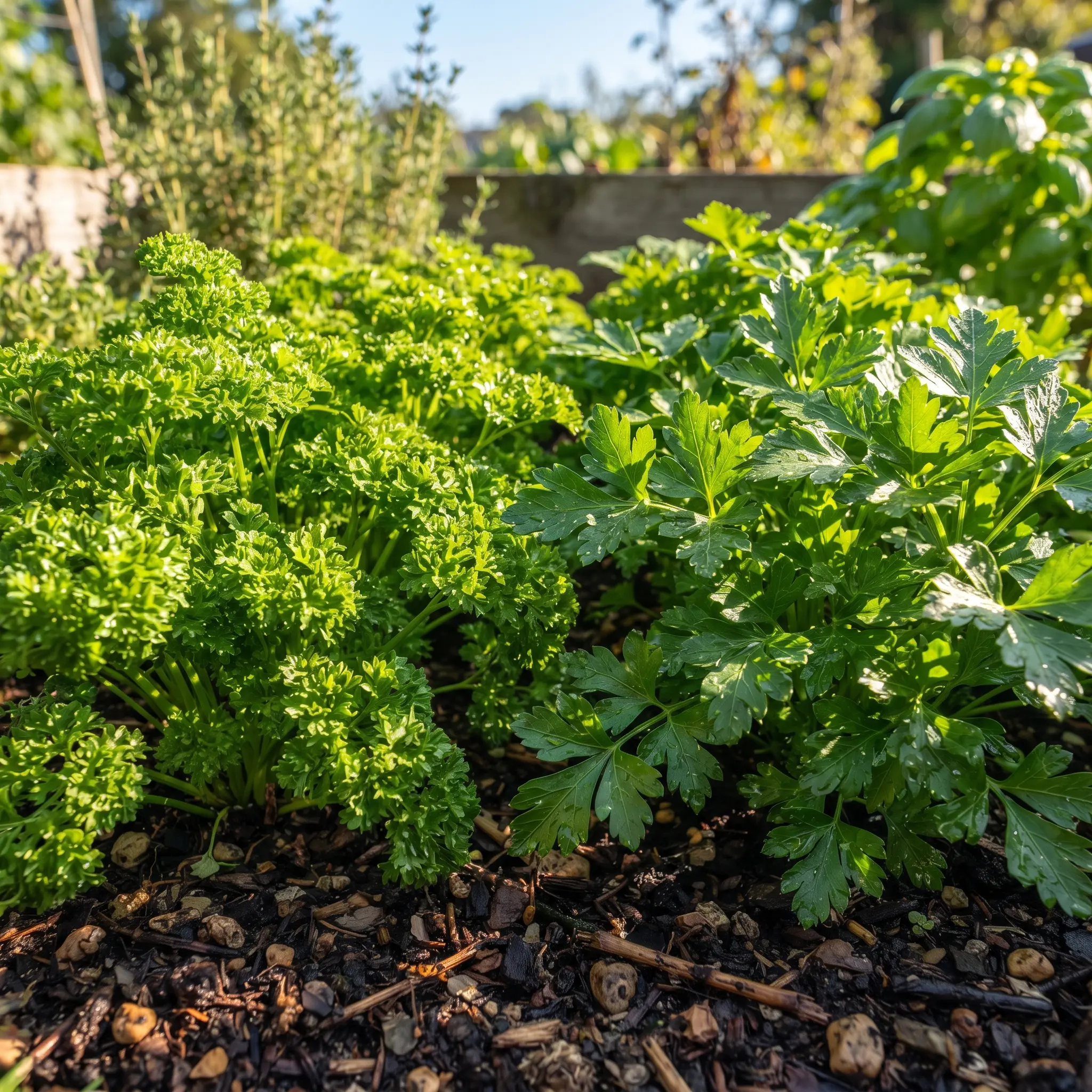
Traditionally, parsley has been used primarily as a diuretic and digestive remedy, especially when water retention, urinary discomfort, or bloating and gas need easing. It is commonly prepared as a tea, fresh or dried culinary herb, tincture, or capsules.
Common Name: Parsley Latin Name: Petroselinum crispum Alternate Names: Garden parsley, rock parsley
- Parts used: leaves (also seeds and root for separate traditional uses)
- Primary properties: diuretic, carminative, antispasmodic
- Common preparations: tea, culinary herb, tincture, capsules
- Best known for: supporting healthy fluid balance and easing digestive discomfort
What It Helps With
Health conditions this herb is commonly used to support.
Related Buying Guides
Featured Recipes
Explore and try simple ways to prepare and use this herb at home.
Active Compounds
The tiny plant chemistry doing all the heavy lifting.
Key Herbal Properties
What this herb is known for, herbally speaking.




Herbal Synergies
Other herbs that pair especially well with this one — together, their combined properties work better than either herb does alone.
Health Conditions Parsley Helps With
- Water retention and mild urinary discomfort — Parsley has one of the longest traditional reputations of any culinary herb as a diuretic, used to support healthy fluid balance and urinary comfort.
- Digestive discomfort — Traditionally used to calm an overactive digestive system, easing bloating, gas, and mild digestive spasms.
- Kidney stone support — Traditional use includes supporting healthy urinary flow in a way believed to help with the passage of small kidney stones.
- Delayed or irregular menstruation — Parsley has a long traditional history of use to help stimulate delayed menstrual flow, a use closely tied to its pregnancy caution.
- Bad breath — Chewing fresh parsley leaf is a simple, traditional remedy for freshening breath after meals.
- Bruises and minor skin irritation (topical) — Traditionally applied as a poultice to bruises, insect bites, and minor skin irritation.
Compounds
- Apiole and myristicin — Volatile oil compounds concentrated in parsley seed and, to a lesser extent, the leaf, traditionally credited with much of parsley’s diuretic and uterine-stimulating activity.
- Flavonoids (including apigenin) — Contribute antioxidant and anti-inflammatory activity to parsley’s overall traditional profile.
- Vitamin K — Present in notable amounts in parsley leaf, relevant both to traditional bone-health use and to its interaction with blood-thinning medication.
- Furanocoumarins — Compounds that can increase skin sensitivity to sunlight, relevant to parsley’s topical use.
- Essential oils — Contribute to parsley’s characteristic aroma and support its traditional carminative, digestive-calming action.
Properties
- Diuretic — Parsley’s defining traditional property, used to support the elimination of excess fluid and encourage healthy urinary flow.
- Carminative — Traditionally used to calm digestive spasms, gas, and bloating.
- Antispasmodic — Apiole’s traditional relaxant effect on the digestive tract underlies parsley’s use for digestive cramping.
- Emmenagogue — Traditionally used to stimulate delayed menstruation, particularly in seed and concentrated preparations.
Recipes Using Parsley
- Parsley leaf tea — Fresh or dried parsley leaf steeped as a simple diuretic and digestive tea.
- Culinary garnish and seasoning — Fresh parsley is widely used as an everyday culinary herb, offering a gentle, food-level way to support digestion.
- Digestive bitters or tincture blends — Parsley is sometimes included in traditional digestive formulas alongside other carminative herbs.
Products Featuring Parsley
- Fresh or dried leaf — The gentlest, most food-safe form, suitable for everyday culinary and mild tea use.
- Tincture or liquid extract — Offers a more concentrated preparation, generally used with more care given the intensity of concentrated apiole.
- Capsules (leaf-based) — A convenient, standardized option for those seeking parsley’s diuretic or digestive support without preparing a tea.
Synergies
- Dandelion leaf — Frequently combined with parsley in traditional diuretic blends for complementary fluid-balance support.
- Peppermint — Paired in digestive formulas, both traditionally used to ease bloating and digestive discomfort.
- Cranberry — Combined in urinary-support blends, pairing parsley’s traditional diuretic reputation with cranberry’s own urinary tract associations.
- Nettle — Blended in nutritive, mineral-rich tonic teas alongside parsley’s own vitamin and mineral content.
Safety & Precautions
Parsley in ordinary culinary amounts is very safe, but concentrated medicinal preparations, particularly parsley seed and essential oil, carry real, well-documented cautions.
Parsley in typical culinary food amounts is considered safe during pregnancy, but concentrated medicinal preparations — including strong teas, tinctures, and especially parsley seed or essential oil — should be avoided during pregnancy, since apiole and myristicin have a documented traditional and historical use as uterine stimulants and abortifacients. Parsley is high in vitamin K, which can interfere with the action of blood-thinning medications like warfarin, so anyone on these medications should keep their parsley intake consistent and consult a healthcare provider before increasing use significantly. Its diuretic effect may also potentiate prescription diuretic medications, increasing the risk of electrolyte imbalance, so this combination should be used with medical guidance. Parsley contains oxalates, so people prone to calcium oxalate kidney stones should consult a healthcare provider before concentrated use. Topically, parsley’s furanocoumarin content can cause increased skin sensitivity to sunlight, so sun exposure should be avoided for a day or so after topical application. People on lithium should use parsley only under medical supervision, given its effect on fluid balance. There is no well-established safety data on concentrated parsley use in pets, though small culinary amounts are generally considered low-risk; check with a veterinarian for specific guidance.
Q&A
Does parsley taste bitter?
No, parsley has a fresh, slightly peppery, green flavor rather than a bitter one, which is part of why it’s such a popular everyday culinary herb and garnish.
Flat-leaf (Italian) parsley tends to have a more pronounced, slightly stronger flavor than curly parsley, though both share the same general fresh, herbaceous taste.
Can parsley be used daily?
Yes, parsley used as a culinary herb or in typical tea amounts is safe for regular daily use as part of a normal diet.
Concentrated medicinal preparations, particularly parsley seed or essential oil, are not intended for indefinite daily use and are traditionally reserved for shorter, more targeted periods due to their greater intensity.
Is parsley safe during pregnancy?
Culinary amounts of parsley used in cooking are generally considered safe during pregnancy, but concentrated medicinal preparations like strong teas, tinctures, and especially parsley seed or essential oil should be avoided, since these carry a real, traditional history of use as a uterine stimulant.
If you’re pregnant and enjoy parsley as a garnish or seasoning, that’s generally fine, but it’s worth checking with a healthcare provider before using any concentrated parsley product during pregnancy.
What’s the difference between parsley leaf, seed, and root?
Parsley leaf is the mildest and most commonly used part, favored for culinary and gentle tea use, while the seed contains a much more concentrated level of apiole and is traditionally reserved for more targeted, short-term medicinal use; the root has its own more minor traditional use, mainly in cooking and mild digestive support.
Because the seed is so much stronger than the leaf, it’s important not to substitute one for the other in a recipe or preparation without understanding this difference in potency.
Can parsley be combined with other diuretic or digestive herbs?
Yes, parsley is commonly combined with herbs like dandelion leaf or peppermint in diuretic and digestive support blends, since their traditional uses are seen as complementary.
If you’re on diuretic medication or blood thinners, it’s worth checking with a healthcare provider before combining parsley with other diuretic herbs, since the combined effect on fluid balance or vitamin K intake may be greater than expected.
References
- Plants of the World Online: Petroselinum crispum
- PubMed: Scientific Literature on Petroselinum crispum
- National Library of Medicine: Chemical Constituents from Petroselinum crispum
- Wikipedia: Petroselinum crispum
- ScienceDirect Topics: Petroselinum crispum Research
- Memorial Sloan Kettering Cancer Center: About Herbs — Parsley
- PubMed: Parsley Apiole and Diuretic Research
- National Center for Complementary and Integrative Health: Parsley
This information is for educational purposes only and is not intended as medical advice. Consult a qualified healthcare professional before using any herb, especially if pregnant, breastfeeding, taking medications, or managing a health condition.