

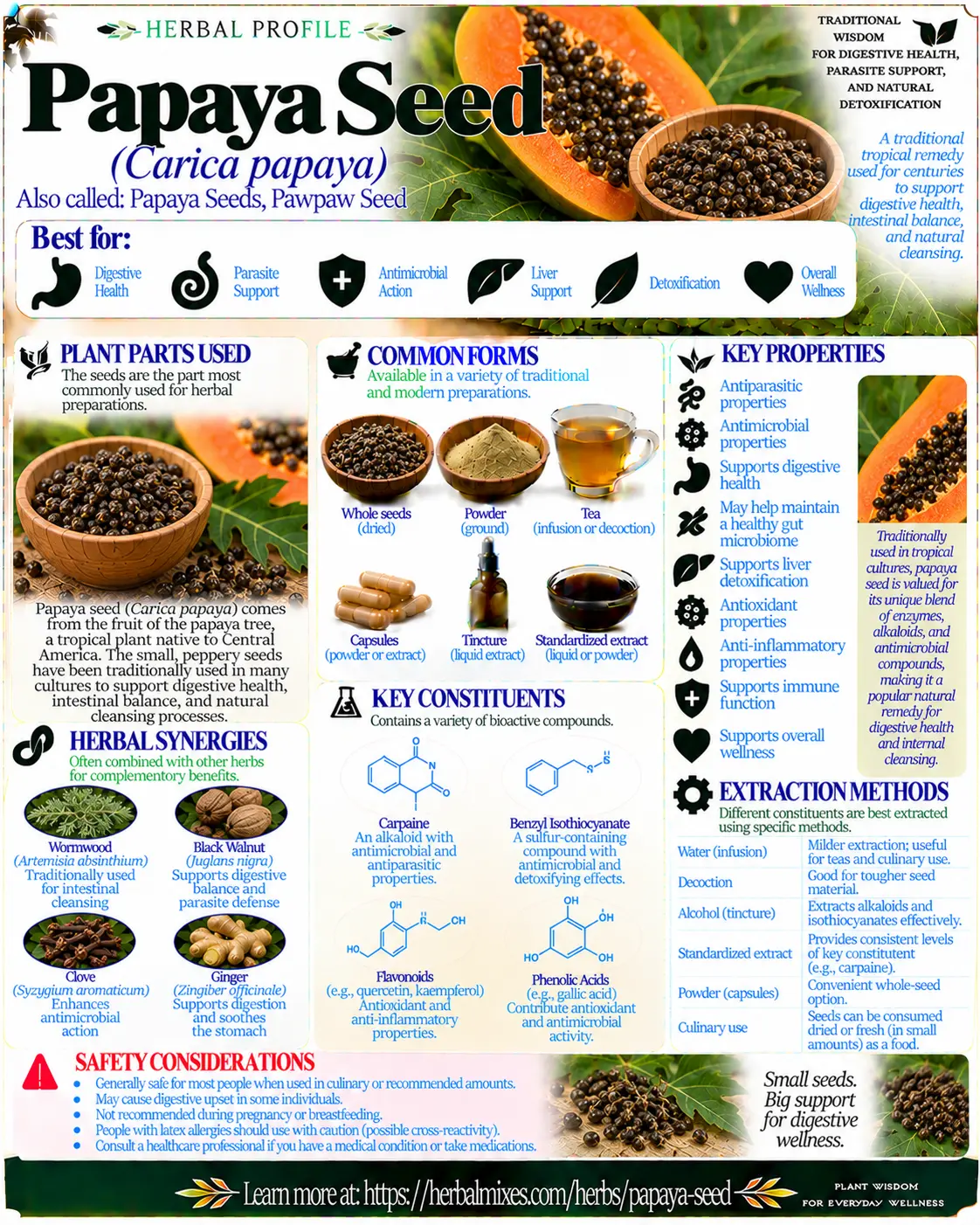
What Papaya Seed Is Good For
Digestive support — Papaya seeds have a sharp, peppery flavor and contain glucosinolates, isothiocyanates, fatty acids, alkaloids, and phenolic compounds. They are traditionally used in small amounts to support digestion and intestinal wellness.
Traditional intestinal cleansing — Papaya seed is especially known for traditional antiparasitic use. One small randomized pilot study in 60 Nigerian children found that dried papaya seed mixed with honey cleared intestinal parasites more often than honey alone after seven days. The study was promising but small and has not been adequately replicated, so papaya seed should not replace standard parasite diagnosis or treatment. (PubMed)
Microbial balance — Papaya seeds are particularly rich in benzyl glucosinolate, which can be converted by myrosinase into benzyl isothiocyanate (BITC). Laboratory studies show substantial antimicrobial and anthelmintic activity from this compound. (PubMed)
Occasional bloating — Small traditional amounts are sometimes used after meals as a pungent digestive spice. Stronger extracts may irritate rather than soothe sensitive digestive systems.
Antioxidant support — Papaya seeds contain phenolics, glucosinolates, isothiocyanates, and lipid-soluble constituents with antioxidant activity. Most evidence for these effects comes from laboratory research rather than clinical trials.
Available Herbal Products
Buying Guides for Available Papaya Seed Products
Organic Papaya Seed Powder – Whole ground seed powder. A single-ingredient organic Carica papaya seed product currently listed in stock and suitable for measured powder preparations. Seller: Herbal Goodness – View Organic Papaya Seed Powder →
Papaya Seed Powder Capsules 600 mg – Whole-seed capsules. Provides organic ground papaya seed in a convenient measured format and is currently listed in stock. Seller: Herbal Goodness – View Papaya Seed Capsules →
Organic Papaya Seed Extract 15X – Alcohol-free liquid concentrate. A concentrated Carica papaya seed extract in glycerin and water, currently listed in stock. Seller: Herbal Goodness – View Papaya Seed 15X Extract →
Papaya Seed Powder – Powder or capsules. A single-ingredient papaya-seed supplement currently offered in multiple powder sizes and a capsule option. Seller: BulkSupplements – View BulkSupplements Papaya Seed Powder →
Papaya seed products are considerably less standardized than common supplements such as turmeric or milk thistle. Look for products that clearly identify Carica papaya seed, provide batch testing, and avoid exaggerated “parasite cleanse” claims.
Herbal Synergies
Papaya seed pairs especially well with ginger, fennel, garlic, pumpkin seed, and thyme depending on whether the goal is digestive comfort, intestinal wellness, or traditional microbial support.
Papaya Seed + Ginger
Best for: Digestive support and post-meal heaviness
Papaya seed contributes pungent isothiocyanate chemistry, while ginger adds warming carminative and nausea-supportive activity.
Best extraction: Freshly ground or powdered papaya seed with ginger tea or powder. Excessive heat may reduce myrosinase activity in the seeds.
Papaya Seed + Fennel
Best for: Bloating and digestive tension
Papaya seed provides stronger pungent stimulation, while fennel offers gentler carminative and antispasmodic activity.
Best extraction: Papaya-seed powder combined with a covered fennel infusion.
Papaya Seed + Garlic
Best for: Traditional intestinal microbial support
Both plants contain compounds formed enzymatically after tissue disruption. Papaya seed produces benzyl isothiocyanate, while garlic produces allicin-related sulfur compounds.
Best extraction: Freshly crushed culinary preparations. Avoid relying on this combination to self-treat diagnosed intestinal infections.
Papaya Seed + Pumpkin Seed
Best for: Traditional intestinal-cleansing formulas
Papaya seed has limited preliminary human evidence for intestinal parasites, while pumpkin seed has longstanding traditional use in parasite-focused herbal practice.
Best extraction: Whole ground seeds or food-based preparations.
Papaya Seed + Thyme
Best for: Digestive microbial balance
Papaya seed contributes benzyl isothiocyanate, while thyme supplies volatile compounds such as thymol and carvacrol.
Best extraction: Papaya-seed powder or extract combined with covered thyme tea or tincture.
Key Herbal Properties
Anthelmintic — Benzyl isothiocyanate appears to be an important contributor to papaya seed’s experimental antiparasitic activity. (PubMed)
Antimicrobial — Seed extracts demonstrate antibacterial and antifungal effects in laboratory studies.
Digestive stimulant — The pungent, mustard-like seed chemistry may stimulate sensory and digestive responses.
Antioxidant — Isothiocyanates, phenolics, and other seed constituents contribute antioxidant activity.
Antifungal — Methanolic and ethanolic seed extracts have inhibited organisms including Candida albicans experimentally. (PubMed)
Reproductive active — Papaya seed extracts have repeatedly affected sperm function and fertility in experimental studies. This is primarily a safety consideration, not a recommended therapeutic use.






Active Compounds
Papaya seeds differ substantially from papaya fruit and leaf. Their chemistry is characterized by benzyl glucosinolate, myrosinase, benzyl isothiocyanate, alkaloids, fatty acids, sterols, phenolics, and glycerides.
Benzyl Glucosinolate
Found mainly in: Seeds
Benzyl glucosinolate, also called glucotropaeolin, is one of the signature constituents of papaya seed.
Research found more than 1 mmol per 100 g of fresh papaya seed, while ripe papaya pulp contained little or no detectable amount. (PubMed)
Best extraction: Water can extract the intact glucosinolate, but biological activity depends strongly on subsequent conversion by myrosinase.
Benzyl Isothiocyanate
Found mainly in: Formed from benzyl glucosinolate after seeds are crushed
Benzyl isothiocyanate (BITC) gives papaya seed much of its characteristic mustard-like pungency.
Research found BITC to be the principal compound associated with papaya seed’s experimental anthelmintic activity. (PubMed)
Best extraction: Fresh crushing followed by moisture exposure encourages myrosinase-mediated formation. BITC is relatively volatile and lipophilic, so excessive heating may reduce retention.
Myrosinase
Found mainly in: Fresh seed tissue
Myrosinase is the enzyme that converts benzyl glucosinolate into benzyl isothiocyanate after the seed is crushed.
Papaya seeds have demonstrated high natural myrosinase activity. (PubMed)
Best extraction: No extraction is required. Crushing or grinding the seed allows enzyme and glucosinolate to interact.
Carpaine
Found mainly in: Seeds and other papaya tissues
Carpaine is an alkaloid found in Carica papaya. Seed phytochemical studies have confirmed its presence alongside numerous lipid-derived constituents. (PubMed)
Best extraction: Hydroalcoholic extraction is more suitable than plain water for broad alkaloid recovery.
Beta-Sitosterol Glucoside
Found mainly in: Seeds
This phytosterol derivative has been isolated from papaya seeds as part of their lipid-soluble phytochemical fraction.
Best extraction: Alcohol-rich or lipid-compatible extraction.
Papayaglyceride
Found mainly in: Seeds
Papayaglyceride is a glyceride-related phytoconstituent isolated from papaya seed during chemical investigations.
Its specific clinical significance remains unclear.
Best extraction: Ethanol or other lipid-compatible solvents.
Fatty Acids and Glycerides
Found mainly in: Seed oil
Papaya seeds contain substantial lipid fractions rich in fatty-acid-containing glycerides.
Best extraction: Cold pressing or lipid extraction rather than tea.
FAQ
What are papaya seeds best used for?
Papaya seeds are best viewed as a pungent digestive botanical with preliminary research for intestinal parasite clearance.
The parasite evidence comes primarily from one small human pilot study and laboratory research, so they should not replace established antiparasitic medicines. (PubMed)
Do papaya seeds kill intestinal parasites?
They may have antiparasitic activity.
A small randomized study found substantially greater parasite clearance with dried papaya seed plus honey than with honey alone. However, only 60 children participated, and larger confirmatory clinical trials are still needed.
Why do papaya seeds taste peppery?
The seeds contain benzyl glucosinolate and myrosinase.
When the seeds are crushed, myrosinase converts the glucosinolate into pungent benzyl isothiocyanate, creating a mustard- or pepper-like flavor.
Is papaya seed the same as papain?
No.
Papain is a proteolytic enzyme especially associated with papaya latex and unripe fruit. Papaya seed’s distinctive chemistry is more strongly characterized by glucosinolates and benzyl isothiocyanate.
Can papaya seeds be taken every day?
Long-term concentrated use is not well established and is not advisable as a routine supplement, particularly because animal and human laboratory studies raise reproductive and liver-safety concerns.
Short-term, conservative use is more appropriate when therapeutic use is considered.
Safety & Precautions
Papaya seed needs more caution than ripe papaya fruit.
One of the clearest concerns is male fertility. Papaya-seed extracts have repeatedly reduced sperm motility and fertility in animal studies. (PubMed)
Importantly, a 2019 laboratory study using human sperm found that aqueous papaya-seed extract reduced sperm vitality, progressive motility, mitochondrial function, and other fertility-related parameters while increasing DNA fragmentation. (PubMed)
For this reason, men actively trying to conceive should avoid medicinal or concentrated papaya-seed products.
Women attempting conception should also be cautious because reproductive effects have been reported in animal studies.
Avoid medicinal papaya seed during pregnancy. Traditional reproductive use and experimental antifertility activity make concentrated seed preparations inappropriate during pregnancy.
Safety during breastfeeding has not been adequately established, so concentrated supplements should generally be avoided.
There are also potential liver-safety concerns. A rat study found dose-related liver abnormalities following repeated methanol-extract administration, including elevated liver enzymes and histological changes. This does not prove ordinary food quantities harm human liver function, but it argues against prolonged high-dose extracts. (PubMed)
Possible gastrointestinal effects include burning, nausea, abdominal discomfort, diarrhea, or irritation, particularly with large quantities.
Papaya seed contains potent benzyl isothiocyanate, so concentrated extracts should not be assumed harmless simply because the seeds come from an edible fruit.
People allergic to papaya or papaya latex should avoid seed products.
Human drug-interaction data specifically for the seed are very limited. Because concentrated botanical extracts can differ markedly from whole seeds, people taking multiple prescription medications should use them conservatively.
Do not use papaya seeds to self-treat suspected intestinal parasites without appropriate testing. Different parasites require different medicines, and persistent infection can lead to nutritional deficiencies, anemia, liver complications, or other problems.
Seek medical evaluation for persistent diarrhea, visible worms, blood in stool, unexplained weight loss, anemia, persistent abdominal pain, fever, or symptoms following international travel.
Anyone who is pregnant, breastfeeding, trying to conceive, managing liver disease, or taking prescription medications should discuss therapeutic papaya-seed use with an appropriate healthcare professional.
References
- Kew Plants of the World Online — Carica papaya L.
- PubMed — Dried Papaya Seeds Against Human Intestinal Parasitosis
- PubMed — Benzyl Isothiocyanate as the Principal Anthelmintic in Papaya Seed
- PubMed — Papaya Seed as a Source of Benzyl Glucosinolate and Isothiocyanate
- PubMed — Phytochemical and Antifungal Profiles of Papaya Seeds
- PubMed — Papaya Seed Extract and Human Sperm Function
- PubMed — Reversible Antifertility Effects of Papaya Seed Extract
- PubMed — Papaya Seed Extract and Liver Toxicity in Rats
- Herbal Goodness — Organic Papaya Seed Powder
- Herbal Goodness — Papaya Seed Capsules
- Herbal Goodness — Papaya Seed 15X Liquid Extract
- BulkSupplements — Papaya Seed Powder
Disclaimer
Disclaimer: This article is for educational purposes only and is not intended to diagnose, treat, cure, or prevent any disease. Herbal products can cause side effects and interact with medications. Consult a qualified healthcare professional before using herbs therapeutically, especially if you are pregnant, breastfeeding, taking prescription medications, or managing a medical condition.