

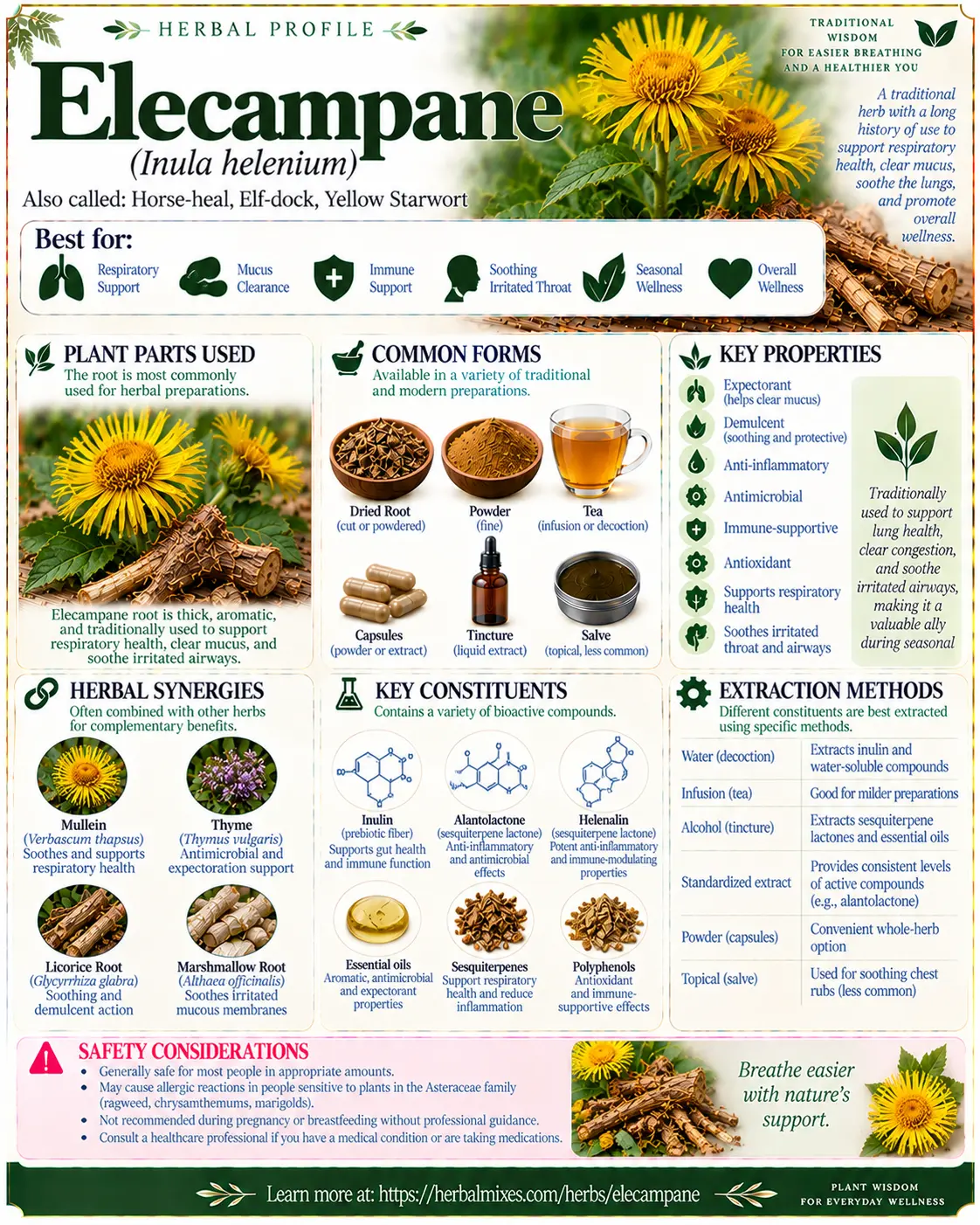
What Elecampane Is Good For
Deep Cough & Bronchial Relief — Elecampane is globally renowned as a premier expectorant and pulmonary tonic, traditionally used to loosen stubborn, deep-seated mucus and ease productive coughs.
Pulmonary Congestion & Chest Dampness — Its warm, pungent volatile oils and inulin complexes penetrate deep into lung tissue, helping clear heavy dampness and phlegm from the bronchial tubes.
Bronchial Spasm Relaxation — Active alantolactone and volatile sesquiterpene lactones help relax bronchial smooth muscle, easing constriction and encouraging deep, open breathing.
Digestive Bitter Tonic — Its bitter constituents stimulate salivary flow, gastric secretions, and upper digestive vigor, supporting post-meal comfort.
Antimicrobial Respiratory Defense — Exhibits strong antimicrobial and antifungal properties that help protect the respiratory tract from stubborn microbial challenges.
Available Herbal Products
Buying Guides for Available Elecampane Products
Organic Elecampane Root Cut – Dried rugged root pieces. An authentic, traditional choice for simmering into a long, rich, warming decoction to support deep lung health. Seller: Mountain Rose Herbs – View Mountain Rose Herbs Elecampane Root →
Elecampane Root Liquid Extract – Hydroalcoholic tincture. A fast-absorbing liquid format designed for convenient drop-by-drop dosing to clear stubborn chest congestion and coughs. Seller: Herb Pharm – View Herb Pharm Elecampane Extract →
Deep Lung & Bronchial Support Syrup – Concentrated herbal formula. Formulated with elecampane root combined with wild cherry bark, honey, and licorice to soothe productive coughs. Seller: Gaia Herbs – View Gaia Herbs Respiratory Formulas →
Organic Elecampane Root Powder – Finely ground root. Used traditionally by advanced herbalists for compounding specialized custom respiratory formulations and syrups. Seller: Starwest Botanicals – View Starwest Botanicals Elecampane →
Herbal Synergies
Elecampane root pairs especially well with Wild Cherry Bark, Mullein Leaf, and Licorice Root, depending on the goal of the formula.
Elecampane Root + Wild Cherry Bark – Best for: Clearing deep chest congestion while calming spasmodic cough reflexes Elecampane acts as a powerful warming expectorant that breaks up and expels thick lung phlegm, while wild cherry bark supplies cyanogenic glycosides that calm the nervous cough reflex center. Together, they form an exceptional balanced cough formula. Best extraction: Simmered decoction or herbal syrup. Simmering these barks and roots together extracts both warming resins and soothing mucilages.
Elecampane Root + Mullein Leaf – Best for: Comprehensive pulmonary restoration, coating irritated airways, and expelling stubborn mucus Elecampane stimulates deep expectoration and clears dampness from the lungs, whereas mullein leaf supplies soothing saponins that tone and lubricate the entire respiratory tree. Best extraction: Combined decoction and infusion. Blending elecampane’s warming root decoction with mullein’s leaf infusion bridges deep expectoration with soothing moisture.
Elecampane Root + Licorice Root – Best for: Sweetening bitter root decoctions, soothing raw throat tissues, and supporting adrenal energy Elecampane provides robust antimicrobial expectorant action, while licorice root adds rich natural sweetness, demulcent coating, and synergistic anti-inflammatory support. Best extraction: Simmered decoction. Licorice softens elecampane’s strong bitterness and enhances palatability.
Key Herbal Properties
Expectorant (Stimulating) — Stimulates bronchial secretions and ciliary action, helping the lungs efficiently move and expel trapped phlegm.
Pulmonary Tonic — Strengthens, warms, and restores vitality to chronic, weakened lung tissue.
Antimicrobial / Antifungal — Inhibits the growth of bacteria and fungi within the respiratory tract.
Antispasmodic (Bronchial) — Relaxes smooth muscle tissue in the airways, easing coughing spasms and tightness.
Bitter Tonic — Stimulates digestive secretions, appetite regulation, and upper GI function.





Active Compounds
Alantolactone and Isoalantolactone (Sesquiterpene Lactones) Found mainly in: Dried root The primary bioactive aromatic compounds responsible for elecampane’s powerful expectorant, antimicrobial, and smooth-muscle-relaxing properties. Best extraction: High-proof alcohol tincture or simmering decoction. Sesquiterpene lactones dissolve efficiently in alcohol and long-simmered water solutions.
Inulin (High Concentration — up to 40-44% of root dry weight) Found mainly in: Thick storage roots A storage polysaccharide that nourishes beneficial gut microflora and provides a pleasantly sweet undertone beneath the bitter resins. Best extraction: Water decoction or hot water brewing. Inulin dissolves readily in warm or simmering water.
Volatile Oils and Mucilage Found mainly in: Root tissues Contribute to the plant’s warming aromatic action and soothing demulcent balance. Best extraction: Hydroalcoholic extract or decoction.
FAQ
What is elecampane best used for? Elecampane is primarily used as a powerful warming expectorant to clear deep-seated chest congestion, loosen stubborn mucus, and support chronic respiratory recovery.
Why is elecampane considered a “warming” expectorant? Unlike cooling demulcent herbs that simply coat dry throats, elecampane contains pungent volatile resins that actively stimulate circulation in the lungs, bringing internal warmth and fluid mobility to cold, damp, stagnant phlegm.
Does elecampane taste bitter? Yes, elecampane tea has a strong, pungent, bitter, and earthy flavor profile with a sweet aftertaste due to its high inulin content; it is often blended with licorice or honey to improve palatability.
Can elecampane be used for dry, tickling coughs? Elecampane is best suited for productive, damp, phlegmy coughs; for dry, hacking, non-productive coughs, moist demulcents like marshmallow, mullein, or wild cherry bark are generally preferred.
Can elecampane be taken every day? It is typically utilized as a short-to-medium-term therapeutic ally during acute or chronic respiratory challenges rather than an indefinite daily supplement.
Safety & Precautions
Asteraceae Allergy: Individuals with known severe allergies to plants in the Asteraceae (daisy/ragweed) family—such as ragweed, marigolds, or daisies—should exercise caution.
Sensitive Stomachs: Because elecampane is rich in active sesquiterpene lactones and bitter resins, high therapeutic doses taken on an empty stomach can occasionally cause mild nausea or gastric upset in sensitive individuals.
Pregnancy & Breastfeeding: Avoid therapeutic medicinal doses of elecampane during pregnancy and lactation due to its strong active constituent profile and traditional stimulating properties.
Sesquiterpene Lactone Sensitivity: Rare skin sensitivity can occur in individuals handling raw plant materials.
Consult a qualified healthcare professional before using elecampane therapeutically, especially if you manage underlying medical conditions or take prescription drugs.
References
National Center for Complementary and Integrative Health (NCCIH)
PubMed Central – Inula helenium (Elecampane) Sesquiterpene Lactones and Respiratory Pharmacology
European Medicines Agency (EMA) Monograph on Inula helenium L., radix
World Health Organization (WHO) Monographs on Selected Medicinal Plants
Mountain Rose Herbs Elecampane Root Monograph
Disclaimer
Disclaimer: This article is for educational purposes only and is not intended to diagnose, treat, cure, or prevent any disease. Herbal products can cause side effects and interact with medications. Consult a qualified healthcare professional before using herbs therapeutically, especially if you are pregnant, breastfeeding, taking prescription medications, or managing a medical condition.