

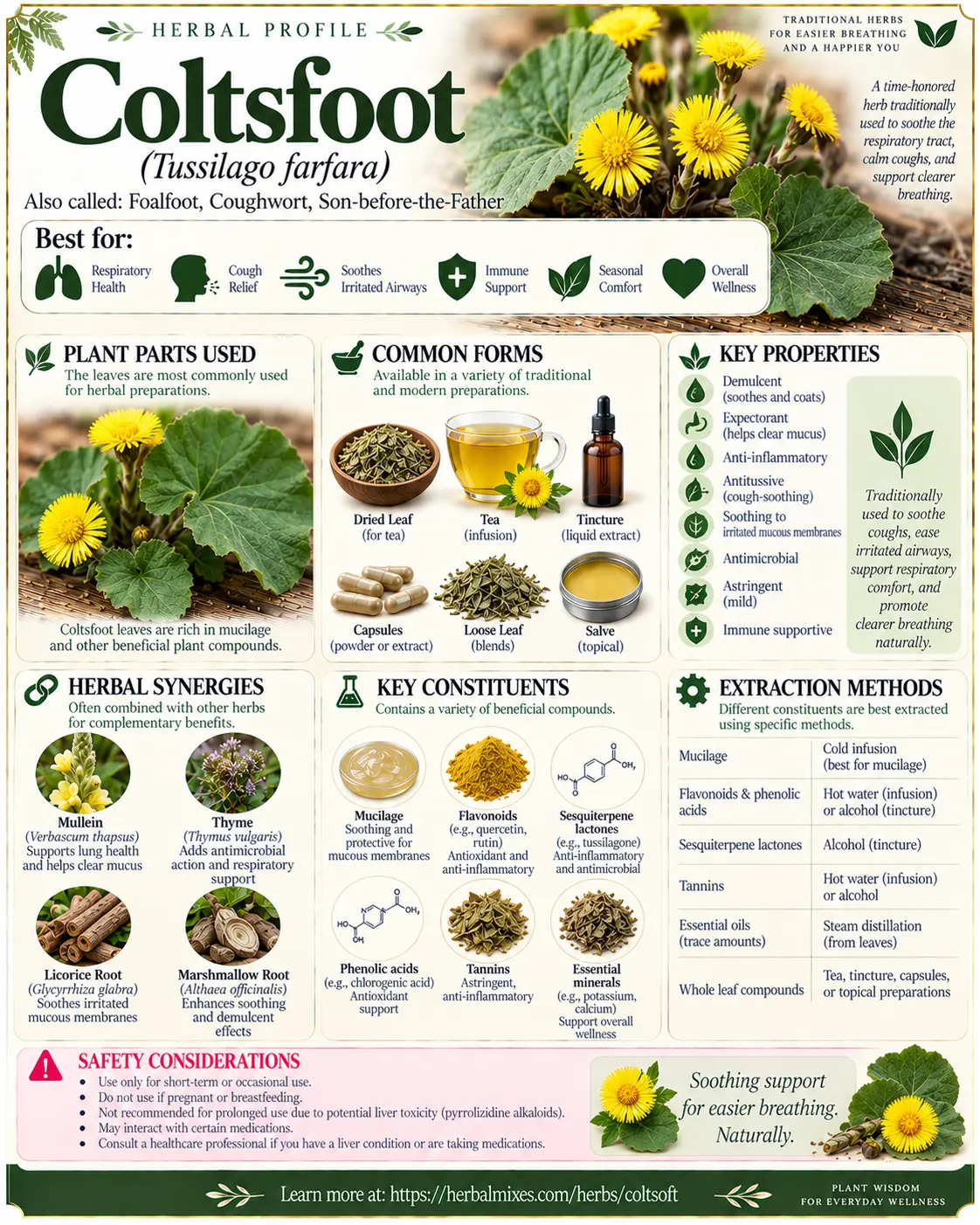
What Coltsfoot Is Good For
Cough & Bronchial Soothing — Coltsfoot is a classic historical pectoral herb traditionally renowned for its exceptional ability to soothe stubborn coughs, tickling throats, and bronchial irritation.
Mucous Membrane Demulcent Action — Rich in soothing mucilage, it coats and protects inflamed mucous membranes along the upper respiratory tract.
Spasmodic Cough Relaxation — Active mucilage and mild tussilagone constituents help relax spasmodic coughing fits and ease tight airways.
Upper Respiratory Comfort — Widely utilized in traditional herbalism to support comfortable breathing and ease acute chest constriction during seasonal challenges.
Throat Irritation Relief — Traditionally brewed into warm teas to bring immediate comfort to scratchy, overworked vocal cords and dry throats.
Available Herbal Products
Buying Guides for Available Coltsfoot Products
Standardized Coltsfoot Liquid Extract (Pyrrolizidine Alkaloid-Free) – Processed herbal extract. A specialized extract where potentially harmful pyrrolizidine alkaloids (PAs) have been removed, making it safe for traditional respiratory support. Seller: Herb Pharm – View Herb Pharm Respiratory Extracts →
Traditional Pectoral Herbal Tea Blend – Loose leaf tea combining PA-free coltsfoot leaf with mullein, marshmallow root, and wild cherry bark. Designed to provide comprehensive respiratory comfort. Seller: Mountain Rose Herbs – View Mountain Rose Herbs Blends →
Organic Coltsfoot Leaf Cut (For Botanical Study / External Use) – Dried aerial parts. Purchased primarily for botanical study or external herbal compress applications under professional guidance. Seller: Starwest Botanicals – View Starwest Botanicals Coltsfoot →
Respiratory Soothing Cough Syrup – Herbal syrup formula. Formulated with safe, tested pectoral herbs to soothe dry coughs and throat irritation. Seller: Gaia Herbs – View Gaia Herbs Respiratory Formulas →
Herbal Synergies
Coltsfoot pairs especially well with Mullein Leaf, Marshmallow Root, and Wild Cherry Bark, depending on the goal of the formula.
Coltsfoot Leaf + Mullein Leaf Best for: Comprehensive respiratory coating, soothing dry coughs, and supporting deep lung health Coltsfoot provides rich demulcent mucilage to quiet tickling coughs, while mullein leaf supplies soothing saponins that tone and lubricate the entire respiratory tree. Together, they form the classic European lung tonic. Best extraction: Covered hot infusion (tea) or syrup. Both herbs yield abundant mucilage into warm water.
Coltsfoot Leaf + Marshmallow Root Best for: Intense throat soothing, coating dry mucous membranes, and relieving irritation Coltsfoot relaxes bronchial tension, whereas marshmallow root delivers heavy cold-water-extracted mucilage that blankets inflamed tissues in soothing moisture. Best extraction: Combined warm infusion. Blending these demulcents creates an exceptionally soothing throat tea.
Coltsfoot Leaf + Wild Cherry Bark Best for: Calming spasmodic coughing fits, easing nighttime throat tickles, and suppressing cough reflexes Coltsfoot soothes surface irritation, while wild cherry bark provides natural glycosides that calm the nervous cough reflex center. Best extraction: Syrup or hydroalcoholic tincture. Combines mucilaginous soothing with antispasmodic cough control.
Key Herbal Properties
Pectoral — Specifically strengthens, protects, and restores health to the lungs and respiratory system.
Demulcent — Soothes, protects, and moistens inflamed or irritated mucous membranes in the throat and lungs.
Antitussive — Relieves and suppresses coughing by calming respiratory irritation.
Antispasmodic (Mild) — Relaxes smooth muscle tissue in the bronchial tubes, easing coughing spasms.
Vulnerary — Supports the repair of irritated epithelial tissues along the respiratory tract.




Active Compounds
Mucilage Polysaccharides Found mainly in: Leaves and flowers High-molecular-weight carbohydrates that coat, protect, and soothe dry, irritated mucous membranes in the respiratory tract. Best extraction: Warm water infusion (tea) or cold-water maceration. Mucilage dissolves efficiently in water.
Pyrrolizidine Alkaloids (PAs — including Senecionine and Tussilagine) Found mainly in: Unprocessed raw leaves and roots Potentially hepatotoxic compounds that can cause liver strain with prolonged use. Crucial Safety Note: Raw, unprocessed coltsfoot contains significant PAs and should be avoided or strictly restricted; modern herbalists insist on using certified PA-free extracts or avoiding internal use of raw plant material. Best extraction: Specialized laboratory processing (PA-removal).
Flavonoids and Tannins Found mainly in: Leaves Antioxidant compounds that support healthy inflammatory balance in lung tissue. Best extraction: Water or alcohol-water extract. Soluble in hydroalcoholic solutions.
FAQ
Why is raw coltsfoot controversial in modern herbalism? Raw, unprocessed coltsfoot contains naturally occurring pyrrolizidine alkaloids (PAs) that can cause liver damage with long-term internal use; consequently, modern herbalists only utilize certified PA-free extracts or alternative demulcents like mullein and marshmallow.
What is coltsfoot best used for? Coltsfoot is traditionally used to soothe dry, hacking coughs, ease bronchial tension, and coat irritated throat tissues.
How does coltsfoot get its name? The shape of its broad, hoof-like leaves resembles the impression of a colt’s foot in the damp spring soil.
Can coltsfoot be smoked in traditional herbal smoking blends? Historically, coltsfoot leaves were smoked in European herbal mixtures to relieve asthma and coughs, though modern herbalism strongly discourages smoking due to lung irritation and PA concerns.
Are there safe alternatives to coltsfoot? Yes, mullein leaf, marshmallow root, slippery elm, and licorice root offer exceptional demulcent and respiratory-soothing benefits completely free of pyrrolizidine alkaloid concerns.
Safety & Precautions
Pyrrolizidine Alkaloid (PA) Toxicity: Never consume raw, unprocessed coltsfoot tea or bulk herb internally, as unrefined PAs can cause severe liver toxicity. Only use verified PA-free commercial extracts under professional guidance.
Short-Term Use Only: Even with certified PA-free products, coltsfoot is intended for short-term, acute respiratory relief rather than continuous long-term daily use.
Pregnancy & Breastfeeding: Strictly avoid internal use of coltsfoot during pregnancy and lactation due to pyrrolizidine alkaloid risks and potential uterine-stimulating effects.
Liver Conditions: Individuals with pre-existing liver disease or compromised hepatic function must strictly avoid unrefined coltsfoot.
Consult a qualified healthcare professional before using coltsfoot therapeutically, especially if you manage underlying medical conditions or take prescription drugs.
References
National Center for Complementary and Integrative Health (NCCIH)
PubMed Central – Tussilago farfara (Coltsfoot) Pyrrolizidine Alkaloids and Liver Safety
European Medicines Agency (EMA) Herbal Documentation and PA Restrictions
World Health Organization (WHO) Monographs on Selected Medicinal Plants
Mountain Rose Herbs Respiratory Botanicals Guide
Herb Pharm Respiratory Extract Safety
Disclaimer
Disclaimer: This article is for educational purposes only and is not intended to diagnose, treat, cure, or prevent any disease. Herbal products can cause side effects and interact with medications. Consult a qualified healthcare professional before using herbs therapeutically, especially if you are pregnant, breastfeeding, taking prescription medications, or managing a medical condition.