

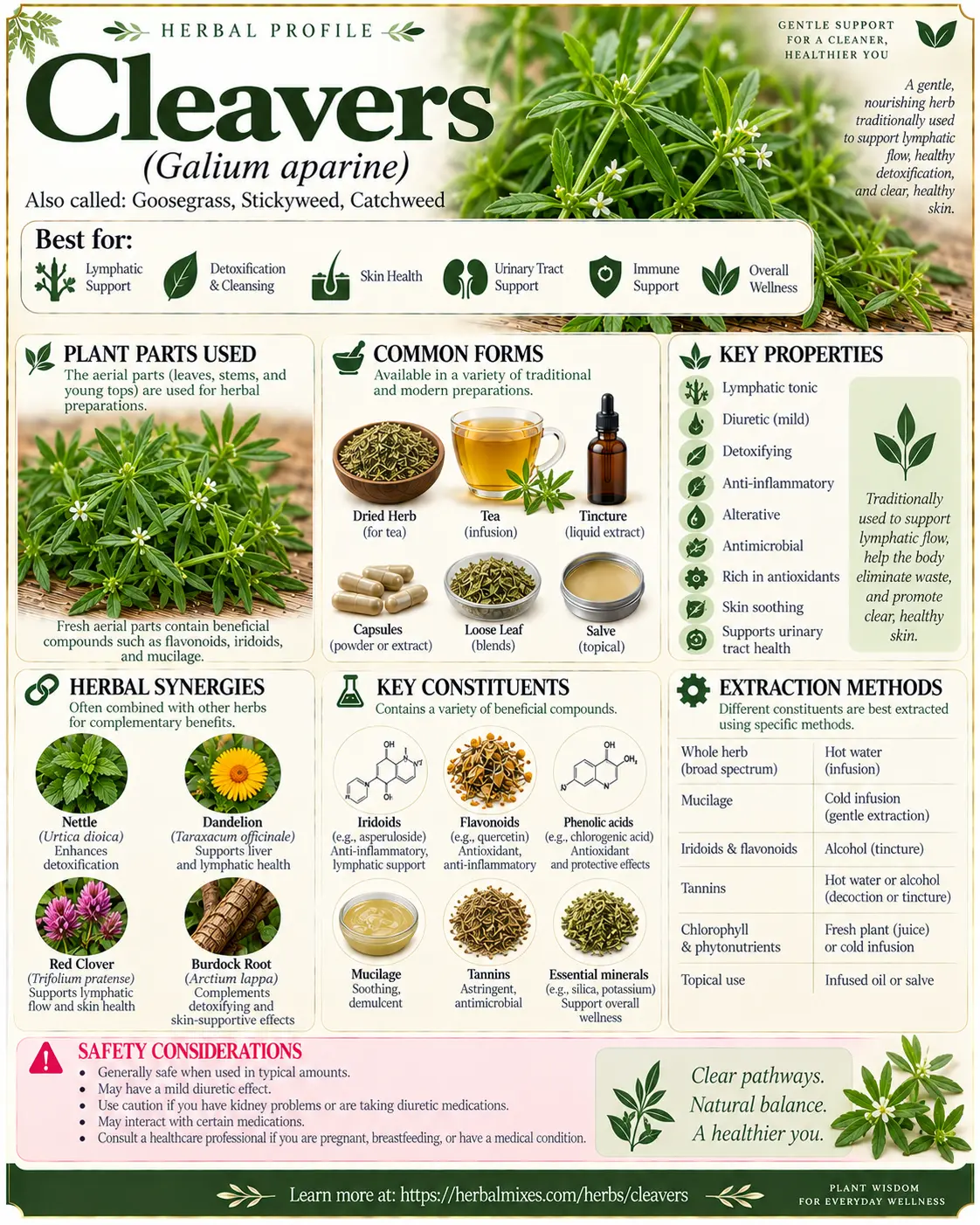
What Cleavers Is Good For
Lymphatic Drainage & Decongestion — Cleavers is widely regarded as a premier lymphagogue traditionally used to encourage lymphatic circulation, reduce swollen lymph nodes, and clear systemic congestion.
Urinary Tract Comfort & Kidney Support — Acts as a cooling diuretic and soothing demulcent that encourages healthy renal function and relieves urinary irritation.
Gentle Detoxification & Spring Tonic — Traditionally employed as an alterative blood cleanser to support the body’s natural elimination pathways during seasonal changes.
Skin Clarity & Irritation Relief — Helps soothe inflammatory skin conditions, minor rashes, and puffiness by promoting efficient metabolic waste clearance.
Cooling & Soothing Action — Its high moisture and chlorophyll content help dissipate heat and soothe inflamed mucous membranes throughout the body.
Available Herbal Products
Buying Guides for Available Cleavers Products
Fresh Cleavers Herb Liquid Extract – Hydroalcoholic fresh-plant tincture. The gold standard for capturing cleavers’ delicate water-soluble and volatile constituents right after harvest. Seller: Herb Pharm – View Herb Pharm Cleavers Extract →
Organic Dried Cleavers Herb – Dried green stems and leaves. A traditional choice for steeping into a cool overnight infusion to support lymphatic flow and urinary wellness. Seller: Mountain Rose Herbs – View Mountain Rose Herbs Cleavers →
Lymphatic Support Herbal Formula – Concentrated liquid extract blend combining cleavers with red root, calendula, and echinacea. Designed to provide comprehensive lymphatic decongestion. Seller: Wise Woman Herbals – View Wise Woman Herbals Formulas →
Fresh Cleavers Spring Juice – Expressed green juice. Traditionally pressed from fresh wild spring plants for immediate, potent lymphatic and renal cleansing protocols. Seller: Gaia Herbs – View Gaia Herbs Cleavers →
Herbal Synergies
Cleavers pairs especially well with Red Root, Calendula Flowers, and Stinging Nettle Leaf, depending on the goal of the formula.
Cleavers + Red Root – Best for: Comprehensive lymphatic drainage, reducing swollen lymph nodes, and clearing deep tissue congestion Cleavers stimulates general lymphatic flow and fluid movement throughout superficial channels, while red root acts specifically on the spleen and deep lymphatic nodes to clear stagnation. Together, they form the premier lymphatic restoration duo. Best extraction: Fresh plant tincture combination. Blending these fresh liquid extracts ensures optimal delivery of water-soluble alkaloids and saponins.
Cleavers + Calendula Flowers – Best for: Lymphatic cleansing, supporting skin health, and reducing glandular swelling Cleavers encourages the clearance of metabolic waste through the lymphatic system, whereas calendula provides gentle alterative action and mucosal tissue support. Best extraction: Tincture blend or infusion. Both herbs yield their active compounds efficiently into hydroalcoholic or aqueous solutions.
Cleavers + Stinging Nettle Leaf – Best for: Spring cleansing, mineral nourishment, and gentle urinary tract support Cleavers acts as a cooling lymphatic mover and diuretic, while nettle supplies deep nutritive mineralization and renal tonic action. Best extraction: Cold-steeped infusion (sun tea) or fresh juice blend. Preserves the delicate, fresh-green constituents of both plants.
Key Herbal Properties
Lymphagogue — Stimulates and supports the movement and drainage of lymphatic fluid, easing swollen or sluggish glands.
Diuretic — Increases urine output, encouraging healthy renal clearance and fluid balance.
Alterative (Blood Purifier) — Gradually supports metabolic function and tissue health by encouraging waste elimination.
Refrigerant / Cooling — Dissipates heat and brings a refreshing, soothing quality to hot, irritated tissues.
Astringent (Mild) — Tones and tightens mucous membranes and vascular walls.



Active Compounds
Iridoid Glycosides (including Asperuloside and Gallioside) Found mainly in: Fresh green aerial parts The primary bioactive compounds responsible for cleavers’ anti-inflammatory, diuretic, and lymphatic-stimulating properties. (Note: Asperuloside breaks down during drying, which is why fresh plant extracts are often considered superior to dried herb). Best extraction: Fresh plant hydroalcoholic tincture or cold water infusion. Iridoid glycosides and delicate compounds degrade with prolonged heat.
Flavonoids and Coumarins Found mainly in: Leaves and stems Antioxidant compounds that support vascular integrity and healthy microcirculation. Best extraction: Alcohol-water extract or cold-steeped tea. Soluble in hydroalcoholic solvents.
Polysaccharides and Chlorophyll Found mainly in: Succulent green stems Provide soothing demulcent action and nutritive support. Best extraction: Expressed fresh plant juice or cold-water infusion. Preserves moisture and green nutrients.
FAQ
What is cleavers best used for? Cleavers is primarily used as a premier lymphatic tonic to reduce swollen glands, encourage fluid drainage, and support urinary tract comfort.
Why is fresh cleavers often recommended over dried? Cleavers contains delicate active iridoid glycosides that partially degrade during the drying process; fresh-plant tinctures or cold infusions capture its highest therapeutic potency.
How does cleavers tea taste? Cleavers tea has a fresh, grassy, slightly sweet, and mild green flavor profile reminiscent of cucumber or spring meadow grass.
Can cleavers be taken every day? Yes, it is frequently used as a short-term spring tonic or daily lymphatic adjunct during periods of immune challenge or glandular swelling.
How did it get the name “cleavers”? The plant is covered in microscopic, hook-like hairs that allow the stems to “cleave” or cling stubbornly to clothing and animal fur as you brush past them.
Safety & Precautions
Mild Diuretic Effects: Because cleavers increases urine output, individuals taking prescription diuretic medications should monitor their fluid balance.
Allergies: True allergies are rare, but individuals sensitive to plants in the Rubiaceae (madder/coffee) family should exercise mild caution.
Fresh Foraging Quality: When gathering wild cleavers, ensure harvesting occurs away from roadsides, chemical sprays, or polluted areas.
Pregnancy & Breastfeeding: Culinary amounts and mild teas are generally safe, but consult a qualified herbalist before using concentrated therapeutic extracts during pregnancy.
Consult a qualified healthcare professional before using cleavers therapeutically, especially if you manage underlying medical conditions or take prescription drugs.
References
National Center for Complementary and Integrative Health (NCCIH)
PubMed Central – Galium aparine (Cleavers) Phytochemistry and Lymphatic Pharmacology
European Medicines Agency (EMA) Herbal Documentation
World Health Organization (WHO) Monographs on Selected Medicinal Plants
Mountain Rose Herbs Cleavers Monograph
Disclaimer
Disclaimer: This article is for educational purposes only and is not intended to diagnose, treat, cure, or prevent any disease. Herbal products can cause side effects and interact with medications. Consult a qualified healthcare professional before using herbs therapeutically, especially if you are pregnant, breastfeeding, taking prescription medications, or managing a medical condition.