

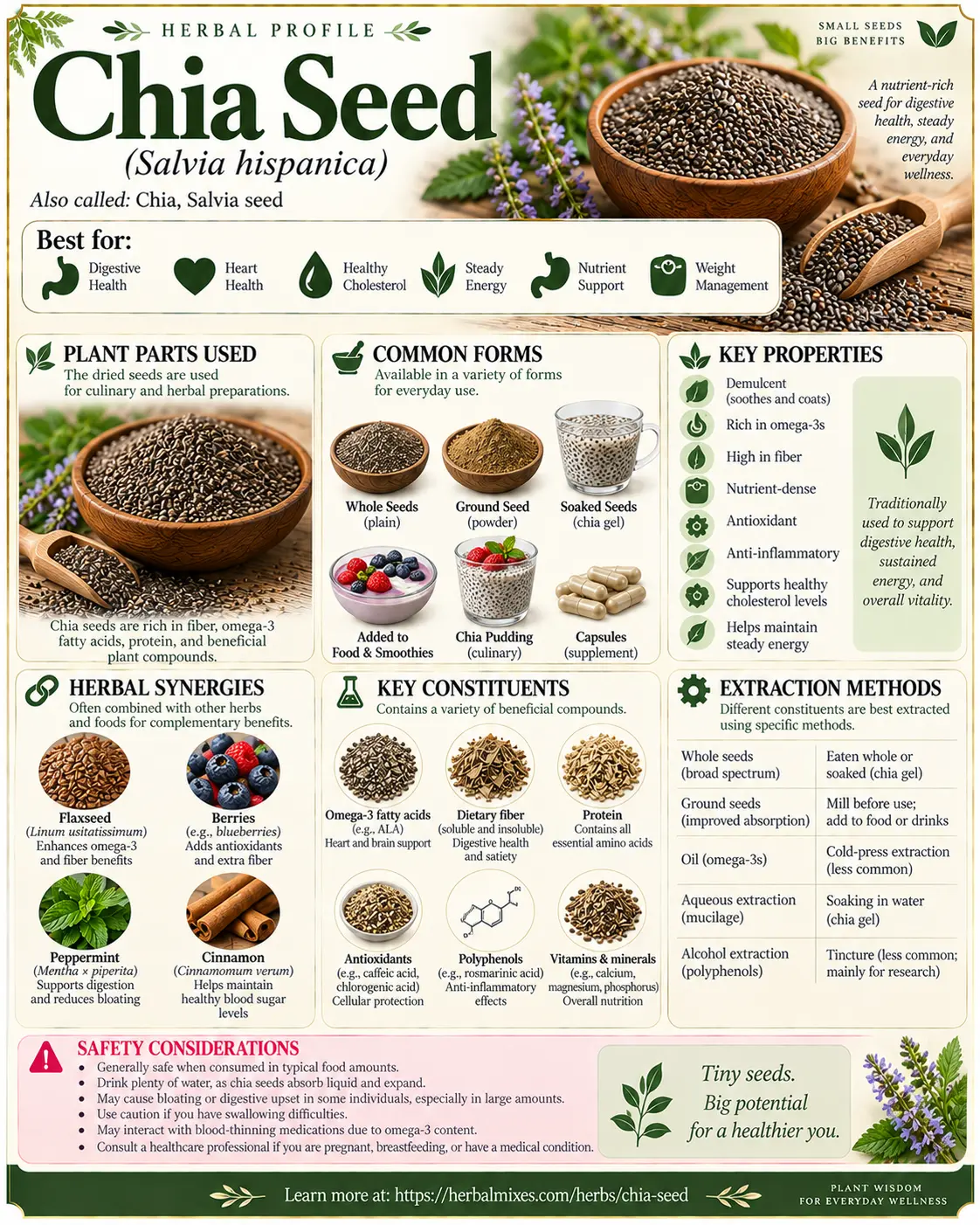
What Chia Seed Is Good For
Digestive Regularity & Fiber Support — Chia seeds are exceptionally rich in soluble and insoluble fiber, forming a soothing mucilaginous gel that promotes smooth bowel motility and healthy elimination.
Plant-Based Omega-3 Fatty Acids — Provides an abundant natural source of alpha-linolenic acid (ALA), an essential omega-3 fatty acid that supports normal cardiovascular function and inflammatory balance.
Sustained Energy & Hydration — When soaked, chia seeds absorb up to ten times their weight in water, slowing digestion and releasing sustained energy while supporting optimal hydration during physical exertion.
Blood Sugar Balance — The viscous gel created by soaked chia slows down carbohydrate digestion and glucose absorption, helping maintain steady post-meal blood sugar levels.
Satiety & Weight Management — Expands in the stomach to promote a lasting feeling of fullness, making it a valuable addition to weight-management wellness goals.
Available Herbal Products
Buying Guides for Available Chia Seed Products
Organic Raw Black Chia Seeds – Whole nutrient-dense seeds. An authentic, versatile choice for stirring into morning porridges, blending into smoothies, or crafting chia puddings. Seller: Mountain Rose Herbs – View Mountain Rose Herbs Chia Seeds →
Organic White Chia Seeds – Whole seeds with a slightly milder visual profile. Ideal for blending seamlessly into light-colored baked goods, beverages, and puddings without altering appearance. Seller: Starwest Botanicals – View Starwest Botanicals Chia →
Cold-Pressed Organic Chia Seed Oil – Pure seed oil. A concentrated liquid format rich in ALA omega-3s, designed for culinary drizzling or skin barrier conditioning. Seller: La Tourangelle – View La Tourangelle Chia Oil →
Superfood Omega Powder Mix – Ground chia and flax seed blend. A convenient milled powder format that ensures immediate nutrient absorption without needing to soak whole seeds. Seller: Navitas Organics – View Navitas Organics Seeds →
Herbal Synergies
Chia seed pairs especially well with Flax Seed, Psyllium Husk, and Hemp Hearts, depending on the goal of the formula.
Chia Seeds + Flax Seeds – Best for: Comprehensive omega-3 intake, dual-fiber digestive support, and cardiovascular health Chia seeds supply soothing mucilage and ALA fatty acids with superior shelf stability, while flax seeds deliver lignans and complementary soluble fiber. Together, they form an exceptional whole-food seed blend. Best extraction: Soaked seed gel or milled powder. Grinding or soaking these seeds unlocks their dense nutrient profiles for easy digestion.
Chia Seeds + Psyllium Husk – Best for: Deep colon cleansing, regular elimination, and supporting healthy cholesterol levels Chia seeds create a nourishing, gel-forming prebiotic matrix in the gut, whereas psyllium husk adds robust bulk-forming fiber to sweep the digestive tract cleanly. Best extraction: Stirred into ample water or juice. Must always be consumed with plenty of fluid to ensure comfortable passage.
Chia Seeds + Hemp Hearts – Best for: Complete plant protein intake, sustained muscular recovery, and balanced essential fatty acids Chia seeds provide slow-release carbohydrates and soluble fiber, while hemp hearts supply complete amino acids and balanced omega-6 to omega-3 ratios. Best extraction: Whole food topping for smoothies or yogurt. Combines seamlessly into daily meals.
Key Herbal Properties
Bulk-Forming Laxative / Demulcent — Absorbs water to form a soothing, lubricating mucilage that eases bowel movements and protects the gut lining.
Cardioprotective — Delivers ALA omega-3 fatty acids that support healthy lipid levels and normal vascular function.
Nutritive / Tonic — Dense source of macro-minerals, plant protein, and antioxidants that nourish overall vitality.
Prebiotic — Soluble fibers feed beneficial gut bacteria, promoting a flourishing microbiome.
Hydrophilic — Binds significant amounts of water, supporting prolonged hydration and electrolyte retention.


Active Compounds
Alpha-Linolenic Acid (ALA — Essential Omega-3 Fatty Acid) Found mainly in: Pressed seed oil and kernel A vital polyunsaturated fatty acid that supports systemic inflammatory balance, brain health, and cardiovascular wellness. Best extraction: Mechanical cold-pressing or whole seed digestion. Preserved effectively in raw, unheated seeds or cold-pressed oils.
Soluble Mucilage Polysaccharides Found mainly in: Outer seed coat (seed hull) Viscous carbohydrate polymers that swell upon contact with water, creating a protective, hydrating gel. Best extraction: Aqueous soaking (hydration in water, milk, or juice). Swells readily in cold or warm liquid within 15 to 30 minutes.
Plant Protein and Minerals (Calcium, Magnesium, Phosphorus) Found mainly in: Whole seed kernel Provide essential structural building blocks and nutritive support. Best extraction: Milling (grinding) or thorough chewing. Grinding whole seeds enhances mineral bioavailability.
FAQ
What are chia seeds best used for? Chia seeds are primarily used to support smooth digestive regularity, provide plant-based omega-3 fatty acids, and sustain steady daily energy and hydration.
Do chia seeds need to be soaked before eating? While dry chia seeds can be sprinkled onto foods, soaking them in liquid for 15 to 30 minutes allows them to form their beneficial mucilaginous gel, making them much easier to digest and hydrate the body.
Can chia seeds help with weight management? Yes, because chia seeds expand significantly and form a thick gel in the stomach, they slow digestion and promote a lasting sense of fullness, helping curb overeating.
How do chia seeds taste? Chia seeds have an exceptionally mild, neutral, and subtly nutty flavor profile, allowing them to blend seamlessly into sweet or savory recipes without altering the taste.
Can chia seeds be ground into flour? Yes, milled chia seeds can be used as an egg replacer in baking when mixed with water, or blended into flours to boost nutritional density.
Safety & Precautions
Adequate Fluid Intake: Always consume soaked chia seeds or drink plenty of water (at least 8 ounces) when eating dry seeds, as their high water-absorbing capacity can cause choking or esophageal blockage if swallowed dry in large quantities.
Diverticular or Inflammatory Bowel Conditions: Individuals with acute flare-ups of diverticulitis or severe strictures should consult a healthcare provider before consuming high-fiber whole seeds.
Blood Pressure & Thinning Medications: Because omega-3 fatty acids and high-dose seed extracts can gently influence blood pressure and clotting, individuals on anticoagulant drugs should monitor intake.
Allergies: True allergies to chia are rare, but individuals with known sensitivities to members of the Lamiaceae (mint) family should exercise mild caution.
Consult a qualified healthcare professional before using chia seeds therapeutically, especially if you manage underlying medical conditions or take prescription drugs.
References
National Center for Complementary and Integrative Health (NCCIH)
PubMed Central – Salvia hispanica (Chia) Nutritional and Cardiovascular Pharmacology
National Library of Medicine – Alpha-Linolenic Acid and Dietary Fiber Profile of Chia Seeds
World Health Organization (WHO) Nutritional Guidelines
Mountain Rose Herbs Chia Seed Monograph
Starwest Botanicals Chia Profile
Disclaimer
Disclaimer: This article is for educational purposes only and is not intended to diagnose, treat, cure, or prevent any disease. Herbal products can cause side effects and interact with medications. Consult a qualified healthcare professional before using foods and herbs therapeutically, especially if you are pregnant, breastfeeding, taking prescription medications, or managing a medical condition.