

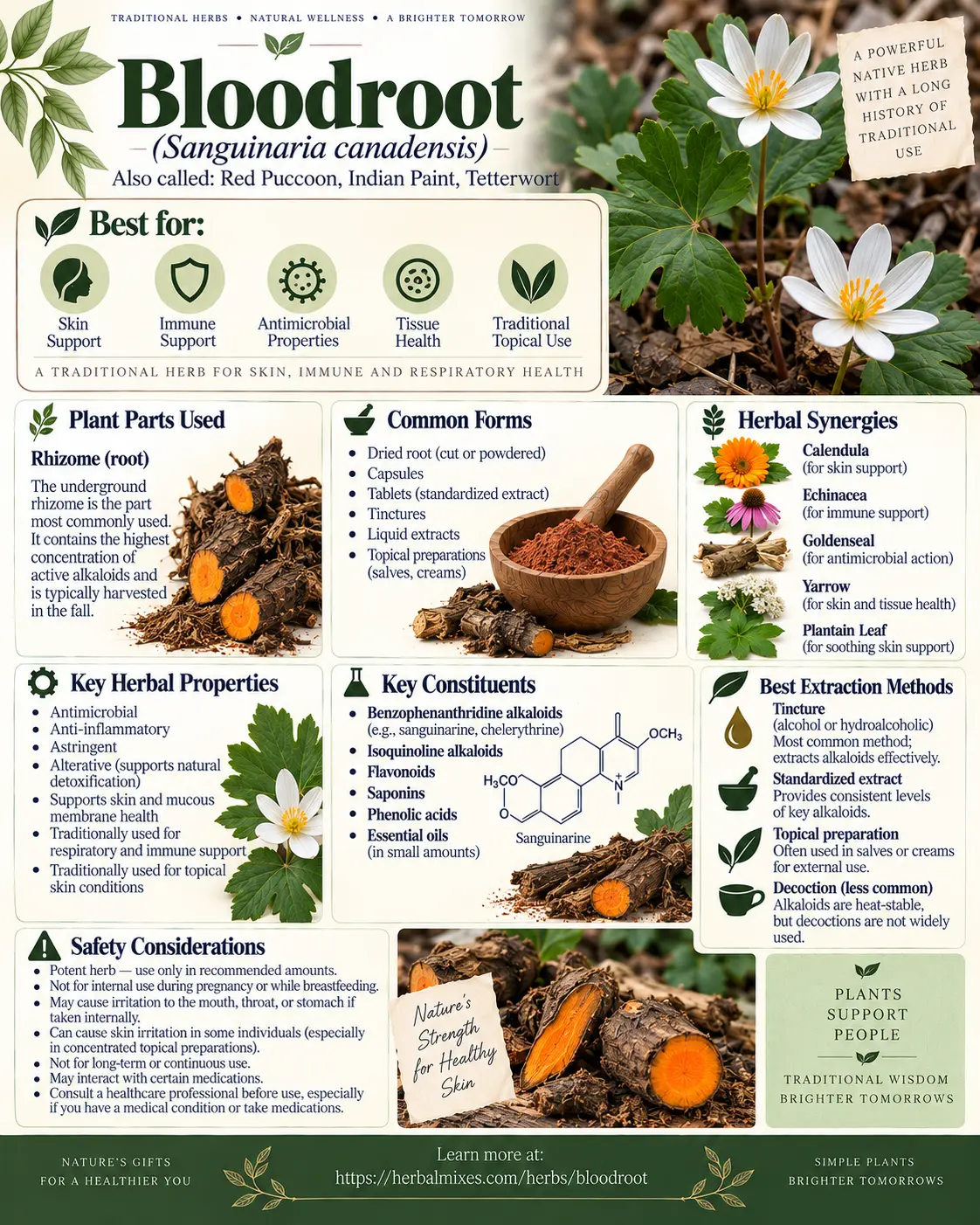
What Bloodroot Is Good For
Respiratory Mucus Clearance — Bloodroot is traditionally utilized in very small, measured doses as a stimulating expectorant to help clear excess mucus from the upper respiratory tract.
Antimicrobial & Topical Support — Historically valued for its broad-spectrum antimicrobial properties, helping support the body against unwanted microbial activity.
Professional Escharotic Care — Widely recognized in historical and botanical texts for its escharotic properties, though topical applications require strict professional oversight due to its caustic nature.
Minor Skin Blemish Care — Traditionally compounded into specialized salves for targeted application on minor external skin blemishes under expert guidance.
Oral & Gum Health Support — Occasionally included in heavily diluted herbal toothpastes and mouthwashes to support normal gum tissue integrity.
Available Herbal Products
Bloodroot Liquid Extract – Diluted hydroalcoholic tincture. A specialized, professional-grade herbal preparation designed for precise drop-by-drop dosing under the direction of an experienced herbalist. Seller: Herb Pharm – View Herb Pharm Bloodroot Extract →
Organic Bloodroot Root Cut – Dried whole rhizome pieces. An authentic herb intended primarily for professional herbal compounders and pharmacists formulating specialized preparations. Seller: Mountain Rose Herbs – View Mountain Rose Herbs Bloodroot →
Botanical Skin Salve (Diluted) – Professional topical ointment. Formulated with carefully measured, highly diluted bloodroot extract combined with soothing oils for external skin care. Seller: Wise Woman Herbals – View Wise Woman Herbals Salves →
Herbal Synergies
Bloodroot pairs especially well with Wild Cherry Bark, Licorice Root, and Echinacea, depending on the goal of the formula.
Bloodroot + Wild Cherry Bark – Best for: Respiratory support, clearing stuck mucus, and easing spasmodic coughs Bloodroot provides potent stimulating expectorant action to loosen deep mucus, while wild cherry bark supplies soothing cyanogenic glycosides that relax bronchial spasms. Together, they create a balanced respiratory formula when used in micro-doses. Best extraction: Syrup or low-dose tincture blend. Both herbs require precise measurement and are traditionally blended into soothing honey syrups.
Bloodroot + Licorice Root – Best for: Softening harsh herbal actions and soothing mucous membranes Bloodroot is exceptionally potent and potentially irritating to mucous membranes, whereas licorice root offers sweet demulcent compounds that coat and protect the throat. Best extraction: Decoction or liquid extract blend. Combining these extracts helps buffer bloodroot’s intense pungency.
Bloodroot + Echinacea Root – Best for: Immune support and mucosal resilience Bloodroot offers strong antimicrobial-supporting alkaloids, while echinacea stimulates lymphatic circulation and white blood cell activity. Best extraction: Hydroalcoholic tincture combination. Both roots extract efficiently in high-proof alcohol-water solvents.
Key Herbal Properties
Escharotic — Destroys or damages skin and tissue upon contact; requires extreme caution and professional oversight.
Stimulating Expectorant — Promotes the thinning and clearance of mucus from the respiratory passages.
Antimicrobial — Supports a hostile environment for unwanted bacteria, fungi, and microbes.
Emetic — High internal doses can stimulate the vomiting center in the brain, causing nausea and purging.
Escharotic Topically — Can cause local tissue necrosis if applied undiluted to the skin.




Active Compounds
Sanguinarine (Benzophenanthridine Alkaloid) Found mainly in: Rhizome and root sap The primary bioactive alkaloid responsible for bloodroot’s intense antimicrobial, escharotic, and physiological potency. Best extraction: High-proof hydroalcoholic tincture. Sanguinarine dissolves efficiently in alcohol-water extraction solvents.
Chelerythrine and Protopine Found mainly in: Rhizome sap Bioactive isoquinoline alkaloids that contribute to the plant’s strong neurological, circulatory, and antimicrobial actions. Best extraction: Alcohol-rich solvent. These potent alkaloids require proper solvent extraction for stable formulation.
Resins and Starch Found mainly in: Thick rhizome Support the structural composition and resinous qualities of the root. Best extraction: Alcohol or vinegar extraction (oxymel). Solvents effectively capture the active resins while stabilizing the liquid.
FAQ
What is bloodroot best used for? Bloodroot is primarily used in micro-doses as a stimulating expectorant for respiratory clearance, or in professional botanical practice as an escharotic for targeted topical care.
Why must bloodroot be used with extreme caution? Bloodroot contains powerful, potentially caustic alkaloids (like sanguinarine) that can cause severe tissue irritation, burns, or systemic toxicity if taken in excessive internal doses.
Can bloodroot be taken as a daily tea? No, bloodroot is far too potent for casual tea brewing or daily consumption; it should only be used in professionally formulated micro-doses or diluted external applications.
What does bloodroot look like? It earns its name from its thick, knotty rhizome, which bleeds a striking, vibrant bright-red or orange-red sap when freshly cut or broken.
Is bloodroot safe for self-treatment of skin lesions? No, self-treating skin growths or moles with undiliged bloodroot salves can lead to severe tissue damage, scarring, or incomplete removal; all topical escharotic use requires medical supervision.
Safety & Precautions
High Toxicity: Bloodroot is a potent and potentially toxic herb containing caustic alkaloids; inappropriate internal or external use can cause severe poisoning, mucosal burning, nausea, vomiting, and tissue necrosis.
Pregnancy & Breastfeeding: Avoid internal and external use completely during pregnancy and lactation due to its strong physiological and uterine-stimulating potential.
Internal Dosing: Never consume internal doses outside of professional clinical guidance, as excessive amounts act as a violent emetic and cardiac depressant.
Topical Caution: Undiluted topical application can cause severe skin burns and scarring; escharotic salves must be managed by qualified professionals.
Consult a qualified healthcare professional before using bloodroot therapeutically, especially if you manage underlying medical conditions or take prescription drugs.
References
National Center for Complementary and Integrative Health (NCCIH)
PubMed Central – Sanguinaria canadensis (Bloodroot) Alkaloids and Bioactivity
National Library of Medicine – Sanguinarine Toxicology and Pharmacology
World Health Organization (WHO) Monographs on Selected Medicinal Plants
Mountain Rose Herbs Bloodroot Rhizome Monograph
Disclaimer
Disclaimer: This article is for educational purposes only and is not intended to diagnose, treat, cure, or prevent any disease. Herbal products can cause side effects and interact with medications. Consult a qualified healthcare professional before using herbs therapeutically, especially if you are pregnant, breastfeeding, taking prescription medications, or managing a medical condition.