

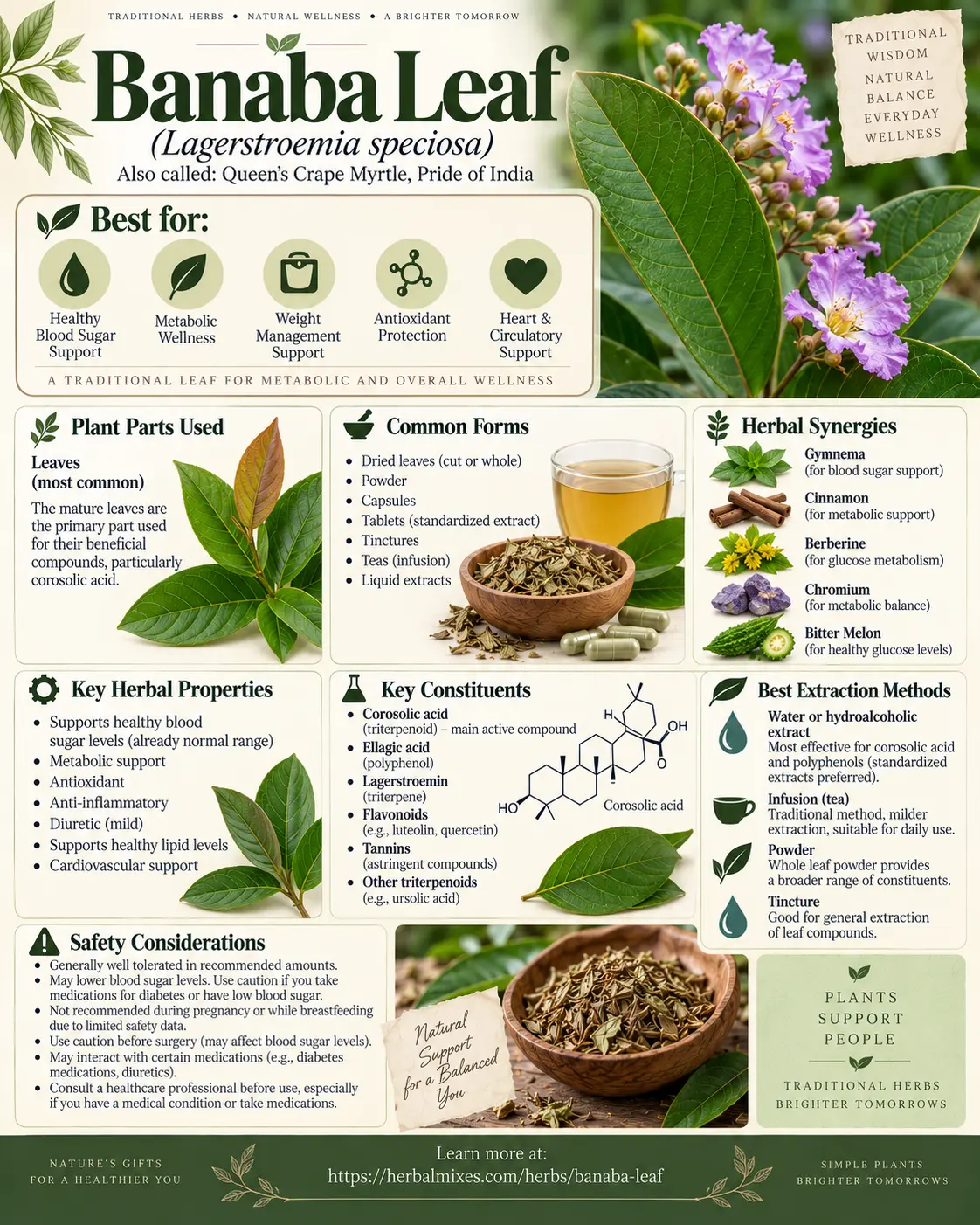
What Banaba Leaf Is Good For
Blood Sugar & Metabolic Support — Banaba leaf is widely recognized for its ability to help maintain healthy blood glucose levels already within the normal range.
Insulin Sensitivity — Active corosolic acid helps support normal cellular glucose uptake, promoting balanced insulin sensitivity and metabolic efficiency.
Weight Management Support — Frequently utilized alongside a balanced lifestyle to support healthy metabolism and assist with weight management goals.
Antioxidant & Cellular Defense — Rich in ellagic acid and polyphenol antioxidants that protect tissues from oxidative stress and free radical damage.
Renal & Urinary Comfort — Traditionally associated with supporting normal kidney function and comfortable urinary tract health in traditional herbal systems.
Available Herbal Products
Standardized Banaba Leaf Extract – Concentrated capsules. Formulated with a guaranteed concentration of active corosolic acid to ensure reliable potency for blood sugar support. Seller: Solaray – View Solaray Banaba Leaf Extract →
Banaba Leaf Liquid Extract – Hydroalcoholic tincture. A fast-absorbing liquid format that allows for convenient, adjustable daily dosing to support post-meal glucose balance. Seller: Herb Pharm – View Herb Pharm Banaba Extract →
Organic Banaba Leaf Tea Cut – Dried loose leaf. An authentic, traditional choice for brewing a soothing herbal infusion to support daily metabolic wellness. Seller: Starwest Botanicals – View Starwest Botanicals Banaba Leaf →
Blood Sugar Metabolic Complex – Comprehensive herbal capsules combining banaba leaf with chromium and cinnamon. Designed to provide synergistic support for healthy glucose metabolism. Seller: Nature’s Way – View Nature’s Way Metabolic Formulas →
Herbal Synergies
Banaba leaf pairs especially well with Cinnamon, Gymnema Sylvestre, and Bitter Melon, depending on the goal of the formula.
Banaba Leaf + Ceylon Cinnamon – Best for: Comprehensive blood sugar support, metabolic balance, and post-meal glucose management Banaba leaf provides active corosolic acid to support cellular glucose transport, while Ceylon cinnamon supplies warming polyphenols that enhance insulin sensitivity. Together, they create a premier metabolic support duo. Best extraction: Standardized capsules or combined tea infusion. Both ingredients yield their supportive compounds effectively into warm water or concentrated extract formats.
Banaba Leaf + Gymnema Sylvestre – Best for: Managing sweet cravings, supporting healthy blood sugar, and pancreatic health Banaba helps regulate cellular glucose uptake, whereas gymnema (“sugar destroyer”) helps suppress sweet taste perception and supports normal insulin production. Best extraction: Capsule blend or hydroalcoholic tincture. Combining these extracts ensures efficient delivery of both triterpene saponins and corosolic acid.
Banaba Leaf + Bitter Melon – Best for: Deep metabolic conditioning and everyday glucose balance Banaba offers targeted insulin-like activity via corosolic acid, while bitter melon provides plant polypeptides and charantin that support overall pancreatic function. Best extraction: Standardized extract capsules. These dense plant tissues combine seamlessly into concentrated capsule or tablet supplements.
Key Herbal Properties
Hypoglycemic Support — Helps support normal blood glucose regulation and healthy post-meal glycemic response.
Insulin Sensitizer — Enhances the body’s cellular utilization of glucose and supports normal insulin receptor activity.
Antioxidant — Neutralizes free radicals and protects metabolic tissues from oxidative stress.
Astringent — Tones mucous membranes and tissues throughout the digestive tract.
Diuretic — Encourages healthy fluid balance and renal elimination.




Active Compounds
Corosolic Acid (Triterpenoid) Found mainly in: Leaves The primary bioactive compound responsible for banaba’s insulin-like properties, enhancing cellular glucose uptake and metabolic balance. Best extraction: Standardized hydroalcoholic extract or alcohol tincture. Corosolic acid dissolves efficiently in alcohol-water extraction solvents.
Ellagic Acid and Ellagitannins (Polyphenols) Found mainly in: Leaves Potent antioxidant compounds that protect cells from oxidative damage and support overall vascular health. Best extraction: Warm water infusion or alcohol extract. These polyphenols are readily extracted in hydroalcoholic solutions and warm water.
Flagravins and Lagerstroemin (Ellagitannins) Found mainly in: Leaf tissues Bioactive ellagitannins that contribute significantly to the plant’s metabolic and glucose-regulating actions. Best extraction: Alcohol-water solvent or standardized extract. Optimal extraction requires proper solvent polarity to capture these complex molecules.
FAQ
What is banaba leaf best used for? Banaba leaf is primarily used to support healthy blood glucose levels, enhance insulin sensitivity, and promote overall metabolic wellness.
How quickly does banaba leaf work? Banaba extract can help support post-meal glucose levels relatively quickly when taken shortly before meals, while long-term metabolic benefits build over several weeks of consistent use.
Can banaba leaf be taken every day? Yes, banaba leaf is frequently incorporated into daily wellness routines by individuals seeking ongoing metabolic and blood sugar support.
Does banaba leaf taste bitter? Banaba leaf tea has a mild, earthy, slightly astringent herbal flavor profile, which is why many individuals prefer taking standardized capsules or liquid tinctures.
Can banaba leaf replace diabetes medication? No, banaba leaf is a dietary supplement designed to support healthy metabolic function and should not be used to replace prescribed medications without medical supervision.
Safety & Precautions
Blood Sugar Monitoring: Because banaba leaf actively supports glucose metabolism, individuals taking blood-sugar-lowering medications or insulin should monitor their blood glucose closely to avoid hypoglycemia (low blood sugar).
Pregnancy & Breastfeeding: Due to insufficient safety data regarding its metabolic effects during pregnancy and nursing, professional medical guidance is strongly recommended.
Surgery: Discontinue use at least two weeks prior to scheduled surgeries, as banaba leaf may influence blood glucose levels during and after procedures.
Medication Interactions: Exercise caution if you take anti-diabetic drugs, insulin, or diuretics, as additive effects may occur.
Consult a qualified healthcare professional before using banaba leaf therapeutically, especially if you manage underlying medical conditions or take prescription drugs.
References
National Center for Complementary and Integrative Health (NCCIH)
PubMed Central – Lagerstroemia speciosa (Banaba) in Glucose Metabolism and Metabolic Syndrome
National Library of Medicine – Corosolic Acid and Banaba Leaf Efficacy
European Medicines Agency (EMA) Botanical Documentation
Disclaimer
Disclaimer: This article is for educational purposes only and is not intended to diagnose, treat, cure, or prevent any disease. Herbal products can cause side effects and interact with medications. Consult a qualified healthcare professional before using herbs therapeutically, especially if you are pregnant, breastfeeding, taking prescription medications, or managing a medical condition.