

What Astragalus Is Good For
Immune System Support — Astragalus is a premier immunomodulating tonic traditionally used to strengthen the body’s natural defenses and support long-term immune resilience.
Vitality & Deep Energy (Qi) — Highly valued in traditional herbalism as a core Qi tonic that helps combat fatigue, restore stamina, and support overall physical endurance.
Respiratory Defense — Commonly utilized to protect and tone the upper respiratory tract, making it a favorite for seasonal wellness support during colder months.
Adaptogenic Resilience — Acts as a gentle adaptogen that helps the body adapt to physical and mental stress while supporting normal energy metabolism.
Post-Illness Recovery — Frequently employed during periods of convalescence to help rebuild strength, nourish depleted tissues, and support healthy recovery.
Available Herbal Products
Organic Astragalus Root Slices – Dried root pieces (Huang Qi). An authentic, traditional choice for simmering into daily bone broths, healing soups, or long-simmered herbal decoctions. Seller: Mountain Rose Herbs – View Mountain Rose Herbs Astragalus Root →
Astragalus Root Extract – Liquid tincture. A concentrated hydroalcoholic extract that captures the water-soluble polysaccharides and active saponins for rapid, convenient daily immune support. Seller: Herb Pharm – View Herb Pharm Astragalus Extract →
Immune Tonic Astragalus Capsules – Standardized root extract capsules. Formulated to provide a guaranteed concentration of active astragalosides and polysaccharides for reliable daily potency. Seller: Gaia Herbs – View Gaia Herbs Astragalus →
Organic Astragalus & Reishi Immunity Blend – Comprehensive mushroom and root extract formula. Designed to provide deep, synergistic immune system reinforcement during stressful seasonal shifts. Seller: Host Defense – View Host Defense Astragalus Formulas →
Herbal Synergies
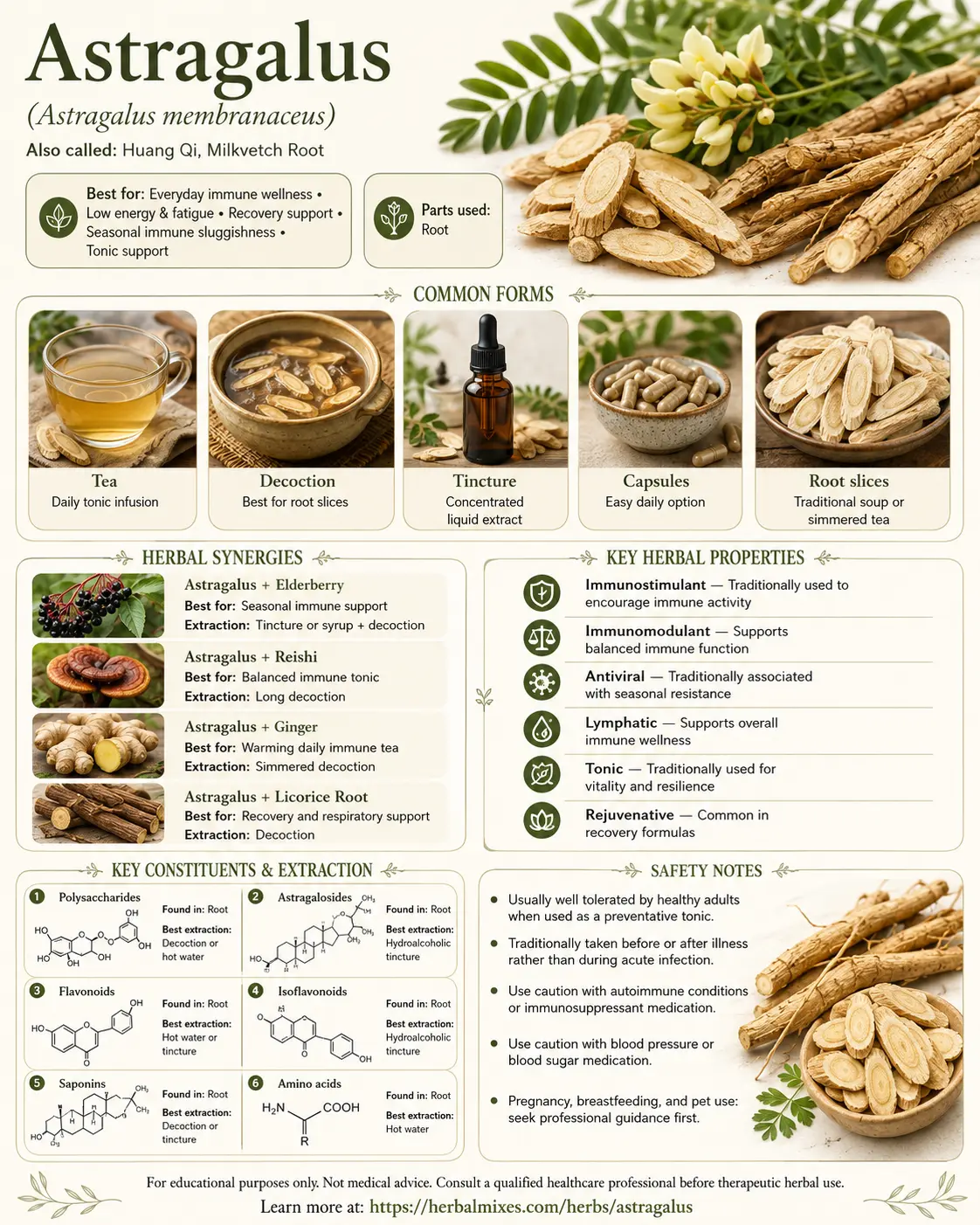
Astragalus pairs especially well with Reishi Mushroom, Eleuthero, and Schisandra Berry, depending on the goal of the formula.
Astragalus Root + Reishi Mushroom – Best for: Deep immune system reinforcement, vitality, and longevity support Astragalus provides foundational Qi-tonifying polysaccharides, while reishi mushroom offers powerful immunomodulating beta-glucans and triterpenes. Together, they create a premier adaptogenic shield for deep immune health. Best extraction: Long-simmered decoction or dual-extract tincture. Both woody roots and mushrooms require extended hot water simmering or alcohol-water extraction to unlock their complex polysaccharides.
Astragalus Root + Eleuthero (Siberian Ginseng) -Best for: Boosting stamina, overcoming fatigue, and supporting daily physical resilience Astragalus builds core immune vitality, whereas eleuthero acts as an energizing adaptogen that supports adrenal function and physical endurance under stress. Best extraction: Alcohol-water tincture or decoction blend. Hydroalcoholic extraction effectively captures the diverse active constituents from both roots.
Astragalus Root + Schisandra Berry – Best for: Restorative recovery, respiratory support, and deep foundational toning Astragalus tonifies the lungs and immune system, while schisandra provides astringent, adaptogenic protection for the liver and respiratory pathways. Best extraction: Decoction combined with tincture. Simmering astragalus root extracts its water-soluble polysaccharides, which can be blended with a schisandra berry tincture.
Key Herbal Properties
Immunomodulating — Regulates and optimizes immune system activity, enhancing the body’s natural defensive surveillance.
Qi Tonic — Deeply nourishes and builds fundamental energy, vitality, and physical stamina.
Adaptogen — Supports the body’s physiological resistance and adaptation to environmental and physical stressors.
Diuretic — Encourages healthy fluid balance and normal renal elimination.
Cardioprotective — Traditionally and clinically associated with supporting normal cardiovascular function and circulation.




Active Compounds
Astragalosides (including Astragaloside IV) Found mainly in: Dried root Bioactive cycloartane triterpenoid saponins that support cellular longevity, immune function, and cardiovascular health. Best extraction: Alcohol-rich hydroalcoholic extract. Astragalosides require adequate alcohol concentration in the solvent to extract efficiently.
Astragalus Polysaccharides (APS) Found mainly in: Root High-molecular-weight carbohydrates responsible for astragalus’s powerful immunomodulating, antioxidant, and tissue-protective properties. Best extraction: Long-term water decoction or hot water extraction. Polysaccharides dissolve readily in hot water, making traditional simmered broths and teas highly effective.
Flavonoids (including Formononetin) Found mainly in: Root Contribute to the plant’s antioxidant activity and vascular health. Best extraction: Hydroalcoholic tincture or warm infusion. Soluble in alcohol-water mixtures.
FAQ
What is astragalus root best used for? Astragalus is primarily used as a foundational daily tonic to support a robust immune system, enhance physical energy, and protect the body during seasonal challenges.
Can astragalus be taken every day? Yes, as a nourishing food-grade tonic root, astragalus is traditionally incorporated into long-term daily routines (such as simmering root slices in soups) to build deep, sustained wellness.
Should astragalus be avoided during an acute fever or cold? Traditional herbal practice suggests pausing tonifying herbs like astragalus during active, acute viral infections with high fevers, as they are best utilized for foundational prevention and post-illness recovery rather than acute immune stimulation.
How does astragalus taste? Astragalus root has a mild, sweet, earthy, and slightly woody flavor profile reminiscent of parsnip or sweet root vegetables, making it pleasant when simmered in broths.
Is tea or tincture better for astragalus? Both are excellent: long decoctions (simmered root tea or soups) extract abundant water-soluble polysaccharides, while hydroalcoholic tinctures capture concentrated astragalosides efficiently.
Safety & Precautions
Acute Infections & Fevers: Traditional herbal protocols advise against using immune-tonifying herbs like astragalus during the acute, active onset of high fevers or acute infections, as it is intended for deep prevention and recovery.
Autoimmune Conditions: Individuals with certain overactive autoimmune conditions should consult a qualified healthcare provider before use, due to astragalus’s immune-modulating activity.
Pregnancy & Breastfeeding: While culinary use in broths is widely enjoyed, concentrated therapeutic extracts should be used only under professional guidance during pregnancy.
Organ Transplants: Avoid use in individuals who have received organ transplants or take immunosuppressive medications, as immune-stimulating herbs may interfere with anti-rejection therapies.
Consult a qualified healthcare professional before using astragalus therapeutically, especially if you manage underlying medical conditions or take prescription drugs.
References
National Center for Complementary and Integrative Health (NCCIH)
European Medicines Agency (EMA) Herbal Monograph on Astragalus membranaceus
World Health Organization (WHO) Monographs on Selected Medicinal Plants – Radix Astragali
Mountain Rose Herbs Astragalus Root Monograph
Disclaimer
Disclaimer: This article is for educational purposes only and is not intended to diagnose, treat, cure, or prevent any disease. Herbal products can cause side effects and interact with medications. Consult a qualified healthcare professional before using herbs therapeutically, especially if you are pregnant, breastfeeding, taking prescription medications, or managing a medical condition.