

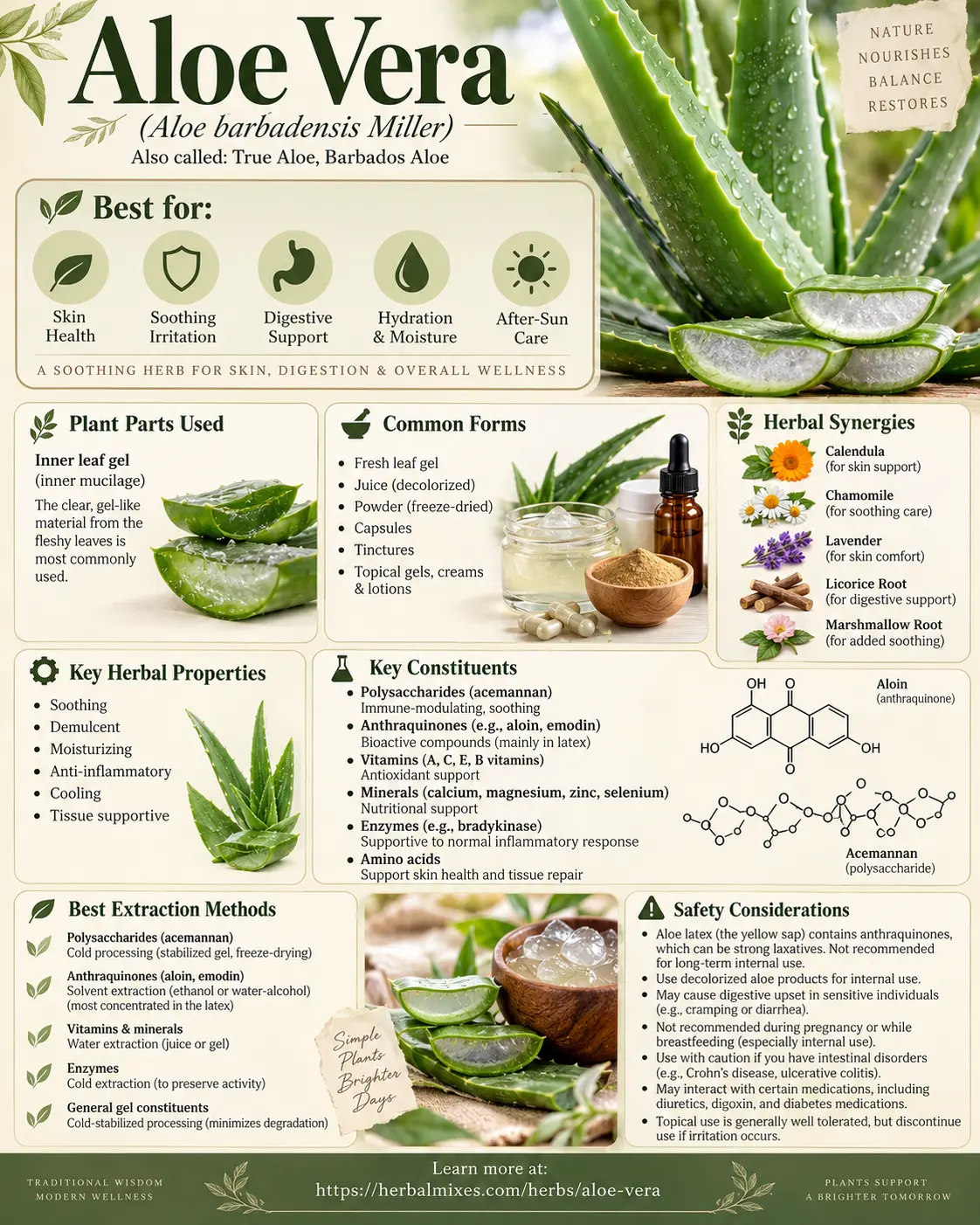
What Aloe Vera Is Good For
Digestive & Mucosal Soothing — Aloe vera inner leaf gel is traditionally used as a demulcent to soothe and coat irritated mucous membranes throughout the gastrointestinal tract.
Skin Health & Minor Tissue Repair — Applied topically or consumed internally to support skin hydration, elasticity, and the natural recovery of minor cuts, scrapes, and sun-exposed skin.
Gastrointestinal Comfort — Helps maintain normal stomach pH and supports a balanced gut microbiome as part of a daily wellness routine.
Immune Support — Rich in bioactive polysaccharides that help support balanced immune system function.
Hydration & Cellular Support — Provides essential moisture and naturally occurring micronutrients that nourish internal tissues.
Available Herbal Products
Buying Guides for Available Aloe Vera Products
Organic Aloe Vera Inner Leaf Juice – Purified liquid gel. An excellent daily choice for soothing the digestive tract and providing internal hydration without the harsh laxative compounds found in the outer leaf rind. Seller: Lily of the Desert – View Lily of the Desert Aloe Juice →
Organic Freeze-Dried Aloe Vera Capsules – Pure inner-leaf powder capsules. A convenient, travel-friendly option that delivers concentrated, bioavailable polysaccharides without the need for liquid refrigeration. Seller: Global Healing – View Global Healing Aloe Vera Capsules →
Pure Aloe Vera Gel – Topical soothing gel. Formulated for direct external application to minor burns, dry skin, and minor skin irritations to cool, hydrate, and support tissue recovery. Seller: Mountain Rose Herbs – View Mountain Rose Herbs Aloe Gel →
Advanced Inner Leaf Extract – Concentrated capsules. Standardized to ensure high levels of immune-supporting acemannan while remaining completely free of aloin and harsh latex. Seller: AloeCure – View AloeCure Advanced Formula →
Herbal Synergies
Aloe vera pairs especially well with Licorice Root, Slippery Elm, and Marshmallow Root, depending on the goal of the formula.
Aloe Vera + Licorice Root – Best for: Deep mucosal soothing, stomach comfort, and digestive lining support Aloe vera provides cooling, hydrating inner-leaf mucilage, while licorice root offers potent demulcent and anti-inflammatory compounds that coat and protect the upper GI tract. Best extraction: Cold infusion, liquid juice, or capsule blend. Both ingredients thrive in non-heat or gentle water-based preparations to protect their delicate polysaccharides and saponins.
Aloe Vera + Slippery Elm – Best for: Comprehensive gastrointestinal coating and relief from occasional irritation Aloe vera hydrates and cools inflamed tissues, whereas slippery elm bark supplies thick, nourishing mucilage that adheres to the gut wall for sustained comfort. Best extraction: Powder blend or liquid suspension. Combining aloe juice with slippery elm powder creates a soothing demulcent slurry ideal for internal lining support.
Aloe Vera + Marshmallow Root – Best for: Gentle tissue hydration, urinary tract comfort, and soothing dry mucous membranes Aloe vera and marshmallow root both excel in high mucilage content, working synergistically to deliver maximum moisture and calming relief to irritated internal pathways. Best extraction: Cold maceration or juice combination. Cold extraction methods preserve the long-chain mucilaginous polysaccharides found in both plants without breaking them down with heat.
Key Herbal Properties
Demulcent — Rich in mucilage that forms a protective, soothing layer over irritated mucous membranes.
Vulnerary — Supports the normal cellular repair and healing of skin and internal epithelial tissues.
Immunomodulating — Contains complex carbohydrates that help regulate and support healthy immune system activity.
Alterative — Promotes gradual systemic restoration and internal cleansing.
Antioxidant — Provides vitamins, enzymes, and polyphenols that help neutralize free radicals.





Active Compounds
Acemannan (Long-Chain Polysaccharide) Found mainly in: Clear inner leaf gel The primary bioactive compound in aloe vera responsible for immune support, mucosal protection, and cellular communication. Best extraction: Cold-processed inner leaf juice or freeze-dried powder. Heat can degrade delicate polysaccharide chains like acemannan, making cold-processing or gentle freeze-drying essential.
Vitamins, Minerals, and Enzymes (including Vitamins A, C, E, and Bradykinase) Found mainly in: Inner leaf pulp Support antioxidant defense and help modulate local tissue inflammation. Best extraction: Fresh inner leaf fillet or cold-extracted juice. These water-soluble nutrients require minimal processing to retain their integrity.
Amino Acids and Plant Sterols Found mainly in: Inner gel matrix Contribute to skin hydration, tissue elasticity, and metabolic support. Best extraction: Aqueous solution or cold stabilization. Water extraction effectively preserves the balance of amino acids and plant sterols.
FAQ
What is aloe vera best used for? Aloe vera is best known for soothing the digestive tract lining, hydrating internal tissues, and supporting external skin healing from minor burns, dryness, or irritation.
Is inner leaf aloe safe to drink daily? Yes, purified inner leaf aloe vera juice or gel that has been completely decolorized and freed from latex (aloin) is widely consumed daily for digestive wellness and hydration.
How does aloe vera gel differ from aloe latex? Aloe vera gel comes from the clear inner mucilage of the leaf and is deeply soothing and hydrating, whereas aloe latex is the bitter yellow sap beneath the skin that acts as a strong stimulant laxative.
Does aloe vera need to be refrigerated? Yes, pure liquid inner leaf aloe vera juices and fresh gel lack artificial preservatives and typically require refrigeration after opening to maintain their freshness and potency.
Can aloe vera help with skin hydration? When applied topically, aloe vera provides a lightweight, water-rich layer of moisture combined with polysaccharides that help lock hydration into the skin.
Safety & Precautions
Outer Rind / Latex Content: Ensure internal products are explicitly sourced from the purified inner leaf fillet and free from aloin (latex), which acts as a harsh laxative.
Pregnancy & Breastfeeding: Internal use of whole-leaf preparations or high-dose extracts should be approached with professional guidance during pregnancy.
Blood Sugar Levels: Because internal aloe vera preparations may influence blood glucose levels, individuals managing diabetes or taking blood-sugar-lowering medications should monitor their levels closely.
Topical Sensitivity: While rare, individuals with extreme skin sensitivities should patch-test topical aloe products before widespread application.
Consult a qualified healthcare professional before using aloe vera therapeutically, especially if you manage underlying medical conditions or take prescription drugs.
References
National Center for Complementary and Integrative Health (NCCIH) – Aloe Vera
PubMed Central – Aloe vera: A Comprehensive Review of Clinical Efficacy
National Library of Medicine – Acemannan and Polysaccharide Profile of Aloe barbadensis
World Health Organization (WHO) Monographs on Selected Medicinal Plants – Aloe Vera Gel
Global Healing Aloe Vera Monograph
Lily of the Desert Quality Standards
Disclaimer
Disclaimer: This article is for educational purposes only and is not intended to diagnose, treat, cure, or prevent any disease. Herbal products can cause side effects and interact with medications. Consult a qualified healthcare professional before using herbs therapeutically, especially if you are pregnant, breastfeeding, taking prescription medications, or managing a medical condition.