

What Aloe Latex Is Good For
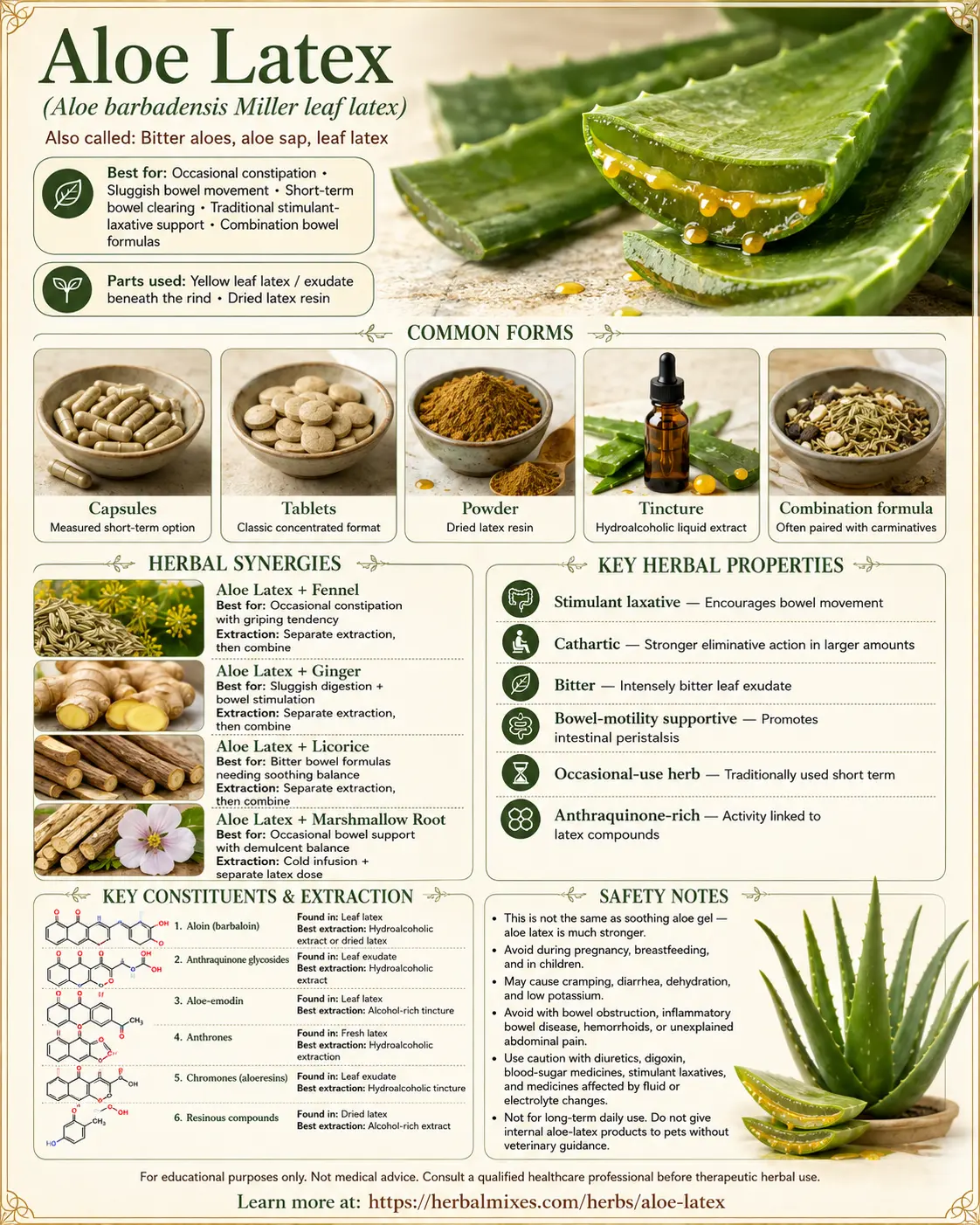
Occasional Constipation & Regularity — Aloe latex is traditionally used as a strong stimulant laxative for the short-term relief of occasional constipation.
Bowel Cleansing & Peristalsis — Active anthraquinone glycosides stimulate muscular contractions (peristalsis) in the colon, encouraging more rapid transit and elimination.
Digestive Stimulation — Bitter principles help engage digestive secretions and support sluggish gastrointestinal motility when used in small, measured quantities.
Traditional Parasitic Support — Historically utilized in specialized, short-term herbal formulas to support the clearance of intestinal parasites due to its strong cathartic action.
Available Herbal Products
Buying Guides for Available Aloe Latex Products
Organic Cape Aloes Gum – Dried resinous chunks. A traditional herbal preparation that can be powdered or carefully measured for compounding into custom capsules or bitter digestive tonics. Seller: Starwest Botanicals – View Starwest Botanicals Cape Aloes →
Aloe Latex Capsules – Encapsulated dried leaf exudate. Provides a precise, measured way to take aloe latex for short-term occasional constipation without handling bitter resin powders directly. Seller: Mountain Rose Herbs – View Mountain Rose Herbs Aloe Products →
Compound Laxative Formula – Proprietary herbal capsules combining aloe latex with soothing carminative herbs. Designed to support bowel regularity while minimizing griping or abdominal cramping. Seller: Nature’s Way – View Nature’s Way Herbal Laxative →
Herbal Synergies
Aloe latex pairs especially well with Ginger, Fennel, and Licorice Root, depending on the goal of the formula.
Aloe latex + Ginger Root – Best for: Easing abdominal griping and supporting comfortable elimination Aloe latex is a powerful stimulant laxative that can sometimes cause cramping, while ginger provides potent carminative and warming actions to soothe intestinal smooth muscle. Together, they promote regular movement with less discomfort. Best extraction: Capsule or combined decoction. Ginger’s warming rhizome pairs smoothly with aloe latex in encapsulated formulas or short simmered decoctions.
Aloe latex + Fennel Seed – Best for: Reducing gas and harmonizing strong cathartic action Aloe latex stimulates vigorous peristalsis, whereas fennel seed offers carminative volatile oils that prevent gas buildup and abdominal pressure during transit. Best extraction: Capsule or tincture blend. Combining a measured aloe extract with a carminative fennel tincture ensures balanced, comfortable digestive support.
Aloe latex + Licorice Root – Best for: Mucosal soothing and softening harsh stimulant effects Aloe latex provides strong eliminative action, while licorice root acts as a sweet demulcent that coats and protects the gastrointestinal lining. Best extraction: Decoction or capsule blend. Both ingredients blend well into traditional multi-herb formulations designed for short-term bowel cleansing.
Key Herbal Properties
Cathartic — Promotes rapid and forceful evacuation of the bowels by stimulating intestinal motility.
Stimulant Laxative — Directs muscular contractions in the colon wall to speed up transit time.
Bitter — Stimulates digestive secretions and salivary flow through direct action on bitter taste receptors.
Anthelmintic — Traditionally recognized for supporting the expulsion of intestinal worms.



Active Compounds
Anthraquinone Glycosides (including Aloin / Barbaloin) Found mainly in: Dried yellow latex located just beneath the outer leaf rind These active compounds are broken down by gut bacteria in the colon, where they stimulate fluid secretion and trigger strong peristaltic contractions. Best extraction: Water or alcohol-water extraction. Aloin is water-soluble and dries readily into a resinous gum or powder, making it easily adaptable for capsules and tinctures.
Resins and Phenolic Compounds Found mainly in: Dried leaf exudate Support the bitter and cathartic potency of the latex. Best extraction: Hydroalcoholic tincture or dried resin powder. Solvents successfully capture these complex botanical resins.
FAQ
What is aloe latex best used for? Aloe latex is used exclusively for the short-term relief of occasional constipation and thorough bowel cleansing, rather than as a daily supplement.
How does aloe latex differ from aloe vera gel? Aloe vera gel comes from the clear, mucilaginous inner fillet of the leaf and is soothing and hydrating, whereas aloe latex is the bitter yellow sap found just beneath the rind, acting as a potent stimulant laxative.
Can aloe latex be used every day? No, stimulant laxatives containing aloe latex should only be used for short periods (typically no longer than 7 to 10 days) to prevent electrolyte imbalance, laxative dependency, or loss of normal bowel tone.
Why does aloe latex cause cramping? Its active anthraquinone compounds directly stimulate the muscular walls of the colon, which can trigger griping or cramping if the dose is too high or if it is used without carminative herbs like ginger or fennel.
Is aloe latex safe during pregnancy? No, aloe latex is strictly contraindicated during pregnancy and breastfeeding due to its strong uterine-stimulating and cathartic properties.
Safety & Precautions
Pregnancy & Breastfeeding: Avoid completely during pregnancy and lactation, as anthraquinone laxatives can stimulate uterine contractions and pass into breast milk.
Duration of Use: Do not use continuously for more than 7 to 10 days, as prolonged use can lead to electrolyte depletion (specifically low potassium), intestinal atony, and laxative dependency.
Underlying Conditions: Avoid use if you experience undiagnosed abdominal pain, intestinal obstruction, appendicitis, Crohn’s disease, ulcerative colitis, or severe dehydration.
Children: Not recommended for young children without direct professional medical supervision.
Medication Interactions: May interact with heart medications (such as cardiac glycosides) and diuretics due to potential potassium depletion caused by excessive bowel loss.
Consult a qualified healthcare professional before using aloe latex therapeutically, especially if you manage underlying medical conditions or take prescription drugs.
References
National Center for Complementary and Integrative Health (NCCIH)
PubMed Central – Aloe vera Leaf Exudate and Anthraquinones
World Health Organization (WHO) Monographs on Selected Medicinal Plants – Aloe Vera Gel / Aloe Latex
European Medicines Agency (EMA) Monograph on Aloe barbadensis miller
Starwest Botanicals Cape Aloes Monograph
Disclaimer
Disclaimer: This article is for educational purposes only and is not intended to diagnose, treat, cure, or prevent any disease. Herbal products can cause side effects and interact with medications. Consult a qualified healthcare professional before using herbs therapeutically, especially if you are pregnant, breastfeeding, taking prescription medications, or managing a medical condition.