

What Alfalfa Is Good For
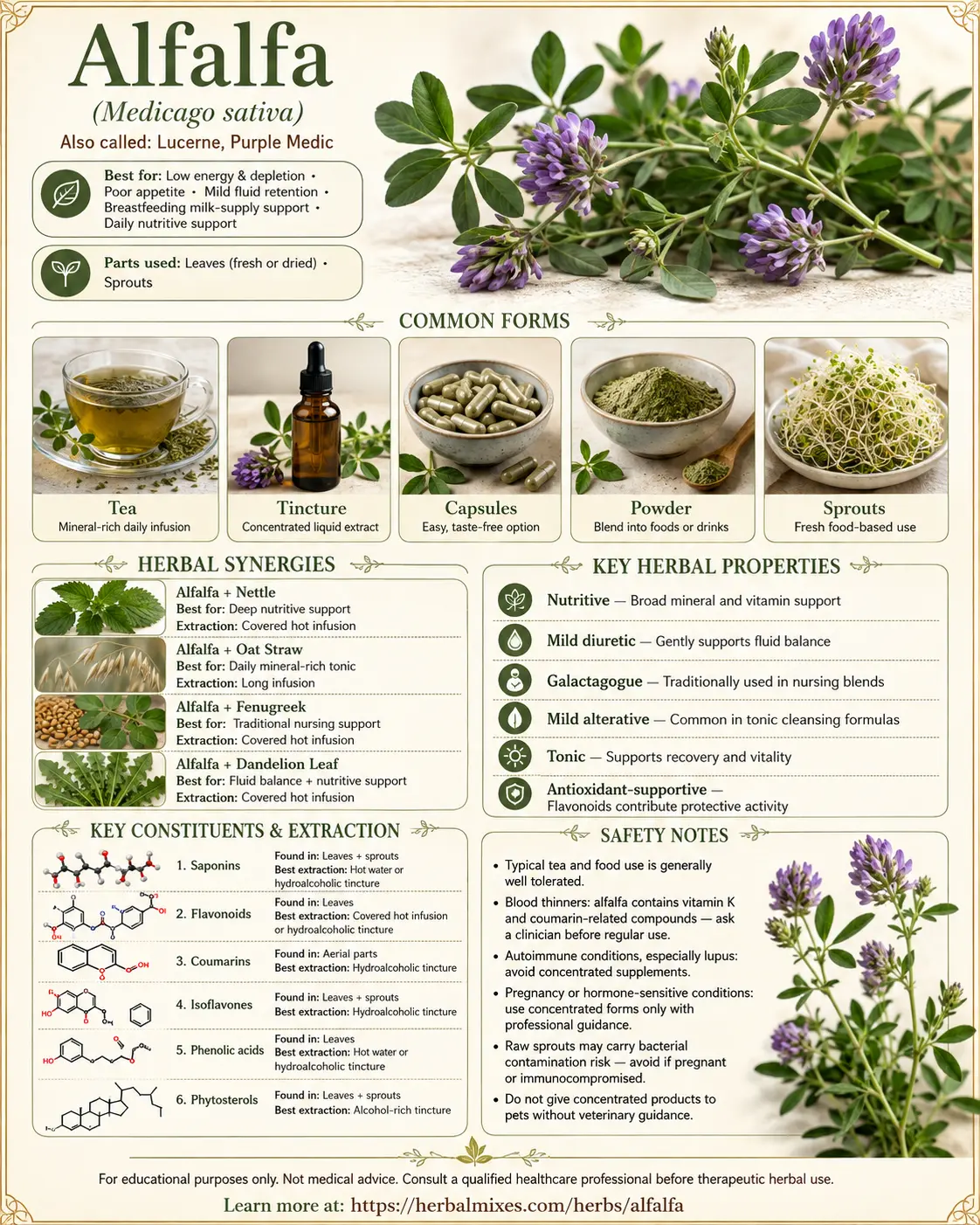
Nutrient Density & Tonic Support — Alfalfa is traditionally valued as a nutritive tonic rich in naturally occurring vitamins, minerals, and trace elements that help support overall vitality.
Digestive Support & Mild Bitter Action — The gentle bitter principles present in the leaves help stimulate digestive secretions and support comfortable, everyday digestive function.
Alkalizing & Metabolic Support — Commonly utilized to help maintain acid-base balance and support the body’s natural metabolic processes.
General Daily Wellness — Alfalfa acts as a comprehensive alterative, supporting general cleansing pathways and overall physiological resilience.
Available Herbal Products
Buying Guides for Available Alfalfa Products
Organic Alfalfa Leaf Powder – Pure leaf powder. An excellent choice for stirring into smoothies, green juices, or incorporating into daily herbal beverage blends for a concentrated boost of green nutrition. Seller: Mountain Rose Herbs – View Mountain Rose Herbs Alfalfa Powder →
Alfalfa Leaf Extract – Liquid tincture. A concentrated hydroalcoholic extract that offers a convenient, quick-absorbing way to capture alfalfa’s water-soluble nutrients and plant compounds. Seller: Herb Pharm – View Herb Pharm Alfalfa Extract →
Organic Alfalfa Leaf Tablets – Compressed whole-leaf tablets. A practical and taste-free option for those who prefer consistent, measured daily dosing without mixing loose powders. Seller: Nature’s Way – View Nature’s Way Alfalfa Tablets →
Organic Alfalfa Tea Cut – Dried cut leaf. Perfect for steeping a traditional mineral-rich herbal infusion or combining with other nutritive green herbs like nettle and oatstraw. Seller: Starwest Botanicals – View Starwest Botanicals Alfalfa Leaf →
Herbal Synergies
Alfalfa pairs especially well with Nettle, Oatstraw, and Dandelion Root, depending on the goal of the formula.
Alfalfa + Nettle Leaf – Best for: Deep nutritive support, mineral replenishment, and tonic vitality Alfalfa provides a broad spectrum of trace minerals and vitamins, while nettle leaf offers a complementary bounty of iron, chlorophyll, and calcium. Together, they create a premier green infusion for foundational wellness. Best extraction: Hot water infusion (long steep). Both mineral-rich leaf herbs release their water-soluble elements efficiently when steeped in covered hot water for 15 to 30 minutes.
Alfalfa + Oatstraw – Best for: Nervous system nourishment, daily vitality, and restorative tonic action Alfalfa’s rich mineral profile blends smoothly with oatstraw’s renowned calming and nutritive qualities, supporting both physical endurance and nervous system resilience. Best extraction: Hot infusion or standard decoction blend. Simmering or steeping these dried aerial parts extracts their abundant plant constituents and minerals into an accessible liquid format.
Alfalfa + Dandelion Root – Best for: Digestive stimulation, gentle cleansing, and metabolic support Alfalfa’s nutritive greens complement dandelion root’s active bitter principles, promoting enhanced digestive secretions and holistic seasonal support. Best extraction: Combined decoction and infusion. Dandelion root requires a brief simmer (decoction), which can then be poured over the alfalfa leaves to steep off the heat.
Key Herbal Properties
Nutritive — Delivers a rich array of essential vitamins, minerals, and trace elements to nourish body tissues.
Alterative — Supports the body’s natural metabolic clearance and gradual systemic restoration.
Diuretic — Encourages healthy fluid balance and normal renal elimination.
Bitter — Stimulates digestive juices, supporting healthy appetite and gastrointestinal efficiency.
Antioxidant — Provides plant polyphenols and chlorophyll that help neutralize free radicals.





Active Compounds
Chlorophyll and Plant Pigments Found mainly in: Green leaves These natural green pigments contribute to alfalfa’s antioxidant activity and traditional reputation as a vitalizing green food. Best extraction: Fresh juice extraction or fine leaf powder. Chlorophyll is best consumed directly via whole leaf formats, green powders, or freshly pressed juices.
Vitamins and Minerals (including Calcium, Magnesium, Potassium, and Vitamins K and C) Found mainly in: Leaves and aerial parts Water-soluble and mineral elements that provide alfalfa’s core nutritive profile. Best extraction: Hot water infusion or hydroalcoholic extract. Long-steeped hot water infusions effectively pull out water-soluble vitamins and minerals.
Saponins (including Medicagenic Acid) Found mainly in: Roots and aerial parts Bioactive plant compounds that contribute to alfalfa’s physiological activity and mild surfactant properties. Best extraction: Alcohol-water tincture. Hydroalcoholic extraction effectively captures these complex plant saponins.
Isoflavones (including Genistein and Daidzein) Found mainly in: Leaves and sprouts Phytoestrogenic compounds that offer mild hormonal-modulating activity. Best extraction: Hydroalcoholic extract or tincture. Alcohol-water solvents readily draw out these organic compounds.
FAQ
What is alfalfa best used for? Alfalfa is primarily used as a daily nutritive tonic to support mineral intake, general vitality, digestion, and mild internal cleansing.
Can alfalfa be taken every day? Yes, culinary and moderate supplemental amounts of alfalfa leaf are frequently enjoyed as part of a daily wellness routine for long-term nutritional support.
Is powder or tea better for alfalfa? Powders allow you to consume the entire leaf matrix (including insoluble fiber and bound minerals) in smoothies or juices, while teas provide a soothing, easily absorbed liquid infusion of water-soluble nutrients.
What does alfalfa taste like? Alfalfa has a mild, fresh, grassy, and slightly earthy flavor profile reminiscent of fresh-cut hay or young green sprouts.
Does alfalfa contain vitamin K? Yes, alfalfa is naturally rich in vitamin K, which plays an important role in normal blood clotting. Individuals taking blood-thinning medications should monitor their intake.
Safety & Precautions
Pregnancy & Breastfeeding: Large medicinal doses or unsprouted alfalfa seeds should be approached with caution during pregnancy and nursing due to a lack of extensive safety data.
Autoimmune Conditions: Individuals with systemic lupus erythematosus (SLE) or related autoimmune conditions should exercise caution, as certain amino acids and active compounds in alfalfa (such as L-canavanine) have been observed in studies to potentially stimulate immune activity.
Medication Interactions: Because alfalfa is high in vitamin K, it may interact with anticoagulant medications (such as warfarin) by altering blood-clotting times.
Hormone-Sensitive Conditions: Due to the presence of phytoestrogenic isoflavones, individuals managing hormone-sensitive conditions should consult a healthcare professional before high-dose use.
Consult a qualified healthcare professional before using alfalfa therapeutically, especially if you manage underlying health conditions or take prescription medications.
References
National Center for Complementary and Integrative Health (NCCIH)
PubMed Central – Medicago sativa Phytochemistry and Pharmacological Activities
National Library of Medicine – Alfalfa Safety and Nutritional Profile
Kew Plants of the World Online – Medicago sativa
Mountain Rose Herbs Alfalfa Monograph
Disclaimer
Disclaimer: This article is for educational purposes only and is not intended to diagnose, treat, cure, or prevent any disease. Herbal products can cause side effects and interact with medications. Consult a qualified healthcare professional before using herbs therapeutically, especially if you are pregnant, breastfeeding, taking prescription medications, or managing a medical condition.