
Eye Health and Herbal Support: A Gentle, Traditional Perspective
There’s a particular kind of fatigue that settles behind the eyes after a long day—screens glowing, lighting a little too harsh, focus stretched thin. Maybe it shows up as dryness, a faint blur at the edges, or that familiar urge to rub your eyes more often than you’d like to admit.

In everyday practice, eye discomfort tends to fall into a few familiar patterns.
Dryness and irritation often show up as a scratchy, tired feeling, especially after long hours of screen use or exposure to dry air; gentle herbs like chamomile are traditionally used in warm compresses to soothe tissues, while cooling preparations such as aloe vera are valued for their calming, hydrating qualities.
Eye fatigue and strain feel more like heaviness or difficulty focusing, and this is where herbs like eyebright (Euphrasia) have a long-standing reputation for easing tension, with fennel occasionally used in traditional eyewash preparations for its refreshing effect.
Age-Related Eye Diseases (Macular Degeneration/Cataracts) may emerge, where oxidative stress becomes more relevant; antioxidant-rich plants such as bilberry are often associated with supporting retinal resilience and visual adaptation, while saffron has been studied for its role in maintaining cellular balance in the eyes.
Retinal Blood Flow and Glaucoma Support: is another important aspect, particularly in conditions linked to reduced blood flow to the retina—ginkgo is well known in both traditional and modern contexts for supporting microcirculation and helping maintain vascular health.
Alongside these more specific patterns, general eye nourishment is often supported with herbs like basil, rich in carotenoids and vitamin C, and cassia seeds, traditionally used to “clear” and refresh the eyes in broader herbal systems.
Herbal Support for Eye Health
In traditional herbalism, the eyes are not treated in isolation. They are seen as closely connected to circulation, liver function, and nervous system tone.
Circulatory support plays an important role. Herbs like bilberry (Vaccinium myrtillus) have long been associated with supporting microcirculation, particularly in delicate tissues such as those of the eyes. This is less about forcing change and more about improving the quality of blood flow over time.
Nervine herbs such as lemon balm (Melissa officinalis) or chamomile are often considered when eye strain is linked to prolonged focus, stress, or mental fatigue. The eyes, after all, follow the nervous system’s rhythm.
Tonifying herbs—like nettle or oat straw—offer a different kind of support. They contribute to overall nourishment, helping maintain tissue resilience rather than targeting a single symptom.
In this way, herbal support for eye health is layered. It looks at circulation, tension, hydration, and nourishment together.
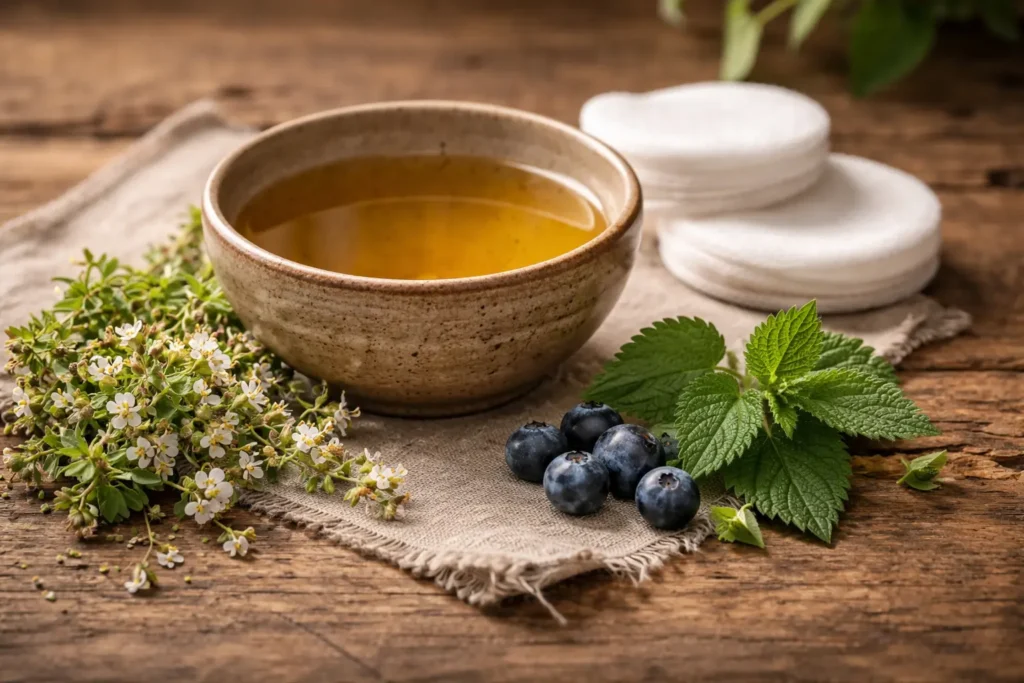
Herbs used for Eye Health support
Several herbs appear again and again in traditional discussions of eye comfort and function.
Eyebright has a long-standing reputation in European herbal traditions for supporting irritated or tired eyes, particularly in seasonal discomfort patterns. Chamomile, gentle and familiar, is often used for its calming and soothing qualities, both internally and externally in traditional preparations.
Bilberry is frequently mentioned in modern herbal literature for its relationship to visual function, particularly due to its rich content of anthocyanins, compounds that support vascular integrity. Research available through PubMed Central explores how these compounds may influence microcirculation and oxidative balance.
Nettle and oat straw are less specific to the eyes but play a broader role in supporting connective tissue and mineral balance, which contributes to long-term resilience.
How These Herbs Work in the Body
From a physiological perspective, many herbs used for eye support act through circulation, antioxidant activity, and nervous system modulation.
Anthocyanins found in bilberry are known for their antioxidant properties and their role in supporting capillary strength and blood flow. This is particularly relevant in the small vessels that nourish the eyes, as discussed in research available through PubMed Central.
Chamomile contains flavonoids such as apigenin, which are associated with calming effects on both the nervous system and inflamed tissues. The European Medicines Agency (EMA) recognizes chamomile’s traditional use for mild inflammation and irritation.
Demulcent and mineral-rich herbs like nettle provide nutrients that support tissue repair and hydration. According to the World Health Organization (WHO), plant-based compounds such as polyphenols and micronutrients contribute to maintaining tissue integrity and reducing oxidative stress.
Rather than acting in a single pathway, these herbs support the body’s natural processes—helping maintain balance, rather than forcing change.
Herbal Preparations and Recipes
The form in which herbs are prepared often shapes how they are experienced.
Teas and infusions are perhaps the most accessible. They allow gentle, repeated exposure to herbs like chamomile, lemon balm, or nettle, making them suitable for daily routines.
Tinctures offer a more concentrated option and are often chosen for convenience. They fit easily into busy schedules where preparing tea may not be practical.
In traditional practice, external applications—such as cooled herbal infusions—have also been used around the eyes, though always with care and proper preparation.
If you’re exploring this further, it can be helpful to look into individual herb profiles, preparation guides, or simple blends that match your preferences and lifestyle.
What Is Eye Health?
Eye health refers to the ability of the eyes to function comfortably and clearly, supported by adequate moisture, circulation, and nervous system balance.
It includes not just vision itself, but how the eyes feel—whether they are relaxed or strained, hydrated or dry, responsive or fatigued.
Why It Happens
Modern life places unique demands on the eyes. Extended screen use reduces blinking frequency, which can contribute to dryness. Artificial lighting and prolonged focus can strain both the muscles of the eye and the nervous system.
Circulatory factors also play a role. The eyes rely on fine, delicate blood vessels, and their function reflects broader patterns in the body.
Environmental exposure—such as air conditioning, wind, or allergens—can further influence how the eyes feel on a daily basis.
How It Commonly Shows Up
People often describe eye-related discomfort in simple, familiar ways.
There may be dryness, a scratchy or tired sensation, or difficulty maintaining focus after long periods of work. Some notice sensitivity to light, while others experience a sense of pressure or heaviness around the eyes.
These experiences tend to fluctuate, often improving with rest and worsening with prolonged strain.
Foundations of Support
Herbs are most effective when paired with small, steady habits.
Taking breaks from screens, allowing the eyes to shift focus, and ensuring adequate hydration all support eye comfort. Sleep is particularly important, as the eyes recover during periods of rest.
Gentle exposure to natural light, balanced with protection from excessive glare, helps maintain a healthy rhythm.
In many cases, these simple foundations create the conditions in which herbal support can be most effective.
Learning More
If this topic resonates, exploring individual herbs in more depth can be a natural next step. Understanding how a plant like bilberry differs from chamomile, or how nettle supports the body more broadly, brings clarity to herbal choices.
Preparation methods are equally worth exploring. A simple shift—from occasional tea to a consistent daily infusion—can change how herbs are experienced over time.
FAQ
Can herbs improve vision directly?
Herbal traditions focus more on supporting the systems that influence eye health, such as circulation and tissue resilience, rather than directly altering vision.
How long does herbal support usually take to notice?
Some effects, like soothing qualities, may be felt relatively quickly. Others develop gradually with consistent use.
Is tea or tincture better for eye health?
Both can be useful. Tea tends to be more gentle and nourishing, while tinctures offer convenience and concentration.
Can multiple herbs be used together?
Yes, combining herbs is common in traditional practice, often to address different aspects of a pattern.
Do lifestyle habits matter as much as herbs?
Very much so. Herbs tend to work alongside supportive habits rather than replacing them.
References
PubMed Central
European Medicines Agency (EMA)
World Health Organization (WHO)
National Center for Complementary and Integrative Health (NCCIH)
NIH Office of Dietary Supplements
American Herbal Pharmacopoeia (AHP)
This content is provided for educational purposes only. It reflects traditional herbal knowledge and publicly available research. It is not intended to diagnose, treat, or replace professional medical care. For personal health concerns, consult a qualified healthcare professional.