

Elderberry syrups vary in elderberry concentration, sugar, sweeteners, and added ingredients. Some are simple black elderberry formulas, while others combine elderberry with herbs, vitamins, or minerals.
Here’s how to choose a good elderberry syrup, what to avoid, and when making your own may make more sense.
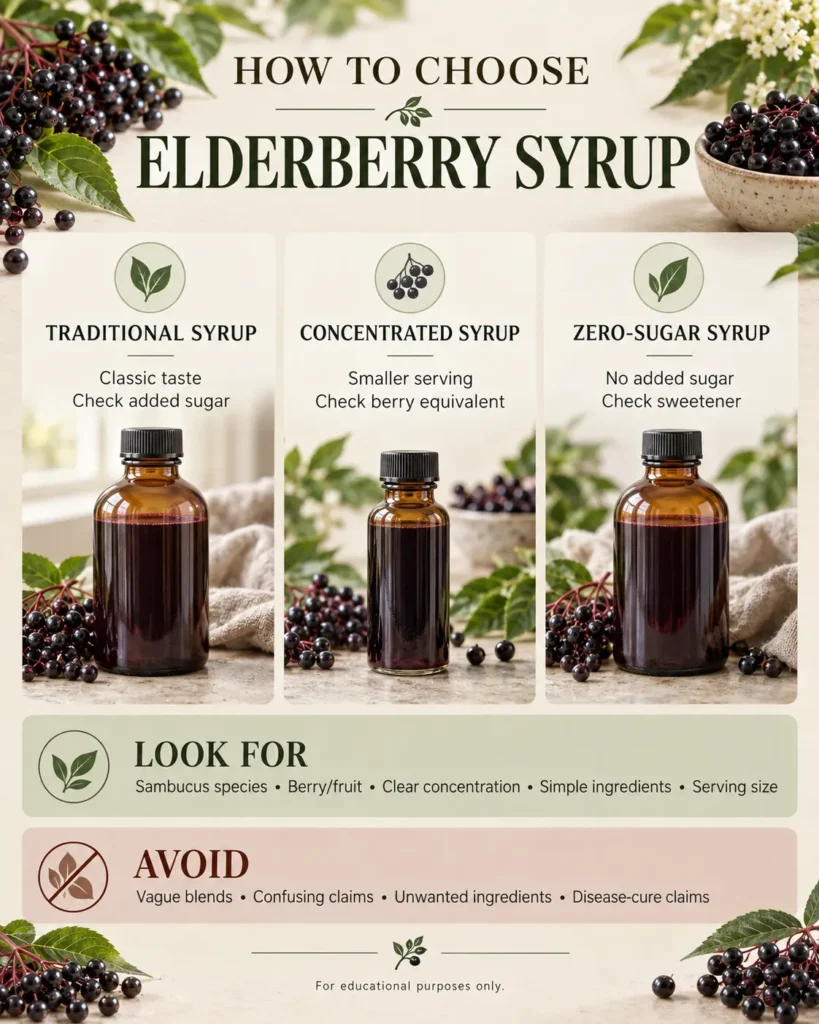
How to Choose a Good Elderberry Syrup
Start with the ingredient list and Supplement Facts panel, not the claims on the front of the bottle.
| Type | What to Know |
| Traditional syrup | Best for classic taste and texture. Look for clearly identified elderberry and check the amount of added sugar. |
| Concentrated syrup | Best for smaller servings. Look for clear extract, concentrate, or berry-equivalent information. |
| Zero-sugar syrup | Best when limiting added sugar. Check which alternative sweetener is used. |
| Multi-ingredient syrup | Best when you specifically want a combination formula. Check every added herb, vitamin, or mineral. |
Check the Elderberry
Look for a clearly identified elderberry species. European black elderberry is commonly listed as Sambucus nigra.
The label should also identify the berry or fruit as the plant part used.
Understand the Concentration
Manufacturers may describe elderberry as juice concentrate, extract, berry equivalent, or standardized extract.
Because these measurements are not always directly comparable, don’t choose a syrup simply because it displays the largest number. Favor products that clearly explain what the amount represents per serving.
Check Sugar and Extra Ingredients
Traditional syrups may use honey, cane sugar, or agave. Sugar-free products may use glycerin or sugar alcohols such as sorbitol.
If the formula also contains zinc, vitamin C, echinacea, propolis, ginger, or other herbs, make sure you actually want those ingredients.
More ingredients do not automatically mean a better product.
Does Organic Matter?
Organic certification can be useful if organic sourcing matters to you, but it does not automatically mean the syrup contains more elderberry, is more concentrated, or is more effective.
Traditional vs Sugar-Free Elderberry Syrup
Choose traditional syrup if: You prefer classic taste and texture and some added sugar fits your diet.
Choose sugar-free if: Limiting added sugar is important and you tolerate the alternative sweeteners used.
Bottom line: Judge the product by its elderberry content and complete ingredient list—not simply by “traditional,” “organic,” or “sugar-free” on the front label.
What to Avoid
- Unclear elderberry species or plant part
- Vague proprietary blends
- Confusing concentration claims
- Ingredients you don’t want
- Excessive added sugar for your needs
- Damaged packaging or seals
- Claims that the product prevents, treats, or cures disease
Research on elderberry for respiratory infections remains limited. NCCIH describes the evidence for colds and flu as preliminary and notes there is not enough information to establish that elderberry is helpful for other purposes.
Recommended Elderberry Syrup Options
ORGANIC ELDERBERRY-FOCUSED OPTION
Gaia Herbs Black Elderberry Syrup Extra Strength
Seller: Gaia Herbs
Form: Concentrated organic black elderberry syrup
Uses organic Sambucus nigra fruit juice concentrate in an elderberry-focused formula. It contains cane sugar, so buyers specifically limiting added sugar may prefer another option.
View Gaia Herbs Black Elderberry Syrup →
STANDARDIZED ELDERBERRY OPTION
Nature’s Way Sambucus Traditional Elderberry Immune Syrup
Seller: Nature’s Way
Form: Organic black elderberry extract syrup
Uses black elderberry extract standardized to anthocyanins and provides concentration information. This is a useful option for buyers who want a commercially standardized elderberry preparation.
View Nature’s Way Sambucus Traditional Elderberry Syrup →
ZERO-SUGAR OPTION
Nature’s Way Sambucus Zero Sugar Traditional Elderberry Immune Syrup
Seller: Nature’s Way
Form: Zero-sugar black elderberry syrup
Provides standardized black elderberry without added sugar. It uses ingredients including sorbitol and glycerin, so check your tolerance for alternative sweeteners.
View Nature’s Way Sambucus Zero Sugar Syrup →
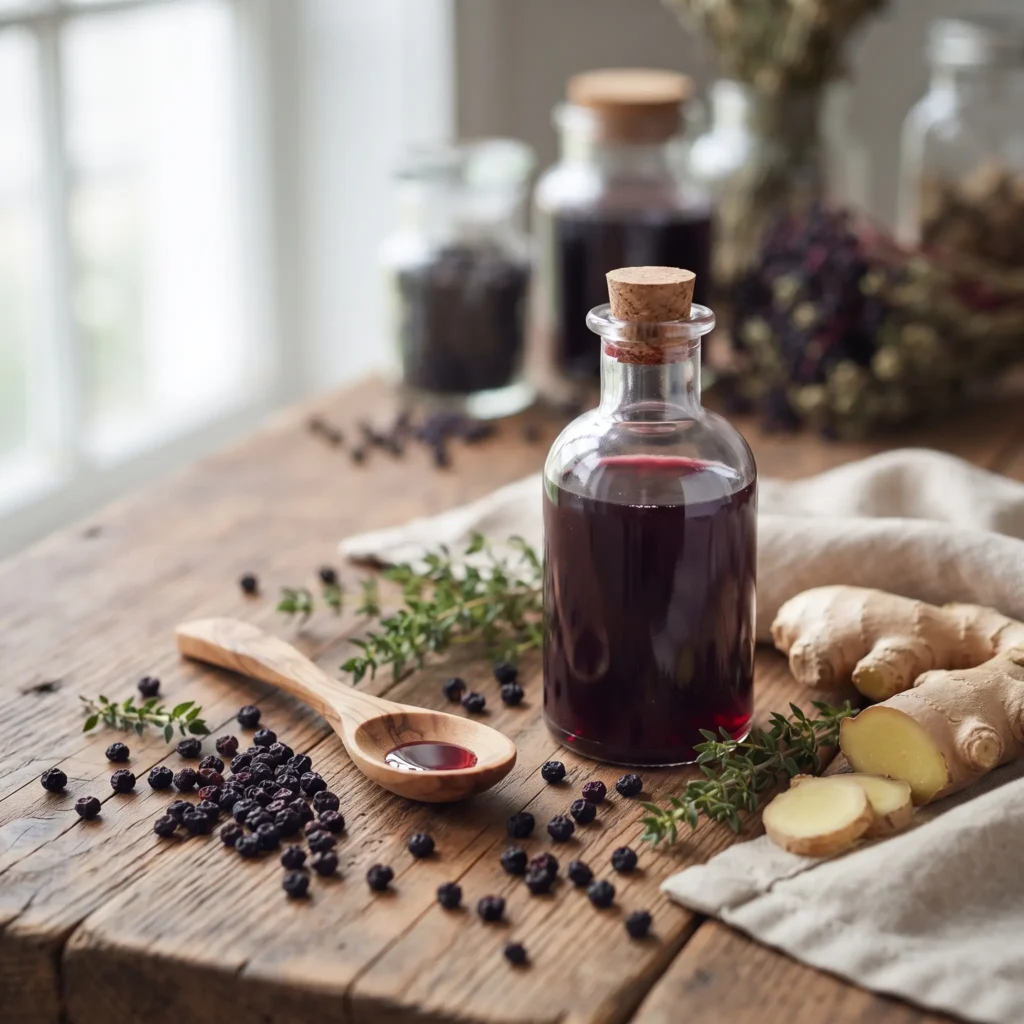
Make It Yourself
Elderberry syrup is one herbal preparation that can reasonably be made at home when properly prepared elderberries are used.
What You’ll Need
- Dried black elderberries
- Water
- Honey or another appropriate sweetener
- Optional herbs or spices
Basic Method
- Simmer the elderberries in water to prepare a decoction.
- Reduce the liquid.
- Strain out all plant material.
- Allow the liquid to cool appropriately.
- Mix with your chosen sweetener.
- Refrigerate according to the recipe’s storage guidance.
DIY Advantages
- Control the ingredients
- Adjust the sweetness
- Customize complementary herbs
- Prepare smaller fresh batches
DIY Limitations
- Requires preparation time
- Shorter and less predictable shelf life
- Requires refrigeration and careful storage
- Concentration is less standardized than commercial extracts
Raw or unripe elderberries and other parts of the elder plant can contain cyanide-producing compounds. Elderberries should be properly prepared and cooked before use.
Buy or Make It Yourself?
Buy it if: You want convenience, consistent serving information, and easier storage.
DIY if: You want control over ingredients and sweetness and are comfortable preparing and storing the syrup correctly.
Bottom line: Commercial syrup is easier and more standardized; DIY gives you more control.
Learn More About Elderberry
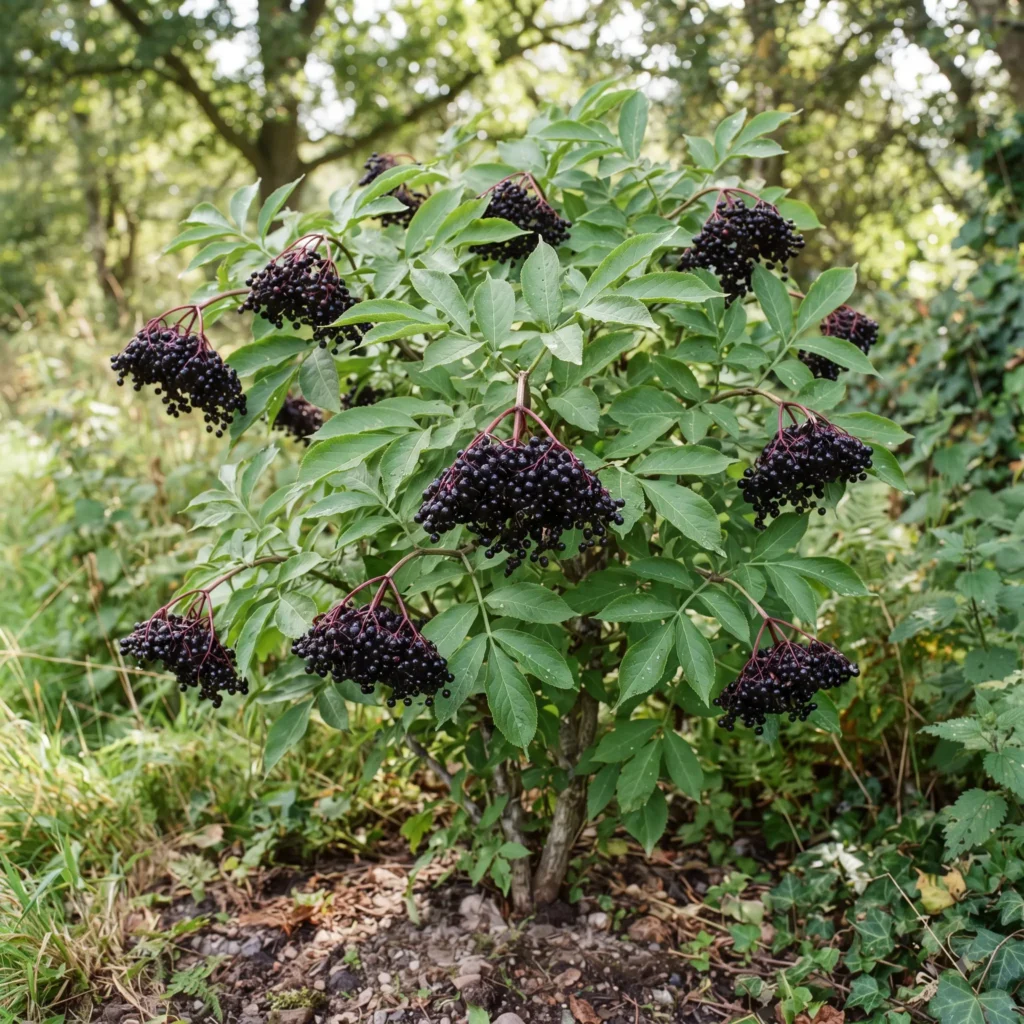
Want to understand the herb beyond the bottle?
Elderberry (Sambucus nigra) — traditional use, constituents, evidence, and safety
Safety
Raw or unripe elderberries, leaves, and stems contain substances that can release cyanide and may cause nausea, vomiting, and diarrhea. Cooking elderberries removes the toxin (NCCIH).
Safety information during pregnancy and breastfeeding is limited. For children, follow the directions for the specific commercial product and check all additional ingredients.
Do not give honey-containing elderberry syrup to infants younger than 12 months.
Frequently Asked Questions
What should I look for in elderberry syrup?
Look for clearly identified elderberry—commonly Sambucus nigra—with the berry/fruit specified, understandable concentration information, a transparent ingredient list, and clearly stated sweeteners.
Is organic elderberry syrup better?
Not necessarily. Organic certification provides information about production practices but does not automatically mean higher elderberry concentration or better effectiveness.
Should elderberry syrup contain sugar?
It doesn’t have to. Traditional syrups commonly use honey or another sweetener, while sugar-free products may use glycerin or sugar alcohols.
Is sugar-free elderberry syrup better?
Only if reducing added sugar is important to you. Check the alternative sweetener because sugar alcohols can cause digestive discomfort in some people.
Is concentrated elderberry syrup better?
Not automatically. Check serving size and how the manufacturer defines its extract, concentrate, or berry equivalent.
Can I make elderberry syrup myself?
Yes. Properly prepared elderberries can be used to make homemade syrup, but careful cooking, refrigeration, and storage are important.
Does elderberry syrup prevent colds or flu?
Evidence is not strong enough to conclude that elderberry reliably prevents colds or flu. A 2021 systematic review found uncertain evidence for reducing cold duration or severity and did not establish reliable prevention.
References & Evidence
National Center for Complementary and Integrative Health (NCCIH)
Elderberry: Usefulness and Safety
Hawkins J, Baker C, Cherry L, Dunne E.
Elderberry for Prevention and Treatment of Viral Respiratory Illnesses: A Systematic Review
BMC Complementary Medicine and Therapies, 2021.
National Center for Complementary and Integrative Health (NCCIH)
The Common Cold and Complementary Health Approaches: What the Science Says
Disclaimer
Disclaimer: This article is for educational purposes only and is not intended to diagnose, treat, cure, or prevent any disease. Herbal products can cause side effects and interact with medications. Consult a qualified healthcare professional before using herbs therapeutically, especially if you are pregnant, breastfeeding, taking prescription medications, or managing a medical condition.