

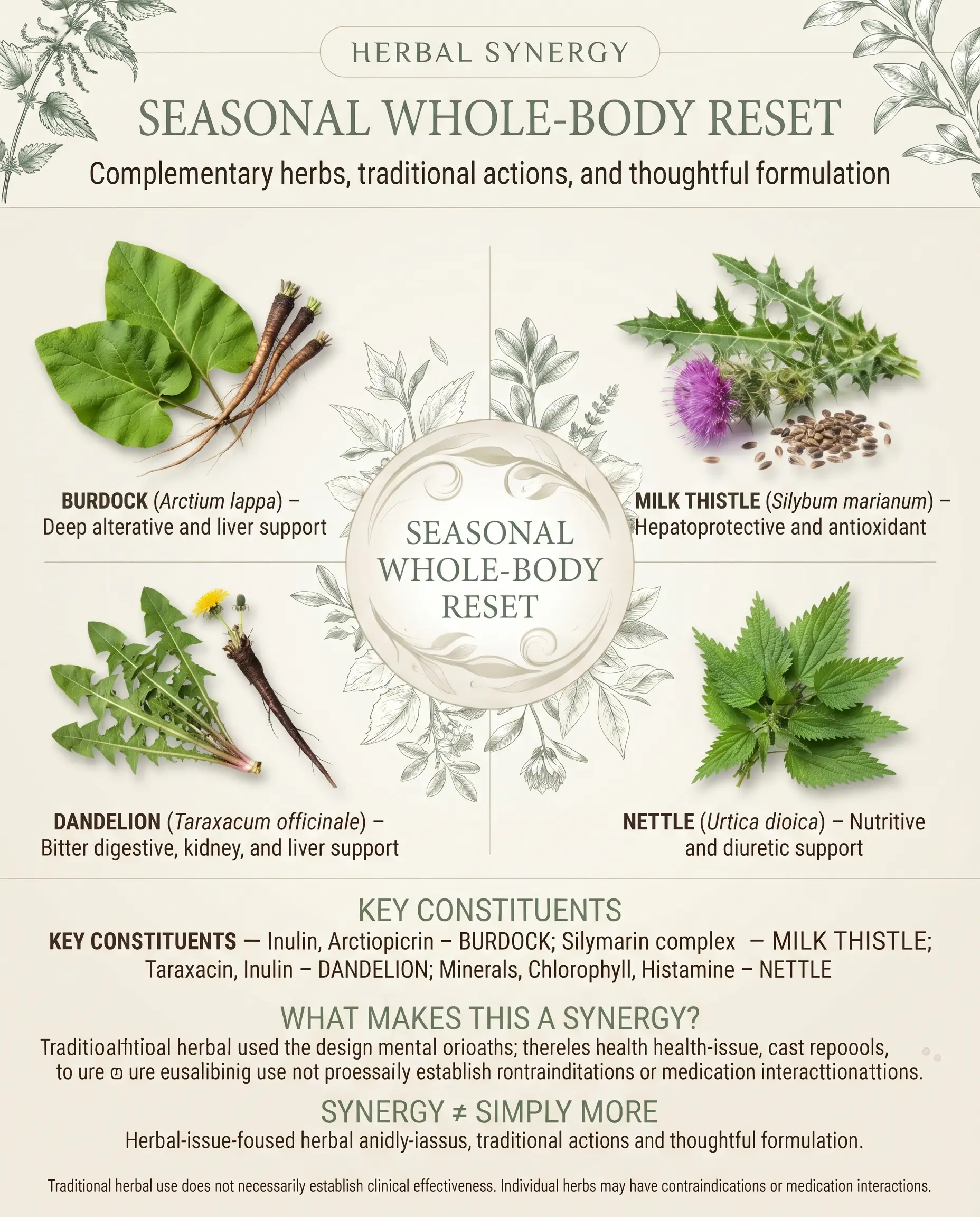
A note before we start: it’s worth being honest about the word “detox” up front. Your liver, kidneys, lungs, and skin already detoxify your body continuously — that’s their job, and they do it well without help from a special tea or juice. No herb “flushes toxins” out in some unique way healthy organs weren’t already doing. This article isn’t about removing toxins; it’s about a gentle, genuinely reasonable seasonal habit reset using herbs that support digestion, hydration, and nutrient intake — which is a real and worthwhile thing, just not what “detox” marketing usually promises.
This is a category where the honest framing matters more than the herbs themselves. A “seasonal reset” done well is really just a gentle return to good basics — supported by a few genuinely pleasant, low-risk herbs — rather than an aggressive purge of anything.
| Herb | What It Adds |
| Dandelion | A gentle bitter that supports digestion, with a long traditional (not miracle) reputation for liver and kidney support |
| Nettle | Genuine nutrient density — the actual “reset” value here is real vitamins and minerals, not toxin removal |
| Burdock | A traditional skin- and digestion-supportive herb, gentle and food-based |
| Cleavers | A gentle, traditional herb often included in seasonal tonics |
None of these herbs remove toxins from your body in a way your liver and kidneys weren’t already handling. What they genuinely do offer: dandelion’s bitter taste supports digestive secretions (see the Low Appetite / Sluggish Digestion article in this series for more on how bitters actually work), nettle contributes real nutrient density, and the whole combination, taken as a warm daily tea, supports hydration and a mindful pause — genuinely valuable, just not “detoxifying” in the way it’s often marketed.
Recipe for Seasonal Whole-Body Reset
Dandelion, Nettle & Burdock Reset Tea
Why this blend: This reflects a classic, traditional European seasonal tea combination — genuinely pleasant, genuinely gentle, and honest about what it actually offers: digestive and nutritive support, not toxin removal.
Ingredients
- 1 tsp dried dandelion root
- 1 tsp dried nettle leaf
- ½ tsp dried burdock root
- 1 cup (240 ml) hot water
Yield: 1 cup
Preparation
- Combine all three herbs in a small saucepan.
- Simmer gently for 10 minutes — roots benefit from real heat to extract properly.
- Strain and drink warm, once or twice daily.
How to Use This is meant as a gentle daily habit for a couple of weeks at a seasonal transition, not an ongoing or intensive “cleanse” — think of it as a mindful pause and nutrient-dense habit, not a purge.
Herbalist’s Note This tea has an earthy, slightly bitter taste — that’s genuinely part of the appeal for many people who enjoy this kind of seasonal ritual, not something to mask with a lot of sweetener.
Safety This is for general wellbeing in healthy people — not a treatment for any diagnosed condition, and not appropriate for prolonged, repeated use.
Ready-to-Use Products With This Synergy
Traditional Medicinals Organic EveryDay Detox Lemon Tea Brand: Traditional Medicinals Key herbs: Burdock root, nettle leaf, cleavers, dandelion root, lemon myrtle Why it fits: This is very close to the exact combination discussed in this article — worth noting the brand itself is refreshingly honest that this isn’t a special “detox diet,” just a pleasant, traditional seasonal tea blend. Buy: traditionalmedicinals.com
Traditional Medicinals Organic Roasted Dandelion Root Brand: Traditional Medicinals Key herbs: Roasted dandelion root Why it fits: A simple, single-herb, coffee-like roasted dandelion tea for anyone who wants to start with the gentlest, most classic component of this combination. Buy: amazon.com
Frontier Co-op Organic Stinging Nettle Leaf Brand: Frontier Co-op Key herbs: Nettle leaf Why it fits: A high-quality nettle option for building the full tea recipe above, or for making a longer-steeped nourishing infusion as covered in this series’ General Nourishment article. Buy: frontiercoop.com
Herbal Synergies for Seasonal Whole-Body Reset
Not everyone reaching for a “reset” needs the same thing, and it’s worth being clear about what actually helps. Wanting a gentle nudge back toward good habits — more water, more whole foods, a mindful pause — is genuinely well served by a pleasant daily tea ritual like the one in this article. Wanting to specifically address bloating or sluggish digestion is better served by the bitters approach covered in this series’ Low Appetite / Sluggish Digestion article, since that’s where the actual mechanism (stimulating digestive secretions) is honestly explained. And anyone drawn to “cleanse” products specifically because of laxative or diuretic effects should know that’s mostly water and stool weight, not toxin removal — and it can backfire with regular use.
As always: synergy is about thoughtful complementarity — not simply adding more herbs to the pot, and definitely not about purging anything your body wasn’t already handling.
Core Herbal Synergy Combinations
Dandelion + Nettle + Burdock Best for: A gentle, traditional seasonal tea ritual — genuinely pleasant, genuinely low-risk. Why it works: This reflects real traditional European herbal practice, combining a gentle bitter (dandelion) with a genuinely nutrient-dense herb (nettle) and a traditional digestive-support herb (burdock). This is honestly appealing as a seasonal ritual and habit-reset, without needing to claim it removes toxins to be worthwhile. This is the tea recipe above.
Dandelion + Cleavers Best for: A simpler two-herb version, especially if burdock isn’t available. Why it works: Dandelion’s gentle bitter action pairs with cleavers’ traditional, gentle reputation (covered in more depth in this series’ Lymph Flow Support article) for a lighter version of the same seasonal ritual.
Nettle Alone (long-steeped) Best for: Someone who wants the most genuinely nutrient-dense option, without the bitter components. Why it works: As covered in this series’ General Nourishment article, nettle’s real, documented mineral density is the most legitimately “reset”-like benefit in this whole category — a long-steeped nettle infusion is arguably the single most honestly beneficial habit in this article.
Plain Water + Whole Foods (the genuinely most evidence-based “reset”) Best for: Anyone who wants the intervention with the strongest actual evidence behind it. Why it works: This isn’t a cop-out — proper hydration, a balanced diet rich in fruits and vegetables, regular movement, and good sleep are what actual medical sources point to as the real, evidence-based way to support your body’s already-excellent detoxification systems. Herbs can make that habit more pleasant and consistent, but they’re not doing something your body wasn’t already doing.
Herbs Used in These Synergies
Dandelion Botanical name: Taraxacum officinale Traditional actions: Gentle bitter, traditional digestive and liver support Role in the synergy: A genuinely gentle traditional herb — its bitter taste has real, documented digestive-stimulating action (see this series’ Low Appetite / Sluggish Digestion article), which is the honest mechanism behind its traditional “liver support” reputation, rather than any special toxin-removing property. Key constituents: Sesquiterpene lactones, inulin
Nettle Botanical name: Urtica dioica Traditional actions: Nutritive, traditional spring tonic Role in the synergy: The most genuinely evidence-backed herb in this article — real, documented mineral density (iron, calcium, magnesium) makes it a legitimately nourishing addition, covered in more depth in this series’ General Nourishment article. Key constituents: Iron, calcium, magnesium, flavonoids
Burdock Botanical name: Arctium lappa Traditional actions: Traditional digestive and skin-support herb Role in the synergy: A gentle, traditional root herb commonly included in seasonal European tea blends, valued more for its traditional reputation and pleasant flavor contribution than for strong modern clinical evidence. Key constituents: Inulin, polyacetylenes
Cleavers Botanical name: Galium aparine Traditional actions: Gentle traditional tonic Role in the synergy: A gentle, well-tolerated traditional herb, covered in more depth in this series’ Lymph Flow Support article — included here as a mild, low-risk addition to a seasonal tea ritual. Key constituents: Iridoid glycosides, tannins
Safety and When to Seek Medical Advice
The most important safety point in this article: be wary of “cleanse” products with laxative or diuretic ingredients. Many commercial detox teas contain senna, cascara, or other stimulant laxatives, or diuretic herbs, to produce quick, noticeable effects. This creates temporary water and stool weight loss that people often mistake for “toxin removal” — it isn’t. Regular or prolonged use of laxative-based cleanse products can lead to dependency, dehydration, electrolyte imbalance, and digestive disruption. The gentle herbs in this article (dandelion, nettle, burdock, cleavers) are not strong laxatives or diuretics, which is exactly why they’re featured here instead.
Use Caution If:
- You have kidney failure, diabetes, or heart failure — check with a provider before regular use of dandelion or nettle-based teas, per standard product guidance for this combination
- You’re allergic to ragweed, daisies, or related plants — dandelion and burdock are part of this plant family
- You’re drawn to a cleanse product specifically because of noticeable laxative or diuretic effects — that’s a sign to reconsider the product, not a sign it’s “working”
- You’re pregnant or breastfeeding — check with a provider before regular use of any concentrated herbal blend, including gentle ones
- You have gallstones or a bile duct obstruction — dandelion stimulates bile flow, which can be problematic in these specific situations
See a Healthcare Professional If: You’re considering a “cleanse” or “detox” specifically because of persistent symptoms like fatigue, bloating, skin issues, or digestive changes — these deserve proper medical evaluation to identify an actual cause, rather than a generic cleanse that isn’t targeting anything specific. Also seek care if you notice jaundice, persistent abdominal pain, or significant changes in bowel habits, which need real diagnosis rather than herbal self-management.
Q&A
Do I actually need to “detox” my body? No — this is worth being direct about. Your liver, kidneys, lungs, and skin already detoxify your body continuously and effectively in healthy people. No herbal tea does something these organs weren’t already doing.
So why do people feel “lighter” after a detox tea or cleanse? Usually because many detox products contain laxative or diuretic herbs, which cause temporary water and stool weight loss — not fat loss or toxin removal. This effect goes away once you stop, and regular use can actually cause problems like dehydration and electrolyte imbalance.
If detox isn’t real, why does this article exist? Because a gentle seasonal tea ritual, built around genuinely pleasant, nutrient-contributing, low-risk herbs, is a real and worthwhile thing — just not because it removes toxins. It’s a nice habit, a source of real nutrients (especially from nettle), and a mindful pause, which are all legitimately valuable on their own terms.
Is Traditional Medicinals’ “Detox” tea actually just marketing, then? The brand itself is refreshingly honest about this — they’ve stated plainly that they don’t have a special detox diet, and the tea is really just a traditional, pleasant herbal blend. The name is more about marketing convention than a literal claim.
What’s the single most evidence-based way to support my body’s detox systems? Genuinely: proper hydration, a balanced diet with plenty of fruits and vegetables, regular movement, good sleep, and limiting alcohol. This isn’t a disappointing answer — it’s what actual medical sources point to as the real, evidence-based approach.
Are all detox teas dangerous? Not necessarily, but it’s worth checking the ingredient list. Gentle herbs like dandelion, nettle, and burdock are low-risk. Products relying heavily on stimulant laxatives (like senna) for their effect deserve more caution, especially with frequent or prolonged use.
When should I see a doctor instead of trying a “reset”? If you’re drawn to a cleanse because of persistent symptoms like fatigue, bloating, or skin changes — those deserve proper medical evaluation to find the actual cause, not a generic herbal cleanse that isn’t targeting anything specific.
References
Detox: Medical Facts, Myths, and Safe Choices – Acibadem Hospitals Group
Detox Tea: Benefits, Risks, and What to Know – Acibadem Hospitals Group
5 Detox Myths: The Truth About Cleanses and Liver Detox – MD Anderson Cancer Center
Detox Myths and Facts: How Your Body Removes Toxins
3 Detox Teas for EveryDay Wellness – Traditional Medicinals
Disclaimer
This article is for educational and informational purposes only and is not intended to diagnose, treat, cure, or prevent disease. It does not claim that any herb removes toxins from the body beyond what the liver, kidneys, lungs, and skin already do naturally in healthy people. Herbs are biologically active and may interact with medications or be inappropriate for some people. If you are pregnant, breastfeeding, taking medication, managing a health condition, or experiencing persistent symptoms, consult a qualified healthcare professional rather than relying on a cleanse or herbal preparation alone.
Available Herbal Products
Explore and shop ready-made products offering this benefit.