

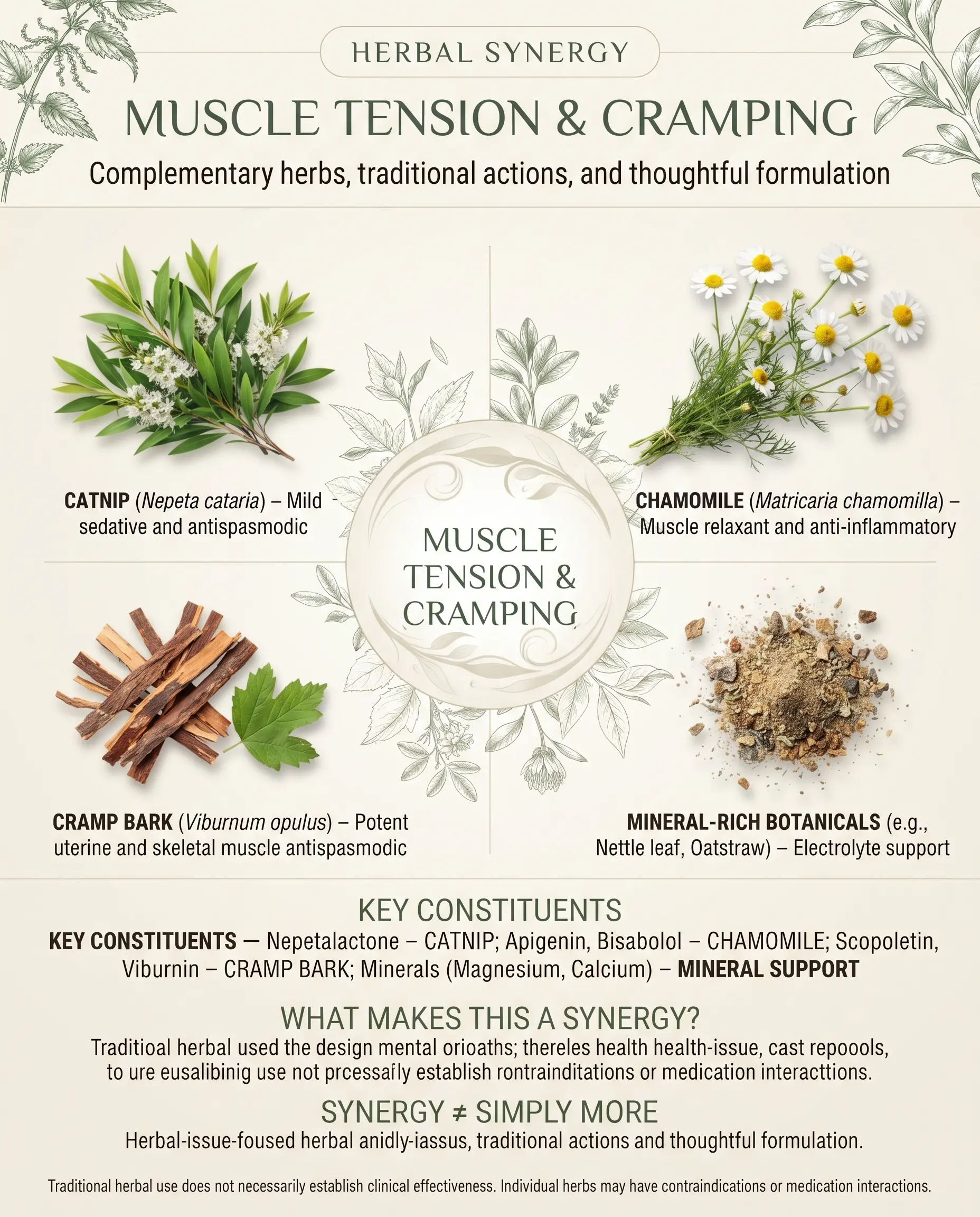
Muscle cramping — the sudden, involuntary, often painful muscle contraction, most commonly in the calf and often at night — is a genuinely humbling category for evidence. This isn’t exercise soreness or general tension; it’s the sharp, seizing cramp itself. Several remedies people reach for here (including one that’s been outright restricted by the FDA) have more caution attached than confidence.
| Herb/Mineral | What It Adds |
| Magnesium | Widely used, but the evidence is honestly mixed — it may help pregnant women specifically, with less support in the general population |
| Cramp Bark | A traditional antispasmodic specifically named for this use, though with limited formal human trial evidence |
| Valerian | Traditionally calming and mildly antispasmodic, more evidence for sleep than cramping directly |
| Black Cohosh | Traditional muscle-relaxing use, more established for menopausal symptoms than general cramping |
This is a category where it’s worth resisting the urge to overstate things. Magnesium is the most commonly recommended option, and it’s genuinely reasonable to try, but a careful systematic review found it doesn’t clearly work for cramps in the general population — the one subgroup where it showed a real signal was pregnant women. Cramp bark carries the most fitting traditional reputation of anything here, but like several herbs covered elsewhere in this series, its human trial evidence hasn’t caught up to its name.
Recipe for Muscle Tension & Cramping
Cramp Bark & Valerian Evening Tea
Why this blend: Cramp bark is traditionally the most specifically named herb for this exact concern, and valerian adds a calming quality that may help with the general muscle tension that often accompanies cramping, especially at night.
Ingredients
- 1 tsp dried cramp bark
- ½ tsp dried valerian root
- 1 cup (240 ml) hot water
Yield: 1 cup
Preparation
- Combine the cramp bark and valerian in a small saucepan.
- Simmer gently for 10 minutes — both are tougher plant material and benefit from real heat.
- Strain and drink warm, in the evening.
How to Use Drink in the evening, particularly if cramps tend to happen at night — this timing matches when nocturnal leg cramps most commonly occur.
Herbalist’s Note Valerian has a notably strong, earthy smell that some people find off-putting at first — it doesn’t reflect anything wrong with the preparation.
Safety Valerian can cause drowsiness — don’t drive or operate machinery after drinking this, and don’t combine it with alcohol or sedating medications.
Ready-to-Use Products With This Synergy
Natural Vitality Calm Magnesium Powder Brand: Natural Vitality Key herbs: Magnesium citrate (not an herb, but the most commonly used option in this category) Why it fits: A widely used magnesium supplement reflecting the most common approach people try for muscle cramping, with the honest caveat that its evidence is strongest specifically in pregnancy. Buy: naturalvitality.com
Gaia Herbs Cramp Bark Brand: Gaia Herbs Key herbs: Cramp bark Why it fits: A single-herb cramp bark supplement reflecting the herb most traditionally associated with this exact concern. Buy: amazon.com
Nature’s Way Valerian Root Brand: Nature’s Way Key herbs: Valerian root Why it fits: A standardized valerian supplement for evening use, useful alongside or instead of cramp bark for nighttime muscle tension. Buy: amazon.com
Herbal Synergies for Muscle Tension & Cramping
Not all muscle tightness is the same problem, and the evidence genuinely varies by which one you’re dealing with. Nocturnal leg cramps — the classic middle-of-the-night calf seizure — is where magnesium has been most studied, with the honest finding that it seems to help pregnant women specifically more than the general population. General muscle tension without true cramping is more where cramp bark and valerian’s calming, traditionally antispasmodic qualities fit. And it’s worth knowing that quinine (found in tonic water, historically used for cramps) was specifically restricted by the FDA due to serious safety concerns — worth knowing if you’ve heard tonic water recommended for cramps.
As always: synergy is about thoughtful complementarity — not simply adding more herbs to the pot.
Core Herbal Synergy Combinations
Cramp Bark + Valerian Best for: General muscle tension and cramping, especially at night. Why it works: Cramp bark carries the most directly relevant traditional name and reputation for this exact concern, while valerian’s calming quality may help with the nighttime timing common to muscle cramps. Neither has strong formal human trial evidence, but both have a long, low-risk traditional track record. This is the tea recipe above.
Magnesium (specifically for pregnancy-related leg cramps) Best for: Nocturnal leg cramps during pregnancy specifically — the one situation with a real, if modest, evidence signal. Why it works: A systematic review of randomized trials found magnesium showed a small but real effect specifically in pregnant women, even though it didn’t clearly outperform placebo in the general population. This is a genuinely useful distinction — magnesium’s reputation for cramps is broader than what the evidence actually supports outside pregnancy.
Cramp Bark Alone Best for: Someone who wants the single herb most specifically associated with this use. Why it works: Cramp bark’s very name reflects centuries of traditional use for exactly this purpose, with a plausible mechanism (documented uterine and smooth muscle relaxing action in traditional and preliminary research) — a reasonable, low-risk option even without strong formal human trials.
Valerian Alone Best for: Cramping or tension that disrupts sleep specifically. Why it works: Valerian’s stronger evidence is actually for sleep rather than muscle cramping directly, but its calming, mildly antispasmodic traditional use makes it a reasonable complement when muscle tension and sleep disruption go together.
Herbs Used in These Synergies
Magnesium Not a botanical (an essential mineral, included because it’s the most common non-herb remedy people reach for in this category) Traditional actions: Not applicable — included for direct comparison to the herbal options Role in the synergy: A systematic review of seven randomized trials found magnesium doesn’t appear effective for nocturnal leg cramps in the general population, but may have a small effect specifically in pregnant women — an important, often-overlooked distinction given how broadly magnesium is recommended for cramps generally. Key constituents: Magnesium (various forms — citrate, glycinate, oxide)
Cramp Bark Botanical name: Viburnum opulus Traditional actions: Traditional antispasmodic, named specifically for this use Role in the synergy: The most traditionally specific herb in this entire article for muscle cramping, with a plausible mechanism from preliminary research showing uterine and smooth muscle relaxing action, though it lacks the human clinical trial base that would make this a well-proven remedy rather than a traditional one. Key constituents: Coumarins, viburnin
Valerian Botanical name: Valeriana officinalis Traditional actions: Traditional calming, mildly antispasmodic Role in the synergy: Better evidenced for sleep than for muscle cramping specifically, but its traditional calming and antispasmodic reputation makes it a reasonable complement, especially for cramping that disrupts sleep. Key constituents: Valerenic acid, valepotriates
Black Cohosh Botanical name: Actaea racemosa Traditional actions: Traditional muscle-relaxing, more established for menopausal symptoms Role in the synergy: Traditionally used for muscle and uterine relaxation, though its stronger evidence base is for menopausal symptoms rather than general muscle cramping — included here as a traditional option rather than a strongly evidenced one for this specific use. Key constituents: Triterpene glycosides
Safety and When to Seek Medical Advice
An important safety note about quinine: Tonic water and quinine tablets have a long folk history for leg cramps, but this deserves real caution. The FDA specifically restricted quinine’s use for leg cramps due to serious safety concerns, including life-threatening blood disorders and irregular heartbeats, with dozens of associated deaths reported. Quinine is not covered as a recommendation in this article for exactly this reason — if you’ve heard tonic water suggested for cramps, know that the amount in a typical drink is much lower than medicinal doses, but concentrated quinine supplements specifically for cramps are not something this article recommends.
Use Caution If:
- You’re pregnant — magnesium has its best evidence specifically in this group, but always check with your provider on dosing and form; cramp bark and black cohosh are generally not recommended during pregnancy without medical guidance
- You take sedating medication or drink alcohol regularly — valerian’s calming effect can add to these; avoid combining without medical guidance
- You have kidney disease — magnesium supplementation needs medical guidance in this situation, since impaired kidneys can’t clear excess magnesium normally
- Cramps are frequent, severe, or affect your daily life significantly — this is worth a proper medical evaluation rather than ongoing herbal trial-and-error, since cramps can occasionally signal an underlying issue (electrolyte imbalance, circulation problems, medication side effects, or a neuromuscular condition)
- You’re taking blood pressure or heart medication — check with a provider before regular magnesium supplementation, since it can interact with some of these
See a Healthcare Professional If: Cramps are frequent, severe, come with muscle weakness, swelling, or changes in skin color, or significantly disrupt your sleep or daily function. Also seek care if cramping started after beginning a new medication (some drugs, including certain blood pressure and cholesterol medications, are known to cause cramping as a side effect) or if you have a condition like diabetes or kidney disease, where cramping deserves closer attention.
Q&A
Does magnesium actually work for leg cramps? Honestly, the evidence is disappointing for most people — a systematic review found it doesn’t clearly outperform placebo in the general population. The one group where it showed a real, if modest, effect was pregnant women specifically.
Is tonic water a safe way to treat cramps? Be cautious here — quinine, the ingredient in tonic water historically used for cramps, was specifically restricted by the FDA due to serious safety concerns, including life-threatening reactions. A typical glass of tonic water contains much less quinine than medicinal doses, but this isn’t a remedy this article recommends relying on.
What’s the best-evidenced herb for cramping specifically? Honestly, none of the herbs in this category have strong human clinical trial evidence — cramp bark is the most traditionally specific option, but its formal research base is thin. This is a category where “traditional, low-risk, and reasonable to try” is a more accurate description than “clinically proven.”
Should I take magnesium every day to prevent cramps? It’s generally considered safe for most people at reasonable doses, but given the mixed evidence, it’s worth having realistic expectations rather than assuming it will reliably prevent cramping outside of pregnancy.
Can I combine cramp bark and magnesium? There’s no known conflict between them, and it’s a reasonable combination to try given how modest the evidence is for either alone — though it’s fair to set expectations accordingly.
Why do I get muscle cramps at night specifically? The exact cause of nocturnal leg cramps isn’t fully understood, though dehydration, prolonged sitting or standing, certain medications, and pregnancy are all associated with them. If they’re frequent or severe, it’s worth a conversation with your provider rather than assuming it’s simple and self-treatable.
When should I see a doctor instead of trying herbs or magnesium? If cramps are frequent, severe, come with weakness or swelling, started after a new medication, or you have a condition like diabetes or kidney disease — those situations deserve proper evaluation rather than ongoing home management.
References
Does Magnesium Supplementation Treat Nocturnal Leg Cramps? – American Academy of Family Physicians
FDA Bans Quinine for Leg Cramps – The People’s Pharmacy
Assessment: Symptomatic Treatment for Muscle Cramps (An Evidence-Based Review) – Neurology
Quinine for Muscle Cramps – Cochrane
Disclaimer
This article is for educational and informational purposes only and is not intended to diagnose, treat, cure, or prevent disease. Herbs are biologically active and may interact with medications or be inappropriate for some people. If you are pregnant, breastfeeding, taking medication, managing a health condition, or experiencing frequent, severe, or persistent symptoms, consult a qualified healthcare professional before using herbal preparations.
Available Herbal Products
Explore and shop ready-made products offering this benefit.