

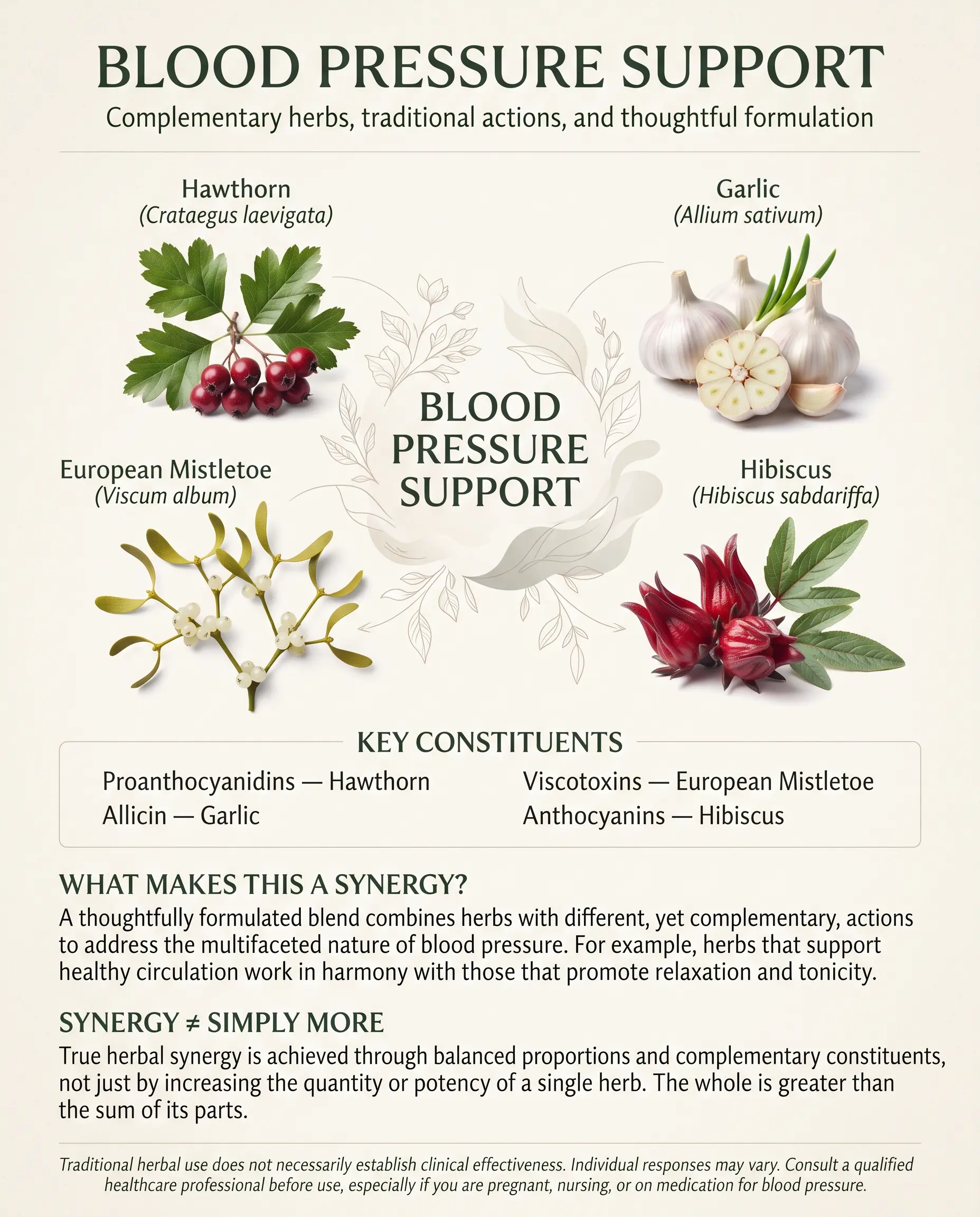
Blood pressure support is another category where herbal evidence is unusually strong — both of the main herbs here have been tested in dozens of randomized trials, not just a handful. Different herbs work through different mechanisms, which is exactly the kind of complementary pairing worth understanding rather than just picking whichever is trending.
| Herb | What It Adds |
| Garlic (especially aged garlic extract) | Consistent meta-analysis evidence for lowering both systolic and diastolic blood pressure |
| Hibiscus | One of the best-evidenced herbs in this whole content series — multiple large meta-analyses, effects described as comparable to some medications |
| Hawthorn | Traditionally used for general cardiovascular support, with more evidence in heart failure than isolated hypertension |
| Beetroot (dietary nitrates) | Works through a distinct mechanism — nitric oxide production — complementing the other two |
Garlic and hibiscus are the two standouts here, working through different mechanisms — garlic affects vascular tone and has antioxidant effects, while hibiscus acts somewhat like a mild, natural ACE inhibitor. Both have real, sizeable bodies of clinical trial evidence behind them, which is genuinely uncommon for herbs in general.
Recipe for Blood Pressure Support
Hibiscus & Garlic Support Tea
Why this blend: Hibiscus has some of the strongest clinical trial evidence of any herb in this category, and pairing it with a small amount of fresh garlic (or a garlic supplement taken separately) targets two different blood-pressure-lowering mechanisms at once.
Ingredients
- 1 tbsp dried hibiscus calyces (or 1 hibiscus tea bag)
- 1 cup (240 ml) hot water
- Optional: 1 small clove fresh garlic, crushed, added to food alongside the tea
Yield: 1 cup
Preparation
- Place the dried hibiscus in a mug or infuser.
- Pour hot water over the hibiscus and cover.
- Steep, covered, for 5–10 minutes — the tea will turn a deep ruby red.
- Strain and drink warm or chilled.
How to Use Drink 2–3 cups daily for several weeks — the clinical trials showing benefit generally used consistent daily intake over 4 to 12 weeks, not a single cup here and there.
Herbalist’s Note Hibiscus has a tart, cranberry-like flavor that many people find easier to drink daily than it sounds — no need to force it down.
Safety If you take hydrochlorothiazide or any blood pressure medication, talk to your doctor before making this a daily habit — see the safety section below for why this matters more than usual.
Ready-to-Use Products With This Synergy
Kyolic Aged Garlic Extract Cardiovascular Health Formula 100 Brand: Kyolic Key herbs: Aged garlic extract Why it fits: Aged garlic extract is the specific garlic preparation shown in meta-analyses to have hypotensive effects comparable to or better than other garlic forms, and Kyolic is the most clinically studied brand of this type. Buy: kyolic.com
Traditional Medicinals Organic Hibiscus Tea Brand: Traditional Medicinals Key herbs: Hibiscus Why it fits: A simple, single-herb hibiscus tea reflecting the exact form used in most of the clinical trials on blood pressure — an easy way to build the “2-3 cups daily” habit the research is based on. Buy: traditionalmedicinals.com
Gaia Herbs Hawthorn Supreme Brand: Gaia Herbs Key herbs: Hawthorn leaf, flower, and berry Why it fits: A standardized hawthorn supplement for general cardiovascular support, complementing garlic and hibiscus with a third, traditionally-used cardiovascular herb. Buy: amazon.com
Herbal Synergies for Blood Pressure Support
Not everyone reaching for blood pressure support has the same starting point. Someone with diagnosed hypertension on prescription medication needs to think carefully about interactions — several of these herbs affect the same drug-processing pathways as common blood pressure medications, which is not a “more is better” situation. Someone with borderline or mildly elevated readings, without medication, has more room to build a daily habit around hibiscus or garlic. And general cardiovascular support, without a specific blood pressure concern, is where hawthorn’s traditional, broader use comes in.
As always: synergy is about thoughtful complementarity — not simply adding more herbs to the pot.
Core Herbal Synergy Combinations
Hibiscus + Garlic Best for: The most evidence-backed combination in this article, for general blood pressure support. Why it works: These are the two best-studied herbs in this category, working through different mechanisms — hibiscus through an ACE-inhibitor-like effect and mild diuretic action, garlic through vascular and antioxidant effects. Multiple large meta-analyses support each independently, making this a genuinely well-evidenced pairing.
Aged Garlic Extract Alone Best for: Someone who wants the single most consistently studied option without building a daily tea habit. Why it works: Meta-analyses specifically comparing garlic preparations found aged garlic extract’s hypotensive effect comparable to, or in some analyses superior to, other garlic forms like powder or oil — a reasonable single-herb starting point.
Hibiscus + Hawthorn Best for: Broader cardiovascular support alongside blood pressure specifically. Why it works: Hibiscus targets blood pressure directly with strong trial support, while hawthorn’s traditional use covers general cardiovascular and circulatory support more broadly — useful for someone wanting a wider net rather than a single, narrow target.
Garlic + Hawthorn Best for: A gentler, more traditional approach without hibiscus’s tart flavor or its specific hydrochlorothiazide interaction concern. Why it works: Garlic brings the stronger trial evidence, while hawthorn adds traditional cardiovascular support through a different route — a reasonable alternative for anyone specifically avoiding hibiscus due to a known interaction.
Herbs Used in These Synergies
Garlic Botanical name: Allium sativum Traditional actions: Traditionally cardiovascular-supportive Role in the synergy: Multiple recent meta-analyses of randomized trials found garlic extracts significantly reduce both systolic and diastolic blood pressure, with aged garlic extract specifically showing effects described in some analyses as comparable to conventional antihypertensive medication. Key constituents: Allicin, S-allyl-cysteine (in aged garlic extract)
Hibiscus Botanical name: Hibiscus sabdariffa Traditional actions: Traditionally used for blood pressure and metabolic support Role in the synergy: One of the best-evidenced herbs in this entire content series — a 2025 dose-response meta-analysis of 26 randomized trials and nearly 1,800 participants found consistent, dose-dependent reductions in both systolic and diastolic blood pressure, with some trials showing reductions comparable to those from pharmaceutical medication. Key constituents: Anthocyanins (cyanidin, delphinidin glycosides)
Hawthorn Botanical name: Crataegus monogyna / Crataegus laevigata Traditional actions: Traditional cardiovascular tonic Role in the synergy: Long used traditionally for heart and circulatory support, with more robust clinical evidence in heart failure specifically than in isolated high blood pressure — included here for broader traditional cardiovascular support rather than as a primary blood-pressure-lowering herb. Key constituents: Flavonoids, oligomeric procyanidins
Beetroot Not a traditional herb (a root vegetable, included for its nitrate content) Traditional actions: Not applicable — included for its dietary nitrate content, which the body converts to nitric oxide Role in the synergy: Works through a genuinely different mechanism than garlic or hibiscus — dietary nitrates support blood vessel dilation via nitric oxide, making it a reasonable food-based addition alongside either herb rather than a competing option. Key constituents: Dietary nitrates, betalains
Safety and When to Seek Medical Advice
Use Caution If:
- You take hydrochlorothiazide or a related diuretic — hibiscus has documented interactions that can increase blood levels of this medication, altering both its effect and its side effects; this needs medical guidance, not just careful reading
- You take any prescription blood pressure medication — garlic and hibiscus both lower blood pressure through their own mechanisms, and combining them with medication can cause blood pressure to drop lower than intended; monitoring and medical guidance matter here
- You’re on blood-thinning medication or scheduled for surgery — garlic has real antiplatelet effects, and many sources recommend stopping both garlic supplements and hibiscus tea at least one to two weeks before a scheduled procedure
- Your blood pressure already runs low — both herbs can push it lower still, which isn’t the goal
- You’re pregnant or breastfeeding — hibiscus in concentrated or supplement form (beyond typical culinary tea amounts) isn’t well studied in pregnancy; check with a provider
See a Healthcare Professional If: Your blood pressure readings are consistently high despite lifestyle changes, you experience symptoms like severe headache, vision changes, chest pain, or shortness of breath (which can signal a hypertensive emergency and need immediate medical attention), or you’re considering herbs as a replacement for prescribed blood pressure medication rather than a complement to it. High blood pressure is a serious cardiovascular risk factor, and this is not a category for self-directed management alone.
Q&A
Which herb has the strongest evidence here? Hibiscus, genuinely — a 2025 meta-analysis pooling 26 randomized trials and nearly 1,800 participants found consistent, dose-dependent blood pressure reductions, with some trials showing effects in the same range as certain medications. Garlic is close behind with its own substantial evidence base.
Can I drink hibiscus tea if I’m on blood pressure medication? Talk to your doctor first, especially if you take hydrochlorothiazide specifically — there’s documented evidence hibiscus can alter how your body processes it. For other blood pressure medications, the concern is more about additive blood-pressure-lowering effects than a specific drug interaction, but medical guidance is still the right move.
How much hibiscus tea do the studies actually use? Most trials used around 2-3 cups daily, consistently, for 4 to 12 weeks. A single cup occasionally isn’t going to replicate the trial results — this is a “build a daily habit” herb, not an as-needed one.
Is garlic supplement better than eating garlic? The trials showing the strongest effects generally used standardized extracts, particularly aged garlic extract, rather than relying on dietary amounts alone. Food-level garlic is a reasonable complementary habit, but supplements deliver a more consistent, studied dose.
Can I take garlic before surgery? No — garlic has real blood-thinning effects, and most guidance recommends stopping it at least one to two weeks before any scheduled surgical procedure. Tell your surgical team you’ve been taking it.
Which combination is gentlest? Garlic and hawthorn, without hibiscus — avoids the specific hydrochlorothiazide interaction concern while still offering real, if more modest, cardiovascular support.
When should I see a doctor instead of trying herbs? If your readings are consistently high, or you experience severe headache, vision changes, chest pain, or shortness of breath — those need immediate medical attention, not herbal tea. High blood pressure management should involve your doctor, with herbs as a possible complement rather than a substitute.
References
Hydrochlorothiazide Drug-Nutrient Interaction with Hibiscus – PeaceHealth Health Information Library
Disclaimer
This article is for educational and informational purposes only and is not intended to diagnose, treat, cure, or prevent disease. Herbs are biologically active and may interact with medications or be inappropriate for some people. If you are pregnant, breastfeeding, taking medication, managing a health condition, or experiencing persistent or severe symptoms, consult a qualified healthcare professional before using herbal preparations.
Available Herbal Products
Explore and shop ready-made products offering this benefit.