

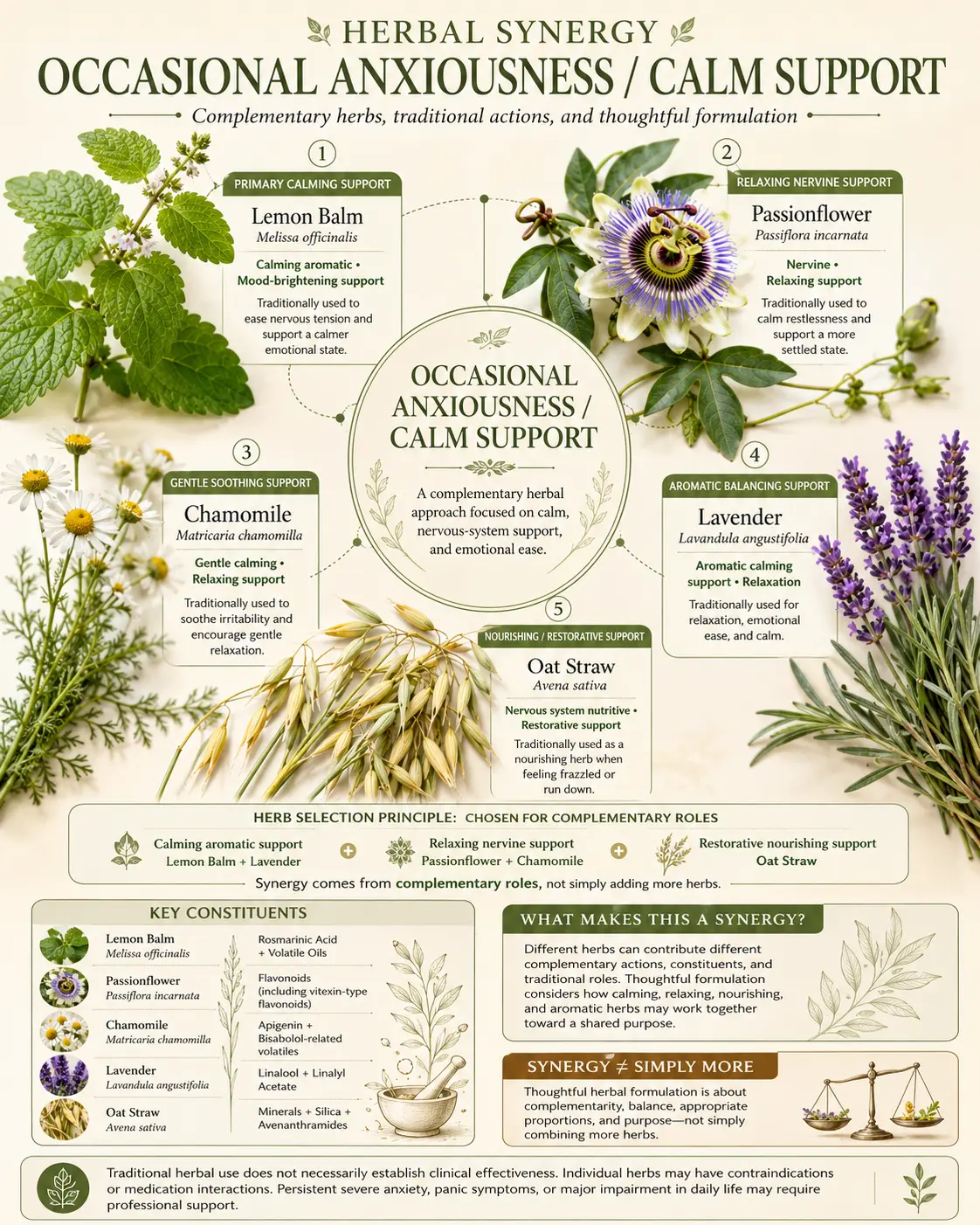
How the Herbs Complement Each Other
Occasional anxiousness shows up differently depending on the trigger — a racing mind before a big presentation, a jittery, unsettled feeling that lingers all evening, or general restlessness with no obvious cause. Different herbs are suited to different flavors of “on edge,” and this is a rare category where two of the herbs have real, substantial clinical trial evidence behind them specifically for anxiety.
| Herb | What It Adds |
| Lavender (as Silexan) | The best-evidenced option here, with trials showing it performs comparably to prescription anxiolytics for occasional anxiety |
| Chamomile | Genuine clinical trial evidence for reducing GAD symptoms, not just a folk remedy |
| Passionflower | Shown in one trial to match a benzodiazepine for anxiety, with fewer side effects |
| L-theanine | Best suited to acute, situational stress (a big meeting, a stressful event) rather than ongoing anxiety |
Lavender and chamomile are the two heavy hitters — both have real randomized trial data, not just tradition. Passionflower fits well for anxiety with physical restlessness, and L-theanine is the specialist for a specific, predictable stressful moment rather than an all-purpose daily herb. A good approach usually matches the herb to the pattern of anxiousness, not just grabs whichever is most popular.
Recipe for Occasional Anxiousness / Calm Support
Chamomile & Passionflower Settling Tea
Why this blend: Chamomile has real clinical trial support for easing anxiety symptoms, and passionflower adds a complementary calming effect that’s shown promise for restlessness alongside anxious feelings — a simple, gentle tea rather than a concentrated treatment product.
Ingredients
- 1 tsp dried chamomile flowers
- 1 tsp dried passionflower
- 1 cup (240 ml) hot water
Yield: 1 cup
Preparation
- Combine the chamomile and passionflower in a mug or infuser.
- Pour hot water over the herbs and cover the cup.
- Steep, covered, for 8–10 minutes.
- Strain and drink warm.
How to Use Drink in the evening or during a moment of anxiousness, up to 2–3 cups a day. Both herbs can be mildly calming, so this isn’t the best choice right before something requiring sharp alertness.
Herbalist’s Note This tea is for the moment, not a substitute for the clinically-dosed capsule forms discussed below — think of it as the gentle, everyday version of the same idea.
Safety Both herbs can add to drowsiness from sedatives, alcohol, or antihistamines — avoid combining them with any of those.
Ready-to-Use Products With This Synergy
Lavela WS 1265 (Silexan) Brand: Integrative Therapeutics Key herbs: Lavender oil (Silexan) Why it fits: This is the exact clinically studied lavender oil preparation behind the strongest evidence in this article — multiple randomized trials found it performed comparably to lorazepam and paroxetine for anxiety, and it’s specifically marketed for occasional anxiety. Buy: integrativepro.com
Gaia Herbs Calm A.S.A.P. Brand: Gaia Herbs Key herbs: Skullcap, passionflower, chamomile, vervain, holy basil Why it fits: A multi-herb blend combining several of the calming herbs discussed in this article into one capsule formula, for occasional use rather than a daily habit. Buy: amazon.com
Traditional Medicinals Organic Chamomile Tea Brand: Traditional Medicinals Key herbs: Chamomile Why it fits: A simple, single-herb tea option reflecting the herb with genuine GAD clinical trial evidence, for readers who’d rather start with one ingredient at a gentle, everyday dose. Buy: traditionalmedicinals.com
Herbal Synergies for Occasional Anxiousness / Calm Support
Not all “on edge” feelings need the same approach. A predictable, upcoming stressful moment — a presentation, a flight, a hard conversation — is where fast-acting L-theanine, taken beforehand, tends to fit best. General, recurring anxiousness without an obvious trigger is closer to where lavender and chamomile’s clinical evidence was actually built, since those trials studied ongoing daily use rather than single doses. And anxiousness paired with physical restlessness or trouble settling down in the evening is where passionflower’s traditional and trial-based reputation comes in.
As always: synergy is about thoughtful complementarity — not simply adding more herbs to the pot.
Core Herbal Synergy Combinations
Lavender (Silexan) + Chamomile Best for: General, recurring occasional anxiousness without one obvious trigger. Why it works: These are the two herbs in this category with the most substantial clinical trial evidence — lavender oil (as Silexan) has repeatedly matched prescription anxiolytics in trials, and chamomile extract has shown real GAD symptom reduction in randomized studies. Using them together covers two independently well-evidenced mechanisms rather than stacking similar traditional herbs.
Passionflower + Chamomile Best for: Anxiousness that comes with physical restlessness or trouble settling in the evening. Why it works: Passionflower has shown comparable results to a benzodiazepine in one small trial, with fewer side effects, and pairs naturally with chamomile’s own calming evidence. This is the tea recipe above — a gentler, evening-oriented combination.
L-theanine + Lavender (Silexan) Best for: A known, predictable stressful event coming up, paired with more general daily calm support. Why it works: L-theanine’s best evidence is specifically for acute situational stress when taken 30–45 minutes beforehand, while lavender’s evidence is built around ongoing daily use. Together they cover both “today’s stressful moment” and “this week’s baseline anxiousness” without overlapping.
Passionflower + L-theanine Best for: Sleep-related anxiousness, or a high-stress evening where you want calm without heavy sedation. Why it works: L-theanine’s non-sedating calm pairs well with passionflower’s deeper relaxation for evenings when anxious thoughts are getting in the way of winding down. Worth noting this combination can feel too calming for daytime use for some people — better reserved for evenings.
Herbs Used in These Synergies
Lavender (Silexan) Botanical name: Lavandula angustifolia Traditional actions: Anxiolytic, calming Role in the synergy: The strongest evidence in this entire article — multiple randomized, double-blind trials of the specific oral preparation Silexan found it as effective as low-dose lorazepam and comparable to paroxetine for generalized anxiety, with a favorable side-effect profile and no sedation or abuse potential reported. Key constituents: Linalool, linalyl acetate
Chamomile Botanical name: Matricaria chamomilla Traditional actions: Calming, mildly anxiolytic Role in the synergy: A rare case of a traditional “calming tea” herb with genuine backing — a series of trials at a US academic medical center found chamomile extract (1500 mg/day) produced meaningful reductions in GAD symptoms, though results on preventing relapse specifically were less conclusive. Key constituents: Apigenin, bisabolol
Passionflower Botanical name: Passiflora incarnata Traditional actions: Calming, mildly sedative Role in the synergy: One small but notable trial found passionflower matched the benzodiazepine oxazepam for GAD symptoms, with fewer side effects — promising, though the overall body of research is smaller than for lavender or chamomile. Key constituents: Flavonoids (vitexin, chrysin)
L-theanine Botanical name: Not applicable (an amino acid, found naturally in tea, not typically used as a standalone herb) Traditional actions: Calming, non-sedating Role in the synergy: Evidence is strongest specifically for acute situational stress — several trials show 200 mg taken 30–45 minutes before a stressor reduces stress markers — while evidence for treating diagnosed, ongoing anxiety is weaker and more mixed. Key constituents: L-theanine (an amino acid found in tea leaves)
Safety and When to Seek Medical Advice
Use Caution If:
- You’re pregnant or breastfeeding — Silexan/lavender oil supplements are generally not recommended during pregnancy, lactation, or for children under 12
- You’re taking sedatives, sleep medication, or drink alcohol regularly — lavender, chamomile, and passionflower can all add to drowsiness when combined with any of these
- You’re allergic to ragweed, daisies, or related plants — chamomile is part of this plant family and can cause allergic reactions in sensitive people
- You’re on blood pressure medication or SSRIs — L-theanine may interact with medications affecting blood pressure or neurotransmitter systems; check with a provider
- You’re currently diagnosed with an anxiety disorder and on prescribed treatment — these herbs are intended for occasional, everyday anxiousness, not as a replacement for prescribed anxiety treatment; discuss any herbal additions with your prescriber first
See a Healthcare Professional If: Anxiousness is severe, persistent, interferes with daily functioning, or is accompanied by panic attacks, chest pain, or thoughts of self-harm. Herbal support here is meant for everyday, occasional nervousness — it is not a substitute for proper mental health care when anxiety is significant or ongoing.
Q&A
What’s the best-evidenced option here? Lavender, specifically the studied oral preparation Silexan — it’s been shown in multiple randomized trials to perform comparably to low-dose lorazepam and paroxetine for anxiety, with a good safety profile and no sedation.
Is chamomile tea actually going to do anything, or is that just folklore? There’s real evidence behind it — clinical trials using a standardized 1500 mg/day chamomile extract found meaningful reductions in GAD symptoms. A cup of tea is a much lower dose than what was studied, so think of it as a gentler, everyday version rather than an exact match to the trial results.
When should I take L-theanine — daily, or just before something stressful? Its evidence is strongest when taken 30–45 minutes before a specific, predictable stressful event, like a presentation or a flight. For ongoing, general anxiousness, lavender and chamomile have more supportive evidence for daily use.
Can I combine several of these at once? Generally yes, in reasonable amounts — but more isn’t automatically better here. Pick based on the pattern (a single stressful event vs. general recurring anxiousness vs. evening restlessness) rather than combining all four just in case.
Which combination is gentlest? Chamomile and passionflower as a tea — mild, well-tolerated, and the tea recipe featured in this article.
I’m already on anxiety medication — can I add these? Talk to your prescriber first. Several of these herbs (especially lavender and L-theanine) can interact with medications or add to sedation, and combining herbal and prescribed treatment should be done with your provider’s knowledge.
When should I see a professional instead of trying herbs? If anxiousness is severe, persistent, interferes with daily life, or comes with panic attacks or thoughts of self-harm — that calls for proper mental health support, not herbal tea.
References
Short-Term Open-Label Chamomile Therapy of Moderate to Severe Generalized Anxiety Disorder – PubMed
L-Theanine for Anxiety: Dosage and Research
Disclaimer
This article is for educational and informational purposes only and is not intended to diagnose, treat, cure, or prevent disease. Herbs are biologically active and may interact with medications or be inappropriate for some people. If you are pregnant, breastfeeding, taking medication, managing a health condition, or experiencing persistent or severe symptoms, consult a qualified healthcare professional before using herbal preparations.
Available Herbal Products
Explore and shop ready-made products offering this benefit.