

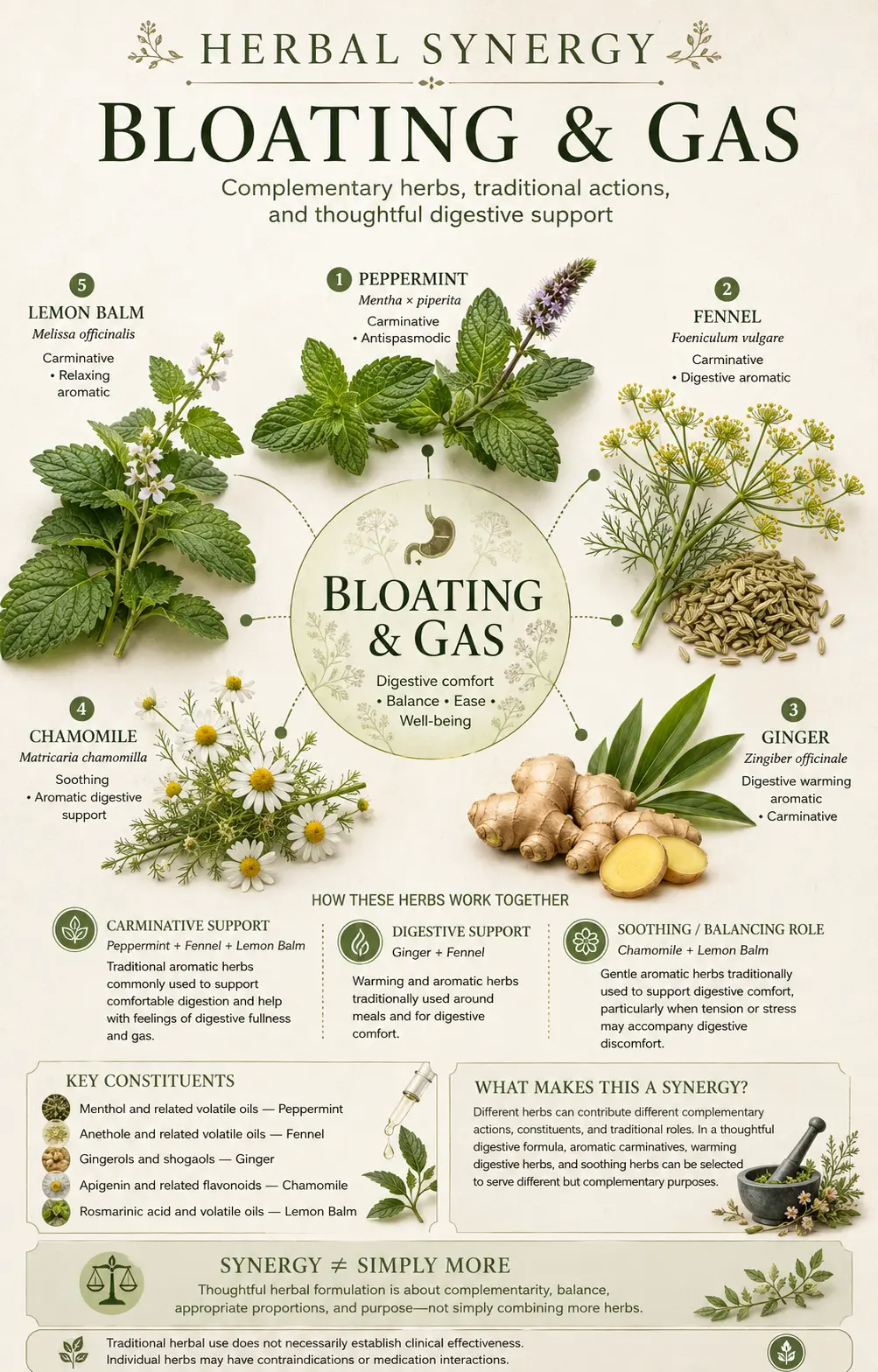
Bloating and gas rarely have one single cause — it’s usually some mix of trapped air, gas-forming fermentation, and a digestive tract that’s too tense (or too sluggish) to move things along. That’s exactly why a thoughtful combination of herbs tends to outperform a single one: each herb can be picked for a different job.
| Herb | What It Adds |
| Peppermint | Relaxes tense gut muscle, easing cramping |
| Caraway | Reduces gas, gently supports movement |
| Fennel | Eases trapped gas and mild spasm |
| Ginger | Supports gastric emptying when things feel stuck |
| Chamomile | Calms without the warming intensity of ginger |
| Dandelion Root | Primes digestion before the meal starts |
Think of a good digestive formula like a small team: you want someone relaxing the muscle, someone dealing with the gas itself, and maybe someone keeping things moving — not four players all trying to do the same job.
Recipe for Bloating & Gas
Fennel, Peppermint & Ginger After-Meal Tea
Why this blend: Fennel and peppermint both ease trapped gas and cramping, while ginger nudges sluggish digestion along — a well-rounded trio for that “I ate too much” feeling.
Ingredients
- 1 tsp crushed fennel seeds
- 1 tsp dried peppermint leaf
- ½ tsp fresh grated ginger (or ¼ tsp dried)
- 1 cup (240 ml) hot water
Yield: 1 cup
Preparation
- Lightly crush the fennel seeds to help release their oils.
- Combine fennel, peppermint, and ginger in a mug or infuser.
- Pour hot water over the herbs and cover immediately.
- Steep, covered, for 8–10 minutes, then strain and sip slowly.
How to Use Drink after meals, up to 2–3 cups a day. Keep the cup covered while steeping — that’s where the good stuff (the volatile oils) would otherwise escape.
Herbalist’s Note Skipping the lid is the #1 way people accidentally steep a much weaker tea than they think they’re getting.
Safety Peppermint can aggravate reflux/GERD — swap in chamomile if that’s you.
Ready-to-Use Products With This Synergy
Regimint Peppermint Oil Plus Caraway Oil Capsules Brand: Regimint (Life Extension) Key herbs: Peppermint oil, caraway oil (enteric-coated) Why it fits: This is the same peppermint-and-caraway-oil pairing studied in clinical trials for functional dyspepsia symptoms, including bloating and fullness. Buy: lifeextension.com
Iberogast Softgels Brand: Iberogast (Bayer) Key herbs: Peppermint, caraway, German chamomile, lemon balm, licorice, iberis amara Why it fits: A long-standing multi-herb blend marketed specifically for occasional bloating, gas, and indigestion. Buy: iberogast.com
Traditional Medicinals Organic Fennel Tea Brand: Traditional Medicinals Key herbs: Organic fennel fruit Why it fits: A simple, single-herb tea option if you want to start small before building up to a full blend. Buy: traditionalmedicinals.com
Herbal Synergies for Bloating & Gas
Not all bloating feels the same, so not every combination should either. Some discomfort is sharp and crampy (lean antispasmodic), some is heavy and sluggish (lean warming), and some shows up predictably after certain meals (worth addressing before you eat, not just after). A gentle blend for an occasional post-dinner bloat isn’t the same tool as a warming combination for the kind of heaviness that lingers all afternoon.
As always: synergy is about thoughtful complementarity — not simply adding more herbs to the pot.
Core Herbal Synergy Combinations
Peppermint + Caraway Best for: Fullness and discomfort that shows up during or right after eating. Why it works: This is the one combination on this list with real clinical trial evidence behind the pairing itself — not just the individual herbs. Peppermint relaxes tense gut muscle, caraway adds a gas-reducing, gently prokinetic effect, and studies on the fixed combination have shown meaningful improvement in pain and fullness compared to placebo.
Fennel + Peppermint + Ginger Best for: Bloating after a big or rich meal. Why it works: Fennel and peppermint both ease gas and spasm, while ginger nudges things along when digestion feels like it’s stalled. A versatile, cover-all-the-bases combination — this is the tea recipe above.
Chamomile + Fennel + Caraway Best for: Sensitive stomachs, evenings, or anyone who finds ginger or straight peppermint too intense. Why it works: Chamomile brings a gentle, non-warming calm, while fennel and caraway supply the carminative punch. This is the formula for the person who wants their digestive tea to taste like an actual tea — not a laboratory experiment.
Dandelion Root + Fennel Best for: People who bloat predictably after certain meals and want to get ahead of it. Why it works: Dandelion root is a bitter, traditionally taken before eating to prime digestive secretions, while fennel’s carminative action helps prevent the gas that might otherwise follow. A “prevention” pairing rather than an “after the fact” one.
Herbs Used in These Synergies
Peppermint Botanical name: Mentha × piperita Traditional actions: Antispasmodic, carminative Role in the synergy: Its menthol content is thought to relax intestinal smooth muscle, making it the go-to for cramping and trapped gas. Pairs naturally with warming or gas-reducing herbs. Key constituents: Menthol, menthone
Caraway Botanical name: Carum carvi Traditional actions: Carminative, mild prokinetic Role in the synergy: The most clinically studied partner for peppermint — the combination has real trial evidence behind it for functional dyspepsia symptoms. Key constituents: Carvone, limonene
Fennel Botanical name: Foeniculum vulgare Traditional actions: Carminative, mild antispasmodic Role in the synergy: One of the most widely recognized single herbs for bloating and flatulence, and a flexible base across several combinations. Key constituents: Anethole, fenchone
Ginger Botanical name: Zingiber officinale Traditional actions: Warming digestive, prokinetic Role in the synergy: Traditionally used to support gastric emptying — the “get things moving” herb rather than the “relax and reduce gas” herb. Key constituents: Gingerols, shogaols
Chamomile Botanical name: Matricaria chamomilla Traditional actions: Soothing antispasmodic Role in the synergy: A gentler, non-warming option for sensitive stomachs or evening use. Key constituents: Bisabolol, chamazulene
Dandelion Root Botanical name: Taraxacum officinale Traditional actions: Bitter, mild digestive stimulant Role in the synergy: Taken before meals to prime digestive secretions rather than treat symptoms after they start. Key constituents: Sesquiterpene lactones, inulin
Safety and When to Seek Medical Advice
Use Caution If:
- You have reflux or GERD — peppermint can make this worse
- You’re pregnant or breastfeeding — check with a provider before regular use, especially of concentrated extracts or essential oils
- You’re on medication — peppermint oil can raise blood levels of certain drugs (including some blood pressure medications and statins) via a liver enzyme interaction
- You’re allergic to carrot-family plants (fennel, caraway, and dill are relatives)
- You’re using concentrated tinctures or capsules rather than tea — effects are stronger and less forgiving
See a Healthcare Professional If: Bloating is severe, persistent, or paired with unintentional weight loss, blood in the stool, fever, or a significant change in bowel habits. These deserve a proper diagnosis, not just a cup of tea.
Q&A
What’s the best combination to start with? Fennel, peppermint, and ginger is the most versatile all-around choice for typical post-meal bloating. Save peppermint + caraway for when you want the most evidence-backed option.
Can I take these herbs together safely? Generally yes, in culinary tea amounts. If you’re combining concentrated capsules or tinctures, it’s worth checking with a healthcare provider first, especially if you take medication.
When should I drink the tea? After meals, when bloating typically shows up. The dandelion + fennel pairing is the exception — that one’s meant to be taken before eating.
Can I use these every day? Culinary-strength teas are commonly used regularly. For capsules or tinctures, follow the product label and don’t exceed the suggested duration without checking in with a professional.
Which combination is gentlest? Chamomile, fennel, and caraway — no warming ginger, no concentrated peppermint.
I’m on medication — is that a problem? It can be, particularly with peppermint oil. Check with a pharmacist or doctor before regular use, especially with blood pressure medications or statins.
When should I just see a doctor? If bloating is severe, doesn’t let up, or comes with weight loss, bleeding, or fever — that’s a “see a doctor,” not a “make tea” situation.
References
EU Herbal Monograph on Foeniculum vulgare (Bitter Fennel) – European Medicines Agency
Effects of Ginger on Gastric Emptying and Motility in Healthy Humans – PubMed
Peppermint Oil: Usefulness and Safety – NCCIH
Irritable Bowel Syndrome: What You Need To Know – NCCIH
Peppermint Safety Info (drug interaction data) – National Association for Holistic Aromatherapy
Iberogast Professional Information – Bayer
Disclaimer
This article is for educational and informational purposes only and is not intended to diagnose, treat, cure, or prevent disease. Herbs are biologically active and may interact with medications or be inappropriate for some people. If you are pregnant, breastfeeding, taking medication, managing a health condition, or experiencing persistent or severe symptoms, consult a qualified healthcare professional before using herbal preparations.
Available Herbal Products
Explore and shop ready-made products offering this benefit.