


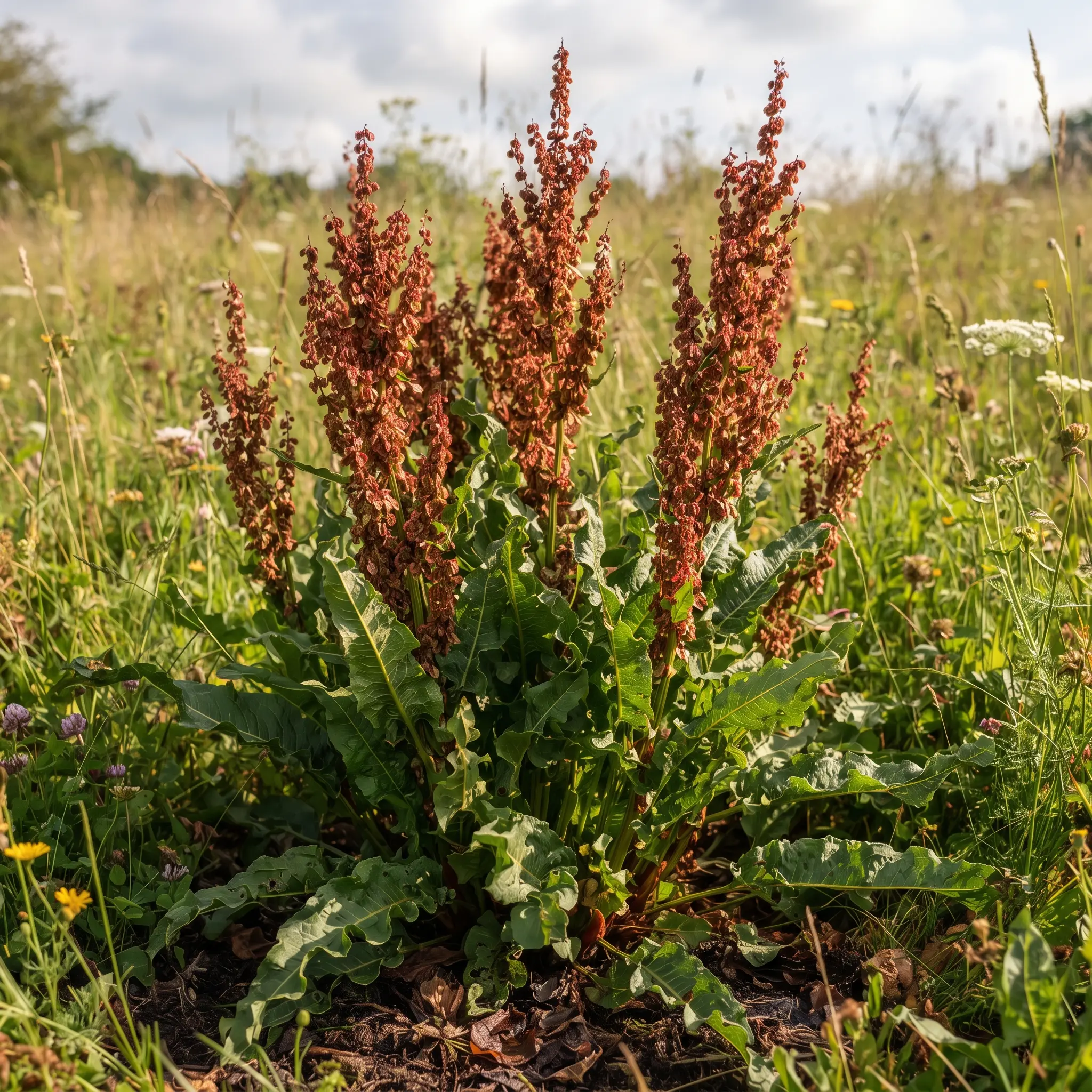
Traditionally, yellow dock has been used primarily for supporting digestive and liver health, especially when dealing with sluggish digestion or a desire for gentle internal cleansing. It is commonly prepared as a tea, tincture, or capsule.
Common Name: Yellow Dock Latin Name: Rumex crispus (Latin name itself in italics) Alternate Names: Curly Dock, Sour Dock
- Parts used: root
- Primary properties: alterative, bitter, mild laxative
- Common preparations: tea, tincture, capsule
- Best known for: supporting digestion and gentle liver support
What It Helps With
Health conditions this herb is commonly used to support.
Related Buying Guides
Featured Recipes
Explore and try simple ways to prepare and use this herb at home.
Active Compounds
The tiny plant chemistry doing all the heavy lifting.
Key Herbal Properties
What this herb is known for, herbally speaking.




Herbal Synergies
Other herbs that pair especially well with this one — together, their combined properties work better than either herb does alone.
Health Conditions Yellow Dock Helps With
- Sluggish digestion — Yellow dock is a classic bitter herb, traditionally used to help stimulate digestive secretions and support a more comfortable digestive process.
- Liver support — Long included in traditional formulas intended to support healthy liver function as part of broader digestive wellness.
- Mild constipation — Traditionally used as a gentle laxative to help support more regular bowel movement.
- Skin irritation — Yellow dock has a traditional reputation as a blood-purifying, or “alterative,” herb, used to support clearer skin.
- Iron-deficiency related fatigue — Traditionally associated with supporting healthy iron levels, given its natural iron content, though it’s not a substitute for addressing diagnosed deficiency.
Compounds
- Anthraquinones — Compounds thought to contribute to yellow dock’s traditional mild laxative action, present in notably lower concentration than in stronger laxative herbs like senna.
- Tannins — Give yellow dock a mild astringent quality, part of why traditional use often balances its laxative and toning effects.
- Iron — Yellow dock root is naturally rich in iron, contributing to its traditional reputation as a supportive herb for iron-related fatigue.
- Flavonoids — Support yellow dock’s overall antioxidant profile and traditional anti-inflammatory reputation.
- Oxalic acid — A naturally occurring compound in yellow dock, relevant to why certain populations are advised to use caution.
Properties
- Alterative — Yellow dock’s defining traditional property, used to gradually support the body’s detoxification and elimination processes.
- Bitter — Traditionally used to stimulate digestive secretions and support a sluggish appetite.
- Mild laxative — Used traditionally, and generally considered gentler than stronger stimulant laxatives, to support regular bowel movement.
- Nutritive (traditional) — Valued traditionally for its iron content as part of a broader nourishing, tonic reputation.
Recipes Using Yellow Dock
- Yellow dock digestive tea — A decoction of the dried root, traditionally sipped before or after meals to support digestion.
- Yellow dock tonic tincture — A concentrated liquid extract, often combined with other alterative herbs like burdock, for broader skin and detoxification support.
- Yellow dock bitters blend — Yellow dock root combined with other bitter herbs in a small-dose formula taken before meals.
Products Featuring Yellow Dock
- Dried root — The traditional base form, used for decoctions and tonic blends.
- Tincture — Offers a concentrated, easy-to-dose liquid form, useful for both digestive and alterative traditional use.
- Standardized capsules — Chosen for convenience and consistent dosing, particularly by those using it specifically for digestive or skin support.
Synergies
- Yellow dock + dandelion root — A classic pairing for traditional liver and digestive support formulas.
- Yellow dock + burdock root — Combined traditionally in skin-clearing, blood-purifying formulas.
- Yellow dock + ginger — Added to warm the formula and improve digestive comfort alongside yellow dock’s action.
- Yellow dock + red clover — Paired in traditional alterative blends aimed at broader detoxification support.
Safety & Precautions
Yellow dock is generally considered well-tolerated at typical traditional doses, though higher doses can cause loose stools or digestive cramping due to its mild laxative action, so it’s best started at a lower dose. Because of its oxalate content, individuals prone to kidney stones should use caution and consult a healthcare provider before regular use, as should anyone with significant kidney disease.
Yellow dock should be used cautiously during pregnancy and breastfeeding, as safety data is limited, so consulting a healthcare provider before use during these times is recommended. It may interact with iron supplements (given its own iron content, so combining could lead to excess intake) and with medications for heart conditions, such as digoxin, so anyone on these should speak with a healthcare provider before use. It is not intended for long-term daily use as a laxative, since ongoing reliance on any laxative herb can affect natural bowel function over time.
Yellow dock is generally well-tolerated by most healthy adults at appropriate traditional doses. For pets, yellow dock (and the broader dock/Rumex family) is considered potentially toxic to dogs and cats due to its oxalate content, and should be kept out of reach; any suspected ingestion should prompt a call to a veterinarian.
Q&A
Is yellow dock a strong laxative like senna?
No — yellow dock is generally considered a much gentler laxative than stronger stimulant herbs like senna, largely because of its comparatively lower concentration of the compounds responsible for that laxative action. It’s more commonly used for its broader digestive and liver-supportive traditional reputation, with its mild laxative effect being a secondary benefit for some people.
If a stronger, more targeted laxative effect is needed, other herbs are generally more appropriate, with yellow dock better suited to gentle, ongoing digestive support.
Can yellow dock be used daily?
Yellow dock is often used as a tonic herb over a period of weeks, and many people do use it daily during that time as part of a digestive or skin-support routine, though taking periodic breaks is a reasonable traditional approach rather than indefinite continuous use. It’s not typically considered a fast-acting remedy.
If using it specifically for skin or digestive support, giving it several weeks of consistent use before evaluating results is reasonable.
Does yellow dock really help with low iron?
Yellow dock root is notably rich in iron and has a long traditional reputation as a supportive herb for iron-related fatigue, which is part of why it’s included in some traditional tonic formulas. That said, diagnosed iron deficiency is a medical matter that deserves proper testing and treatment.
If you suspect low iron, seeing a healthcare provider for appropriate testing is the right first step, with yellow dock potentially used as a supportive addition rather than a standalone treatment.
Is yellow dock the same as the “dock” weed found in yards?
Yes — yellow dock (Rumex crispus), sometimes called curly dock, is a common plant often found growing as what many consider a garden or lawn weed, and it’s this same plant that has the traditional herbal history. Its distinctive curly-edged leaves are a helpful identifying feature.
If foraging yellow dock yourself, correct identification matters, so working from a reliable plant identification guide or with an experienced forager is a reasonable precaution.
Is yellow dock safe around pets?
No — yellow dock and other plants in the dock family are considered potentially toxic to dogs and cats due to their oxalate content, which can affect the kidneys and cause other symptoms if ingested in quantity. The plant should be kept out of reach in yards and gardens where pets have access.
If a pet ingests yellow dock or shows any concerning symptoms after possible exposure, contacting a veterinarian promptly is important.
References
- Plants of the World Online: Rumex crispus
- PubMed: Scientific Literature on Rumex crispus
- National Library of Medicine: Chemical Constituents from Rumex crispus
- Wikipedia: Rumex crispus
- ScienceDirect Topics: Rumex crispus Research
- Memorial Sloan Kettering Cancer Center: About Herbs — Yellow Dock
- PubMed: Rumex crispus Digestive and Anthraquinone Research
- ASPCA: Toxic and Non-Toxic Plants — Dock
This information is for educational purposes only and is not intended as medical advice. Consult a qualified healthcare professional before using any herb, especially if pregnant, breastfeeding, taking medications, or managing a health condition.