


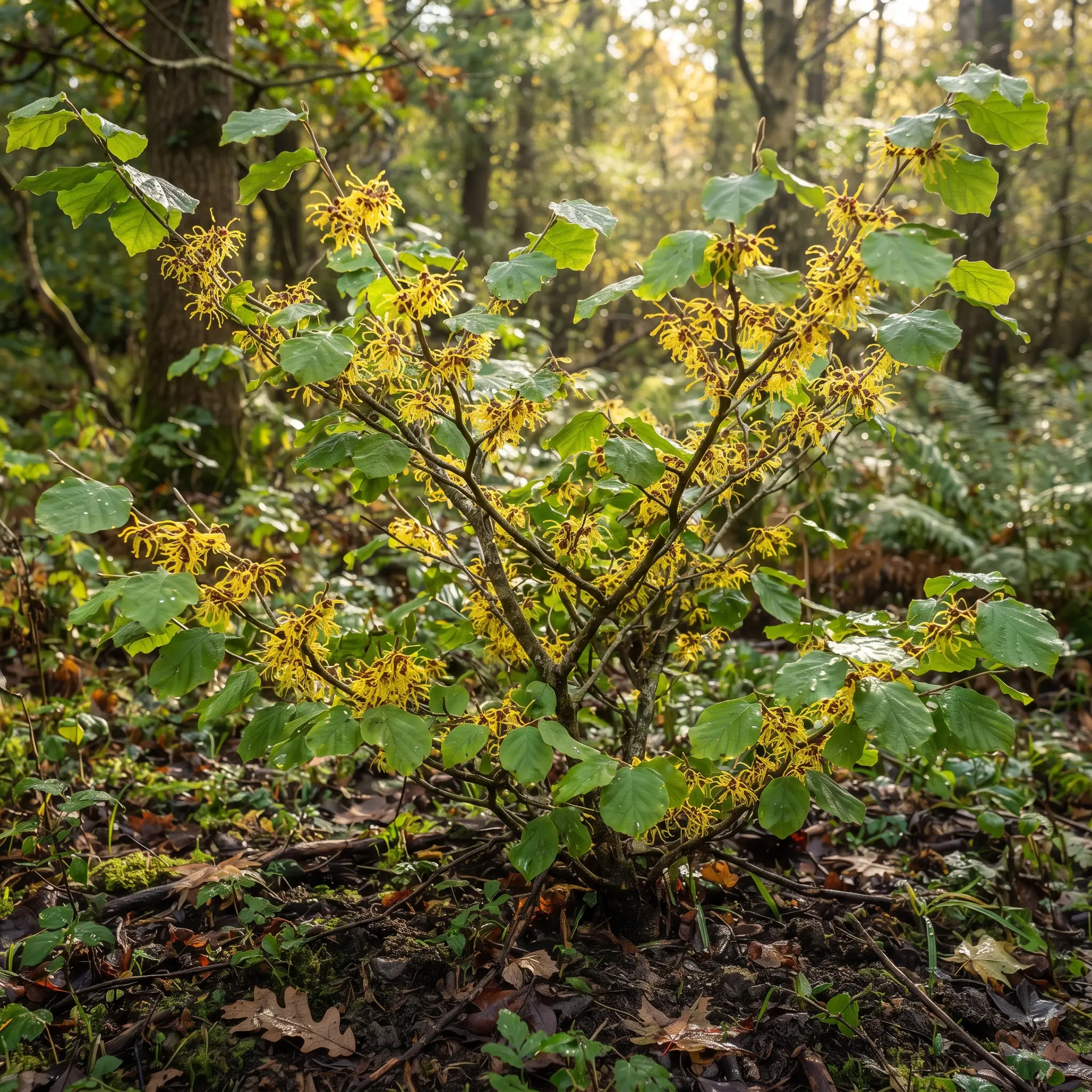
Traditionally, witch hazel has been used primarily for soothing skin irritation and easing minor swelling, especially when dealing with bruises, insect bites, or general skin inflammation. It is commonly prepared as a distilled hydrosol (witch hazel water), tincture, salve, or compress.
Common Name: Witch Hazel Latin Name: Hamamelis virginiana (Latin name itself in italics) Alternate Names: Winterbloom, Spotted Alder
- Parts used: bark, leaves, twigs
- Primary properties: astringent, anti-inflammatory, vulnerary
- Common preparations: distilled water (hydrosol), tincture, salve, compress
- Best known for: soothing skin irritation, bruising, and minor swelling
What It Helps With
Health conditions this herb is commonly used to support.
Related Buying Guides
Featured Recipes
Explore and try simple ways to prepare and use this herb at home.
Active Compounds
The tiny plant chemistry doing all the heavy lifting.
Key Herbal Properties
What this herb is known for, herbally speaking.




Herbal Synergies
Other herbs that pair especially well with this one — together, their combined properties work better than either herb does alone.
Health Conditions Witch Hazel Helps With
- Minor bruises & swelling — Witch hazel has a long traditional reputation for helping ease minor bruising and localized swelling when applied topically.
- Skin irritation & blemishes — Traditionally used as a gentle topical astringent to help calm irritated or oily skin.
- Hemorrhoids — One of witch hazel’s most well-established traditional uses, applied topically as a compress or pad to help soothe hemorrhoid-related discomfort.
- Insect bites & minor skin inflammation — Traditionally dabbed onto insect bites and minor irritations to help ease itching and inflammation.
- Varicose vein discomfort — Traditionally used topically to help support comfort in areas affected by varicose veins.
- Minor cuts & scrapes — Used traditionally as a mild topical antiseptic and astringent for minor wound care.
Compounds
- Tannins — Witch hazel’s defining compound group, responsible for its strongly astringent, tightening, and traditional anti-inflammatory qualities.
- Flavonoids — Support witch hazel’s overall antioxidant profile and traditional anti-inflammatory reputation.
- Volatile oils — Contribute a mild aroma and are thought to support witch hazel’s broader traditional soothing effects, particularly in distilled hydrosol form.
- Gallic acid — A compound related to witch hazel’s tannin content, thought to contribute to its traditional astringent and antioxidant qualities.
Properties
- Astringent — Witch hazel’s most defining property, used to tone and tighten irritated or inflamed tissue.
- Anti-inflammatory — Its tannin and flavonoid content underpin witch hazel’s traditional reputation for calming swelling and irritation.
- Vulnerary — Traditionally used to support the healing of minor wounds, cuts, and skin irritation.
- Hemostatic (mild, topical) — Traditionally associated with helping ease minor superficial bleeding when applied topically.
Recipes Using Witch Hazel
- Witch hazel skin toner — Distilled witch hazel water applied directly to the skin as a gentle, traditional toner for blemish-prone or irritated skin.
- Witch hazel compress — A cloth soaked in witch hazel water, traditionally applied to bruises, swelling, or hemorrhoid discomfort.
- Witch hazel salve — Witch hazel extract blended into a salve base for a longer-lasting topical application on irritated skin.
Products Featuring Witch Hazel
- Distilled witch hazel water (hydrosol) — The most common and widely available form, gentle enough for direct skin application.
- Tincture — A more concentrated alcohol-based extract, sometimes used for internal traditional applications under practitioner guidance, though topical use is far more common.
- Salve or ointment — Combines witch hazel extract with a soothing base for targeted topical application, particularly for hemorrhoid or skin care use.
Synergies
- Witch hazel + aloe vera — A soothing pairing combining witch hazel’s astringent quality with aloe’s hydrating, calming properties.
- Witch hazel + calendula — Combined in traditional topical preparations for skin-soothing and anti-inflammatory support.
- Witch hazel + tea tree — Paired in topical toners for combined astringent and antimicrobial blemish support.
- Witch hazel + chamomile — Traditionally combined for a gentle, calming topical preparation suited to sensitive skin.
Safety & Precautions
Witch hazel is generally considered very well-tolerated for topical use by most healthy adults, since it’s one of the gentler traditional astringent herbs. Commercial witch hazel water products vary in alcohol content, and those with higher alcohol concentrations can be more drying or irritating to sensitive skin, so choosing an alcohol-free version is worth considering for sensitive or dry skin types.
Witch hazel is intended for external use, and internal use of concentrated tinctures should only be done under the guidance of a qualified herbal practitioner, as internal use is far less common and studied than its traditional topical applications. Anyone with a known allergy to witch hazel or related plants should discontinue use if irritation develops. There are no major traditional cautions against topical witch hazel use during pregnancy or breastfeeding, though as with any topical product, patch testing on a small area first is a reasonable precaution for anyone with sensitive skin.
Topical witch hazel is generally very well-tolerated by most healthy adults with minimal risk. For pets, witch hazel in dilute, alcohol-free topical form is sometimes used cautiously for minor skin irritation in dogs under veterinary guidance, but products containing alcohol should be avoided around pets, and it should never be given internally without veterinary direction.
Q&A
Is all witch hazel water the same?
No — commercial witch hazel water products can vary meaningfully in alcohol content, with some containing higher amounts of alcohol as a preservative, which can be more drying or irritating, especially for sensitive skin. Alcohol-free versions are generally gentler and better suited for regular use on delicate or dry skin.
Checking the ingredient label for alcohol content is a reasonable step if you’re choosing a product for sensitive skin or frequent use.
Can witch hazel be used daily?
Witch hazel is commonly used daily as part of a regular skincare routine, particularly as a toner, and it’s generally considered gentle enough for this kind of frequent topical use by most people. It doesn’t carry the strict dosing cautions that come with more potent botanicals.
If you notice dryness or irritation with daily use, particularly with an alcohol-containing product, switching to an alcohol-free version or reducing frequency is a reasonable adjustment.
Does witch hazel actually help with hemorrhoids?
Witch hazel has one of the longest and most specific traditional reputations of any herb for soothing hemorrhoid-related discomfort, and it remains a common ingredient in over-the-counter hemorrhoid pads and wipes today. Applied as a compress or with pre-soaked pads, it’s traditionally used to help ease the associated swelling and irritation.
If hemorrhoid symptoms are severe, persistent, or accompanied by bleeding, it’s worth having them evaluated by a healthcare provider, using witch hazel as a supportive comfort measure alongside appropriate care.
Can witch hazel be taken internally?
Witch hazel is primarily and most commonly used topically, and internal use of concentrated tinctures is far less established and should only be considered under the guidance of a qualified herbal practitioner familiar with appropriate dosing. Most people should stick to the well-established topical traditional applications.
If you’re interested in any internal use of witch hazel, working with an experienced herbalist rather than self-dosing is the more cautious approach.
Is witch hazel safe around pets?
Alcohol-free witch hazel used cautiously and topically in small amounts is sometimes used for minor skin irritation in dogs, but products containing alcohol should be avoided, as alcohol can be irritating or harmful to a pet’s skin. Witch hazel should not be given internally to pets without veterinary guidance.
If you’re interested in using witch hazel for a pet’s skin irritation, choosing an alcohol-free product and checking with a veterinarian first is the safest approach.
References
- Plants of the World Online: Hamamelis virginiana
- PubMed: Scientific Literature on Hamamelis virginiana
- National Library of Medicine: Chemical Constituents from Hamamelis virginiana
- Wikipedia: Hamamelis virginiana
- ScienceDirect Topics: Hamamelis virginiana Research
- NC State Extension Plant Toolbox: Hamamelis virginiana
- Memorial Sloan Kettering Cancer Center: About Herbs — Witch Hazel
- PubMed: Witch Hazel Tannin and Anti-Inflammatory Research
This information is for educational purposes only and is not intended as medical advice. Consult a qualified healthcare professional before using any herb, especially if pregnant, breastfeeding, taking medications, or managing a health condition.