


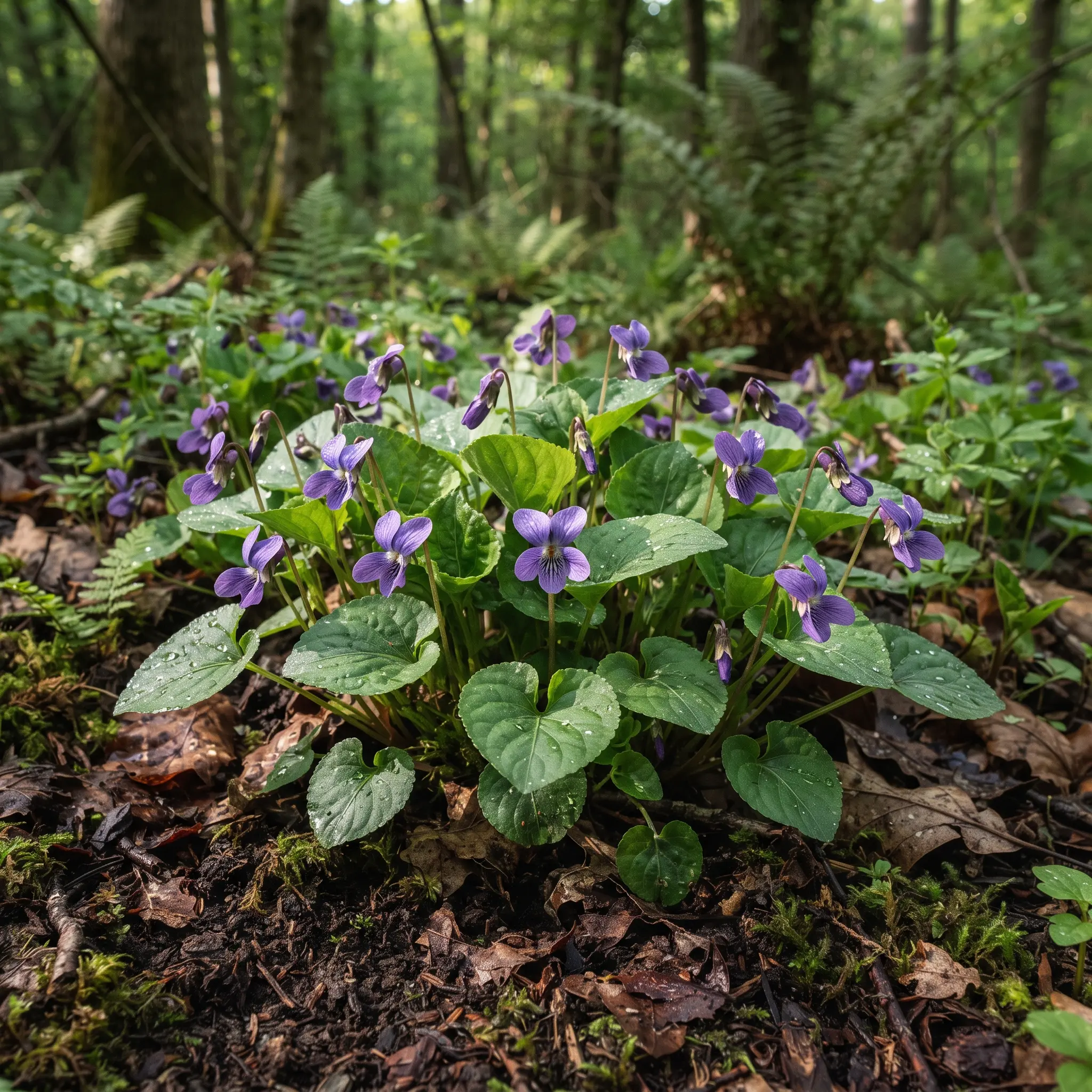
Traditionally, violet leaf has been used primarily for soothing skin irritation and supporting lymphatic health, especially when dealing with swollen glands or minor skin inflammation. It is commonly prepared as a tea, tincture, infused oil, or poultice.
Common Name: Violet Leaf Latin Name: Viola odorata (Latin name itself in italics) Alternate Names: Sweet Violet, Garden Violet
- Parts used: leaves, flowers
- Primary properties: lymphatic, demulcent, anti-inflammatory
- Common preparations: tea, tincture, infused oil, poultice
- Best known for: soothing skin irritation and supporting lymphatic health
What It Helps With
Health conditions this herb is commonly used to support.
Related Buying Guides
Featured Recipes
Explore and try simple ways to prepare and use this herb at home.
Active Compounds
The tiny plant chemistry doing all the heavy lifting.
Key Herbal Properties
What this herb is known for, herbally speaking.




Herbal Synergies
Other herbs that pair especially well with this one — together, their combined properties work better than either herb does alone.
Health Conditions Violet Leaf Helps With
- Swollen lymph nodes — Violet leaf has a long traditional reputation as a lymphatic herb, used to help support healthy lymphatic drainage and swollen glands.
- Skin irritation & minor breakouts — Traditionally applied topically as an infused oil or poultice to help soothe irritated, inflamed skin.
- Cough & respiratory irritation — Traditionally used as a soothing tea to help ease a dry, irritated cough.
- Digestive discomfort — Used traditionally in small amounts as a gentle demulcent to help soothe an irritated digestive tract.
- Breast tissue tenderness — Historically included in traditional formulas intended to support breast tissue comfort, often applied topically alongside internal use.
Compounds
- Mucilage — Contributes to violet leaf’s soothing, demulcent quality, particularly for irritated skin and digestive tissue.
- Saponins — Thought to contribute to violet leaf’s traditional lymphatic-supportive and expectorant reputation.
- Flavonoids (including rutin) — Support violet leaf’s overall antioxidant profile and are thought to contribute to its traditional anti-inflammatory effects.
- Salicylates — Compounds thought to contribute modestly to violet leaf’s traditional soothing, anti-inflammatory reputation.
Properties
- Lymphatic — Violet leaf’s most defining traditional property, used to support healthy lymphatic drainage and swollen glands.
- Demulcent — Its mucilage content gives violet leaf a soothing quality, useful for both skin and digestive tissue.
- Anti-inflammatory — Supports violet leaf’s traditional use for calming irritated skin and tissue.
- Expectorant (mild) — Traditionally used to help ease a dry, irritated cough.
Recipes Using Violet Leaf
- Violet leaf tea — A gentle infusion of fresh or dried violet leaves, traditionally sipped for lymphatic and skin support.
- Violet leaf infused oil — Fresh violet leaves infused into oil, traditionally applied topically to soothe irritated skin.
- Violet leaf poultice — Fresh, mashed violet leaves applied directly to the skin, a traditional remedy for localized swelling or irritation.
Products Featuring Violet Leaf
- Dried leaf — Versatile and traditional, suited for tea and homemade infused oils.
- Infused oil or salve — A common topical form, favored for skin-soothing applications.
- Tincture — Offers a concentrated liquid form for those wanting violet leaf’s effects without brewing tea.
Synergies
- Violet leaf + red clover — A traditional pairing combining two lymphatic-supportive herbs.
- Violet leaf + calendula — Combined in topical preparations for skin-soothing and anti-inflammatory support.
- Violet leaf + cleavers — Paired traditionally for broader lymphatic support formulas.
- Violet leaf + plantain leaf — Traditionally combined in poultices for soothing skin irritation.
Safety & Precautions
Violet leaf is generally considered gentle and well-tolerated by most healthy adults, with few significant traditional cautions when used in typical tea or topical amounts. As with many plants, individuals with known plant allergies should introduce it cautiously and watch for any skin or digestive reaction when trying it for the first time.
There is limited specific safety data on concentrated violet leaf extracts during pregnancy and breastfeeding, so it’s reasonable to stick to typical culinary or tea-strength amounts and consult a healthcare provider before using concentrated supplement forms during these times. It’s worth noting that violet leaf should not be confused with African violet or other unrelated plants also called “violet,” as identification matters for safety and efficacy.
Violet leaf in typical tea or topical amounts is generally very well-tolerated. For pets, violet leaf is not a commonly used or well-studied herb, and reliable safety information is limited, so it’s best avoided for dogs or cats without direct veterinary guidance.
Q&A
Does violet leaf tea taste like the flower smells?
Violet leaf tea has a mild, slightly green, and gently sweet flavor, though it’s more subtle and less perfumed than the flower’s distinctive fragrance. It’s often described as a gentle, easy-to-drink herbal tea rather than having an overpowering floral taste.
Many people find it pleasant on its own, though it can also be blended with other mild herbs like chamomile for variety.
Can violet leaf be used daily?
Violet leaf tea and topical preparations are generally considered gentle enough for regular use by most healthy adults. It doesn’t carry the strict dosing cautions that come with more potent botanicals.
If using it specifically for lymphatic or skin support, many people find a daily cup of tea or a regular topical routine to be a sustainable, low-risk habit.
Is violet leaf the same as the violets that grow wild in yards?
Sweet violet (Viola odorata), the species traditionally used for herbal preparations, is closely related to many common wild violet species found in lawns and gardens, though not every violet-like plant is necessarily the correct species for herbal use. Correct identification matters if foraging rather than purchasing from a reputable supplier.
If you’re interested in using wild-growing violets, confirming the species with a reliable plant identification resource or experienced forager is a reasonable precaution.
Are violet leaves and violet flowers used differently?
Violet leaves are traditionally used more for their lymphatic and demulcent properties in tea, tincture, and topical preparations, while the flowers are often used for their delicate flavor and color in culinary applications, as well as some topical preparations. Both parts come from the same plant but tend to feature in slightly different traditional uses.
Many herbal preparations use both the leaf and flower together, particularly in infused oils and teas.
Is violet leaf safe around pets?
Violet leaf isn’t a well-studied herb for dogs or cats, so there isn’t reliable safety information confirming it’s appropriate for them. Without solid data, it’s best treated with caution rather than assumed safe.
If you’re interested in herbal support for a pet’s skin or lymphatic health, it’s best to speak with a veterinarian familiar with herbal options rather than sharing a human violet leaf preparation.
References
- Plants of the World Online: Viola odorata
- PubMed: Scientific Literature on Viola odorata
- National Library of Medicine: Chemical Constituents from Viola odorata
- Wikipedia: Viola odorata
- ScienceDirect Topics: Viola odorata Research
- Memorial Sloan Kettering Cancer Center: About Herbs — Violet Leaf
- PubMed: Viola odorata Anti-Inflammatory Research
This information is for educational purposes only and is not intended as medical advice. Consult a qualified healthcare professional before using any herb, especially if pregnant, breastfeeding, taking medications, or managing a health condition.