


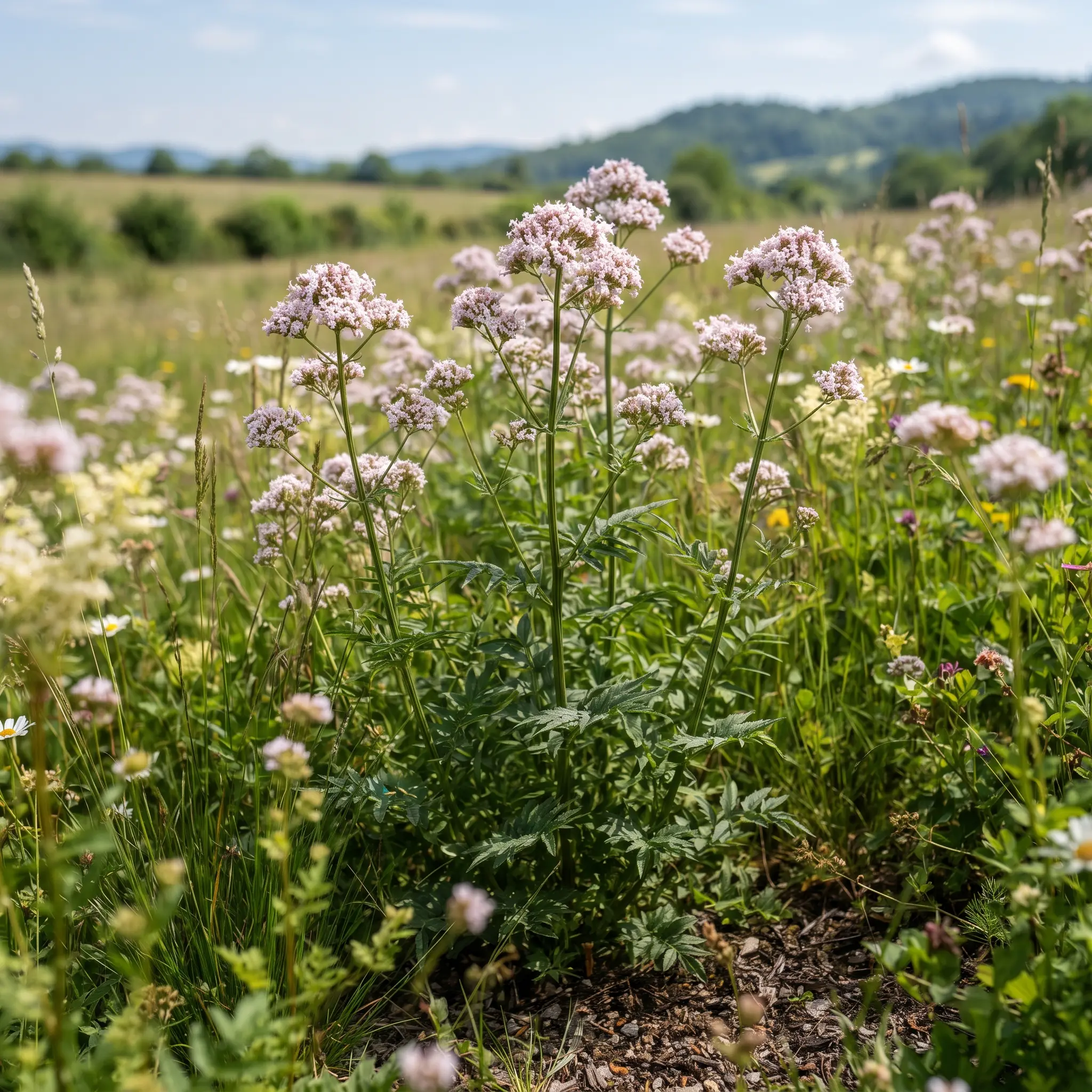
Traditionally, valerian root has been used primarily for supporting restful sleep and easing anxious tension, especially when dealing with difficulty falling asleep or a racing mind at bedtime. It is commonly prepared as a tea, tincture, capsule, or standardized extract.
Common Name: Valerian Root Latin Name: Valeriana officinalis (Latin name itself in italics) Alternate Names: All-Heal, Garden Heliotrope
- Parts used: root, rhizome
- Primary properties: sedative, nervine, antispasmodic
- Common preparations: tea, tincture, capsule, standardized extract
- Best known for: supporting restful sleep and calming nervous tension
What It Helps With
Health conditions this herb is commonly used to support.
Related Buying Guides
Featured Recipes
Explore and try simple ways to prepare and use this herb at home.
Active Compounds
The tiny plant chemistry doing all the heavy lifting.
Key Herbal Properties
What this herb is known for, herbally speaking.



Herbal Synergies
Other herbs that pair especially well with this one — together, their combined properties work better than either herb does alone.
Health Conditions Valerian Root Helps With
- Difficulty falling asleep — Valerian root has one of the longest and most well-established traditional reputations of any herb for supporting sleep onset.
- Anxiety & nervous tension — Traditionally used to help calm an overactive mind and ease everyday tension, particularly in the evening.
- Muscle tension & cramping — Used traditionally as an antispasmodic to help relax tense or cramping muscles.
- Restlessness tied to stress — Traditionally reached for during periods of stress-related restlessness, particularly when it interferes with winding down.
- Menstrual cramping — Traditionally used to help ease the muscular discomfort associated with menstrual cramps.
Compounds
- Valerenic acid — A compound unique to valerian, generally understood to contribute significantly to its traditional sedative and calming reputation.
- Valepotriates — Compounds thought to contribute to valerian’s traditional antispasmodic and sedative effects, though they are less stable and less concentrated in some processed products.
- Essential oils — Contribute to valerian’s characteristically strong, earthy aroma and are thought to support its overall traditional calming effects.
- Flavonoids — Support valerian’s overall antioxidant profile and contribute to its broader traditional calming reputation.
Properties
- Sedative — Valerian’s most defining traditional property, used to support relaxation and easier sleep onset.
- Nervine — Traditionally used to calm an overactive nervous system and ease everyday tension.
- Antispasmodic — Used traditionally to relax tense muscles, including those involved in menstrual cramping.
- Mild anxiolytic (traditional) — Traditionally associated with easing feelings of anxiousness, particularly in the evening.
Recipes Using Valerian Root
- Valerian sleep tea — An infusion of dried valerian root, often combined with chamomile or lemon balm to soften its strong flavor, taken before bed.
- Valerian tincture blend — A concentrated liquid extract, often combined with other calming nervines like passionflower, taken shortly before sleep.
- Valerian evening capsule blends — Standardized valerian extract combined with herbs like hops or lemon balm in capsule form for sleep support.
Products Featuring Valerian Root
- Standardized extract capsules — Offers a consistent, pre-measured dose and avoids valerian’s notably strong, earthy taste.
- Dried root/tea — A traditional whole-herb form, though its taste is often described as pungent and an acquired preference.
- Tincture — Provides a concentrated liquid form for flexible, adjustable evening dosing.
Synergies
- Valerian + hops — A classic pairing for sleep support, traditionally combined for a stronger sedative effect.
- Valerian + passionflower — Combined for broader calming and anxiety-easing support alongside valerian’s sleep-supportive action.
- Valerian + lemon balm — Paired to soften valerian’s strong flavor while adding a gentle, calming quality.
- Valerian + chamomile — A gentle, soothing pairing well suited to an everyday evening tea routine.
Safety & Precautions
Valerian root can cause drowsiness, so it’s best not combined with driving or operating machinery, particularly after taking it and especially when first trying it or at higher doses. Because of its traditional sedative action, it should be used cautiously alongside other sedative medications, alcohol, or sleep aids, as combined effects could be stronger than intended and increase drowsiness beyond what’s expected.
There is limited safety data on valerian during pregnancy and breastfeeding, so it’s generally advised to avoid use during these times unless guided by a healthcare provider. Valerian is generally intended for shorter-term or occasional use rather than indefinite daily reliance, and some people report a temporary “hangover” grogginess the following morning, particularly at higher doses. It should be discontinued gradually rather than abruptly after longer-term use, as abrupt discontinuation after extended regular use has been associated with mild withdrawal-like symptoms in some people. It may also interact with sedative medications, anesthesia (so it should be stopped prior to scheduled surgery, with a healthcare provider’s guidance), and certain liver-metabolized medications.
Valerian root used as traditionally recommended is generally well-tolerated by most healthy adults. For pets, valerian is notably attractive to cats in a manner similar to catnip and can have a stimulating rather than sedating effect on them, so it should be kept out of reach of cats; for dogs, valerian is sometimes used under veterinary guidance for calming support, but should not be given without professional direction.
Can valerian root be used every night for sleep?
Valerian is often used for a period of weeks for sleep support, and many people do use it nightly during that time, though it’s generally best used for a defined period rather than indefinitely without a break. Long-term nightly use over months to years hasn’t been as thoroughly studied as shorter-term use.
If sleep difficulties persist despite consistent valerian use, it’s worth discussing with a healthcare provider to rule out underlying causes, using valerian as a supportive tool alongside good sleep habits rather than a standalone fix.
Why does valerian root smell so strong?
Valerian root has a notably pungent, earthy, somewhat musty aroma due to its volatile oil and valerenic acid content, which some people find quite off-putting, especially in tea form. This strong smell is a well-known and harmless characteristic of the herb.
Many people prefer capsule or tincture forms specifically to avoid the taste and smell that come with brewing valerian root tea directly.
How long does it take for valerian to work?
Valerian’s calming effects are generally felt within 30 minutes to two hours of taking it, which is why it’s typically taken shortly before bedtime. Unlike some sleep aids, its full traditional benefit for sleep quality is often described as building with consistent use over one to two weeks rather than being strongest on the very first night.
Giving it a short trial period of about two weeks before deciding whether it’s a good fit is a reasonable approach.
Is valerian root safe to combine with melatonin or other sleep aids?
Combining valerian with other sedating sleep aids, including melatonin, alcohol, or prescription sleep medications, can increase drowsiness and sedation beyond what either would cause alone, so this combination should be approached cautiously and ideally discussed with a healthcare provider first. Stacking multiple sedating substances isn’t automatically more effective and can increase the risk of excessive grogginess.
If you’re currently using another sleep aid and considering adding valerian, checking with a healthcare provider or pharmacist first is a reasonable step to avoid unwanted interactions.
Is valerian root safe around pets?
Valerian root has an unusual effect on cats similar to catnip, often acting as a stimulant rather than a sedative and prompting playful or excited behavior, so it should be kept out of reach if you don’t want your cat drawn to it. For dogs, valerian is sometimes used specifically for its calming effect under veterinary guidance, but dosing differs significantly from human use.
If you’re interested in using valerian for a dog’s anxiety or calming support, working with a veterinarian to determine appropriate dosing is the safest approach.
References
- Plants of the World Online: Valeriana officinalis
- PubMed: Scientific Literature on Valeriana officinalis
- National Library of Medicine: Chemical Constituents from Valeriana officinalis
- Wikipedia: Valeriana officinalis
- ScienceDirect Topics: Valeriana officinalis Research
- Memorial Sloan Kettering Cancer Center: About Herbs — Valerian
- PubMed: Valerenic Acid Sedative Research
- PubMed: Valerian Root Sleep Quality Research
This information is for educational purposes only and is not intended as medical advice. Consult a qualified healthcare professional before using any herb, especially if pregnant, breastfeeding, taking medications, or managing a health condition.